Author: tristan

  • Alcoa Nears Sale of New York Smelter Site to Bitcoin Miner NYDIG

    Alcoa Nears Sale of New York Smelter Site to Bitcoin Miner NYDIG

    Alcoa is in advanced talks to sell its dormant Massena East smelter site in upstate New York to New York Digital Investment Group, according CEO Bill Oplinger. Chief Executive Officer Bill Oplinger indicated that the transaction is expected to close in the middle of the year as the company continues efforts to divest unused industrial properties.

    The Massena East facility spans roughly 1,300 acres along the St. Lawrence River and has remained inactive since 2014 due to high operating costs and increasing global competition in aluminum production. The site benefits from access to large-scale hydropower through regional energy infrastructure, making it attractive for energy-intensive operations such as data centers and cryptocurrency mining.

    NYDIG Expands Mining Strategy Through Strategic Infrastructure Investments

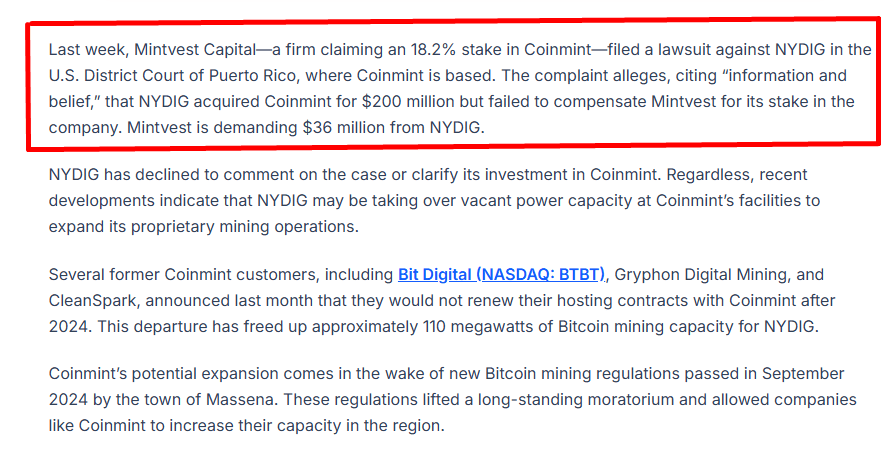
    The proposed purchase would strengthen NYDIG’s presence at the location, where mining activity has already been underway through a partnership with Coinmint. NYDIG previously acquired a strategic stake in Coinmint in October 2024, securing long-term operational access under an existing lease agreement.
    Industry trends show former industrial sites increasingly being repurposed for digital infrastructure. Similar redevelopment projects have emerged across the United States, where aging smelters are being converted into facilities capable of supporting cryptocurrency mining, artificial intelligence workloads and high-performance computing systems.

    Shift Toward Digital Infrastructure Reflects Changing Energy Economics

    The expected sale reflects a broader transformation in the energy and manufacturing landscape, as companies seek to monetize idle facilities with strong grid connectivity. While several mining firms are shifting power resources toward artificial intelligence and computing services, NYDIG has continued expanding its Bitcoin mining capacity through acquisitions and infrastructure development.

    Disclaimer

    This content is for informational purposes only and does not constitute financial, investment, or legal advice. Cryptocurrency trading involves risk and may result in financial loss.
  • Charles Schwab and Citadel Securities Explore Entry Into Prediction Markets

    Charles Schwab and Citadel Securities Explore Entry Into Prediction Markets

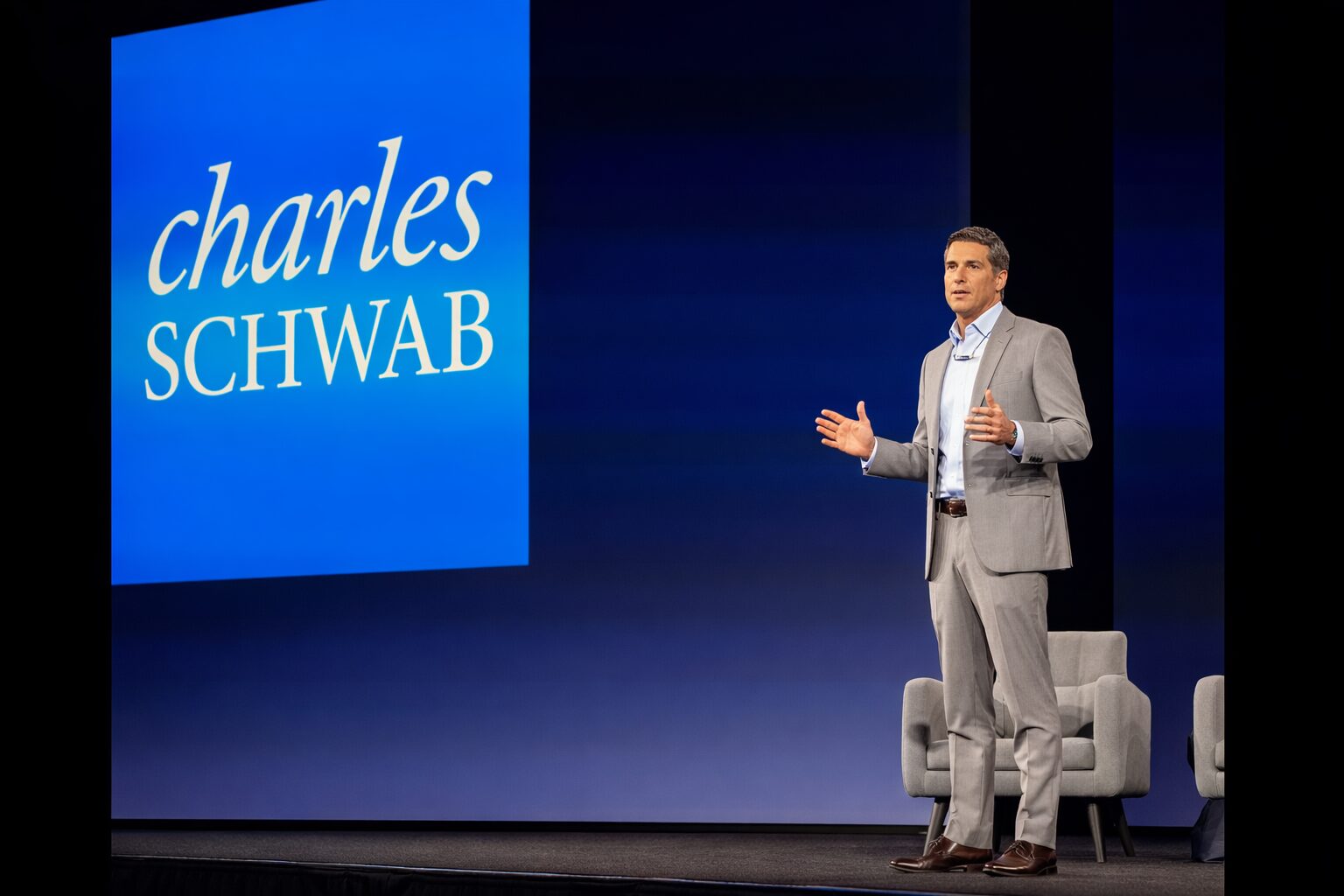
    Major financial institutions Charles Schwab and Citadel Securities are evaluating opportunities to enter the rapidly expanding prediction markets industry. Executives from both firms have signaled growing interest in the sector, which has seen significant increases in trading activity over recent months.

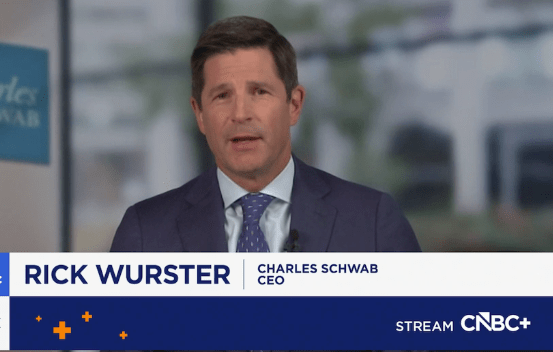
    Rick Wurster stated that offering prediction markets could become a realistic addition to Schwab’s services in the future. He noted that although current client demand appears limited, the company considers the technology straightforward to implement and worth further evaluation.

    Charles Schwab CEO Rick Wurster speaking to CNBC after the company launched Bitcoin and Ether trading on Thursday.: CNBC

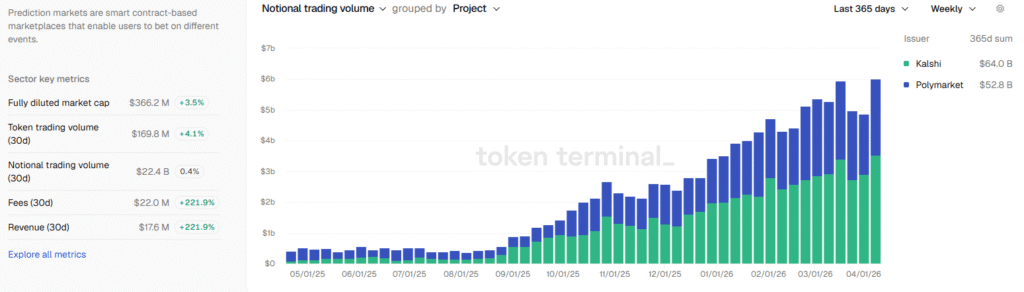
    Prediction platforms such as Kalshi and Polymarket have experienced strong growth, with combined monthly trading volumes reaching approximately $23.6 billion in March, reflecting increasing market participation.

    Focus on Risk Management Rather Than Gambling Markets

    Both companies emphasized caution regarding certain types of contracts. Wurster said Schwab would likely avoid prediction markets tied to sports, politics or entertainment, focusing instead on tools that support long-term investment strategies.

    Similarly, Jim Esposito confirmed that Citadel Securities is closely monitoring the sector’s development but has not committed to immediate participation. He noted that current liquidity levels remain relatively limited, though market growth is expected to accelerate.

    Kalshi and Polymarket record combined total monthly trading volume of $23.6 billion in March

    Event Contracts Seen as Potential Hedging Tools

    Citadel Securities executives indicated that prediction-based event contracts could eventually serve as practical hedging instruments for investors. These contracts could help clients manage risks tied to major events such as elections or economic policy changes, which often influence market movements.

    Despite regulatory scrutiny from state authorities and federal lawmakers, interest from established financial firms suggests prediction markets may continue gaining institutional attention as the sector matures.

    Disclaimer

    This content is for informational purposes only and does not constitute financial, investment, or legal advice. Cryptocurrency trading involves risk and may result in financial loss.
  • Warren Accuses SEC Chair Atkins of Misleading Congress Over Enforcement Data

    Warren Accuses SEC Chair Atkins of Misleading Congress Over Enforcement Data

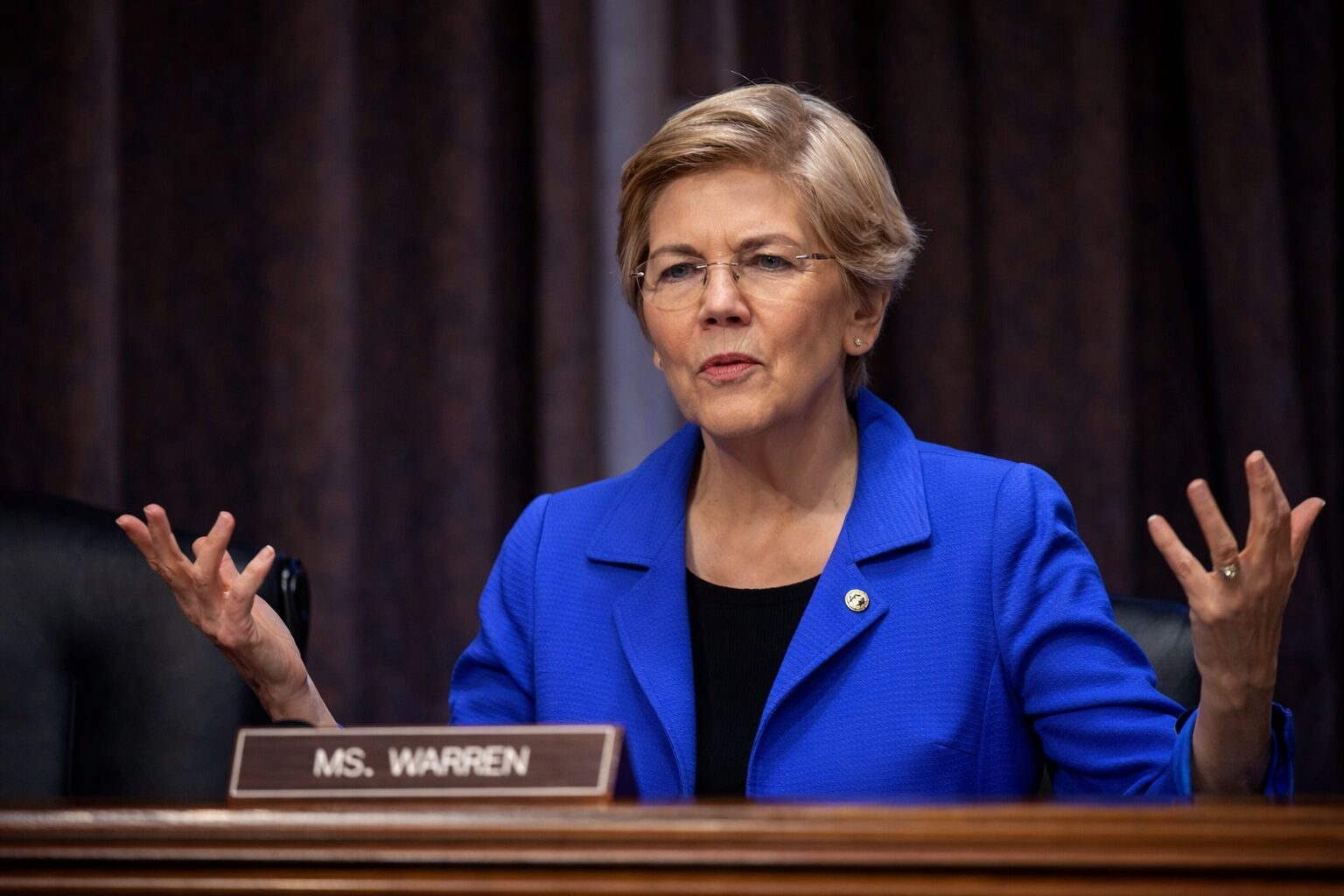
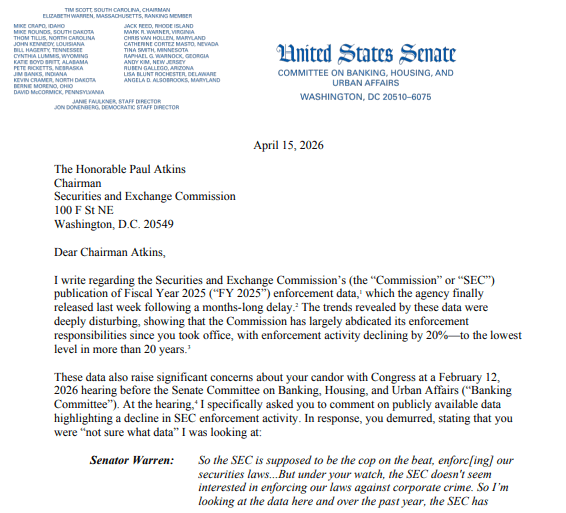
    US Senator Elizabeth Warren has accused Paul Atkins, head of the U.S. Securities and Exchange Commission, of potentially misleading Congress regarding the agency’s enforcement record. In a formal letter dated Wednesday, Warren said recently released enforcement data for fiscal year 2025 raised serious concerns about statements made by Atkins during a February congressional hearing.

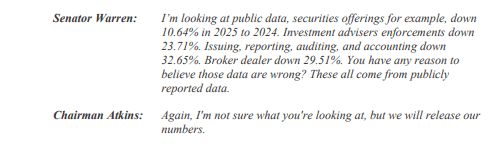
    According to the newly published figures, the number of enforcement actions initiated by the SEC fell to its lowest level in the past decade. Warren noted that during the February 12 hearing, Atkins said he was uncertain about the data she referenced when she questioned him about declining enforcement activity.

    Crypto Enforcement Rollbacks Draw Criticism

    Warren described the enforcement slowdown as “deeply disturbing,” arguing that the agency has significantly reduced oversight responsibilities under recent policy shifts. She also pointed to the rollback of several enforcement cases against cryptocurrency companies, many of which were originally launched during the previous administration.

    An excerpt from Elizabeth Warren’s letter to Paul Atkins claiming she gave him an opportunity “to correct the record” on SEC enforcement.: SBC

    The senator stated that Atkins’ earlier response now appears misleading, suggesting he may have attempted to cast doubt on data that clearly showed declining enforcement activity. She emphasized that the hearing occurred more than four months after the end of fiscal year 2025, making the lack of clarity particularly concerning.

    SEC Asked to Respond by Late April

    Warren’s letter includes multiple questions seeking clarification on whether Atkins was aware of the enforcement trends at the time of his testimony. She also requested a detailed explanation for the sharp drop in enforcement actions recorded by the agency.

    The SEC chair has been asked to provide formal responses by April 28. As of now, the regulatory body has not publicly commented on the allegations or the concerns raised in the letter.

    Disclaimer

    This content is for informational purposes only and does not constitute financial, investment, or legal advice. Cryptocurrency trading involves risk and may result in financial loss.
  • Coinbase Premium Hits 7-Month High as Institutional Demand Drives Bitcoin Buying

    Coinbase Premium Hits 7-Month High as Institutional Demand Drives Bitcoin Buying

    Coinbase Premium Signals Rising Institutional Bitcoin Accumulation

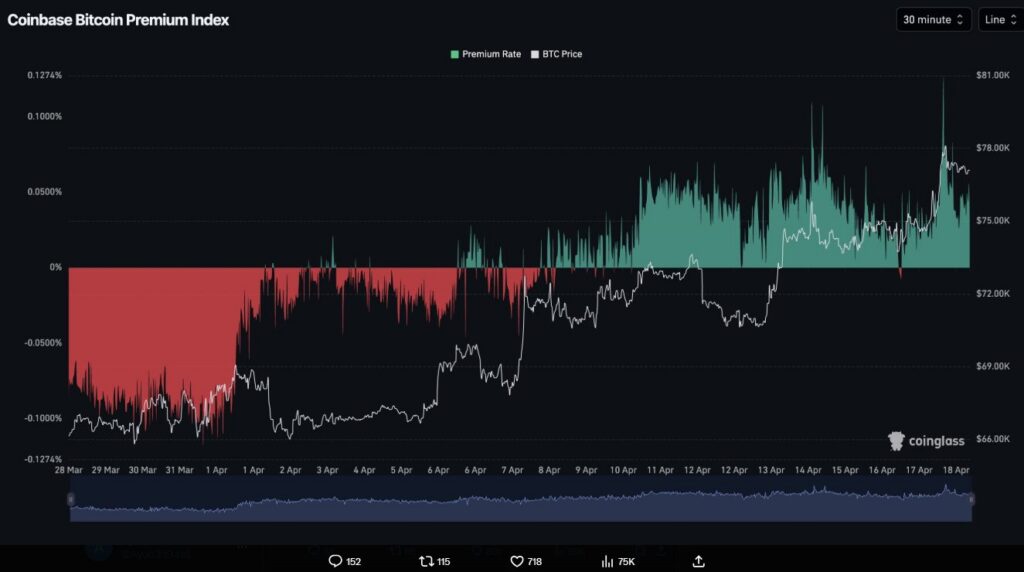
    Bitcoin showed renewed strength after the Coinbase Premium index surged to its highest level in seven months, reaching the equivalent of $81,000 per BTC at its peak. The premium reflects the difference between Bitcoin prices on Coinbase and those on global exchanges, and a widening gap typically signals strong demand from United States-based investors, particularly large institutions.

    Coinbase Premium index

    Market observers often treat Coinbase as a primary entry point for institutional capital. When Bitcoin trades at higher prices on this platform compared to international markets, it suggests that institutional buyers are accumulating assets aggressively. The latest spike indicates a return of large-scale investment activity following weeks of mixed market sentiment.

    Bitcoin Price Volatility Follows Geopolitical Developments

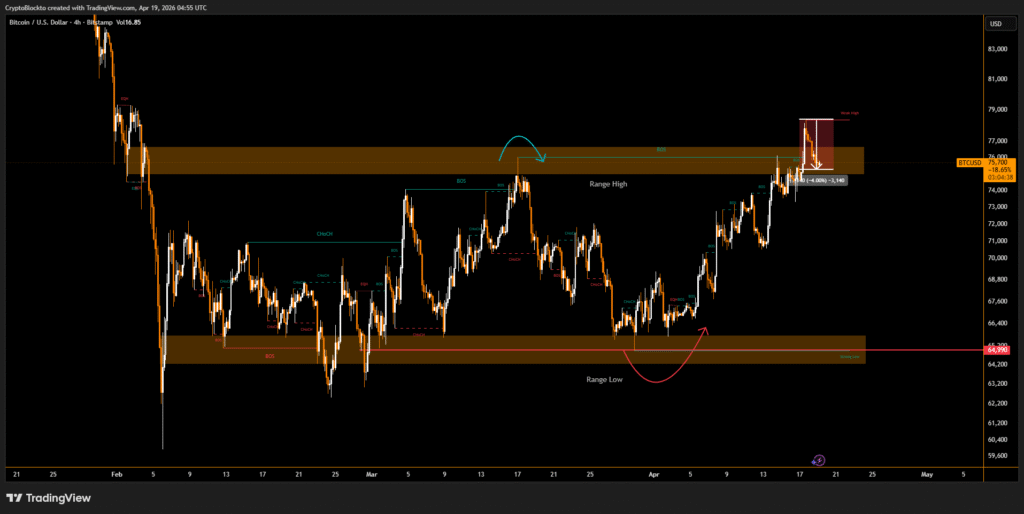
    Bitcoin briefly climbed to around $78,000 on Friday following positive news related to easing geopolitical tensions and declining oil prices. However, the rally lost momentum, with Bitcoin laterat the time of writting trading near the $75,800 to $76,000 range as market sentiment stabilized.

    $BTC 4h price chart

    Despite the pullback, the rising Coinbase Premium suggests that underlying demand remains strong. If institutional accumulation continues at current levels, analysts believe it could mark the early phase of a broader upward trend, especially as Bitcoin continues testing key resistance zones near recent highs.

    Disclaimer

    This content is for informational purposes only and does not constitute financial, investment, or legal advice. Cryptocurrency trading involves risk and may result in financial loss.
  • RAVE Token Crash Triggers Investigations as RaveDAO Denies Pump-and-Dump Allegations

    RAVE Token Crash Triggers Investigations as RaveDAO Denies Pump-and-Dump Allegations

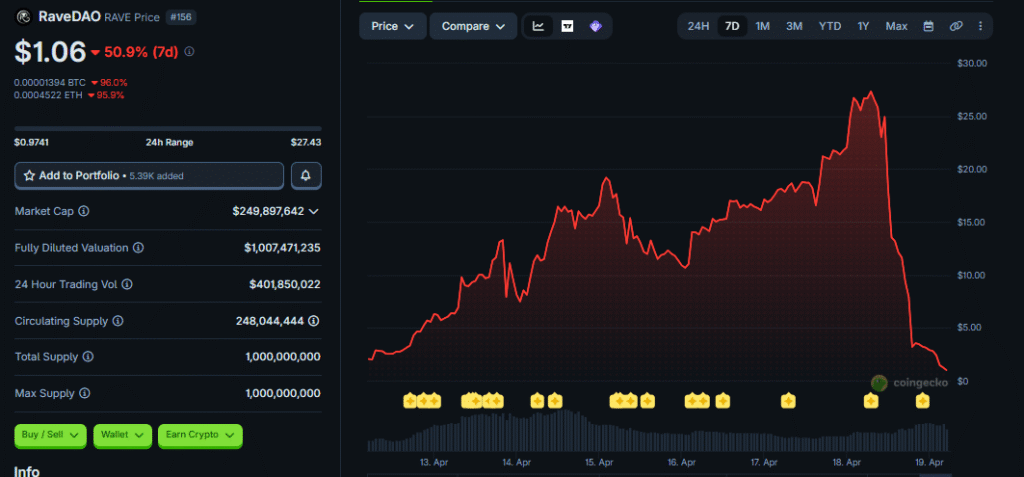
    The RAVE token experienced extreme volatility after surging from approximately $0.25 to nearly $28 within nine days before crashing to below $4 on Saturday. At its peak, the token briefly ranked among the top 20 cryptocurrencies by market capitalization, surpassing several established digital assets. However, the sharp decline erased most gains, leaving the token trading near $1.06 and down more than 100% in a single day.

    RAVE price data :CoinGecko

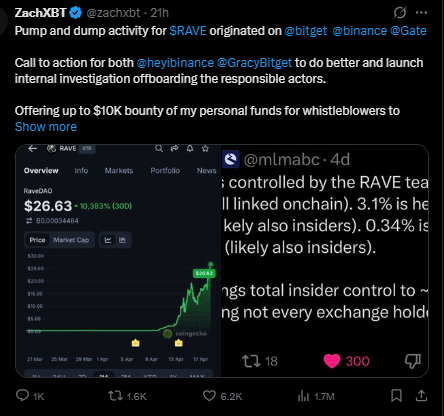
    The rapid price rise followed by a steep fall triggered widespread scrutiny within the crypto community. Onchain analyst ZachXBT publicly alleged a potential pump-and-dump scheme, highlighting claims that nearly 90% of the token’s 1 billion supply was held across three wallets linked to the project team. A $25,000 bounty has reportedly been offered to encourage whistleblowers to provide additional evidence.

    Exchanges Launch Investigations Into Suspicious Trading Activity

    Major cryptocurrency exchanges Binance and Bitget confirmed they have launched investigations into the unusual trading patterns surrounding the RAVE token. Officials from both platforms stated they are reviewing transaction flows and market behavior to determine whether manipulation occurred during the rally.

    Bitget CEO Gracy Chen said on X ;

    RaveDAO responded through public statements denying responsibility for the sudden price movement. The team stated it was aware of speculation but insisted it had not participated in activities designed to influence the token’s market value.

    Token Supply Structure and Project Funding Plans Under Scrutiny

    In its response, RaveDAO acknowledged plans to sell portions of unlocked tokens to support operations, marketing and development activities. The team also indicated it is exploring mechanisms such as price-triggered token locks to improve transparency and maintain alignment between project growth and token performance.

    The controversy has increased regulatory and investor attention on token supply distribution and liquidity management, highlighting ongoing risks in emerging Web3 ecosystems.

    Disclaimer

    This content is for informational purposes only and does not constitute financial, investment, or legal advice. Cryptocurrency trading involves risk and may result in financial loss.
  • Trump Sets April 22 Deadline for Iran Deal, Warns Bombing Could Resume

    Trump Sets April 22 Deadline for Iran Deal, Warns Bombing Could Resume

    April 22 Deadline Raises Risk of Renewed US Airstrikes

    US President Donald Trump has set April 22 as a deadline for reaching a long-term agreement with Iran, warning that American bombing operations could resume if negotiations fail. The ultimatum comes as a fragile two-week ceasefire approaches its end, increasing pressure on both sides to reach a resolution.

    Trump confirmed that preventing Iran from developing a nuclear weapon remains the top priority and stressed that the United States will maintain its blockade of Iranian ports during negotiations. He stated that failure to reach a deal would leave Washington with few alternatives, highlighting the high-stakes nature of the ongoing diplomatic efforts.

    Nuclear Dispute and Port Blockade Stall Negotiations

    Negotiations remain stalled due to major disagreements over Iran’s nuclear stockpile and the continuing US blockade. Iranian officials have rejected proposals to transfer enriched uranium abroad, while US leaders insist that uranium control is essential for long-term security.

    Iran’s parliamentary leadership has warned that the Strait of Hormuz may not remain open if the blockade continues. Pakistan has been involved in mediation efforts, but no confirmed breakthrough has been announced as talks continue under tight deadlines.

    Global Oil Markets and Regional Stability at Risk

    The ongoing tensions have already affected global energy markets, with disruptions around the Strait of Hormuz driving oil price volatility and raising inflation concerns worldwide. Shipping companies remain cautious due to reported security threats and maritime restrictions.

    If an agreement is reached before April 22, it could lead to phased peace measures and gradual easing of restrictions. However, failure to secure a deal could result in renewed airstrikes and expanded naval operations, increasing the risk of broader regional conflict and economic disruption.

    Disclaimer

    This content is for informational purposes only and does not constitute financial, investment, or legal advice. Cryptocurrency trading involves risk and may result in financial loss.

  • Bitcoin Mining Difficulty Drops Slightly as Next Increase Expected in May 2026

    Bitcoin Mining Difficulty Drops Slightly as Next Increase Expected in May 2026

    Bitcoin Mining Difficulty Falls to 135.5T Amid Industry Pressure

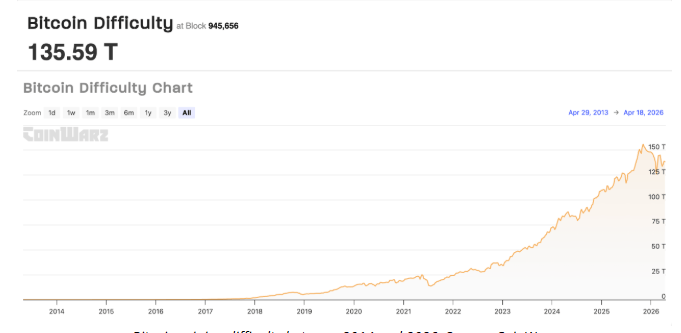
    Bitcoin mining difficulty recorded a modest decline on Saturday, falling to approximately 135.5 trillion (T), reflecting a decrease of about 1.1% within the past 24 hours. Mining difficulty measures how challenging it is for miners to add new blocks to the Bitcoin blockchain, and it adjusts periodically to maintain an average block time of about 10 minutes.

    Recent data shows the average block time is currently around 9.8 minutes, slightly below the network’s target. Despite the latest drop, projections indicate that mining difficulty is expected to rise again in the upcoming adjustment cycle.

    Bitcoin mining difficulty between 2014 and 2026.

    Next Difficulty Adjustment Projected for Early May

    The next difficulty adjustment is estimated to occur on May 1, 2026, at approximately 01:24 PM UTC. During this update, difficulty is forecast to increase from around 135.59T to nearly 137.43T, with roughly 1,865 blocks remaining before the recalibration takes place.

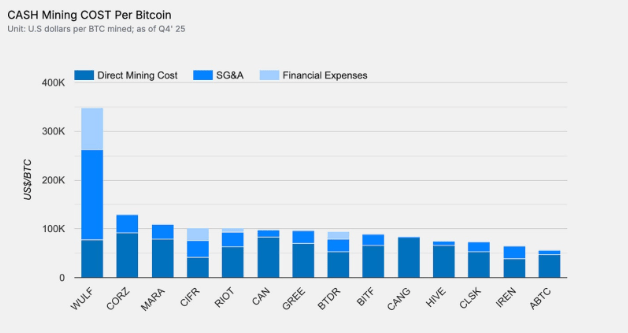
    The mining sector has been facing significant financial pressure due to rising energy costs, lower block rewards following earlier halving events, and fluctuating cryptocurrency prices. These factors have made mining operations increasingly expensive.

    Mining companies’ cost of mining a single BTC.: TheEnergyMag

    Public Mining Firms Sell Record Bitcoin Holdings

    Publicly traded mining companies sold record amounts of Bitcoin during the first quarter of 2026 to maintain operational stability. Major firms including MARA, CleanSpark, Riot, Cango, Core Scientific and Bitdeer collectively sold more than 32,000 BTC during the quarter, exceeding the combined total sold across all quarters of 2025.

    Reports suggest that as many as 20% of Bitcoin miners are currently operating at a loss, highlighting the growing economic challenges facing the global mining industry.

    Disclaimer

    This content is for informational purposes only and does not constitute financial, investment, or legal advice. Cryptocurrency trading involves risk and may result in financial loss.
  • Iran Considers Bitcoin Strategic Asset While USDt Dominates Oil Toll Payments

    Iran Considers Bitcoin Strategic Asset While USDt Dominates Oil Toll Payments

    Iran Adopts Bitcoin as Strategic Payment Option for Oil Transit

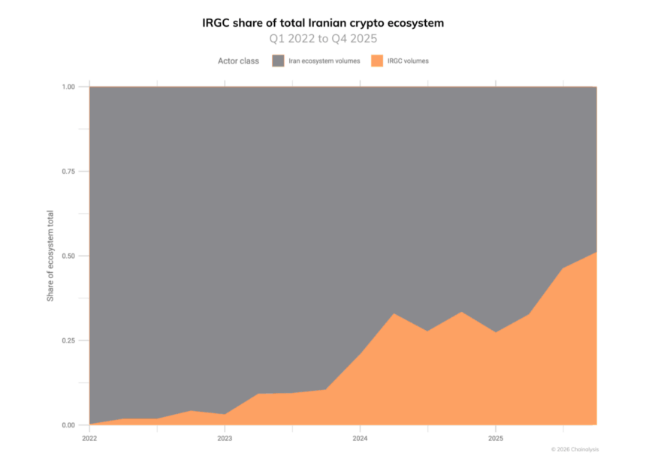
    Iran’s decision to include Bitcoin as a payment method for oil vessels passing through the Strait of Hormuz highlights its growing role as a strategic financial tool. According to Sam Lyman, head of research at the Bitcoin Policy Institute, the move reflects Bitcoin’s censorship-resistant nature and its ability to function without centralized control.

    Transactions carried out by the Iranian Revolutionary Guard Corps account for nearly half of the total crypto market volume in Iran.: BPI

    He explained that Bitcoin was selected because it cannot be easily frozen or blocked by foreign authorities, making it attractive for transactions exposed to sanctions pressure. Iran currently accepts toll payments in Chinese yuan, US dollar-pegged stablecoins and Bitcoin. However, there has been no confirmed onchain evidence showing that Bitcoin has yet been used for actual toll settlements.

    USDt Stablecoins Continue to Dominate Iran Crypto Transactions

    Despite Bitcoin’s strategic appeal, US dollar backed stablecoins, particularly USDt, remain the dominant digital payment method within Iran’s financial activity. Reports indicate that Iran has moved nearly $3 billion worth of cryptocurrency since 2022, with the majority conducted using stablecoins rather than Bitcoin.

    Authorities have managed to freeze approximately $600 million in crypto-linked assets during that period, leaving about $2.4 billion successfully transferred. Analysts suggest that stablecoins remain widely used despite potential wallet-freezing risks, as their liquidity and global acceptance make them practical for large-scale payments.

    Disclaimer

    This content is for informational purposes only and does not constitute financial, investment, or legal advice. Cryptocurrency trading involves risk and may result in financial loss.
  • $292 Million Kelp DAO Exploit Becomes Largest DeFi Hack of 2026

    $292 Million Kelp DAO Exploit Becomes Largest DeFi Hack of 2026

    Kelp DAO Bridge Attack Drains 116,500 rsETH Across 20 Chains

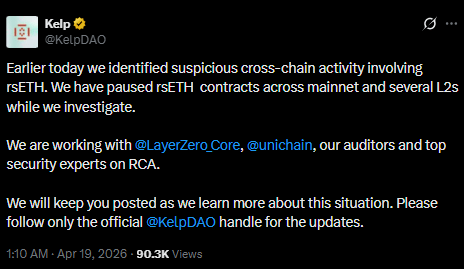
    A major security breach has struck the decentralized finance sector after an attacker drained 116,500 rsETH tokens, valued at roughly $292 million, from Kelp DAO’s cross-chain bridge. The stolen amount represents about 18% of the token’s circulating supply, making it the largest DeFi exploit recorded in 2026 so far.

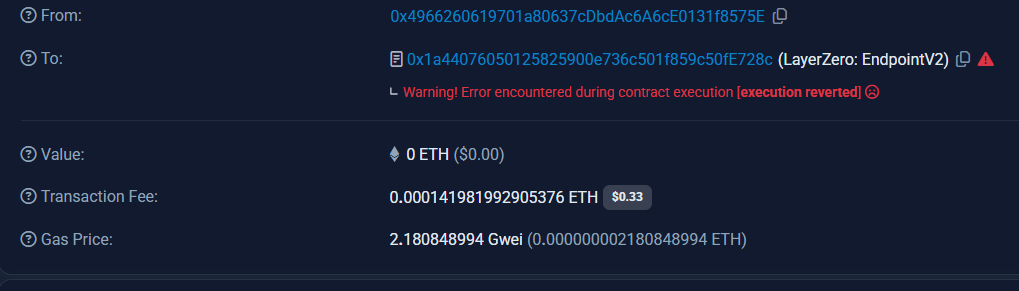
    The attack targeted a LayerZero powered bridge used to move rsETH across more than 20 blockchain networks. Investigators said the attacker manipulated the cross chain messaging system, making the bridge believe it had received a valid transaction request from another network. This triggered the release of funds to an address controlled by the attacker.

    Kelp DAO responded by freezing core contracts within 46 minutes of detecting the exploit, successfully blocking two additional attempts that aimed to withdraw another 40,000 rsETH.

    DeFi Platforms Freeze Markets as rsETH Backing Concerns Grow

    The incident triggered widespread defensive actions across major decentralized platforms. Lending protocols including Aave, SparkLend and Fluid suspended rsETH-related markets to limit exposure and prevent further losses. The freeze followed concerns that the drained bridge held reserves backing wrapped versions of rsETH on multiple layer-2 networks.

    Because those reserves supported tokens across chains such as Base, Arbitrum and Scroll, the loss raised uncertainty about whether wrapped assets remain fully backed. Market pressure increased as investors monitored redemption activity and liquidity risks.

    The exploit adds to a growing series of decentralized finance attacks in recent weeks, intensifying concerns about cross-chain bridge security and systemic risks across interconnected blockchain ecosystems.

    Disclaimer

    This content is for informational purposes only and does not constitute financial, investment, or legal advice. Cryptocurrency trading involves risk and may result in financial loss.

  • Ethereum Co-Founder Warns of AI Centralization Risks and Predicts Machine-Driven Crypto Economy

    Ethereum Co-Founder Warns of AI Centralization Risks and Predicts Machine-Driven Crypto Economy

    AI and Blockchain Convergence Driving Future Digital Economy

    Ethereum co-founder Joseph Lubin has warned that artificial intelligence and blockchain technology are rapidly merging, creating the foundation for a machine-driven global economy. He explained that autonomous and semi-autonomous digital agents will increasingly transact, coordinate and verify activities across decentralized networks, using blockchain systems as their financial infrastructure.

    Lubin noted that these advanced interfaces could allow users to interact with complex crypto platforms through simple instructions rather than technical processes. In this model, artificial intelligence acts as a bridge between users and blockchain protocols, simplifying operations such as payments, asset transfers and financial management.

    However, he cautioned that risks could grow if artificial intelligence systems remain concentrated in the hands of a few major technology companies. According to him, decentralized cryptographic networks will play a crucial role in maintaining transparency and ensuring that systems can independently verify transactions without centralized authority.

    MetaMask Development and Growth of Tokenization

    Lubin also highlighted the ongoing transformation of MetaMask into a user-controlled financial platform that functions like a personal banking system. He described it as evolving toward a “personal money operating system,” capable of managing digital assets and interacting with decentralized services through automated tools.

    He added that stablecoins are acting as an early step toward broader adoption of decentralized financial systems, although many still depend on centralized issuers. Tokenization of traditional assets is expected to expand as financial institutions increasingly adopt blockchain technology.

    Quantum Computing Risks Considered Manageable

    Addressing concerns about quantum computing, Lubin described the technology as a long-term challenge rather than an immediate threat. He said developers have been preparing protective upgrades for years, suggesting that future improvements will be integrated into Ethereum’s natural evolution as the ecosystem continues to expand.

    Disclaimer

    This content is for informational purposes only and does not constitute financial, investment, or legal advice. Cryptocurrency trading involves risk and may result in financial loss.