
Bitcoin has moved past 50.01% of its current halving cycle, according to network data from mempool.space, marking a key milestone in epoch 5 that began in April 2024 and runs toward the next halving expected on April 12, 2028. The block subsidy now stands at 3.125 BTC per block, with issuance averaging about 450 BTC per day as blocks are mined roughly every 10 minutes.
The Bitcoin network maintains stability through difficulty adjustments every 2,016 blocks, ensuring consistent issuance as supply trends toward the fixed 21 million cap. More than 20 million BTC have already been mined, leaving the final supply to be distributed over the next ~114 years.
Price performance has been more subdued this cycle, with Bitcoin up around 15% from $64,000 to nearly $75,000 since the April 2024 halving. It previously hit an all-time high near $126,000 in October 2025 before falling to about $60,000 in February 2026, according to Glassnode data.
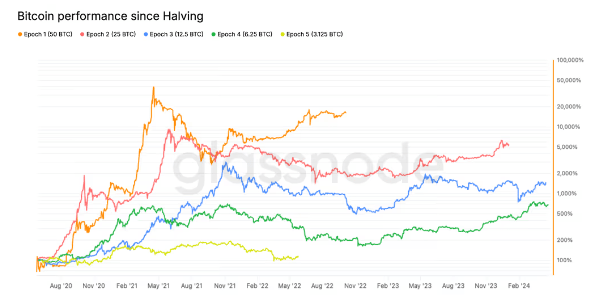
Analysts say diminishing returns reflect growing market maturity, higher adoption, and reduced volatility across cycles.
Disclaimer
This content is for informational purposes only and does not constitute financial, investment, or legal advice. Cryptocurrency trading involves risk and may result in financial loss.
Leave a Reply