Category: Bitcoin news

  • Bitcoin Market Cap Surges $327 Billion as Odds of $60K Drop Fade

    Bitcoin Market Cap Surges $327 Billion as Odds of $60K Drop Fade

    Bitcoin has added roughly $327 billion in market capitalization since its February 5 bottom, signaling renewed investor confidence and strengthening price stability above key support levels. Market data shows that expectations of a decline to $60,000 in April have sharply dropped, with prediction market odds shifting to 100% in favor of Bitcoin staying above that level, compared with just 20% a week earlier.
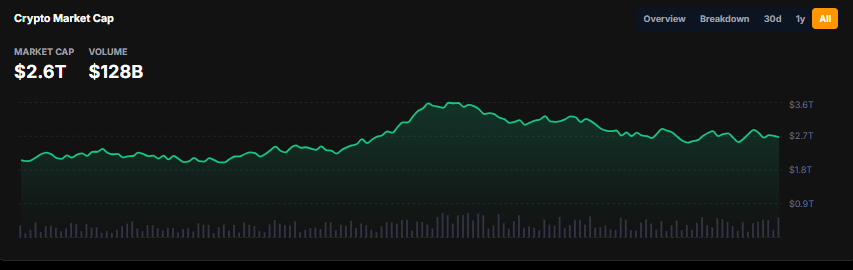
    Total Mcap

    Bitcoin Prediction Markets Show Strong Support Above $60K

    Activity across prediction markets suggests traders are overwhelmingly confident in Bitcoin’s short-term strength. Contracts forecasting Bitcoin to remain above $68,000 on April 16 are priced at 99.9% probability, while forecasts for Bitcoin holding above $60,000 on April 19 stand at 99.8%.
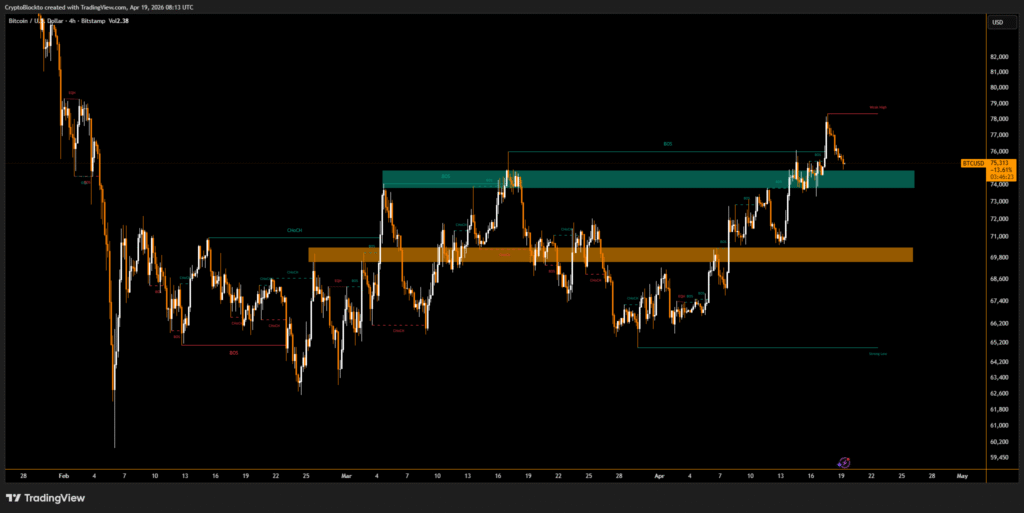
    $BTC price action since Feb 2026

    Trading activity remains steady, with about $390,585 in USDC volume recorded over the past 24 hours. The April 16 contract alone accounted for $301,452 of that volume, indicating concentrated trader interest in near-term price levels. Analysts note that at current liquidity levels, it would require substantial capital inflows or outflows to significantly shift market expectations.

    Geopolitical Tensions and Policy Signals Influence Bitcoin Outlook

    The recovery has unfolded alongside ongoing tensions between the United States and Iran, rather than during a stable macroeconomic environment. This timing has led analysts to suggest that a support range around $65,000 to $66,000 may be forming, reflecting resilient market demand.
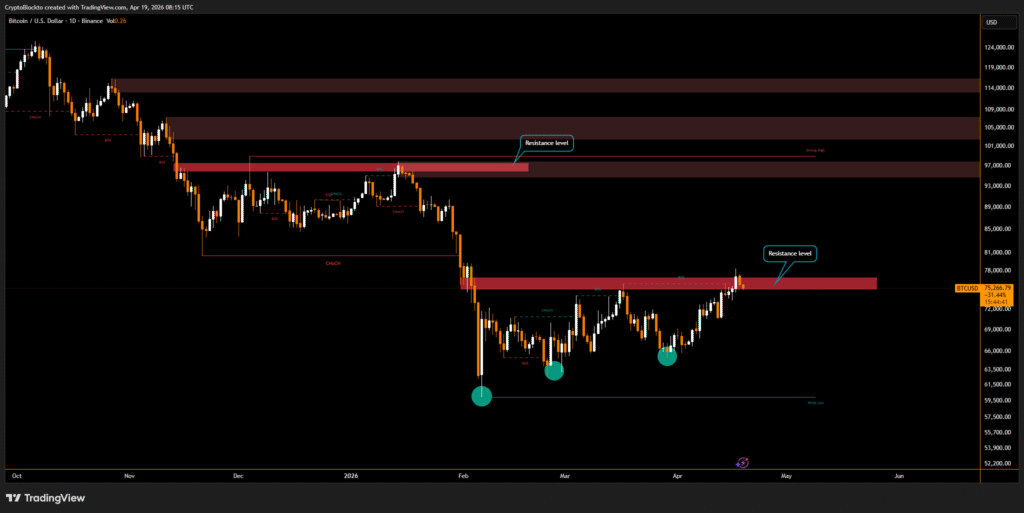
    $BTC daily price chart

    However, geopolitical developments remain a key risk factor. Traders are closely monitoring ceasefire negotiations between Washington and Tehran, as renewed escalation could trigger broader risk-off sentiment across global markets.

    https://cms.blockto.io/trump-sets-april-22-deadline-for-iran-deal-warns-bombing-could-resume/

    In addition, statements from major financial leaders such as Larry Fink, chief executive of BlackRock, and Federal Reserve Chair Jerome Powell are expected to influence market positioning in the coming weeks, particularly regarding interest rates and liquidity conditions.

    Disclaimer

    This content is for informational purposes only and does not constitute financial, investment, or legal advice. Cryptocurrency trading involves risk and may result in financial loss.

  • Coinbase Premium Hits 7-Month High as Institutional Demand Drives Bitcoin Buying

    Coinbase Premium Hits 7-Month High as Institutional Demand Drives Bitcoin Buying

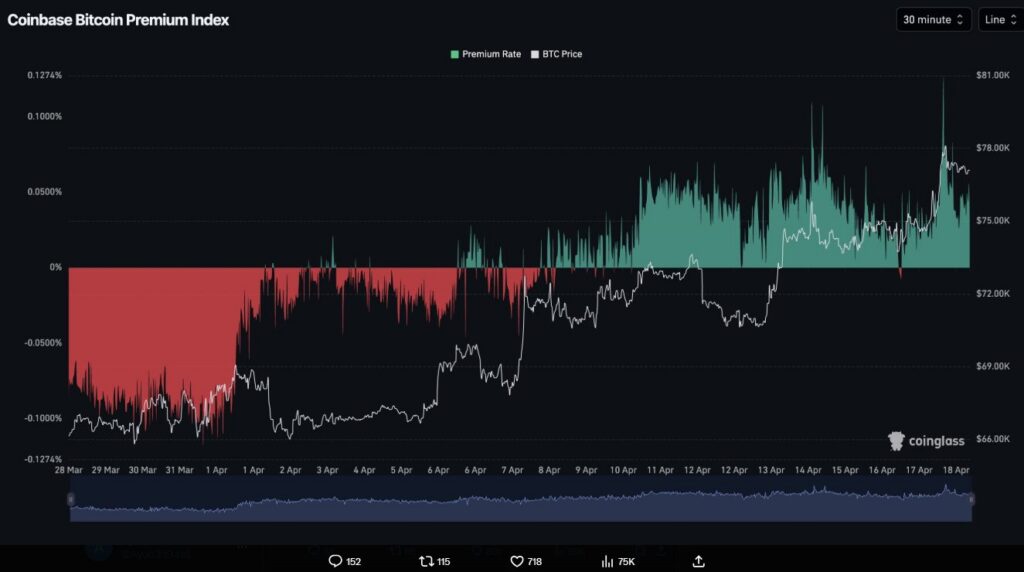
    Coinbase Premium Signals Rising Institutional Bitcoin Accumulation

    Bitcoin showed renewed strength after the Coinbase Premium index surged to its highest level in seven months, reaching the equivalent of $81,000 per BTC at its peak. The premium reflects the difference between Bitcoin prices on Coinbase and those on global exchanges, and a widening gap typically signals strong demand from United States-based investors, particularly large institutions.

    Coinbase Premium index

    Market observers often treat Coinbase as a primary entry point for institutional capital. When Bitcoin trades at higher prices on this platform compared to international markets, it suggests that institutional buyers are accumulating assets aggressively. The latest spike indicates a return of large-scale investment activity following weeks of mixed market sentiment.

    Bitcoin Price Volatility Follows Geopolitical Developments

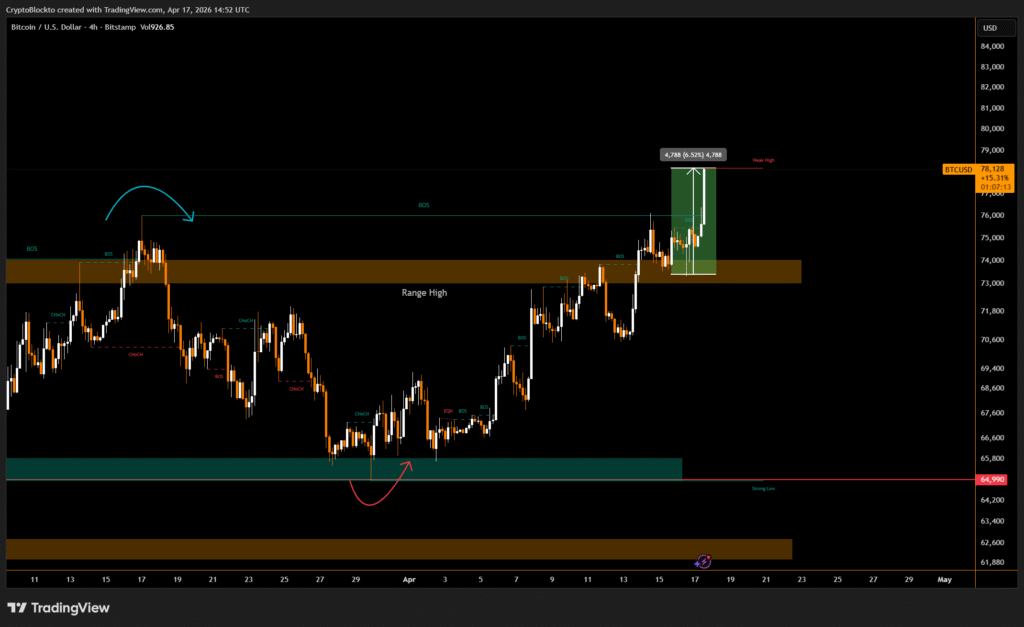
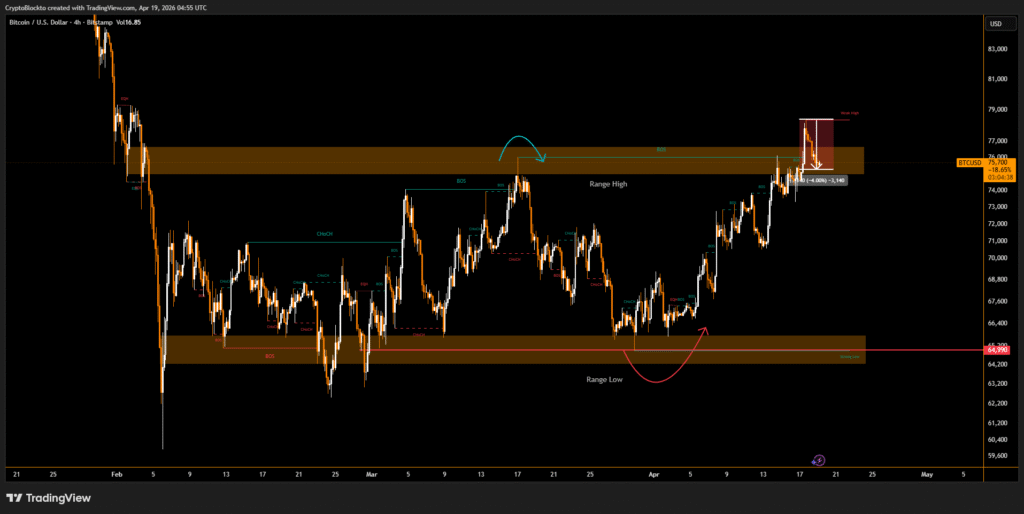
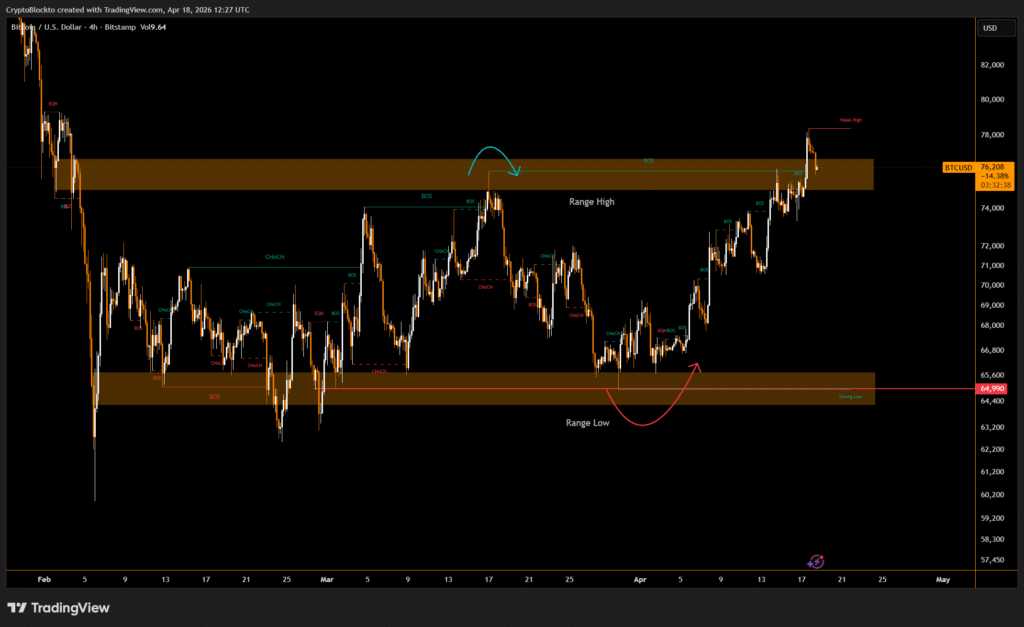
    Bitcoin briefly climbed to around $78,000 on Friday following positive news related to easing geopolitical tensions and declining oil prices. However, the rally lost momentum, with Bitcoin laterat the time of writting trading near the $75,800 to $76,000 range as market sentiment stabilized.

    $BTC 4h price chart

    Despite the pullback, the rising Coinbase Premium suggests that underlying demand remains strong. If institutional accumulation continues at current levels, analysts believe it could mark the early phase of a broader upward trend, especially as Bitcoin continues testing key resistance zones near recent highs.

    Disclaimer

    This content is for informational purposes only and does not constitute financial, investment, or legal advice. Cryptocurrency trading involves risk and may result in financial loss.
  • Bitcoin Mining Difficulty Drops Slightly as Next Increase Expected in May 2026

    Bitcoin Mining Difficulty Drops Slightly as Next Increase Expected in May 2026

    Bitcoin Mining Difficulty Falls to 135.5T Amid Industry Pressure

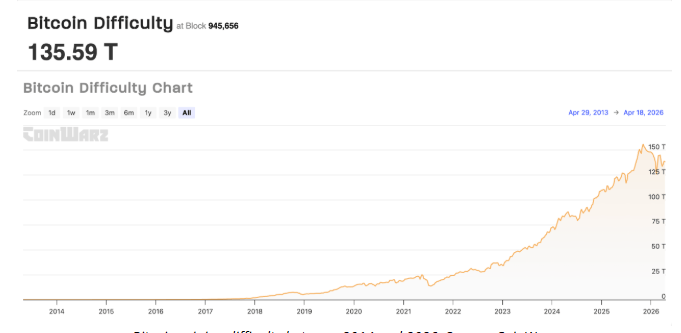
    Bitcoin mining difficulty recorded a modest decline on Saturday, falling to approximately 135.5 trillion (T), reflecting a decrease of about 1.1% within the past 24 hours. Mining difficulty measures how challenging it is for miners to add new blocks to the Bitcoin blockchain, and it adjusts periodically to maintain an average block time of about 10 minutes.

    Recent data shows the average block time is currently around 9.8 minutes, slightly below the network’s target. Despite the latest drop, projections indicate that mining difficulty is expected to rise again in the upcoming adjustment cycle.

    Bitcoin mining difficulty between 2014 and 2026.

    Next Difficulty Adjustment Projected for Early May

    The next difficulty adjustment is estimated to occur on May 1, 2026, at approximately 01:24 PM UTC. During this update, difficulty is forecast to increase from around 135.59T to nearly 137.43T, with roughly 1,865 blocks remaining before the recalibration takes place.

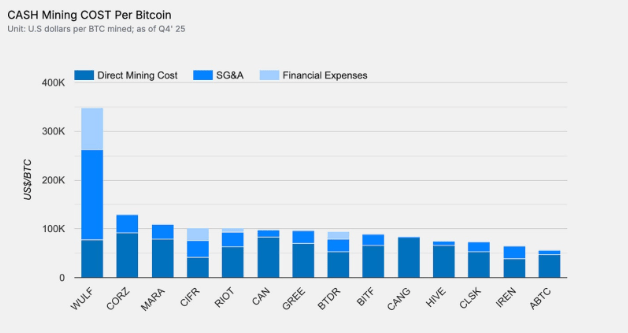
    The mining sector has been facing significant financial pressure due to rising energy costs, lower block rewards following earlier halving events, and fluctuating cryptocurrency prices. These factors have made mining operations increasingly expensive.

    Mining companies’ cost of mining a single BTC.: TheEnergyMag

    Public Mining Firms Sell Record Bitcoin Holdings

    Publicly traded mining companies sold record amounts of Bitcoin during the first quarter of 2026 to maintain operational stability. Major firms including MARA, CleanSpark, Riot, Cango, Core Scientific and Bitdeer collectively sold more than 32,000 BTC during the quarter, exceeding the combined total sold across all quarters of 2025.

    Reports suggest that as many as 20% of Bitcoin miners are currently operating at a loss, highlighting the growing economic challenges facing the global mining industry.

    Disclaimer

    This content is for informational purposes only and does not constitute financial, investment, or legal advice. Cryptocurrency trading involves risk and may result in financial loss.

  • Bitcoin Falls Back to $75,000 After Iran Closes Strait of Hormuz Again

    Bitcoin Falls Back to $75,000 After Iran Closes Strait of Hormuz Again

    Bitcoin Price Volatility Amid Hormuz Closure

    Bitcoin experienced sharp volatility, slipping back toward the $75,000–$76,000 range after briefly surging above $78,000 when markets reacted to reports that Iran had reopened the Strait of Hormuz. The rally was initially driven by geopolitical optimism following claims of reduced tensions, including remarks from Donald Trump suggesting Iran had agreed to an “unlimited” suspension of its nuclear program, although Tehran did not confirm the statement.

    $BTC 4h price chart

    The sudden upside move triggered a major short squeeze across crypto markets, leading to approximately $762 million in liquidations within hours. Short positions accounted for nearly $593 million of the total, with bitcoin contributing around $381 million and ether about $167 million. Funding rates had remained negative for weeks, showing traders were heavily positioned against price increases. Oil markets also reacted sharply, dropping nearly 10% to around $85.90 per barrel before sentiment reversed. Later in the day, bitcoin eased back to about $76,091 as reports emerged that Iran had again restricted maritime traffic in the Strait of Hormuz, with tanker communications indicating a renewed closure and vessels turning back amid security concerns.

    Mass Liquidations and Market Resistance Levels

    The liquidation wave marked one of the largest short-driven events of 2026, with bearish positions outnumbering longs by nearly four to one. Market analysts are closely watching the $76,000–$78,000 range as a critical resistance zone that has repeatedly capped upward momentum since earlier corrections. A sustained breakout above this level could open a potential path toward the yearly open near $94,000 and the previous all-time high near $126,000. However, continued geopolitical uncertainty surrounding the Strait of Hormuz and fluctuating oil dynamics is keeping traders cautious, reinforcing volatility across both crypto and traditional energy-linked markets.

    Disclaimer

    This content is for informational purposes only and does not constitute financial, investment, or legal advice. Cryptocurrency trading involves risk and may result in financial loss.
  • BlackRock Bitcoin ETF Inflows Hit $1.34B as Institutional Demand Accelerates

    BlackRock Bitcoin ETF Inflows Hit $1.34B as Institutional Demand Accelerates

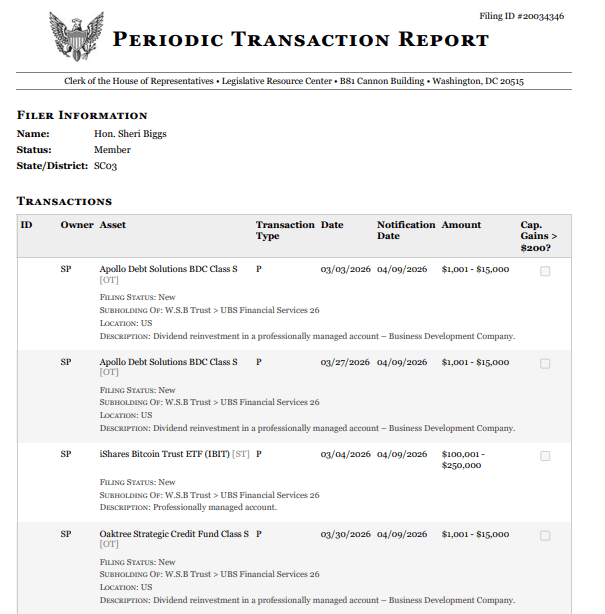
    BlackRock’s spot Bitcoin ETF, the iShares Bitcoin Trust (IBIT), has recorded around $284 million in additional Bitcoin linked inflows, bringing total accumulation to approximately $1.34 billion over just eight days. The sustained buying trend highlights strong institutional participation as Bitcoin continues its recovery toward the $78,000 level.

    transaction report fillings

    ETF Flows Strengthen Bitcoin Market Momentum

    Market data shows Bitcoin traded near $68,000 on March 4 before moving above $72,000 the same day, extending a broader rebound supported by improving sentiment and ETF inflows. Analysts point to IBIT as a major driver of liquidity, with its structure directly tracking Bitcoin’s spot price and attracting both institutional and managed-account exposure. The consistent inflows are seen as a stabilizing force during volatile trading sessions.

    Separately, U.S. Representative Sheri Biggs disclosed a purchase of up to $250,000 in IBIT through a UBS-managed account under the W.S.B Trust. The trade, executed on March 4 and reported on April 16, falls within the STOCK Act’s 45-day reporting window and is described as professionally managed. No allegations of wrongdoing have been made.

    Bitcoin is trading near $77,000 on April 17 after a ceasefire in the Strait of Hormuz.

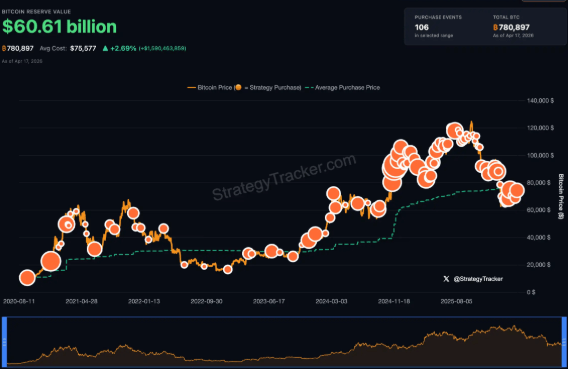
    Strategy’s bitcoin reserve flips back into profits

    With Bitcoin approaching recent highs, continued ETF inflows are being closely watched as a key indicator of whether institutional demand can sustain the current rally or if momentum will cool under profit-taking pressure.

    Disclaimer

    This content is for informational purposes only and does not constitute financial, investment, or legal advice. Cryptocurrency trading involves risk and may result in financial loss.
  • Spot Bitcoin ETFs Record Nearly $1 Billion Weekly Inflows as Market Risk Sentiment Improves

    Spot Bitcoin ETFs Record Nearly $1 Billion Weekly Inflows as Market Risk Sentiment Improves

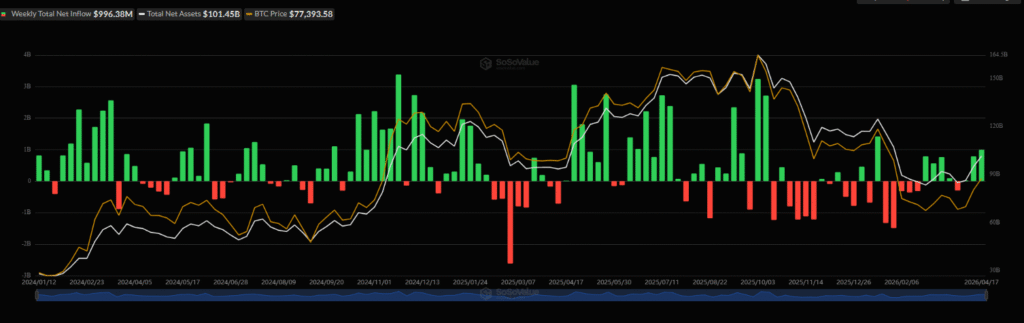
    Spot Bitcoin exchange-traded funds (ETFs) attracted nearly $1 billion in net inflows over the past week, marking their strongest weekly performance in more than three months. Data from SoSoValue showed total inflows reaching $996 million, the highest level since early January, when weekly inflows climbed to about $1.4 billion.

    Spot Bitcoin ETFs see almost$1 billion in weekly gains

    Daily flows reflected strong midweek demand. Friday led the surge with $663.9 million in inflows, followed by $411.5 million on Tuesday and $186 million on Wednesday. Thursday recorded a smaller $26 million gain, while the week began with a $291 million outflow on Monday.

    Total net assets across spot Bitcoin ETFs surpassed $101 billion by the end of the week, supported by rising investor participation. Trading activity also increased significantly, with daily ETF volumes approaching $4.8 billion, indicating renewed interest in risk-oriented assets.

    Improving Geopolitical Sentiment Supports Crypto Demand

    Market analysts noted that improving geopolitical conditions have contributed to shifting investor sentiment. Reduced tensions surrounding Strait of Hormuz helped stabilize global markets after officials confirmed the route had reopened to commercial shipping during an ongoing ceasefire period.

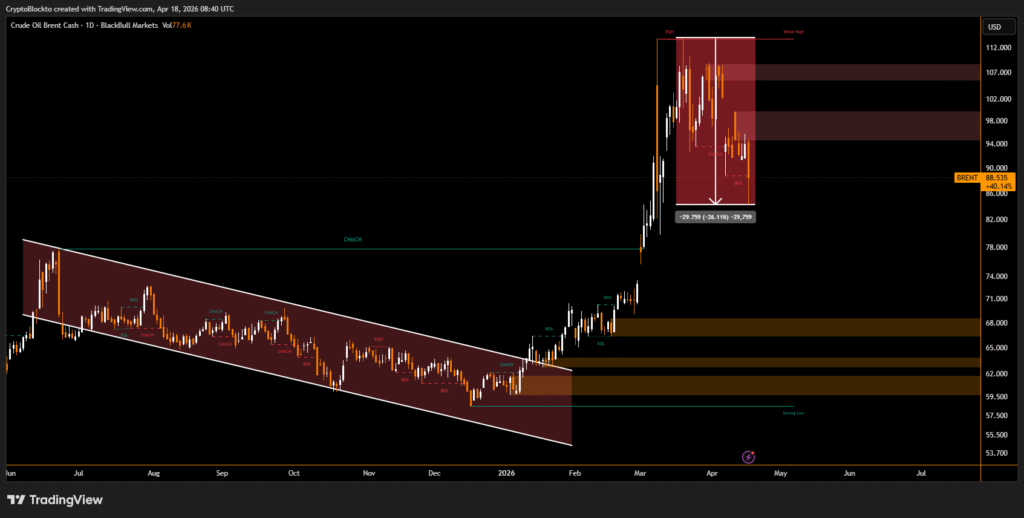
    The easing of supply disruption fears triggered reactions across financial markets. Bitcoin climbed above $77,000, while Brent crude prices declined roughly 10%, falling to around $84 per barrel.

    Brent crude daily price chart

    Bitcoin Market Structure Remains Range-Bound

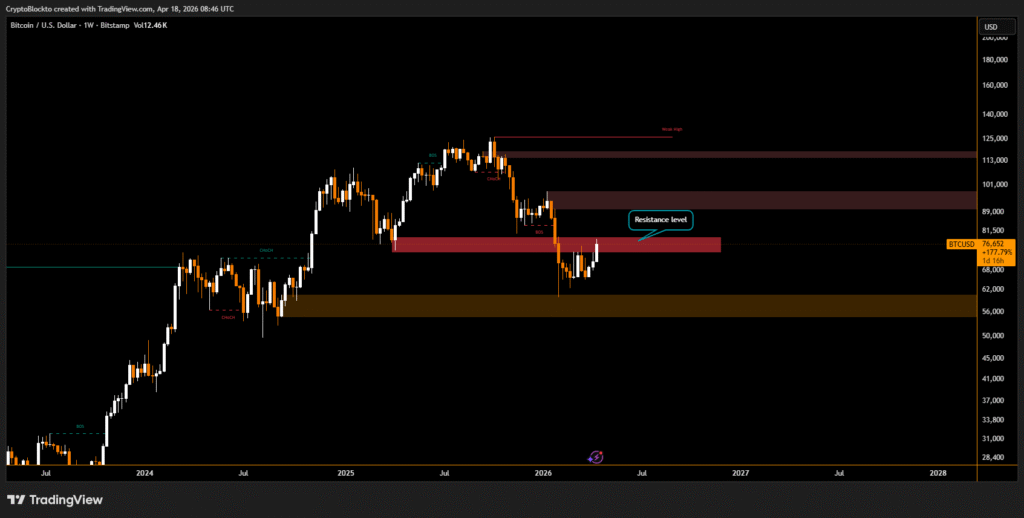
    Despite rising inflows, analysts observed that Bitcoin continues to trade within a defined range. Resistance remains above $75,000, while support has formed near $72,000, suggesting the market is building a new equilibrium rather than extending a strong directional trend.

    $BTC weekly price chart

    At the same time, cautious monetary policy expectations from the Federal Reserve and ongoing concerns about long-term U.S. debt demand have weakened confidence in traditional safe-haven assets such as the U.S. dollar. This environment has encouraged additional capital flows into alternative assets, including Bitcoin and related investment products.

    Disclaimer

    This content is for informational purposes only and does not constitute financial, investment, or legal advice. Cryptocurrency trading involves risk and may result in financial loss.

  • Strategy Proposes Semi-Monthly Dividends for STRC Preferred Stock

    Strategy Proposes Semi-Monthly Dividends for STRC Preferred Stock

    Dividend Schedule Change Aims to Improve Liquidity and Price Stability

    Strategy Inc. has proposed a change to the dividend payment structure for its preferred stock STRC, seeking shareholder approval to shift payouts from once per month to twice per month. The company stated that moving to a semi-monthly payment model could reduce reinvestment delays while improving liquidity, market efficiency and price stability.

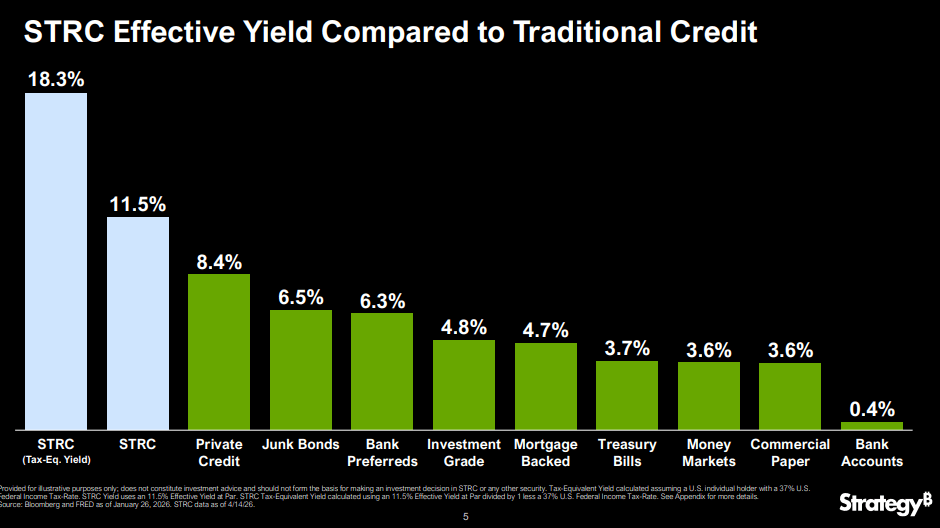
    STRC is structured as a perpetual preferred stock designed to trade close to a $100 par value while delivering a variable cash dividend. The current dividend yield is set at an annualized rate of 11.5%, with adjustments made monthly to encourage stable pricing and minimize volatility. If approved, the new payment structure would mark a notable shift in how dividend income is distributed to investors.

    Shareholder Vote Scheduled as Preferred Stock Demand Grows

    The proposal will be finalized through a shareholder vote during the company’s annual meeting scheduled for June 8. If approved, the first record date under the semi-monthly system would occur on June 30, with the initial payment expected on July 15.

    STRC is part of a broader lineup of preferred stocks issued by Strategy, including STRF, STRE, STRK and STRD. These instruments rank above the company’s common stock, MSTR, and have collectively helped raise billions of dollars to support ongoing Bitcoin acquisition efforts.

    STRC Effective Yield Compared to Traditional Credit

    Unlike STRC, the company’s other preferred shares offer fixed dividend rates. Earlier this week, STRC recorded a $1.1 billion trading day, representing nearly a 50% increase from its previous record level. Following its latest purchases, Strategy now holds approximately 780,897 BTC, reinforcing its position as one of the largest corporate holders of Bitcoin.

    Disclaimer

    This content is for informational purposes only and does not constitute financial, investment, or legal advice. Cryptocurrency trading involves risk and may result in financial loss.
  • Polymarket Odds Surge to 74% for Hormuz Strait Traffic Normalization by End of May

    Polymarket Odds Surge to 74% for Hormuz Strait Traffic Normalization by End of May

    Strait of Hormuz Reopening Drives Prediction Market Confidence

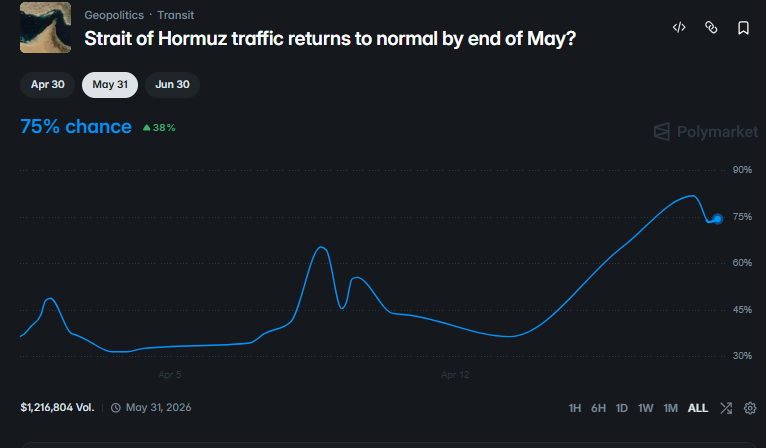
    Trading activity on the prediction platform Polymarket shows growing confidence that shipping activity through the Strait of Hormuz will return to normal by the end of May 2026. Market participants pushed the probability of normalization to 74%, after briefly reaching a high of 82% following confirmation that the waterway had reopened during a ceasefire period.

    The increase in confidence followed statements from Seyed Abbas Araghchi, who announced that commercial vessel traffic through the Strait had been declared fully open for the duration of the ceasefire. According to the announcement, ships are permitted to travel along coordinated maritime routes approved by Iran’s Ports and Maritime Organization.

    Despite improving expectations for May, traders placed the likelihood of full normalization by the end of April at just 40%, reflecting continued uncertainty in the near term.

    Bitcoin Gains as Ceasefire Eases Market Fears While Oil Remains Sensitive

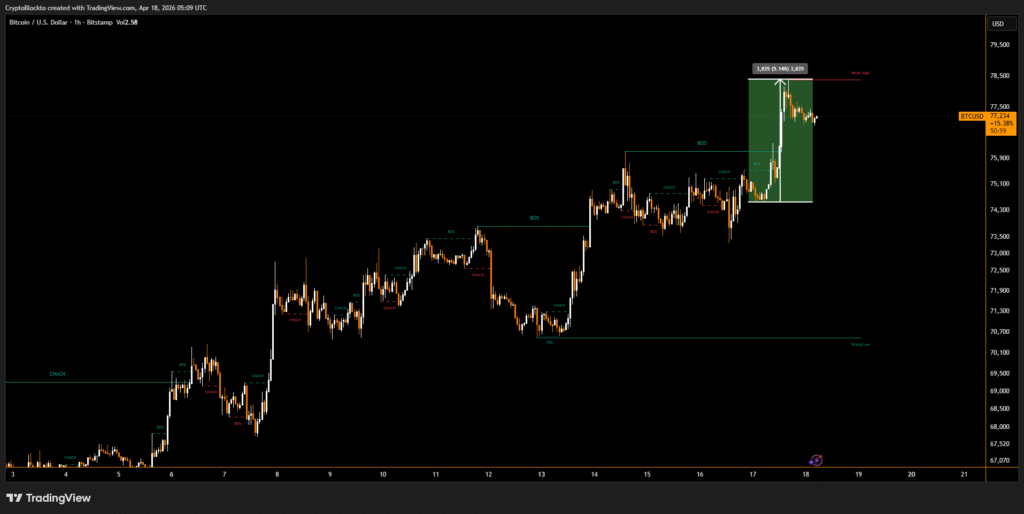
    The reopening news triggered reactions across financial markets. The price of Bitcoin climbed sharply, briefly reaching $78,000 before stabilizing near $77,358 at the time of reporting. Analysts noted that geopolitical developments linked to Iran significantly influenced both digital assets and energy markets.

    Bitcoin surged after Iranian officials announced that the Strait of Hormuz would remain open during the ceasefire

    Market analyst Nic Puckrin described the ceasefire as “fragile,” warning that unresolved tensions could continue to affect investor sentiment throughout 2026. He added that sustained stability, softer economic data, and declining oil prices toward $80 per barrel would likely be required for Bitcoin to reclaim the $90,000 level.

    Meanwhile, Donald Trump stated that the U.S. naval blockade on Iran would remain in place until related negotiations are fully completed, signaling that geopolitical risks and pressure on oil markets—may persist.

    Disclaimer

    This content is for informational purposes only and does not constitute financial, investment, or legal advice. Cryptocurrency trading involves risk and may result in financial loss.

  • Quantum Computing Threat to Bitcoin: How a Future Attack Could Steal Funds in Minutes

    Quantum Computing Threat to Bitcoin: How a Future Attack Could Steal Funds in Minutes

    Bitcoin Security Relies on Elliptic Curve Cryptography

    The security of Bitcoin depends on a cryptographic method known as Elliptic Curve Cryptography. Each Bitcoin wallet uses a private key a secret 256-bit number to generate a public key using a mathematical curve called secp256k1.

    This system functions as a one-way mathematical process. While generating a public key from a private key is fast, reversing the process using classical computers is considered practically impossible. The difficulty of solving the elliptic curve discrete logarithm problem means that traditional machines would require more time than the age of the universe to determine a private key from a public key.

    Shor’s Algorithm Presents a Breakthrough Risk

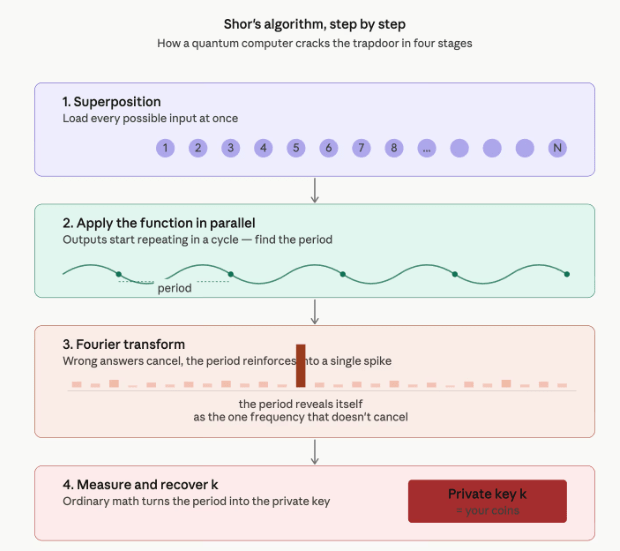
    In 1994, mathematician Peter Shor introduced Shor’s Algorithm, a method capable of solving the discrete logarithm problem efficiently using quantum computing. Unlike classical systems, quantum computers use superposition, entanglement and interference to analyze many possible values simultaneously.

    By identifying repeating mathematical patterns within elliptic curve operations, Shor’s Algorithm can determine the private key associated with a public key. Once recovered, the attacker could control the corresponding wallet and transfer funds without authorization.

    Google Research Suggests a Nine-Minute Attack Window

    A recent study from Google’s Quantum AI division, with contributions from researchers including Justin Drake and Dan Boneh, proposed a realistic attack model targeting Bitcoin encryption.

    The research reduced previous hardware estimates from millions of qubits to fewer than 500,000 physical qubits, using around 1,200 to 1,450 logical qubits and tens of millions of Toffoli gates. The study also showed that much of the required computation could be completed in advance, allowing the final stage to finish in about nine minutes once a public key becomes visible.

    Exposure Risk and Long-Term Implications

    Bitcoin transactions typically confirm in roughly 10 minutes, creating a narrow window where attackers could attempt to intercept funds during broadcast. Researchers estimate attackers could have about a 41% chance of completing the calculation before confirmation.

    A larger concern involves approximately 6.9 million bitcoin, nearly one-third of total supply, stored in wallets where public keys are already visible. These holdings could be targeted without time pressure if sufficiently advanced quantum hardware becomes available.

    While such machines do not yet exist, the research highlights the growing importance of quantum-resistant cryptographic upgrades to secure long-term blockchain infrastructure.

    Disclaimer

    This content is for informational purposes only and does not constitute financial, investment, or legal advice. Cryptocurrency trading involves risk and may result in financial loss.
  • Bitcoin Breakout Above $78K Pushes Strategy Back Into Profit as Momentum Strengthens

    Bitcoin Breakout Above $78K Pushes Strategy Back Into Profit as Momentum Strengthens

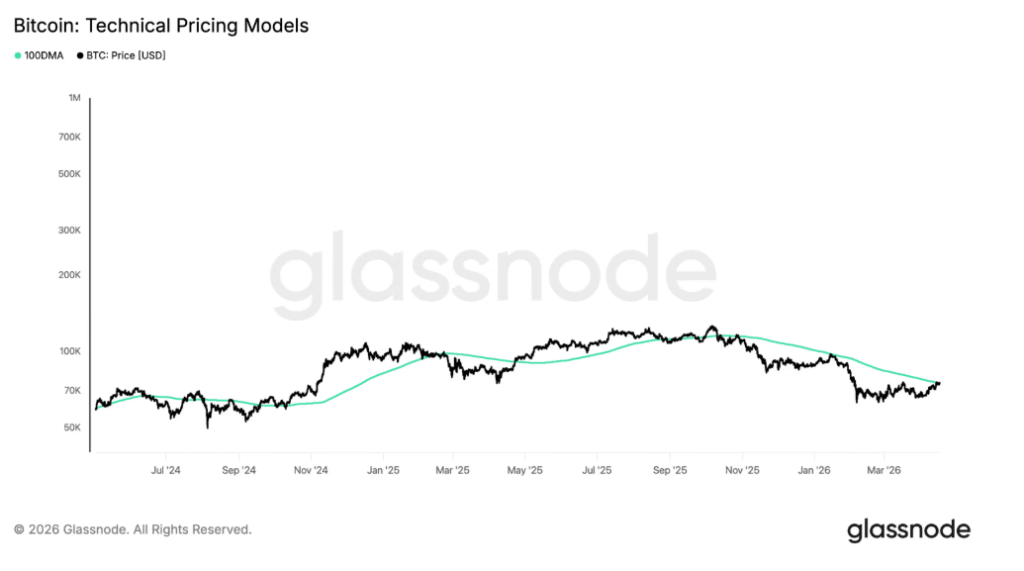
    Bitcoin climbed decisively above the $78,000 level, marking its first clear breakout since the sharp market decline on Feb. 5 that drove prices down to nearly $60,000. BTC also moved firmly above its 100-day moving average of $74,774, a technical milestone widely viewed by traders as confirmation of renewed bullish momentum.

    $BTC 4h price chart

    Since bottoming in early February, Bitcoin has rallied more than 25%, reversing earlier weakness that followed repeated failures to hold gains above the mid-$76,000 range. Earlier attempts to reclaim higher levels stalled at $76,700 on Feb. 4 and again at $76,013 on March 17, making the current move above $76,300 a more significant technical breakout.

    Strategy Returns to Profit as Stock Surges

    The rally has had direct implications for Strategy, the largest publicly traded corporate holder of Bitcoin. Shares of the company rose about 8%, while its Bitcoin holdings moved back into profit territory. The firm’s average Bitcoin purchase price stands at $75,577, meaning current market levels now exceed its cost basis.

    Strategy also moved above its 200-week moving average, a long-term trend indicator covering roughly four years of price activity. This marks the first time the company has reclaimed this level since February, suggesting strengthening long-term sentiment toward both Bitcoin and crypto-linked equities.

    Disclaimer

    This content is for informational purposes only and does not constitute financial, investment, or legal advice. Cryptocurrency trading involves risk and may result in financial loss.