Category: Bitcoin news

  • Bitcoin ETFs Record $1.3 Billion March Inflows, First Gain of 2026

    Bitcoin ETFs Record $1.3 Billion March Inflows, First Gain of 2026

    US spot Bitcoin ETFs posted $1.32 billion in inflows in March 2026, marking the category’s first monthly gain of the year and the first since October 2025, according to SoSoValue. Despite this rebound, the sector ended Q1 with roughly $500 million in net outflows, as January and February redemptions totaled $1.61 billion and $207 million, respectively.
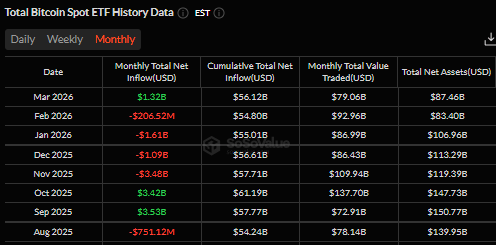
    Monthly spot Bitcoin ETF flows since Aug 2025

    Market Sentiment and Trading Volumes

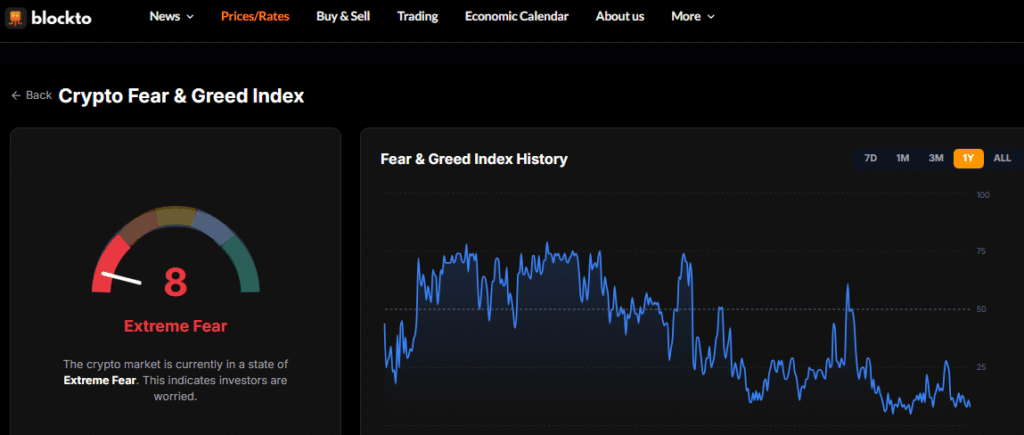
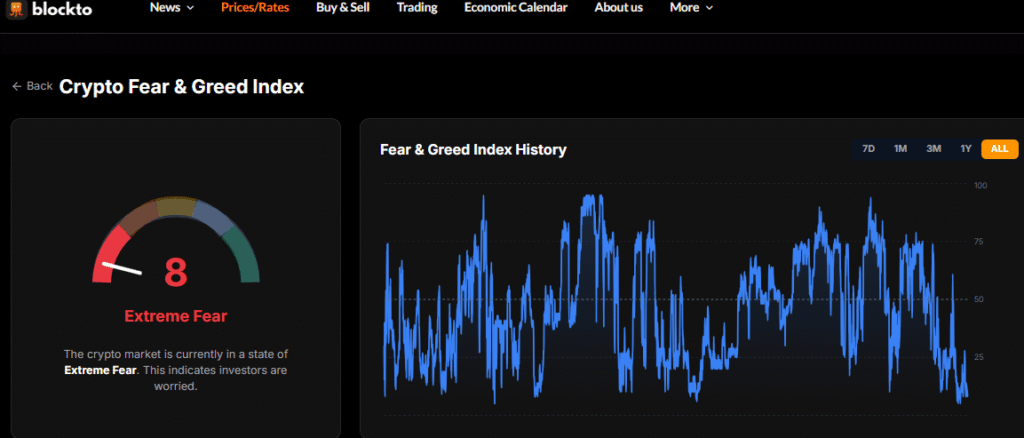
    Bitcoin (BTC) declined more than 22% in Q1, following a 23% drop in Q4 2025. Investor caution persisted, with the Crypto Fear & Greed Index largely below 20, signaling “Extreme Fear.” March inflows came amid geopolitical tensions in the Middle East, reflecting some resilience in crypto investment products. Monthly trading volumes in Bitcoin ETFs fell to $79 billion, compared with $93 billion in February and $87 billion in January.
    Other Spot Crypto ETFs

    Spot Ether (ETH) ETFs posted $46 million in net outflows for March, resulting in quarterly losses of $769 million. XRP ETFs saw $31 million in March outflows but ended the quarter with net positive flows of $43 million. Solana (SOL) ETFs maintained momentum, recording $213 million in cumulative inflows with no outflows since their October 2025 launch.
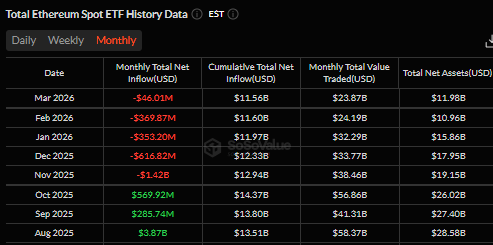
    Monthly spot Ether ETF flows since Aug 2025.

    Cumulative inflows across all spot crypto ETFs reached $56 billion, with total assets under management of approximately $87.5 billion at the end of Q1 2026.

    Disclaimer

    This content is for informational purposes only and does not constitute financial, investment, or legal advice. Cryptocurrency trading involves risk and may result in financial loss.

  • Bitcoin Eyes Potential Upside as Trump Sets Timeline to End Iran War

    Bitcoin Eyes Potential Upside as Trump Sets Timeline to End Iran War

    Global markets moved sharply higher after U.S. President Donald Trump said he expects the Iran war to end within two to three weeks and promised an “important update” in a national address scheduled for Wednesday at 9 p.m. Eastern. The announcement triggered strong gains across equities and commodities, with Asian stocks rising 4% and S&P 500 futures jumping notably.

    The MSCI Asia Pacific Index recorded its strongest session since the conflict began, while Asian technology shares climbed 6.5%, led by major chipmakers posting gains above 9%. Oil markets also reacted, with Brent crude rebounding above $105 after reports that the United Arab Emirates may assist the U.S. and allies in reopening the Strait of Hormuz, potentially becoming the first Gulf state to enter the conflict directly.

    Meanwhile, Iranian President Masoud Pezeshkian indicated that Iran has the willingness to end the war but expects guarantees against future aggression.

    Bitcoin and Crypto Markets Show Moderate Gains

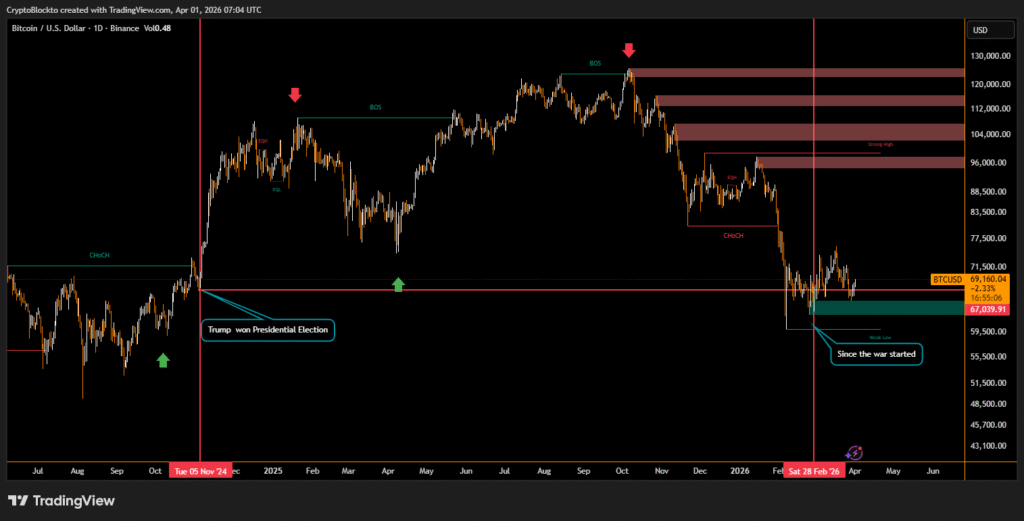
    Bitcoin traded near $68,150, rising about 0.3% over 24 hours, while other cryptocurrencies posted modest increases. Ether gained 1.6% to $2,100, XRP rose 0.5% to $1.34.

    $BTC daily price chart

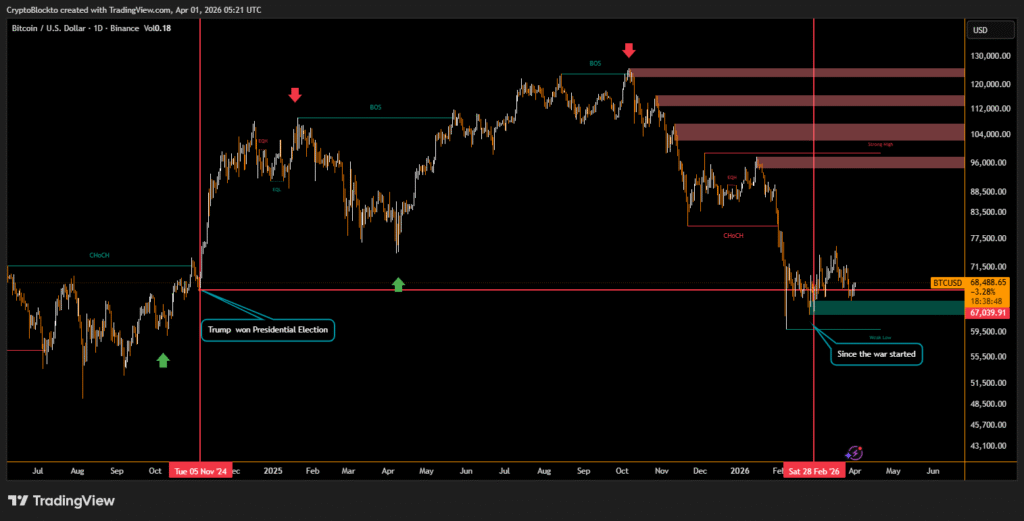
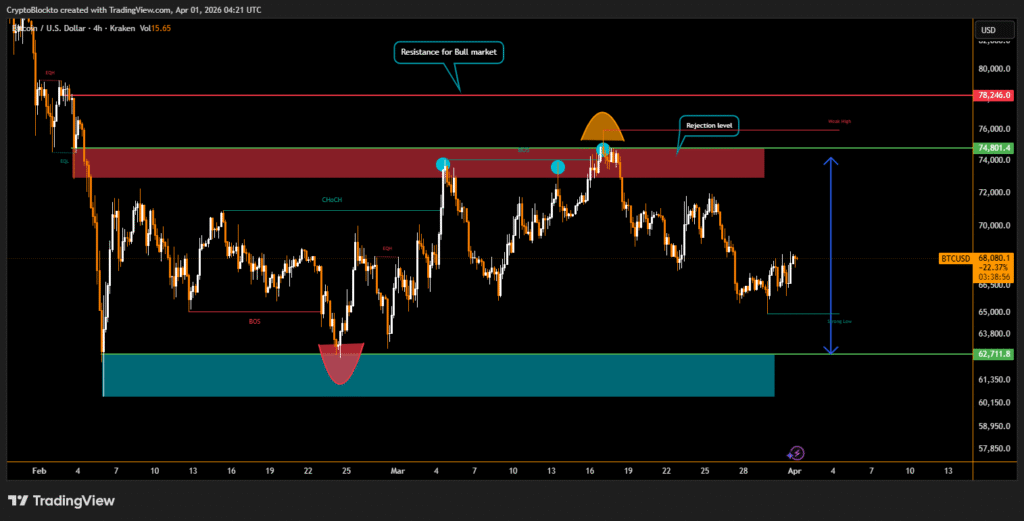
    Despite the rally in traditional markets, Bitcoin has remained relatively stable, trading within a $65,000 to $73,000 range throughout the conflict. This reduced volatility compared with equities highlights a divergence between digital assets and traditional financial markets.

    New Bitcoin ETF and Market Catalysts Point to Stronger Second Quarter

    Beyond geopolitical optimism, new financial developments could provide additional momentum. Morgan Stanley recently received approval for a bitcoin exchange-traded fund (ETF) charging 14 basis points, significantly below the category average. The product opens potential exposure to the firm’s 16,000 financial advisors, who collectively manage about $6.2 trillion in client assets.

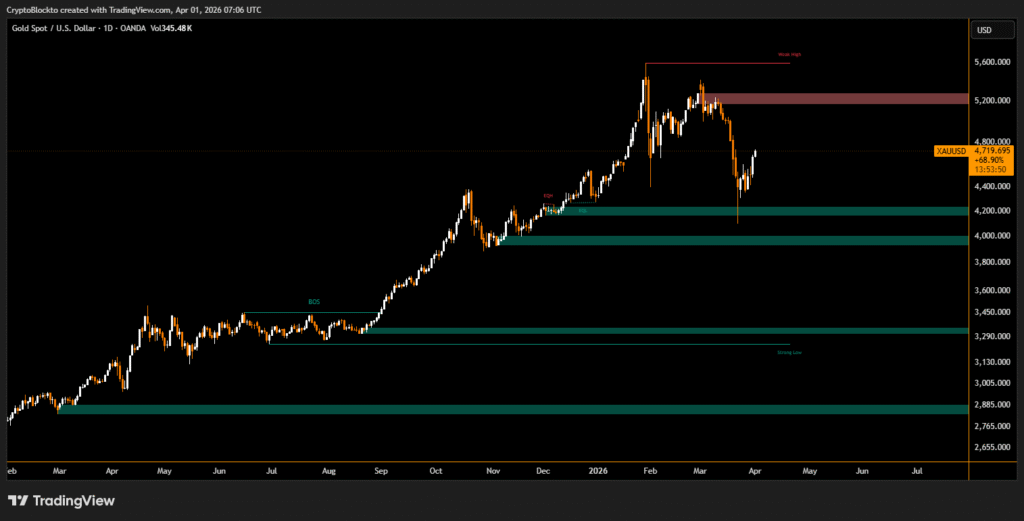
    Gold also continued to move higher, approaching $4,700, although the metal recorded a nearly 12% decline in March, its steepest monthly drop since October 2008, highlighting shifting investor sentiment during the ongoing conflict.

    XAUUSD daily price chart
    Disclaimer

    This content is for informational purposes only and does not constitute financial, investment, or legal advice. Cryptocurrency trading involves risk and may result in financial loss.
  • Crypto Fear and Greed Index Remains in Extreme Fear as Bitcoin Consolidation Signals Possible Accumulation

    Crypto Fear and Greed Index Remains in Extreme Fear as Bitcoin Consolidation Signals Possible Accumulation

    The Crypto Fear and Greed Index continues to reflect deep market pessimism, registering a reading of 11, firmly within the “extreme fear” zone. This condition has persisted for 12 consecutive days, with sentiment remaining largely negative since Jan. 28, aside from a short recovery between March 17 and March 18.

    The index, which tracks volatility, trading volume, social sentiment, and market momentum, is widely used as a contrarian indicator. Historically, extended periods of extreme fear have been viewed as potential dip-buying opportunities. However, prolonged bearish market conditions since January have led some traders to question whether the traditional signal remains reliable.

    Crypto commentator Rand Group highlighted a disconnect between investor sentiment and price action. Ongoing concerns tied to U.S. interest rates and Israel–Iran war developments have kept sentiment weak, yet Bitcoin selling pressure has not significantly increased, suggesting underlying resilience.

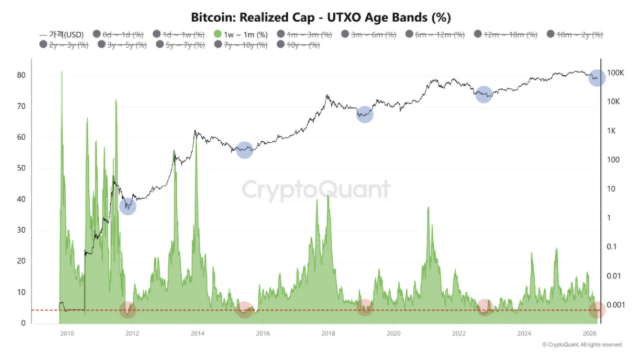
    Bitcoin realized cap: UTXO age bands

    Onchain Metrics Point to Reduced Speculation and Possible Market Bottom

    Onchain data suggests calmer trading activity beneath the surface. Crypto analyst MAC_D reported that the proportion of short-term Bitcoin holders, particularly those holding between one week and one month, has dropped to 3.98%. In previous market cycles, levels below 4% have often coincided with periods when markets were approaching a bottom.

    Lower short-term participation indicates fewer rapid trades and reduced speculative demand. At the same time, long-term holders now control a larger portion of the circulating supply, signaling continued accumulation even during periods of negative sentiment.

    Bitcoin Weakness Against Equities Adds Market Uncertainty

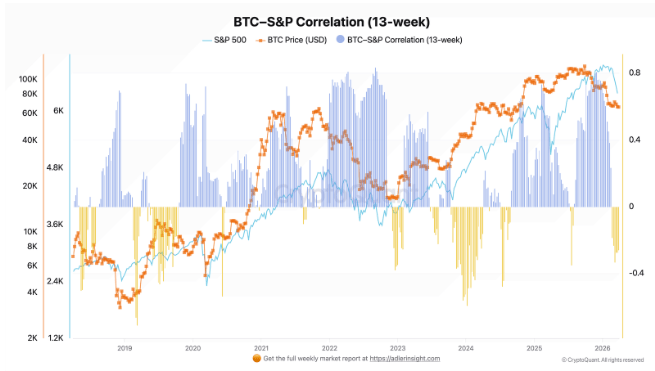
    Bitcoin researcher Axel Adler Jr. observed that Bitcoin’s short-term correlation with the S&P 500 has weakened, with the 13-week correlation slipping below zero. The BTC-to-S&P ratio has also trended lower throughout 2026, reflecting Bitcoin’s continued underperformance relative to equities.

    BTC/S&P 500 ratio

    Although Bitcoin briefly rallied to $76,000 on March 17, the move failed to establish sustained upward momentum. Weak participation from smaller investors suggests that Bitcoin is currently being treated as a higher-risk asset compared with traditional stocks.

    Despite this relative weakness, the combination of stable support above $60,000, limited selling pressure, and increased whale dominance suggests that Bitcoin may be entering a quiet accumulation phase, even as overall sentiment remains deeply negative.

    Disclaimer

    This content is for informational purposes only and does not constitute financial, investment, or legal advice. Cryptocurrency trading involves risk and may result in financial loss.

  • Bitcoin and Stock Markets Rally as Hopes Rise for End to US and Israel-Iran War

    Bitcoin and Stock Markets Rally as Hopes Rise for End to US and Israel-Iran War

    Bitcoin and U.S. stock markets moved higher after renewed optimism emerged around a possible end to the US and Israel-Iran war. Bitcoin briefly climbed to $68,589 before stabilizing above $68,000, as investors reacted to comments from U.S. President Donald Trump suggesting that options to end the conflict were being considered.

    $BTC daily price chart

    Reports indicated that Trump told aides he could consider ending the war, even as the Strait of Hormuz remains partially closed. Separate unconfirmed remarks attributed to Iranian President Masoud Pezeshkian suggested Iran may also be exploring ways to exit the conflict if certain assurances are met by the United States and Israel.

    U.S. Stock Market Surges Alongside Crypto Assets

    Equity markets reacted strongly to the developments. The Dow Jones Industrial Average gained more than 1,125 points, while the S&P 500 and Nasdaq recorded gains of 2.91% and 3.83%, respectively. The broad rally highlighted how geopolitical headlines continue to influence risk assets across traditional and digital markets.

    Weak Spot Demand and Market Caution Limit Breakout Potential

    Market confidence remains fragile despite recent gains. Weak spot demand continues to limit Bitcoin’s ability to sustain upward price movements. Data shows that open interest in Bitcoin futures and spot buying activity have remained largely flat since the Feb. 6 sell-off below $60,000, suggesting that recent price moves are heavily influenced by headlines rather than strong investor participation.

    Additional caution is visible among traders, with many short-term holders still holding positions below their cost basis of $85,800. At the same time, stablecoin inflows to crypto exchanges remain near two-year lows, reinforcing the view that investors are staying defensive even as markets react positively to geopolitical developments.

    Disclaimer

    This content is for informational purposes only and does not constitute financial, investment, or legal advice. Cryptocurrency trading involves risk and may result in financial loss.
  • Bitcoin Approaches Key Buy Zone as Gap to Realized Price Narrows

    Bitcoin Approaches Key Buy Zone as Gap to Realized Price Narrows

    Spot Price Still Above Realized Value Signals Incomplete Market Reset

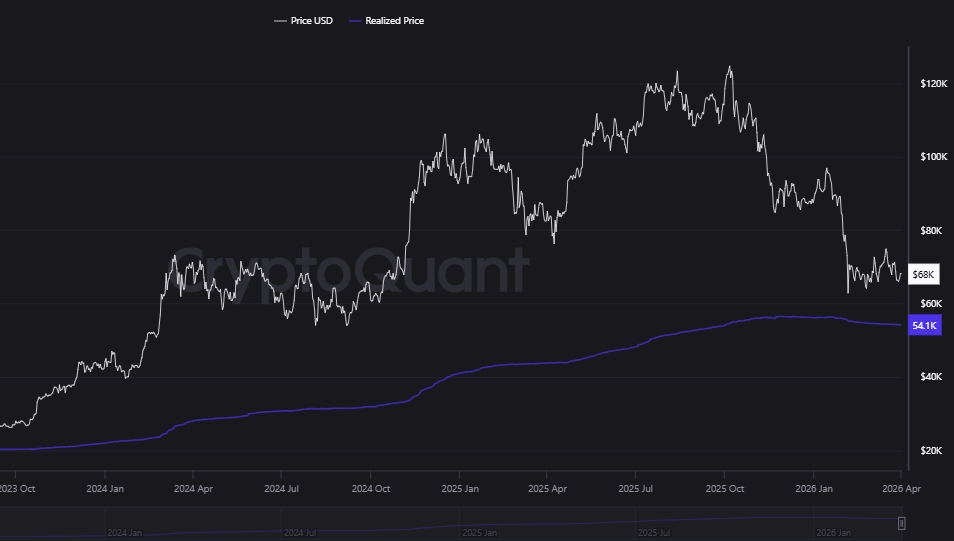
    Bitcoin is moving closer to levels historically linked with long-term buying opportunities, though on-chain data suggests the market has not yet reached a classic accumulation phase. Current data shows bitcoin trading near $67,500 while its realized price the average cost basis of all coins stands at approximately $54,286. This leaves bitcoin about 21% above realized price, meaning most holders remain in profit.

    The premium has compressed sharply from roughly 120% in late 2024, when bitcoin traded above $119,000, to about 21% today. Analysts view this rapid narrowing as a sign of market adjustment, but not a completed reset. Historically, major cycle bottoms occurred when bitcoin traded below realized price, as seen during the 2022 bear market and the early 2020 market crash.

    Bitcoin: Realized Price

    Institutional Demand and Market Behavior Remain Key Factors

    Other indicators reinforce caution. The Coinbase Premium Index has recently turned negative, signaling weaker institutional demand. While the $65,000 to $70,000 range has held through weeks of geopolitical tension and more than $1 billion in ETF inflows during March, analysts note that a decline toward the $54,000 level may still be required to mirror previous market bottoms.

    $BTC 4h
    Disclaimer

    This content is for informational purposes only and does not constitute financial, investment, or legal advice. Cryptocurrency trading involves risk and may result in financial loss.