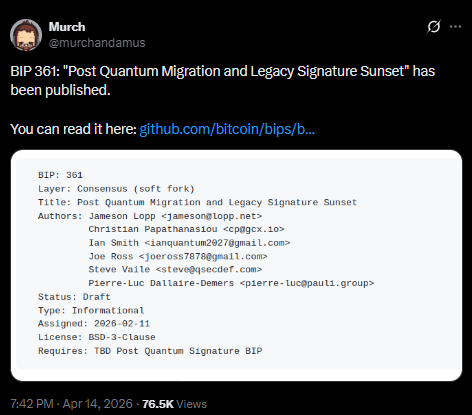
A group of Bitcoin developers led by cypherpunk Jameson Lopp has introduced BIP-361, a draft proposal aimed at protecting the network from future quantum computing threats. The proposal focuses on freezing quantum vulnerable coins, including an estimated 1.7 million BTC stored in early P2PK addresses, which includes holdings believed to belong to Satoshi Nakamoto, valued near $74 billion.
BIP-361 builds on BIP-360, which proposed a soft fork introducing a new output format known as pay-to-Merkle-root (P2MR). This format is designed to function similarly to Taproot (P2TR) but removes key paths considered vulnerable to quantum attacks.
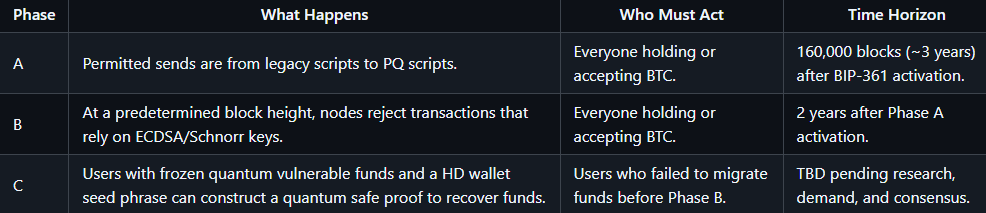
Under the plan, Phase A would block sending BTC to legacy addresses three years after activation. Phase B would invalidate old signatures after five years, effectively freezing remaining vulnerable funds. Phase C proposes a recovery option using zero-knowledge proofs.
Community Debate Emerges Over Security and Ownership Risks
While developers describe the proposal as a defensive strategy to protect long-term network value, critics argue it conflicts with Bitcoin’s principle of preserving user ownership. Some community members warn that forcing upgrades could permanently lock funds belonging to users who fail to migrate in time, raising philosophical and technical concerns across the ecosystem.
Mark Erhardt, shared BIP-361 on X on Tuesday;
Disclaimer
This content is for informational purposes only and does not constitute financial, investment, or legal advice. Cryptocurrency trading involves risk and may result in financial loss.
Leave a Reply