
Decentralized lending protocol Aave has experienced more than $5.4 billion in Ether outflows following a security incident tied to rsETH, raising fresh concerns about liquidity risks across decentralized finance markets.
Data shared by Lookonchain indicates that the issue began after an exploit involving Kelp DAO allowed an attacker to deposit rsETH and drain ETH liquidity from the lending pool. The incident reportedly left Aave with a portion of bad debt, intensifying fears among large holders.
Whale Withdrawals Accelerate After rsETH Exploit
The exploit triggered a wave of withdrawals from major investors, often referred to as whales, as confidence in the platform temporarily weakened. Among the largest withdrawals was by crypto entrepreneur Justin Sun, who removed 65,584 ETH, valued at approximately $154 million, from the protocol.
Blockchain data shows that this mass withdrawal trend contributed significantly to the overall outflow total, marking one of the largest single-day liquidity movements recorded on the platform in recent months.
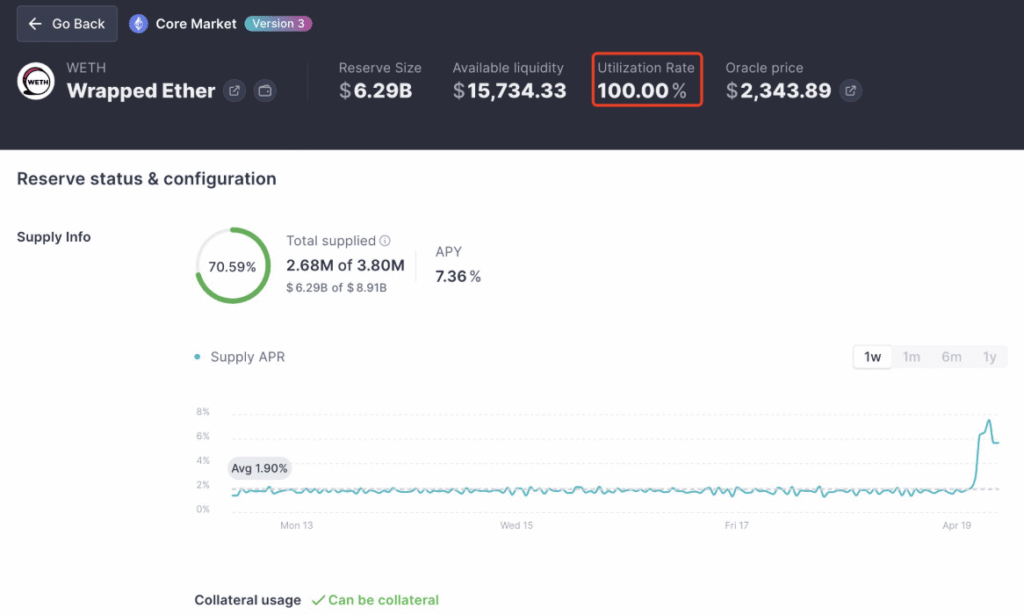
ETH Utilization Rate Reaches 100% Amid Liquidity Pressure
As withdrawals intensified, Aave’s ETH utilization rate climbed to 100%, indicating that nearly all available Ether within lending pools had been borrowed or withdrawn. Such conditions can increase borrowing costs and heighten the risk of liquidity shortages if inflows do not recover.
Market observers note that the situation highlights ongoing risks associated with liquid restaking tokens and interconnected DeFi protocols, particularly during periods of market stress and security-related uncertainty.
Disclaimer
This content is for informational purposes only and does not constitute financial, investment, or legal advice. Cryptocurrency trading involves risk and may result in financial loss.
Leave a Reply