Author: tristan

  • Trump Announces Planned Blockade of Strait of Hormuz Amid Escalating Iran Tensions

    Trump Announces Planned Blockade of Strait of Hormuz Amid Escalating Iran Tensions

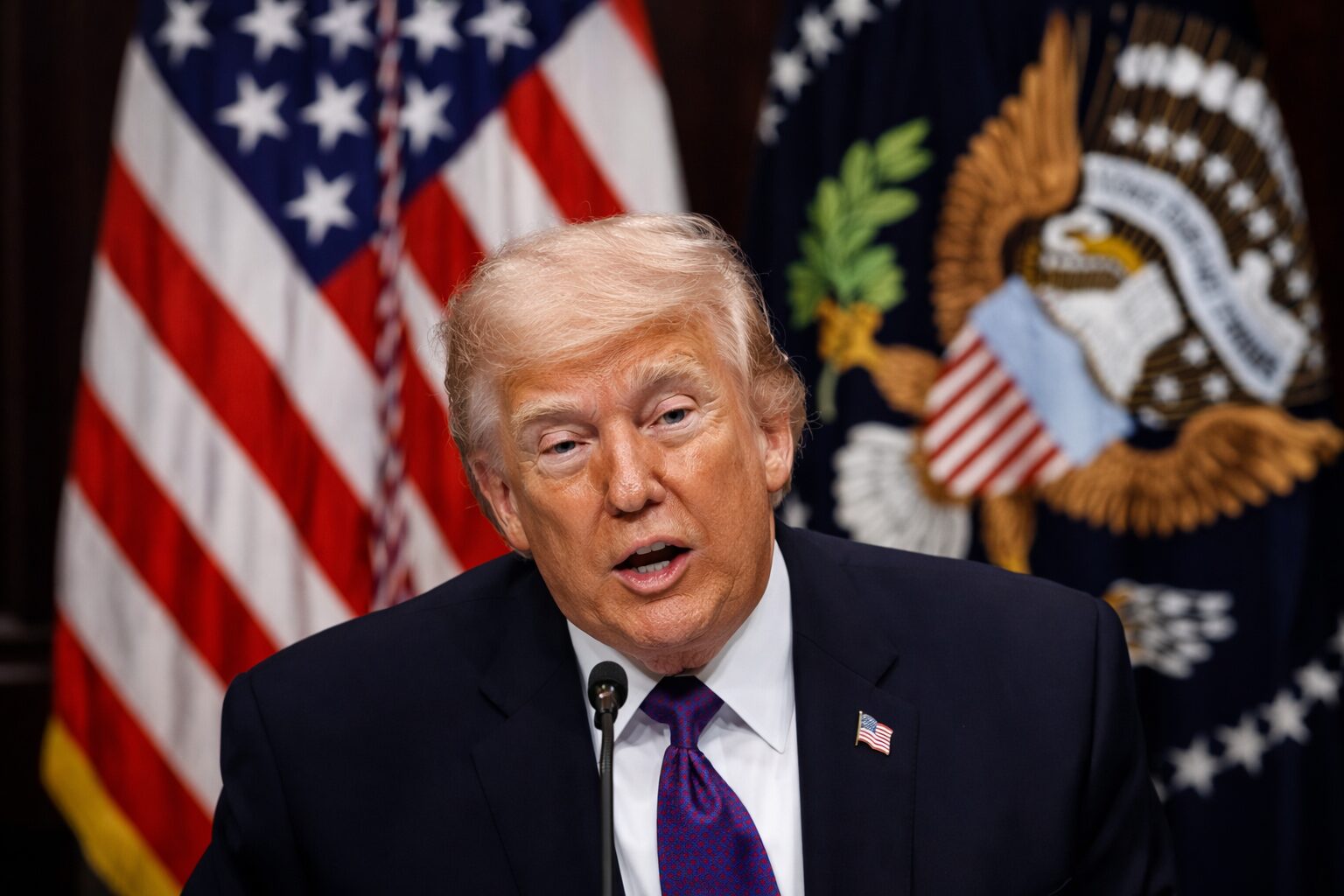
    U.S. President Donald Trump has announced plans for the United States to begin blockading ships entering and leaving the Strait of Hormuz, escalating tensions following failed negotiations with Iran.

    In a public statement on Truthsocial, Trump said the United States Navy would immediately begin intercepting vessels attempting to transit the strait, particularly targeting ships that paid tolls to Iranian authorities. He also stated that naval forces would start clearing sea mines allegedly placed in the waterway, warning that any hostile action against U.S. forces or commercial vessels would be met with military response.

    Strategic Importance of Strait of Hormuz Heightens Global Risk

    The Strait of Hormuz remains one of the world’s most critical maritime chokepoints, carrying a significant share of global oil shipments. Any blockade could severely disrupt energy supplies and increase shipping risks across international waters.

    Trump further warned that Iran would not be allowed to benefit from what he described as illegal toll collection activities, adding that additional allied nations may join the blockade effort. The announcement has intensified geopolitical concerns, as potential military escalation around the strait could impact global energy markets, maritime trade flows, and regional stability.

    Disclaimer

    This content is for informational purposes only and does not constitute financial, investment, or legal advice. Cryptocurrency trading involves risk and may result in financial loss.

  • Commodity Traders Turn to Stablecoins as Iran Conflict Triggers Banking Restrictions

    Commodity Traders Turn to Stablecoins as Iran Conflict Triggers Banking Restrictions

    Geopolitical tensions tied to the Iran conflict are reshaping global trade finance, with some commodity traders in Europe reportedly losing access to traditional banking services. According to Luke Sully, CEO of trade finance firm Haycen, several traders have been “debanked” as Western banks tighten compliance controls over fears of indirect exposure to sanctioned Iranian entities.

    The issue centers on counterparty risk, particularly transactions involving regional hubs such as Oman, where links to sanctioned flows may be difficult to detect. Rather than face regulatory consequences, banks are stepping back from servicing certain commodity transactions, leaving traders to seek alternative payment channels.

    Stablecoin Adoption Expands Across Global Trade Finance

    Stablecoins, particularly USDT, are increasingly filling the gap created by reduced banking access. Their speed, global liquidity, and ability to bypass traditional correspondent banking systems make them attractive for cross-border trade settlement.

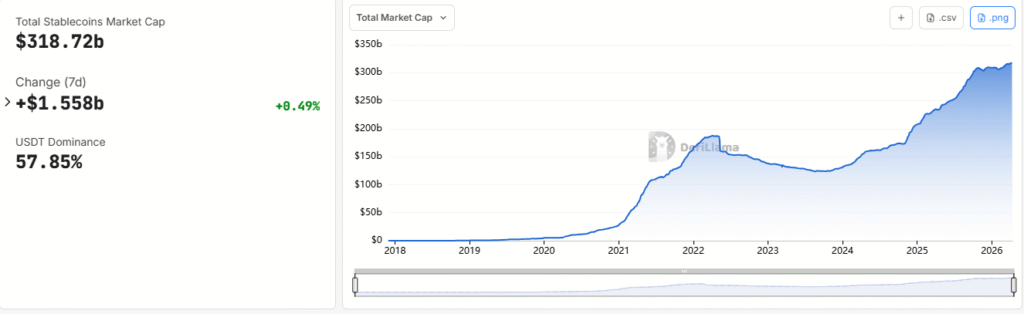
    Total Stablecoins Market Cap

    The broader trade finance sector, valued at roughly $2 trillion, already relies heavily on non-bank lenders such as private credit funds that finance shipments ranging from helium exports to industrial minerals. Stablecoin usage has surged alongside this shift, with total market capitalization exceeding $300 billion in 2025 and transaction volumes surpassing $4 trillion, accounting for nearly 30% of on chain activity.

    Haycen aims to position its USDhn stablecoin as a dedicated liquidity and settlement layer for institutional trade finance participants worldwide.

    Disclaimer

    This content is for informational purposes only and does not constitute financial, investment, or legal advice. Cryptocurrency trading involves risk and may result in financial loss.

  • Bitcoin Shows Signs of Seller Exhaustion as Realized Losses Decline

    Bitcoin Shows Signs of Seller Exhaustion as Realized Losses Decline

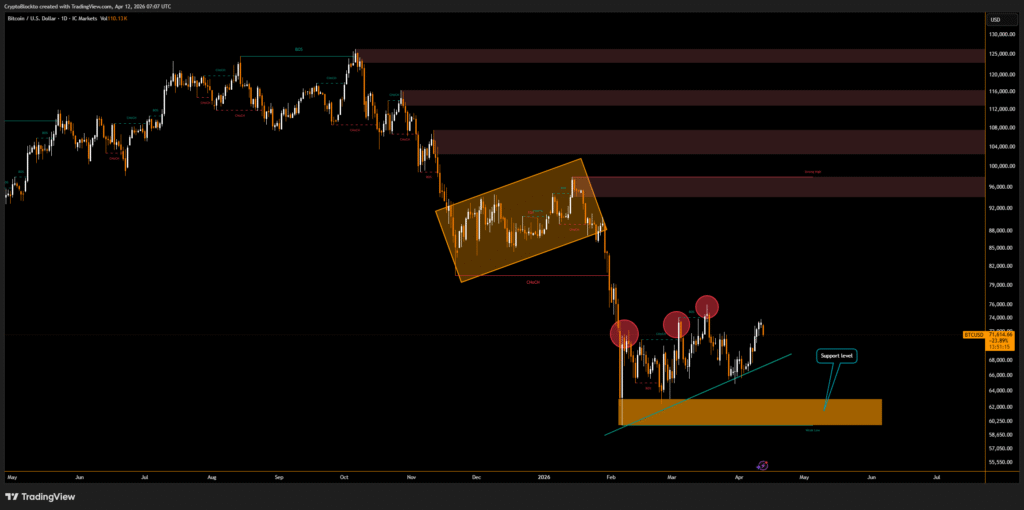
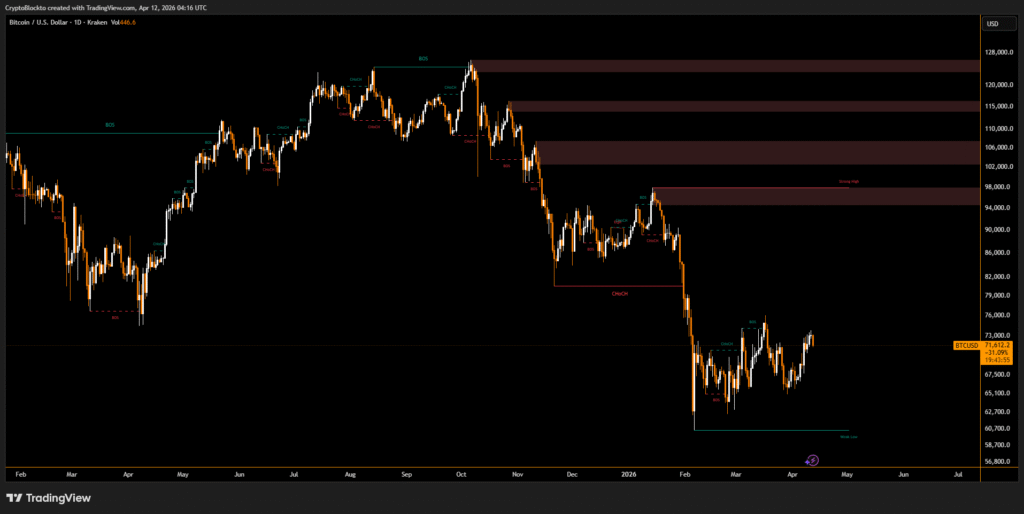
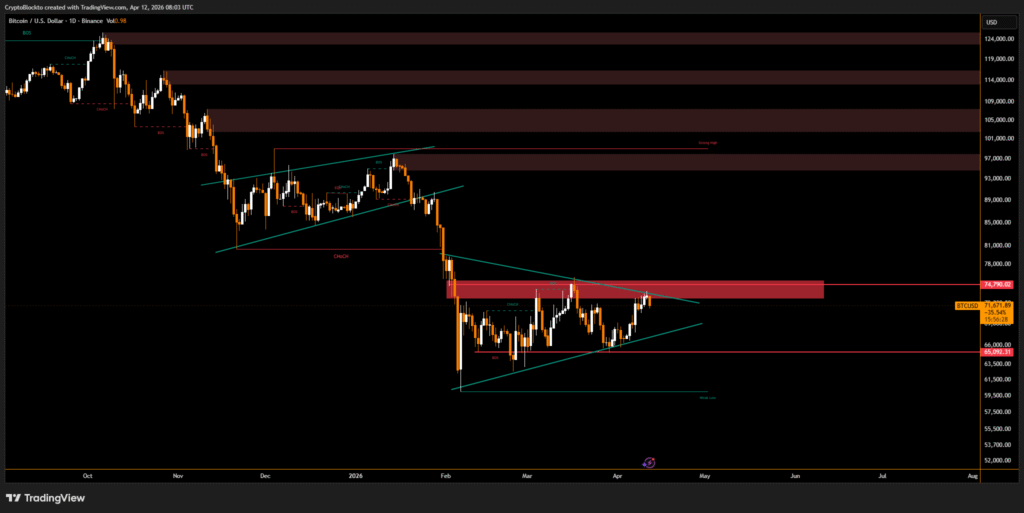
    Bitcoin may be entering a phase of seller exhaustion, as on chain data indicates a steady decline in realized losses and improving market balance. After reaching a low near $60k on Feb. 5, 2026, Bitcoin has spent more than two months consolidating, gradually moving toward the $70k range despite broader macroeconomic uncertainty and rising oil prices linked to geopolitical tensions.

    $BTC daily price chart

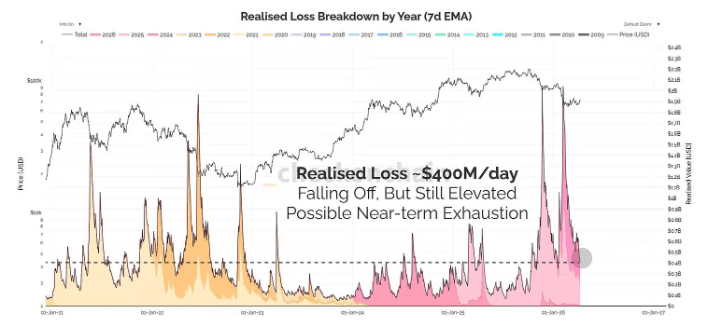
    Recent blockchain analytics show that realized losses have dropped to approximately $400 million per day, a sharp decrease from peak levels of nearly $2 billion recorded on Nov. 21, 2025, and again on Feb. 5, 2026. Those earlier spikes exceeded losses seen during the 2022 bear market, highlighting how intense selling pressure had been before the recent slowdown.

    Additional on-chain indicators suggest a gradual transition from heavy selling to renewed buying interest. The profit-to-loss ratio has risen to 1.4, its highest level since January 2026, indicating that realized profits are now exceeding realized losses.

    Seven day average realized profits currently stand near $300 million per day, close to 12-month lows, suggesting investors who purchased Bitcoin near $60,000 are beginning to secure modest gains.

    Together, declining realized losses and improving profitability metrics signal fading sell-side pressure, increasing the likelihood that Bitcoin is approaching a stabilization phase as market participants shift toward cautious accumulation.

    Disclaimer

    This content is for informational purposes only and does not constitute financial, investment, or legal advice. Cryptocurrency trading involves risk and may result in financial loss.
  • US Faces Critical Window to Pass CLARITY Act Before 2030 Deadline

    US Faces Critical Window to Pass CLARITY Act Before 2030 Deadline

    United States Senator Cynthia Lummis has warned that lawmakers are approaching a critical deadline to pass the CLARITY Act, stressing that failure to act soon could delay meaningful regulatory progress until at least 2030.

    Lummis emphasized that delaying the legislation could risk the country’s financial competitiveness, especially as policymakers face tightening legislative calendars ahead of the November midterm elections, which could shift congressional priorities and stall momentum behind the bill.

    Former White House crypto adviser David Sacks echoed the urgency, stating that the Senate Banking Committee should move quickly to advance market structure legislation to a full Senate vote, followed by presidential approval.

    Industry Leaders Say Clear Rules Could Drive Innovation

    Industry leaders argue that passing the CLARITY Act would define regulatory responsibilities between agencies, creating certainty for companies and investors.

    Chris Dixon of Andreessen Horowitz stated that clear regulatory rules typically benefit both consumers and entrepreneurs by reducing uncertainty and encouraging innovation.Support has also emerged from the gaming sector, with Robbie Ferguson of Immutable suggesting the legislation could accelerate growth across blockchain-based gaming platforms.

    Meanwhile, Brian Armstrong and Paul Grewal indicated that the proposal may soon reach a markup hearing, though disagreements over stablecoin yield regulations remain a key obstacle.

    Regulatory backing is also growing, with Paul Atkins voicing support for comprehensive market structure legislation designed to modernize oversight frameworks.

    Disclaimer

    This content is for informational purposes only and does not constitute financial, investment, or legal advice. Cryptocurrency trading involves risk and may result in financial loss.
  • XRP Falls to $1.33 After Heavy Selling as Bitcoin Weakness Pressures Major Cryptos

    XRP Falls to $1.33 After Heavy Selling as Bitcoin Weakness Pressures Major Cryptos

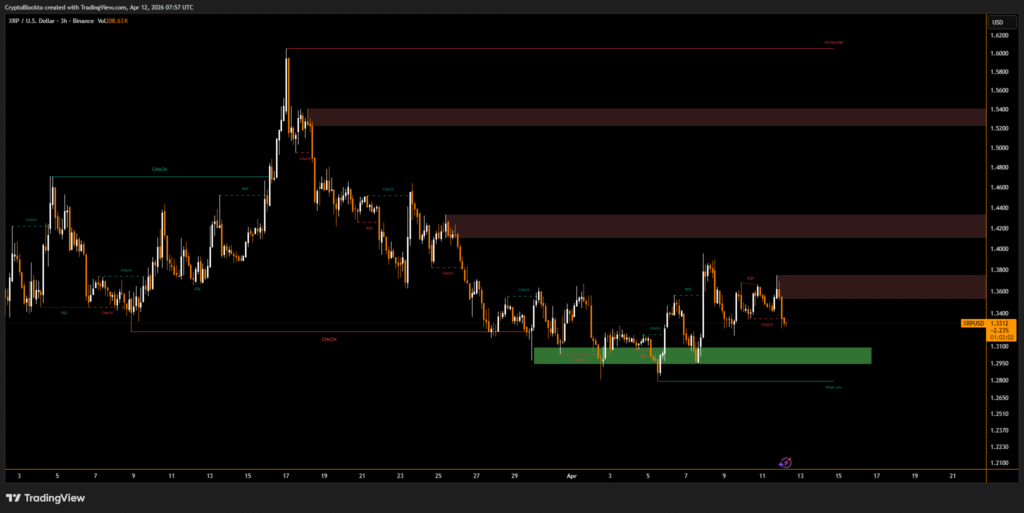
    XRP dropped sharply to $1.33 after a sudden wave of selling pushed the token below important support levels. The decline began with XRP trading near $1.36, before falling within minutes on unusually high trading volume, indicating aggressive selling rather than a temporary liquidity shortage.

    $XRP 3h price chart

    Over the past 24 hours, XRP declined about 1.8%, but the most significant move occurred during the intraday breakdown. Once the $1.35 support level failed, selling accelerated rapidly, reflecting fragile market conditions and shallow order books that allow prices to move quickly during selloffs

    Weak Bounce Reinforces Bearish Structure

    Following the sharp drop, XRP attempted a recovery but failed to regain lost ground. The price formed a lower high, while trading volume weakened during the rebound, suggesting limited buying interest. The $1.35 level has now turned into immediate resistance, while the $1.40 to $1.41 zone continues to cap recovery attempts.

    Market indicators remain mixed, with volatility compressing even as price momentum weakens. This combination often precedes a larger price move, though the direction remains uncertain.

    If XRP fails to hold the $1.33 support level, analysts warn that the next downside targets could fall within the $1.32 to $1.31 demand zone, keeping the broader downtrend intact.

    Disclaimer

    This content is for informational purposes only and does not constitute financial, investment, or legal advice. Cryptocurrency trading involves risk and may result in financial loss.

  • Bitcoin and Ether Approach Key Levels That Could Signal Market Trend Reversal

    Bitcoin and Ether Approach Key Levels That Could Signal Market Trend Reversal

    Bitcoin and Ether are approaching price levels that could indicate a potential trend reversal in the crypto market, according to macro analyst Jordi Visser. Despite growing sentiment that a bear market may continue through 2026, Visser believes a sustained recovery could begin if both assets cross key resistance levels.

    Jordi Visser spoke to Anthony Pompliano on Friday.: Anthony Pompliano

    Bitcoin moving above $76,000 and Ether rising beyond $2,400 would likely mark the start of a more durable upward move this year. At current levels, Bitcoin trading near $71,646 would need to gain approximately 6.1%, while Ether at around $2,214 would require an increase of roughly 8% to reach those thresholds.

    $BTC daily price chart

    Inflation Outlook and Recession Expectations Shape Market Sentiment

    Visser noted that persistent inflation could support alternative assets such as cryptocurrencies. He argued that investors may seek returns outside traditional equities if stock market growth remains limited. Recent data from the U.S. Bureau of Labor Statistics (BLS) showed the Consumer Price Index (CPI) increased 3.3% year-over-year in April, reinforcing expectations that inflation may remain elevated.

    Prediction market data also reflects shifting sentiment, with recession expectations for 2026 falling to 24%, down 10% over the past 30 days.

    Mixed Forecasts as Some Traders Expect Further Declines

    Not all analysts share an optimistic outlook. Veteran trader Peter Brandt suggested Bitcoin could still fall below its Feb. 6 yearly low of $60,000, possibly retesting levels seen during September or October 2026 before forming a long-term bottom.

    Visser, however, cautioned against rigid bull-versus-bear classifications, noting that market cycles often shift gradually rather than through clearly defined turning points.

    Disclaimer

    This content is for informational purposes only and does not constitute financial, investment, or legal advice. Cryptocurrency trading involves risk and may result in financial loss.
  • Arthur Hayes Buys $1.1 Million in HYPE After Three-Month Pause as ETF Race Intensifies

    Arthur Hayes Buys $1.1 Million in HYPE After Three-Month Pause as ETF Race Intensifies

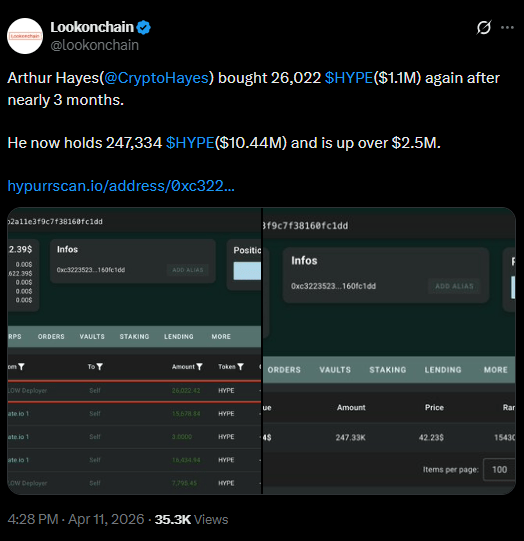
    Crypto entrepreneur Arthur Hayes has resumed buying HYPE tokens, acquiring 26,022 HYPE valued at approximately $1.1 million after a pause lasting nearly three months. The purchase was identified through Lookonchain tracking data, marking his first accumulation since early 2026 and signaling renewed confidence in the asset.

    Following the latest transaction, Hayes’s total holdings increased to 247,334 HYPE, currently valued at about $10.44 million. The position is reportedly sitting on unrealized gains of 27.22%, translating to an estimated $2.23 million in profit, despite ongoing volatility across the broader crypto market.

    Hyperliquid Revenue Model Supports Long-Term Price Expectations

    Hayes recently reaffirmed a $150 price target for HYPE by August 2026, suggesting a potential 266% increase from current levels. He highlighted Hyperliquid’s revenue structure as a major catalyst, noting that the platform returns 97% of trading fees to buy back and burn HYPE tokens from the open market. This process creates a deflationary cycle, linking token value directly to platform usage and activity levels.

    Institutional Interest Grows as Spot HYPE ETF Plans Advance

    Asset management firms Bitwise and Grayscale are reportedly advancing plans to introduce spot HYPE exchange-traded funds (ETFs). Bitwise has filed an amended registration with the U.S. Securities and Exchange Commission (SEC), introducing the ticker BHYP and proposing a 0.67% management fee.

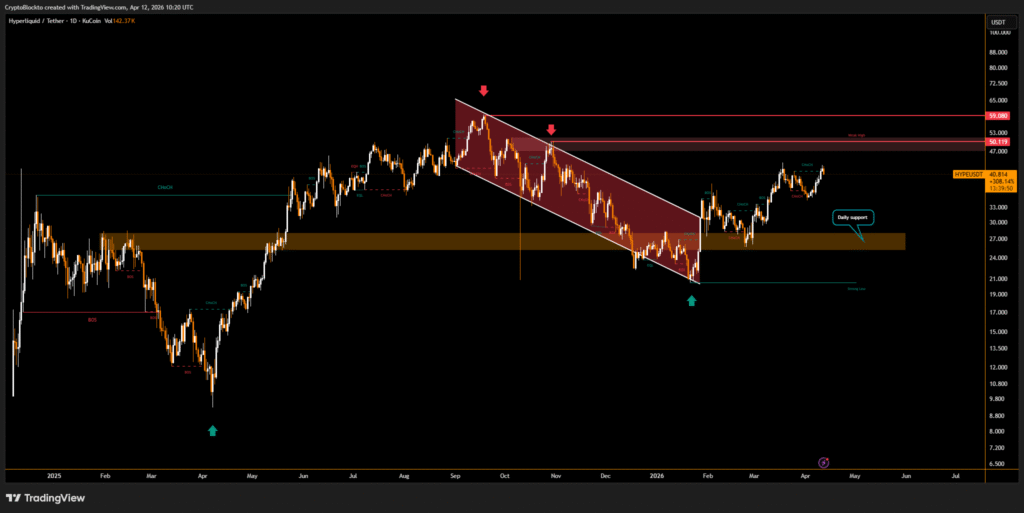
    $HYPE over the last year

    Over the past year, HYPE has gained roughly 176%, making it one of the strongest-performing large-cap tokens. However, short-term pressure remains, with the token slipping around 2% in the past 24 hours to approximately $40.91, influenced partly by geopolitical uncertainty following unsuccessful U.S.–Iran negotiations.

    Disclaimer

    This content is for informational purposes only and does not constitute financial, investment, or legal advice. Cryptocurrency trading involves risk and may result in financial loss.
  • ECB Supports EU Plan to Centralize Crypto Supervision Under ESMA Authority

    ECB Supports EU Plan to Centralize Crypto Supervision Under ESMA Authority

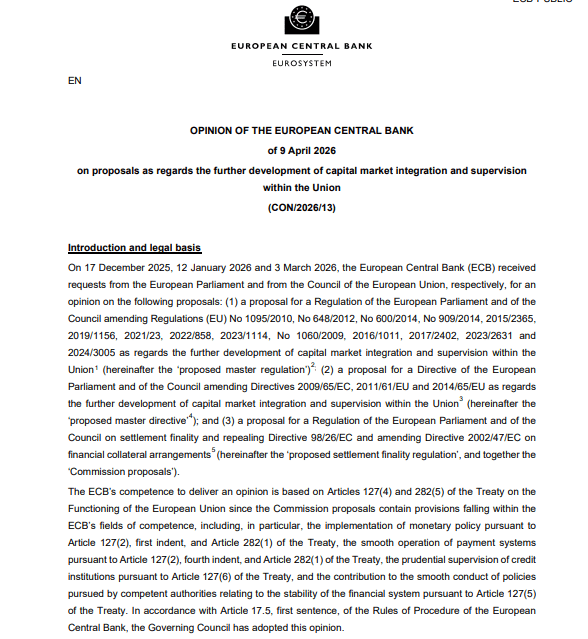
    The European Central Bank (ECB) has formally supported a proposal by the European Commission to centralize oversight of major crypto firms under the European Securities and Markets Authority (ESMA), headquartered in Paris. The recommendation was outlined in an official opinion published on April 9, describing the initiative as a major step toward deeper integration of financial markets across the European Union.

    Under the proposed framework, supervision of systemically important cross-border entities, including large crypto asset service providers (CASPs), trading venues, clearinghouses, and securities depositories, would shift from national regulators to ESMA. This marks one of the most significant structural changes to crypto oversight since the Markets in Crypto-Assets (MiCA) framework became fully applicable at the end of 2024.

    Phased Transition Recommended to Prevent Market Disruption

    The ECB emphasized that ESMA must receive adequate staffing and funding to manage its expanded responsibilities effectively. It also recommended a gradual transition process from national authorities to reduce the risk of operational disruptions during implementation.

    Resistance From Smaller EU Financial Hubs

    Some EU member states, including Ireland, Luxembourg, and Malta, have expressed concerns about transferring authority to a centralized regulator. These countries host a significant number of crypto licensing activities, with major exchanges such as Coinbase securing authorization through Luxembourg, while OKX and Gemini obtained licenses via Malta. Kraken has similarly expanded its derivatives operations through licensing arrangements with the Central Bank of Ireland and a Cypriot MiFID entity.

    The ECB also argued that large crypto firms could become systemically relevant, requiring unified supervision to prevent risks from spreading into the banking sector. Additionally, the central bank requested a non-voting seat on ESMA’s executive board to provide technical expertise on payment systems and monetary policy transmission.

    Negotiations on the proposal will now continue between EU member states and the European Parliament, a process expected to last several months before any final regulatory changes are approved.

    Disclaimer

    This content is for informational purposes only and does not constitute financial, investment, or legal advice. Cryptocurrency trading involves risk and may result in financial loss

  • Crypto Market Recovery After October 2025 Crash Remains Fragile as Liquidity Stays Weak

    Crypto Market Recovery After October 2025 Crash Remains Fragile as Liquidity Stays Weak

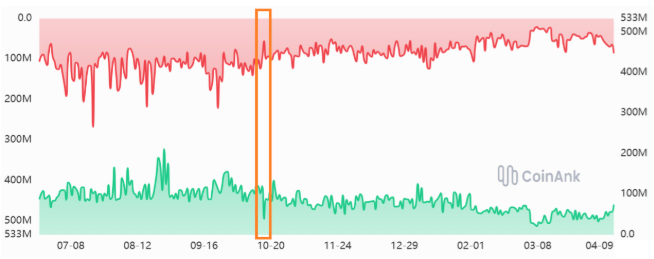
    Bitcoin Orderbook Depth Shows Ongoing Liquidity Decline

    Six months after the Oct. 10, 2025 crypto flash crash, digital asset markets continue to show signs of fragility, with liquidity remaining well below pre crash levels. The October event wiped out a record $19 billion in leveraged positions, while several altcoins dropped between 40% and 80%, triggering widespread speculation about market maker losses and allegations of exchange-related disruptions.

    $BTC daily price chart

    Before the crash, Bitcoin orderbook depth typically ranged between $180 million and $260 million in September 2025, with about $90 million in active bids on most trading days. During the crash, technical disruptions and auto-deleveraging events caused liquidity to shrink rapidly. By mid-November 2025, orderbook depth stabilized near $150 million, but current levels rarely exceed $130 million, marking a 50% decline from September figures.’

    Aggregate Bitcoin spot +1% to -1% orderbook depth, USD

    Derivatives Activity and ETF Volumes Reflect Lower Risk Appetite

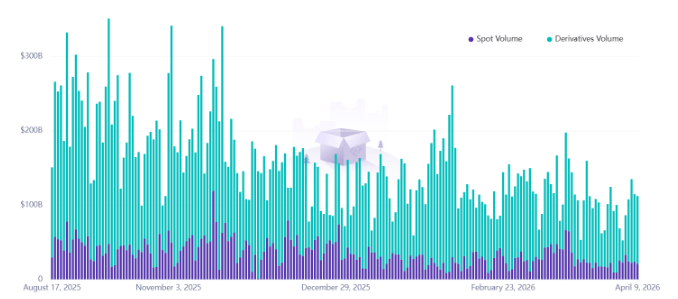
    Market conditions weakened further in February 2026, when Bitcoin orderbook depth fell below $60 million for nearly 10 days as prices struggled to hold $65,000. Cryptocurrency derivatives volumes have fluctuated between $40 billion and $130 billion over the past month, significantly below the $200 billion levels commonly recorded in September 2025.

    Total crypto trading volume, USD

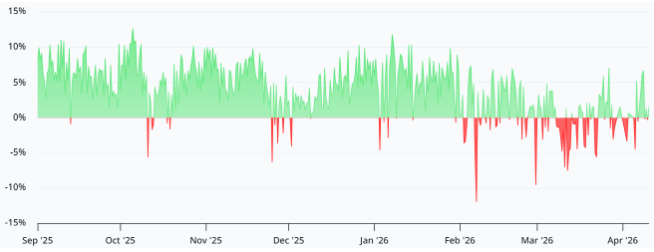
    Bitcoin perpetual futures funding rates remained stable through November 2025, but dropped sharply in February 2026, indicating weaker demand for leveraged long positions. Meanwhile, U.S.-listed spot Bitcoin ETFs recorded strong activity after the crash, reaching $11.5 billion daily volume by late November. However, ETF volumes declined again in early April 2026, with Bitcoin ETF trading falling below $3.3 billion per day and Ether ETF volumes averaging $1 billion, down from $2 billion in September 2025.

    Bitcoin perpetual futures annualized funding rate: Laevitas

    Overall, liquidity, derivatives participation, and ETF flows suggest that while the October crash did not permanently damage market structure, crypto markets in April 2026 remain less healthy than they were six months earlier, indicating cautious sentiment and limited bullish momentum.

    Disclaimer

    This content is for informational purposes only and does not constitute financial, investment, or legal advice. Cryptocurrency trading involves risk and may result in financial loss

  • Strait of Hormuz Shipping Disruption Intensifies as Supertankers Reverse Course After US–Iran Talks Fail

    Strait of Hormuz Shipping Disruption Intensifies as Supertankers Reverse Course After US–Iran Talks Fail

    Two empty supertankers were forced to reverse course in the Strait of Hormuz after tensions escalated following the collapse of US–Iran negotiations in Islamabad, raising fresh concerns over energy security in one of the world’s most critical shipping routes.

    Ship tracking data showed that a group of three very large crude carriers (VLCCs) approached the narrow waterway from the Gulf of Oman late Saturday. By early Sunday, near Iran’s Larak Island, two vessels—the Agios Fanourios I and the Pakistan-flagged Shalamar made sudden U-turns instead of entering the Persian Gulf.

    The Mombasa B, another VLCC, continued through the channel between Larak and Qeshm islands, an Iran-approved transit route, although its final destination remains unclear.

    Geopolitical Tensions Impact Maritime Traffic in Key Energy Corridor

    The timing of the reversal coincided with the announcement that US and Iranian negotiators had failed to reach an agreement, increasing uncertainty around the fragile ceasefire and regional maritime security. Although both Iraq and Pakistan had received prior approval from Iran for transit, the sudden change reflects heightened risk conditions in the strait.

    The Strait of Hormuz, a vital global energy chokepoint, has experienced repeated disruptions since escalating strikes in the region began earlier in the year. While most vessels attempt to exit the Persian Gulf, empty tankers also regularly enter to load cargo, making stable passage essential for global supply chains.

    Ongoing Shipping Volatility Signals Fragile Energy Route Stability

    Recent weeks have seen multiple vessels including Chinese container ships and LNG carriers abort transits due to security concerns. Despite occasional successful crossings, maritime traffic remains inconsistent, with Iran-linked vessels dominating movement patterns since late February.

    The latest reversals underscore how rapidly geopolitical developments are influencing global oil logistics, keeping the Strait of Hormuz under persistent operational risk.

    Disclaimer

    This content is for informational purposes only and does not constitute financial, investment, or legal advice. Cryptocurrency trading involves risk and may result in financial loss.