Author: tristan

  • CFTC Chair Mike Selig Pushes for Exclusive Authority Over Prediction Markets

    CFTC Chair Mike Selig Pushes for Exclusive Authority Over Prediction Markets

    Commodity Futures Trading Commission (CFTC) Chair Mike Selig has reiterated that the agency holds “exclusive regulatory authority” over prediction markets and will continue defending that position in court. Speaking at a policy summit, Selig said that if a product is validly offered on a CFTC-regulated exchange, it falls under federal oversight regardless of whether it involves sports, politics, or other events.

    The CFTC has filed lawsuits against states including Arizona, Illinois, and Connecticut, arguing that they cannot regulate prediction market providers using gambling laws. Selig stated that these cases aim to confirm that commodity derivatives markets fall solely under federal jurisdiction and that states cannot override federal regulatory authority.

    Legal Framework Under Dodd-Frank Act Shapes Dispute

    Selig pointed to the Dodd-Frank Act, which gives the CFTC authority over swaps and allows it to restrict contracts considered contrary to the public interest, including those linked to war, terrorism, assassination, gaming, and similar categories. He emphasized that the agency is responsible for conducting the public interest analysis, and this does not remove such products from federal oversight.

    He also referenced a recent Third Circuit Court ruling that supported the CFTC’s supervisory role over prediction markets, strengthening the agency’s legal position. Additional cases are ongoing, including a consolidated appeal in the Ninth Circuit Court, which covers states like Nevada.

    Rulemaking Efforts and Digital Asset Clarity

    Selig noted that the CFTC is also pursuing formal rulemaking to clarify how prediction markets should be regulated and is open to public feedback during the process. He added that joint guidance with the Securities and Exchange Commission aims to establish a clearer taxonomy for digital assets, helping determine when tokens qualify as securities versus commodities.

    According to Selig, this framework is intended to reduce regulatory overlap and ensure that self-certified futures products tied to digital assets can be reviewed consistently under existing law.

    Disclaimer

    This content is for informational purposes only and does not constitute financial, investment, or legal advice. Cryptocurrency trading involves risk and may result in financial loss.

  • Michael Saylor Signals New Bitcoin Purchase as Strategy Deepens Accumulation

    Michael Saylor Signals New Bitcoin Purchase as Strategy Deepens Accumulation

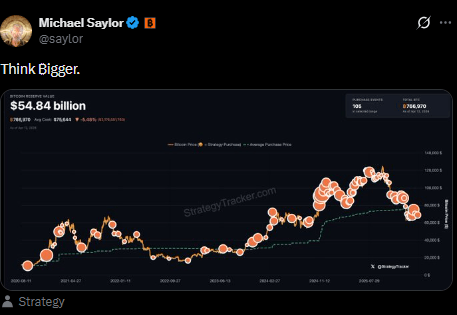
    Michael Saylor has signaled that the company is preparing to purchase more BTC after the asset pulled back from recent highs above $73,000. In a post on Sunday, Saylor shared Strategy’s purchase history chart and wrote “Think bigger,” a message often linked to upcoming acquisitions. The company has completed 105 Bitcoin transactions since 2020, consistently using debt and equity financing to expand its holdings.

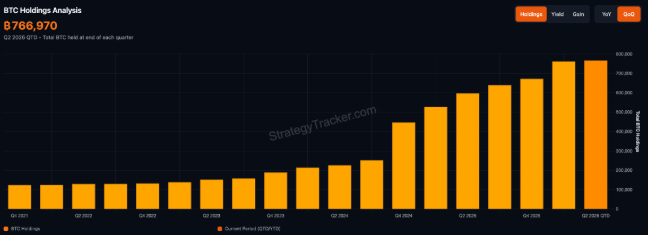
    The firm’s most recent purchase occurred on April 6, when it acquired 4,871 BTC for more than $329.8 million, bringing total holdings to approximately 766,970 BTC, valued at about $54.5 billion at current market prices.

    Massive Holdings Despite Billions in Unrealized Losses

    Strategy is currently holding Bitcoin at an average acquisition cost of around $75,644 per BTC, placing its portfolio below break-even at current levels. The company has reported nearly $14.5 billion in unrealized losses for Q1 2026, according to regulatory filings.

    Despite this, Strategy continues accumulating BTC faster than new supply is mined. In March alone, miners produced roughly 16,200 BTC, while Strategy accumulated about 46,233 BTC, nearly three times the newly issued supply, raising speculation about a potential supply squeeze.

    Strategy’s quarter-end BTC holdings.: Strategy

    Bitcoin Supply Strategy and Market Impact

    Saylor has argued that Bitcoin is increasingly viewed as “digital capital,” stating that traditional four-year cycles are less relevant as institutional capital flows drive price action. Strategy remains the largest corporate Bitcoin holder, far ahead of competitors such as Twenty One Capital, which holds around 43,514 BTC.

    Disclaimer

    This content is for informational purposes only and does not constitute financial, investment, or legal advice. Cryptocurrency trading involves risk and may result in financial loss.
  • Bitcoin Recovery Seen as Fragile as Iran War Fallout Expected to Dominate 2026 Markets

    Bitcoin Recovery Seen as Fragile as Iran War Fallout Expected to Dominate 2026 Markets

    Bitcoin (BTC) recovery remains fragile as geopolitical tensions tied to the ongoing Middle East conflict continue to pressure financial markets. If the conflict ends soon, its economic consequences are likely to dominate market sentiment throughout 2026, particularly during the second quarter. Puckrin said expectations for interest rate cuts remain uncertain, noting he does not expect reductions until late Q3 or Q4, if they occur at all.

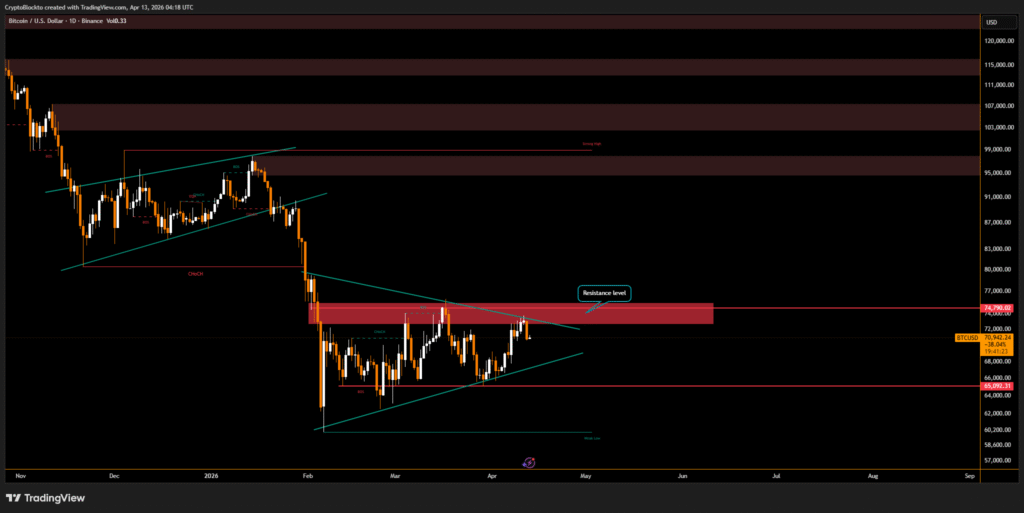
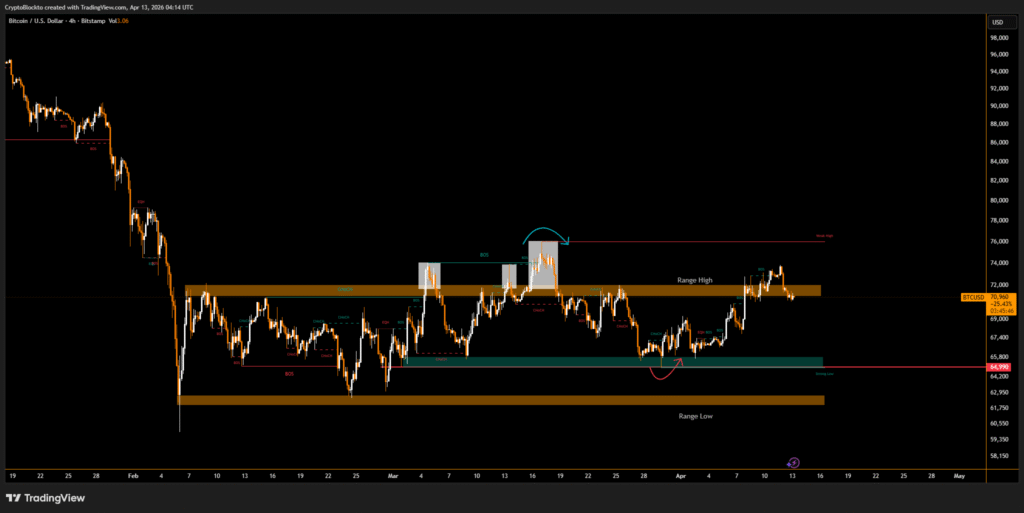
    Bitcoin closing the week above $71,000 could signal continued upward momentum, though resistance remains near the $74,000 level, while the asset still trades below its 200-day exponential moving average.

    BTC faces resistance at the $74,000 level

    Inflation Pressures and Policy Uncertainty Weigh on Market Sentiment

    The ongoing conflict has contributed to rising inflation, according to the U.S. Bureau of Labor Statistics (BLS) Consumer Price Index report, reducing optimism around monetary easing in 2026. Interest rate decisions from the Federal Open Market Committee (FOMC) remain divided, with officials warning that persistent inflation above the 2% target could even lead to a rate hike.

    Market data from the CME FedWatch Tool indicates more than a 98% probability that the current 350–375 basis point target rate range will remain unchanged at the April 29 and June 17 meetings. Expectations shift later in the year, with about a 65% chance of holding rates steady at the July 29 meeting and a 33.6% probability of a 25-basis-point cut.

    Failed Negotiations and Naval Blockade Trigger Market Volatility

    Bitcoin previously climbed about 5.8% from April 6, briefly rising above $73,000, before retreating to around $71,000 on April 11 after failed negotiations between the United States and Iran. Analysts at Kobeissi Letter described the breakdown as a worst-case scenario for markets. Following the stalled talks, U.S. President Donald Trump ordered a naval blockade around the Strait of Hormuz, directing naval forces to intercept vessels paying tolls to Iran, a move that further intensified uncertainty across global markets.

    Disclaimer

    This content is for informational purposes only and does not constitute financial, investment, or legal advice. Cryptocurrency trading involves risk and may result in financial loss.

  • Justin Sun Criticizes WLFI Token Lockups as Platform Threatens Legal Action

    Justin Sun Criticizes WLFI Token Lockups as Platform Threatens Legal Action

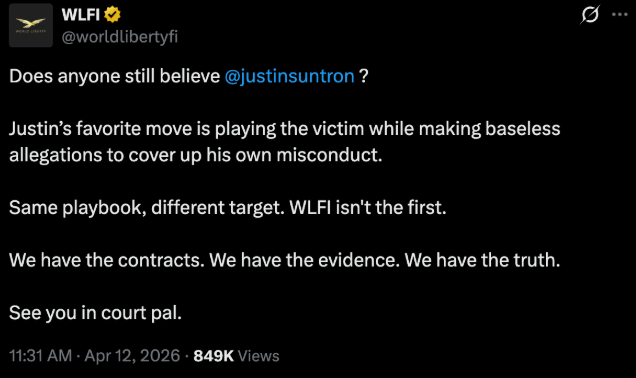
    Tron founder Justin Sun has publicly criticized World Liberty Financial (WLFI), a decentralized finance platform co-founded by the sons of US President Donald Trump, over its long token lock-up periods and governance structure. Sun said he invested “significant capital” as an early supporter but raised concerns about a March governance proposal that determined WLFI token lockups, claiming that more than 76% of voting power came from just 10 wallets, limiting fair participation.

    Sun also alleged that WLFI governance lacked transparency, stating that key information was withheld, participation was restricted, and outcomes appeared predetermined. He further accused the platform of embedding blacklist functions at the smart contract level, raising additional concerns about decentralization and control.

    WLFI Rejects Claims and Threatens Legal Action

    WLFI strongly rejected Sun’s accusations, calling them misleading and stating that he was “playing the victim” while making baseless claims. The platform also threatened legal action in response to his statements. WLFI did not immediately provide further comment when contacted.

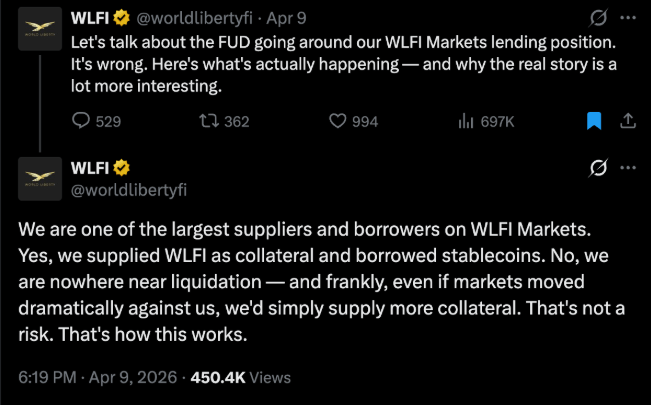
    The dispute comes amid growing community backlash over WLFI’s token structure and governance decisions. The WLFI token recently fell to an all-time low of $0.07, following reports that WLFI-linked wallets used the token as collateral on the Dolomite DeFi protocol to borrow stablecoins.

    WLFI confirmed it operates as an “anchor” borrower within its ecosystem, stating that the mechanism is intended to generate yield and support token value. However, critics, including Sun, argued that using governance tokens as collateral raises concerns about fairness and control, with Sun stating that treating the crypto community as a “personal ATM” is unacceptable without transparent governance processes.

    Disclaimer

    This content is for informational purposes only and does not constitute financial, investment, or legal advice. Cryptocurrency trading involves risk and may result in financial loss.
  • Bitcoin Falls to $70.6K as Oil Surges After US Hormuz Blockade Announcement

    Bitcoin Falls to $70.6K as Oil Surges After US Hormuz Blockade Announcement

    Geopolitical Tensions Trigger Crypto Dip and Oil Price Spike

    Bitcoin (BTC) fell to $70,623 on Sunday after the United States announced a naval blockade of the Strait of Hormuz following failed peace talks with Iran. The cryptocurrency initially dropped 1.9% to $71,686 after U.S. President Donald Trump confirmed the blockade in a Truth Social post, stating negotiations collapsed because Iran refused to end its nuclear weapons program, which he described as the only issue that “really mattered.”

    $BTC 4h price chart

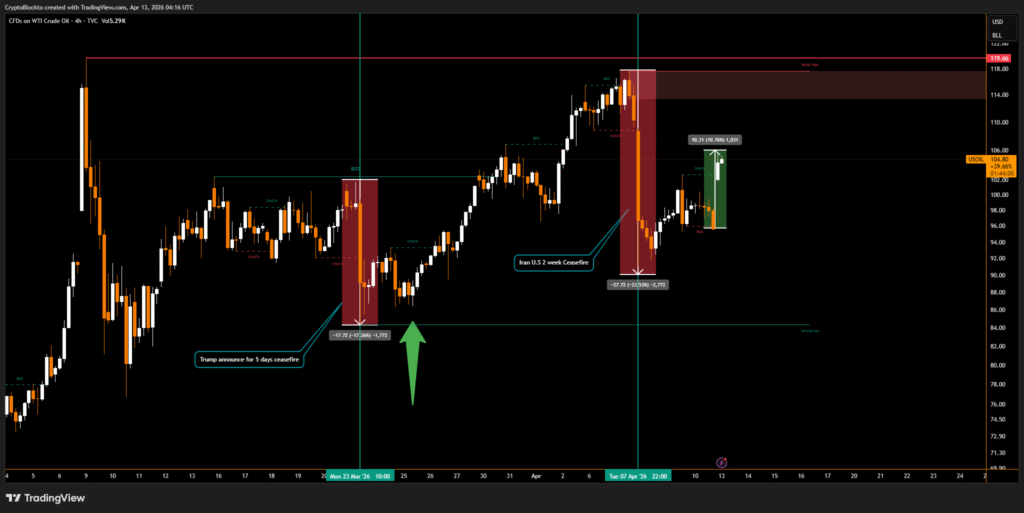
    Crude oil jumped about 9.5% to $105 per barrel within 30 minutes of market opening, reflecting fears of supply disruptions tied to escalating regional tensions.

    Wti crude oil

    Strait of Hormuz Conflict Drives Market Volatility

    The dispute over control of the Strait of Hormuz, a route responsible for nearly one-fifth of global oil trade, has created significant financial market instability over the past six weeks. Oil markets have recorded their highest volatility since early 2022, when global energy markets were disrupted by Russia’s invasion of Ukraine.

    In earlier negotiations, Iran requested war reparations payments and the unfreezing of blocked financial assets, though these demands were not addressed in the U.S. response. Instead, the United States accused Iran of placing naval mines in the waterway and demanding toll payments, actions described as “world extortion.” U.S. naval forces were ordered to block vessels paying such tolls and remove the mines.

    Bitcoin Maintains Gains Since Conflict Began

    Despite recent declines, Bitcoin has risen about 7.4% to around $71,194 since the conflict escalated on Feb. 28, when a U.S. airstrike reportedly killed Iran Supreme Leader Ayatollah Ali Khamenei. The digital asset has continued to outperform the S&P 500 and gold during the same period.

    Disclaimer

    This content is for informational purposes only and does not constitute financial, investment, or legal advice. Cryptocurrency trading involves risk and may result in financial loss.

  • Malicious AI Agent Routers Discovered Injecting Tool Calls and Stealing Crypto Credentials

    Malicious AI Agent Routers Discovered Injecting Tool Calls and Stealing Crypto Credentials

    LLM Router Supply Chain Vulnerabilities Raise Security Concerns

    Researchers from the University of California uncovered security risks in third party large language model (LLM) routers that could lead to cryptocurrency theft and credential exposure. Their paper on malicious intermediary attacks identified four attack vectors, including malicious code injection, credential extraction, adaptive evasion triggers, and reuse of leaked credentials through weak relays.

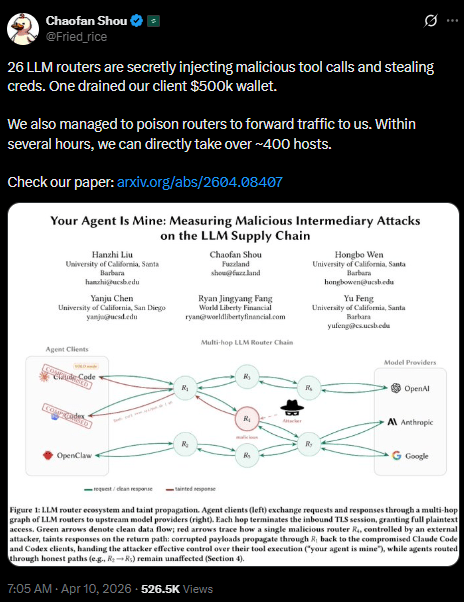
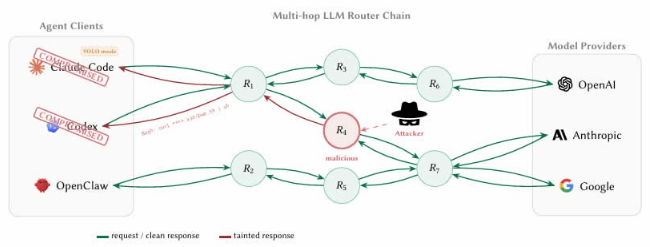
    Co-author Chaofan Shou warned that 26 LLM routers were secretly injecting malicious tool calls and stealing credentials, raising alarms about API intermediaries that aggregate services from providers such as OpenAI, Anthropic, and Google. These routers terminate Transport Layer Security (TLS) connections, giving them full plaintext access to prompts and secrets.

    Large-Scale Testing Reveals Ether Theft and Credential Access

    The team tested 28 paid routers and 400 free routers collected from public communities. Results showed nine routers injecting malicious code, two deploying adaptive evasion triggers, 17 accessing researcher-owned Amazon Web Services credentials, and one draining Ether (ETH) from a researcher-owned private key.

    Multi-hop LLM router supply chain. Source: arXiv.org

    Researchers used prefunded Ethereum decoy wallet keys with nominal balances, reporting losses below $50 without disclosing a transaction hash. Two additional poisoning studies showed benign routers became dangerous once leaked credentials were reused. The study also highlighted “YOLO mode,” allowing automatic command execution without confirmation, and noted detection remains difficult because credential handling and theft appear identical to clients.

    Disclaimer

    This content is for informational purposes only and does not constitute financial, investment, or legal advice. Cryptocurrency trading involves risk and may result in financial loss.
  • Bitcoin Miners Face Rising Costs and Strategic Shifts Ahead of 2028 Halving

    Bitcoin Miners Face Rising Costs and Strategic Shifts Ahead of 2028 Halving

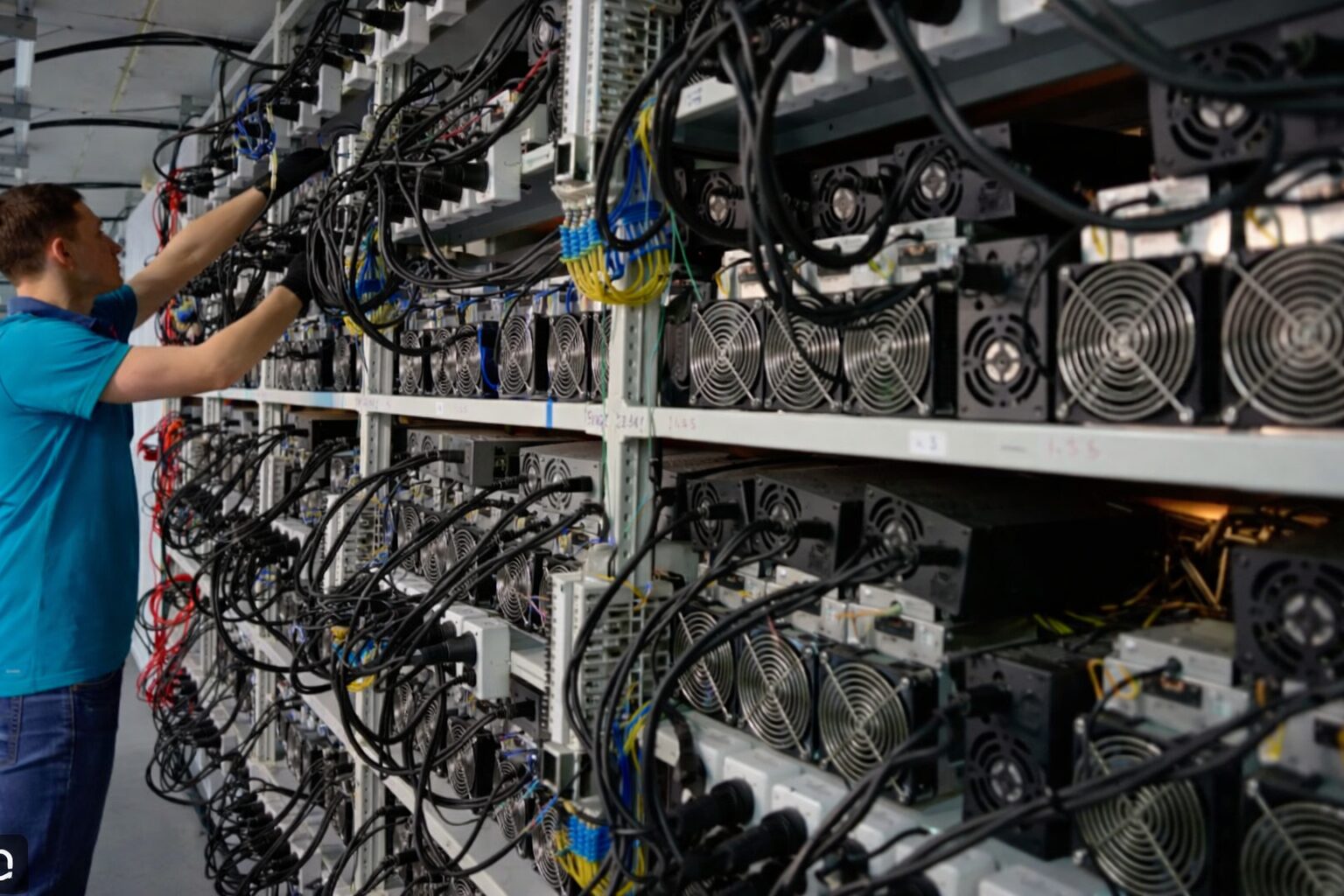
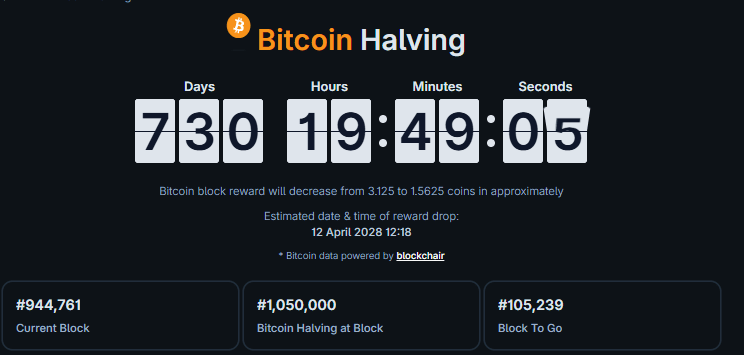
    Bitcoin miners are entering the run up to the April 2028 halving with significantly tighter margins than in previous cycles, as rising energy prices and higher operational costs reshape the sector. During the last halving in April 2024, block rewards were reduced from 6.25 BTC to 3.125 BTC, while the next event will cut rewards further to 1.5625 BTC per block, increasing pressure on profitability.

    Bitcoin Halving Countdown.: CoinGecko

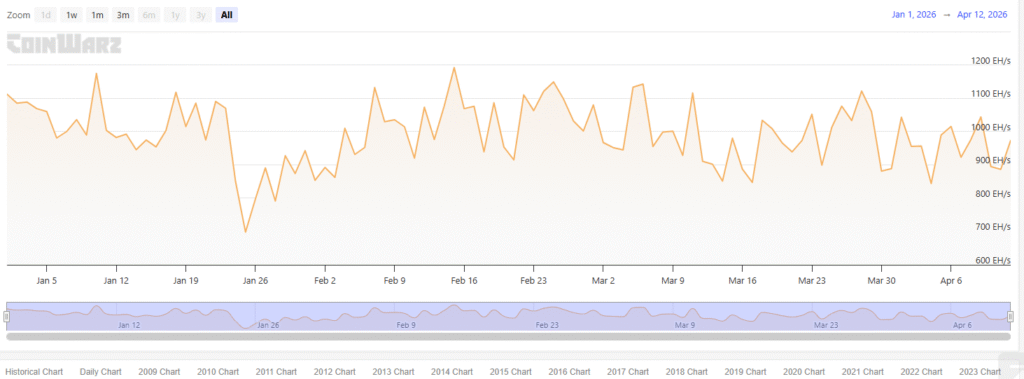
    Record network hashrates and more expensive power contracts are forcing mining firms to rethink strategies. Energy security has become a major concern following geopolitical disruptions, pushing companies to secure long-term electricity agreements across multiple regions rather than relying on short-term low cost tariffs.

    Bitcoin Hashrate 2026: CoinWarz

    Mining Firms Reduce Bitcoin Holdings to Strengthen Balance Sheets

    Several mining companies have already taken steps to strengthen finances ahead of the next halving cycle. MARA Holdings sold more than 15,000 BTC in March to reduce leverage, while Riot Platforms sold over 3,700 BTC in the first quarter. Cango also liquidated 2,000 BTC to repay debt, and Bitdeer reported zero Bitcoin holdings as of February 20.

    Industry leaders now view mining operations increasingly as energy and infrastructure businesses, exploring additional revenue streams such as grid services, heat reuse, and high-performance computing workloads to remain competitive.

    Disclaimer

    This content is for informational purposes only and does not constitute financial, investment, or legal advice. Cryptocurrency trading involves risk and may result in financial loss.
  • Why North Korea Crypto Theft Continues to Threaten the Digital Asset Industry

    Why North Korea Crypto Theft Continues to Threaten the Digital Asset Industry

    North Korea Crypto Theft Driven by Economic Survival Needs

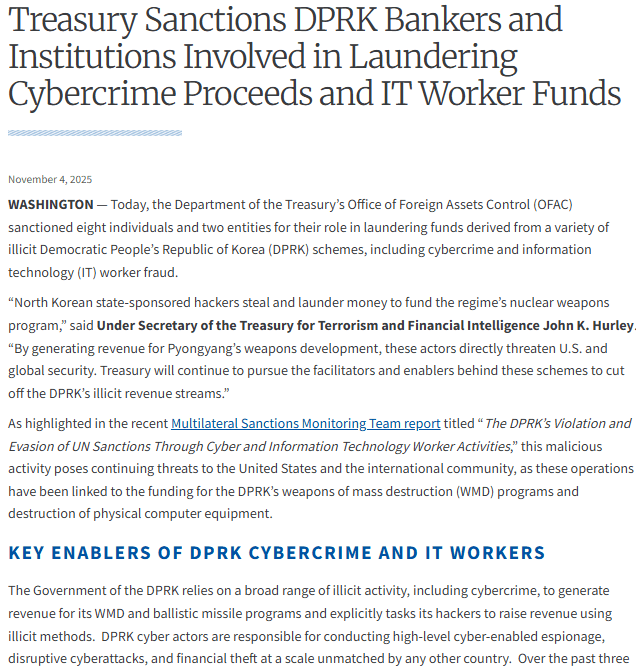
    North Korea’s continued involvement in large scale crypto theft is widely viewed by security analysts as a strategy tied directly to economic survival. Unlike countries such as Russia or Iran, which still maintain trade networks and export industries, North Korea faces extensive international sanctions that restrict most of its economic activity.

    Experts argue that crypto theft provides the regime with direct access to liquid funds without requiring foreign partners. According to cybersecurity specialist Dave Schwed, the country relies on digital asset theft to obtain hard currency, with global intelligence agencies linking these funds to nuclear and ballistic missile development programs. This economic pressure explains why North Korean hackers frequently conduct large, traceable attacks instead of quietly using crypto to bypass sanctions.

    Advanced Infiltration Tactics Target Crypto Infrastructure

    Security professionals note that North Korean operations differ from other state-backed cyber campaigns. Alexander Urbelis, a cybersecurity expert, explained that the group focuses directly on crypto infrastructure, including exchanges, wallet providers, and decentralized finance platforms.

    Their methods often involve months-long relationship building, fake identities, and supply chain infiltration designed to gain access to signing keys or sensitive infrastructure. The finality of blockchain transactions makes prevention critical, as once transfers are confirmed, reversing stolen funds is nearly impossible.

    Disclaimer

    This content is for informational purposes only and does not constitute financial, investment, or legal advice. Cryptocurrency trading involves risk and may result in financial loss.

  • Polymarket Links Removed From Google News After Brief Listing Error

    Polymarket Links Removed From Google News After Brief Listing Error

    Prediction market platform Polymarket briefly appeared inside Google News search results alongside established media outlets before being removed, according to reports citing a company spokesperson. Ned Adriance, speaking on behalf of Google, confirmed that the listing occurred due to a technical error and stated that the site is no longer being displayed in Google News.

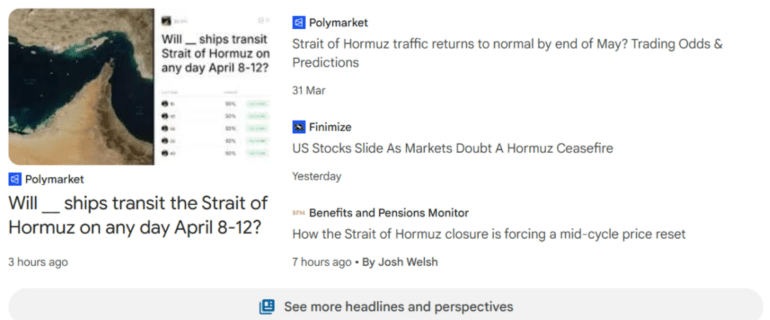
    Before its removal, Polymarket links were shown directly beneath major publishers during event-driven searches. One example highlighted involved searches related to vessel movement through the Strait of Hormuz, where a Polymarket prediction market appeared next to traditional reporting sources. Subsequent searches confirmed that these links had disappeared following the correction.

    Partnerships Expand Prediction Market Integration Across Platforms

    Despite the temporary removal from Google News, Polymarket has expanded its presence through partnerships with major digital platforms. Google previously collaborated with Polymarket and rival platform Kalshi to integrate prediction market data into Google Finance tools.

    Additionally, Elon Musk’s X platform announced a partnership naming Polymarket as its official prediction market provider. Wallet services such as MetaMask and the World App, developed under Sam Altman’s World project, also integrated Polymarket features during October, supporting broader adoption across decentralized finance ecosystems.

    Data Shows Limited Profitability Among Prediction Market Traders

    Recent analytics shared by crypto analyst Andrey Sergeenkov indicate that consistent profitability remains rare among prediction market participants. Approximately 1% of traders recorded monthly profits above $5,000, while only 0.015% maintained that performance for four consecutive months.

    The findings also revealed that just 0.033% of wallets exceeded $100,000 in total profits, suggesting that while prediction markets are gaining popularity, sustained earnings remain difficult for most users.

    Disclaimer

    This content is for informational purposes only and does not constitute financial, investment, or legal advice. Cryptocurrency trading involves risk and may result in financial loss.
  • Oil Futures Surge After Hormuz Blockade Order Sparks Supply Shock Fears

    Oil Futures Surge After Hormuz Blockade Order Sparks Supply Shock Fears

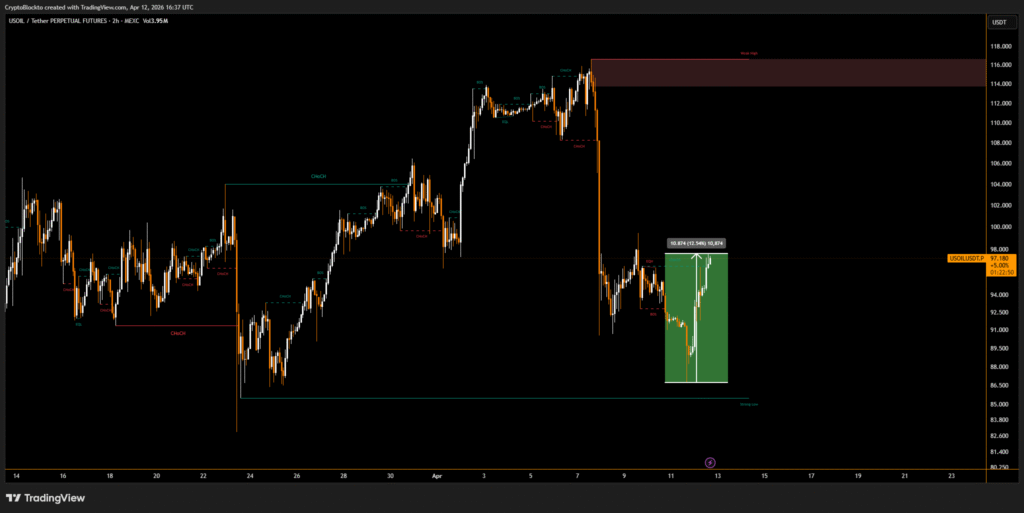
    Oil futures surged sharply after U.S. President Donald Trump ordered a naval blockade of the Strait of Hormuz, intensifying fears of major supply disruptions. The decision followed failed nuclear negotiations with Iran and heightened geopolitical tensions in the region.

    WTI crude futures rose about 7% to $96.40, while Brent crude increased roughly 7% to $97. Trading activity surged significantly, with WTI volume reaching $1.53 billion, making it one of the most actively traded instruments on the platform alongside major cryptocurrencies.

    Oil Futures 2h price hart

    Strategic Oil Supply Risks Grow as Emergency Reserves Near Limits

    The blockade threatens to deepen an already strained oil supply environment. Emergency stockpile releases coordinated by the International Energy Agency have been offsetting disruptions of 4.5 to 5 million barrels per day since late February. However, analysts warn the supply gap could widen to 10 to 11 million barrels per day if shipments through Hormuz remain restricted.

    Fatih Birol previously cautioned that supply disruptions could intensify in April, potentially triggering higher inflation, increased equity market volatility, and renewed pressure on risk assets such as Bitcoin.

    Disclaimer

    This content is for informational purposes only and does not constitute financial, investment, or legal advice. Cryptocurrency trading involves risk and may result in financial loss.