Author: tristan

  • XRP Falls to $1.30 After Failed Breakout Amid Thinning Liquidity

    XRP Falls to $1.30 After Failed Breakout Amid Thinning Liquidity

    XRP failed to hold above $1.35 and closed near $1.30, with the rejection at resistance indicating stronger selling pressure than the 2% price drop suggests. Rising volume during the failed breakout, combined with lower highs, shows sellers maintaining control while support weakens.
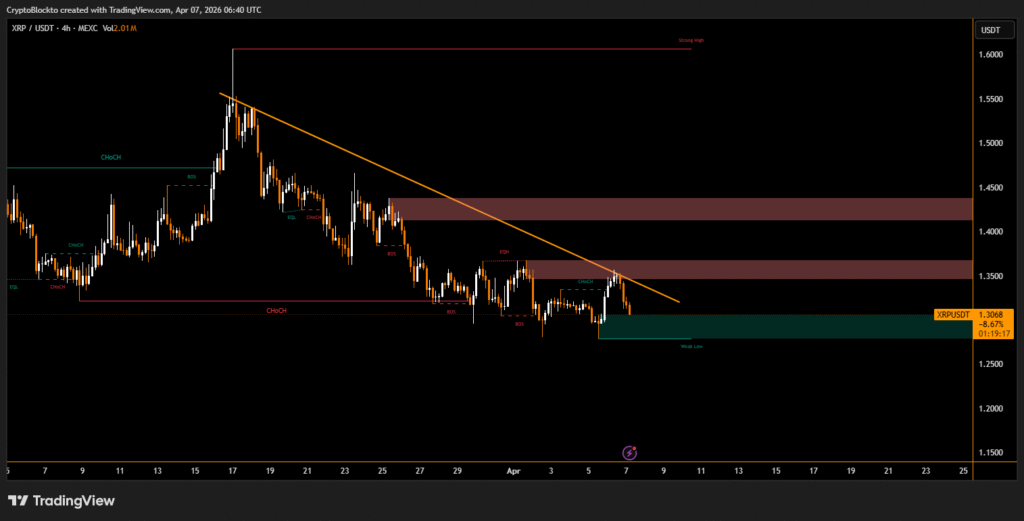
    $XRP 4h price chart

    Liquidity has sharply declined, thinning order books and raising the risk of more pronounced price swings. Open interest is increasing even as the price falls, indicating traders are adding short positions in anticipation of a sharper move.

    Key Technical Levels and Trader Focus

    $1.35 now represents the immediate resistance ceiling. A sustained reclaim above this level is required to shift momentum back toward buyers. The support zone near $1.30–$1.29 is critical; a break below it could open the path toward $1.28.

    Analysts note that with liquidity thinning, any breach of key resistance or support could trigger amplified moves, making XRP’s near-term price action highly sensitive to order book depth and market positioning. Traders should monitor these levels closely for potential rapid directional shifts.

    Disclaimer

    This content is for informational purposes only and does not constitute financial, investment, or legal advice. Cryptocurrency trading involves risk and may result in financial loss.

  • Iran Proposes $2 Million Strait of Hormuz Fee as Part of 10-Point Peace Plan

    Iran Proposes $2 Million Strait of Hormuz Fee as Part of 10-Point Peace Plan

    Tehran Seeks Guarantees in Exchange for Reopening Strait

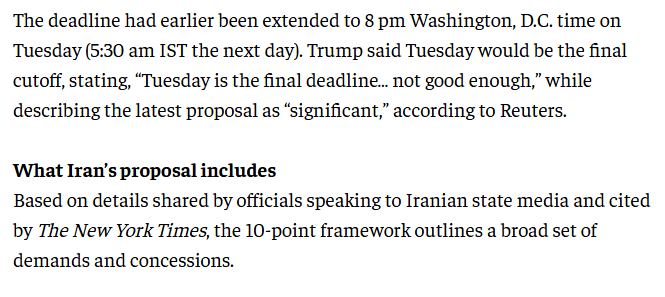
    Iran has reportedly presented a 10-point proposal aimed at ending its ongoing conflict with the United States and Israel, according to state media reports. The plan, conveyed via Pakistan, comes amid escalating tensions and a looming deadline set by former US President Donald Trump for Tehran to meet certain conditions. Trump described the proposal as “significant” but reiterated that Tuesday would be the “final deadline.”

    At the heart of the plan, Iran demands guarantees against future attacks and a permanent cessation of Israeli strikes against Hezbollah in Lebanon. It also calls for the lifting of all economic sanctions imposed on the country.

    In return, Iran would permit the reopening of the Strait of Hormuz, a strategic waterway vital for global oil and gas transport. Additionally, Tehran has proposed charging $2 million per ship passing through the strait while seeking assurances that it will be shielded from future military strikes.

    The framework signals Iran’s attempt to negotiate both security guarantees and economic concessions, linking control over a key maritime chokepoint with broader geopolitical demands.

    Disclaimer

    This content is for informational purposes only and does not constitute financial, investment, or legal advice. Cryptocurrency trading involves risk and may result in financial loss.

  • Bitcoin’s Quantum Risks Are ‘More Social Than Technical,’ Says Grayscale

    Bitcoin’s Quantum Risks Are ‘More Social Than Technical,’ Says Grayscale

    The threat posed by quantum computers to Bitcoin may be more about social coordination than technical vulnerability, according to Zach Pandl. While Google’s March 30 report suggested that a quantum computer could potentially break Bitcoin’s cryptography with fewer resources than previously expected, Pandl emphasized that Bitcoin’s technical design reduces its risk. The UTXO model, proof-of-work consensus, absence of native smart contracts, and certain address types make it less exposed than other cryptocurrencies.

    Managing Dormant and Vulnerable Coins

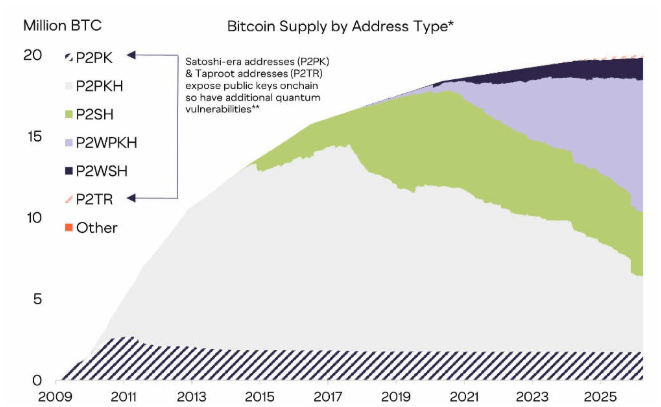
    Approximately 1.7 million BTC, including an estimated 1 million held by Satoshi, are locked in early P2PK addresses. The Bitcoin community faces three options: burn these coins, slow their release, or take no action. Pandl noted that “all are conceptually doable,” but reaching consensus is difficult given Bitcoin’s history of contentious protocol debates, including the 2023 dispute over blockspace usage for Bitcoin Ordinals.

    About 1.7 million BTC is vulnerable to the quantum threat

    Preparing for a Post-Quantum Future

    Pandl stressed it is “time to get started” on adopting post-quantum cryptography, citing initiatives by Solana, the XRP Ledger, and the Ethereum Foundation. For now, he reassured investors that no immediate security threat exists, but preparation is crucial for the long-term security of Bitcoin and other blockchains.

    Disclaimer

    This content is for informational purposes only and does not constitute financial, investment, or legal advice. Cryptocurrency trading involves risk and may result in financial loss.
  • SEC Nears Release of “Reg Crypto” Proposal on Fundraising and Startup Exemptions

    SEC Nears Release of “Reg Crypto” Proposal on Fundraising and Startup Exemptions

    SEC Moves Closer to Publishing Crypto Fundraising Rules

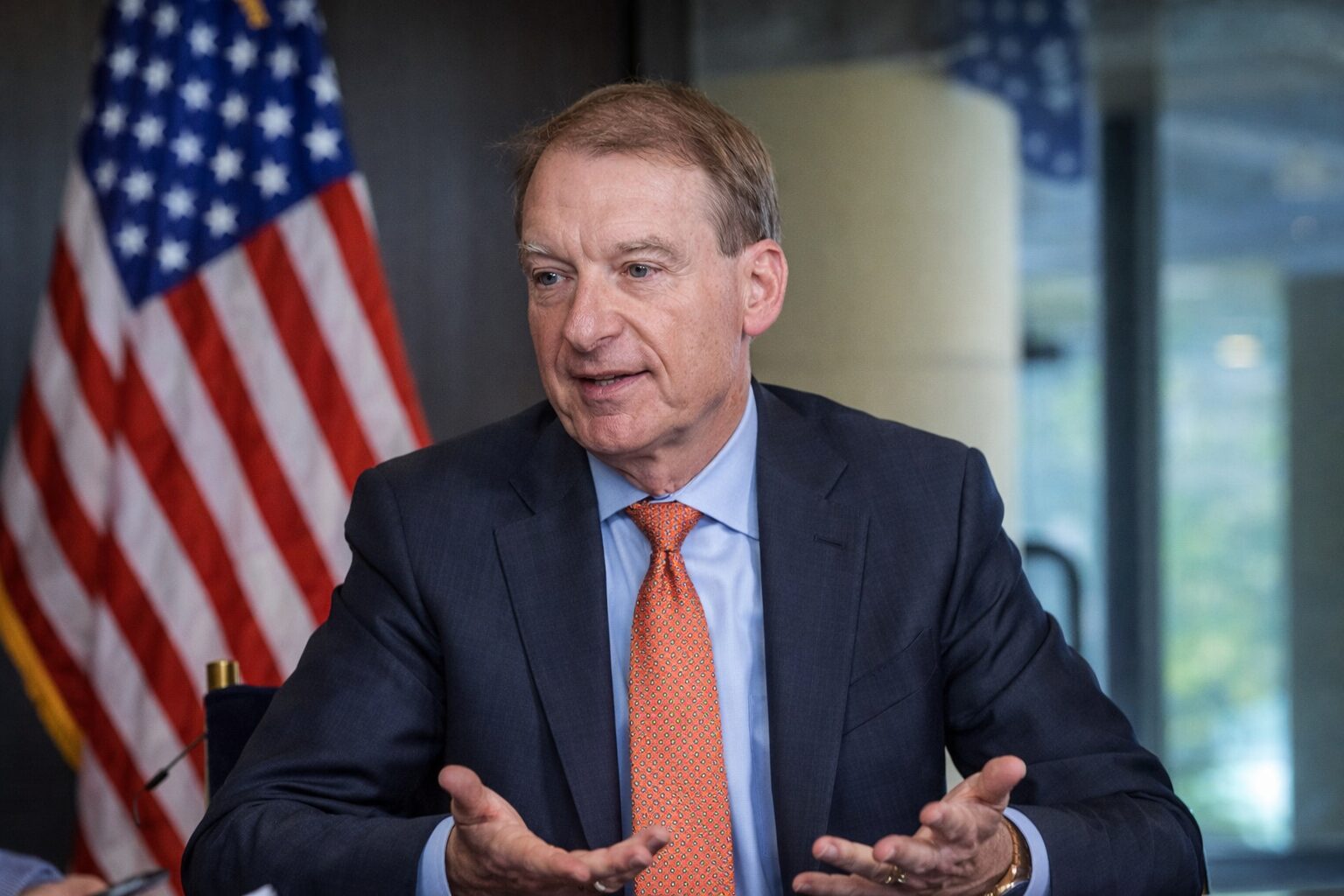
    The US Securities and Exchange Commission is preparing to release a long-awaited “Reg Crypto” proposal that will clarify how crypto fundraising and startup exemptions are regulated. Chair Paul Atkins said the proposal is currently under review by the White House Office of Information and Regulatory Affairs, placing it one step away from public release.

    According to Atkins, the proposal focuses on the Securities Act of 1933 and aims to define which crypto transactions qualify as securities and which do not. It will specifically address fundraising structures and exemptions that allow startups to raise capital. He also confirmed that the SEC plans to introduce a separate innovation exemption designed to allow experimentation without disadvantaging established companies.

    US Senator Paul atkins: Blockchain Association

    Political Engagement and Congressional Influence Highlighted

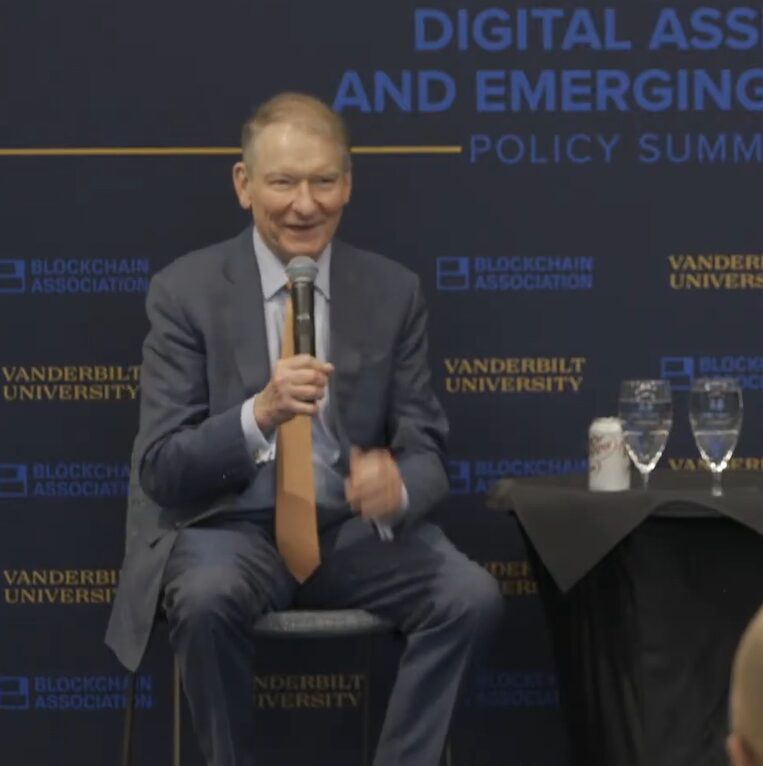
    Speaking at an event hosted by Vanderbilt University and the Blockchain Association, Atkins emphasized the role of Congress in shaping the regulatory environment. He stated that while rulemaking is advancing, lawmakers could still influence its direction.

    Atkins encouraged industry participants to remain engaged in the upcoming midterm elections, citing Bernie Moreno as an example of supportive leadership. He warned that an unfriendly Congress could create obstacles, though he expressed confidence that regulatory progress would continue despite political uncertainty.

    Disclaimer

    This content is for informational purposes only and does not constitute financial, investment, or legal advice. Cryptocurrency trading involves risk and may result in financial loss.
  • Bitcoin Slides Toward $68,000 as Whale Selling and Weak Demand Pressure Market

    Bitcoin Slides Toward $68,000 as Whale Selling and Weak Demand Pressure Market

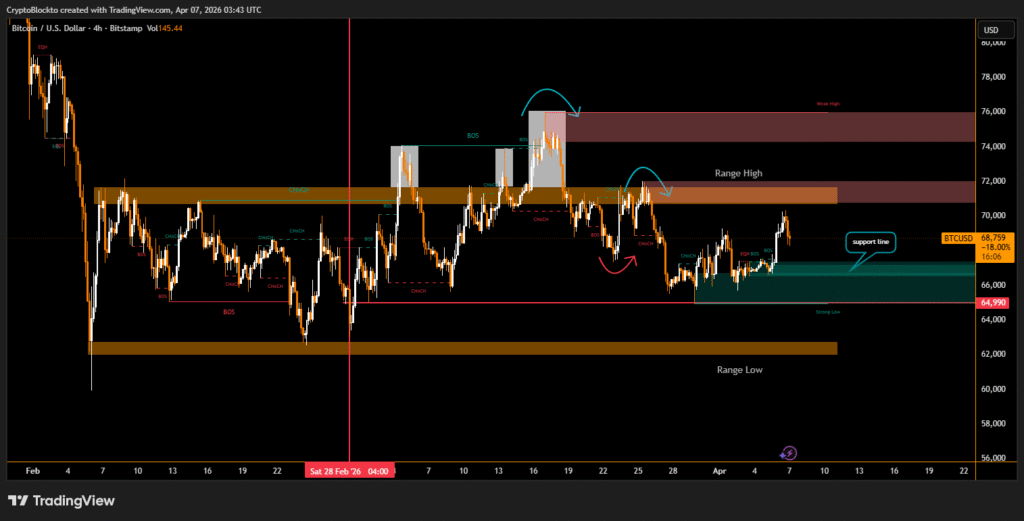
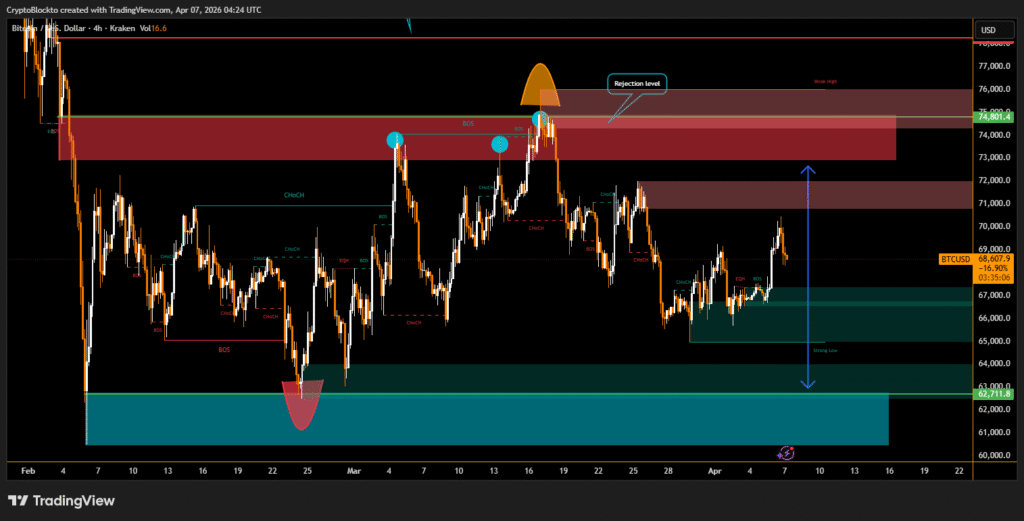
    Bitcoin has repeatedly failed to maintain levels above $70,000 and is now retreating toward $68,000, testing the lower boundary of a $65,000–$73,000 trading range that has held since late March. On-chain data from Glassnode indicates soft trading volumes and subdued activity, signaling weak participation behind recent price moves.

    $BTC 4h prie chart

    Large holders continue distributing BTC, according to trading and liquidity firm Caladan, leaving the market reliant on macro-driven flows and derivatives positioning rather than broad based accumulation.

    Derivatives and Prediction Markets Signal Downside Risk

    Options markets show elevated implied volatility relative to realized levels, reflecting increased demand for downside protection. Analysts highlight a negative gamma setup below $68,000, where market makers may be forced to sell BTC to hedge positions, potentially accelerating a decline toward $60,000 if support fails.

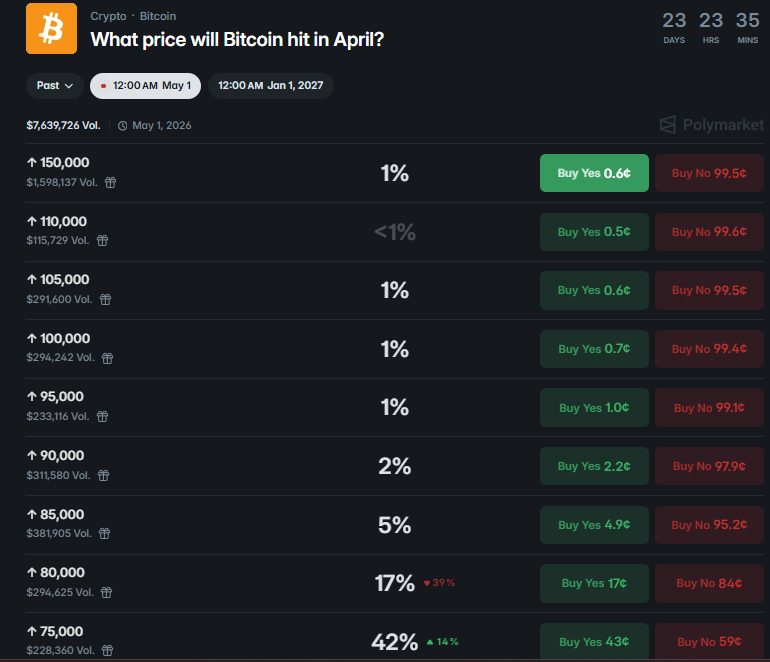
    Prediction market activity on Polymarket shows traders assigning a 68% probability that BTC will trade at or below $65,000 in April, while higher targets like $80,000 have seen falling odds.

    Taken together, these trends suggest a structurally fragile market: stable for now, but vulnerable to sharp declines if key support levels break.

    Disclaimer

    This content is for informational purposes only and does not constitute financial, investment, or legal advice. Cryptocurrency trading involves risk and may result in financial loss.
  • JPMorgan CEO Jamie Dimon Warns of Rising Blockchain and Stablecoin Competition

    JPMorgan CEO Jamie Dimon Warns of Rising Blockchain and Stablecoin Competition

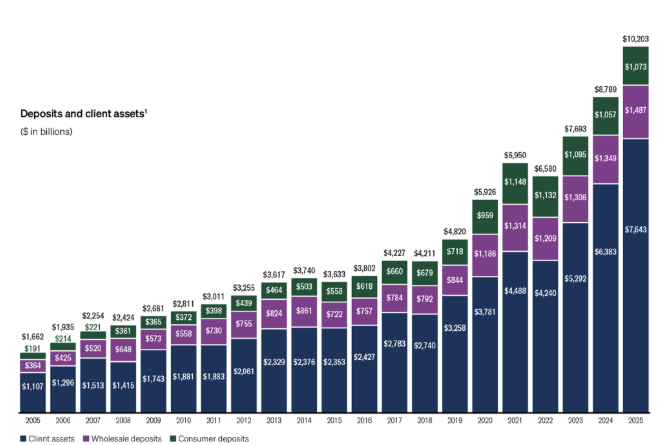
    Chief executive Jamie Dimon has warned that emerging technologies, including blockchain and stablecoins, are creating a new wave of competition for traditional financial institutions. In his annual shareholder letter, Dimon highlighted artificial intelligence, advanced data systems and automation as key forces shaping the future of banking.

    He noted that blockchain-based systems are introducing new competitors capable of offering financial services through stablecoins, smart contracts and tokenization. While these technologies were not the central theme of the letter, Dimon acknowledged that their growth represents a meaningful shift in how financial services may be delivered in the coming years.

    Dimon’s shareholder letter highlighted the bank’s scale, including client assets, wholesale funding and consumer deposits: JPMorgan

    JPMorgan Expands Kinexys Blockchain Network

    JPMorgan Chase has continued investing in its internal blockchain infrastructure known as Kinexys, which supports near-instant transfers without relying on traditional intermediaries. The platform is targeting up to $10 billion in daily transaction volume.

    Major institutional participants, including Mitsubishi Corporation, Qatar National Bank, Siemens and BlackRock, have joined the network. JPMorgan is also positioning Kinexys to support tokenization use cases in markets such as private credit and real estate.

    Stablecoin Regulation Debate Intensifies in Washington

    Dimon’s remarks come amid ongoing regulatory debates in the United States following the passage of the GENIUS Act, which established a formal framework for stablecoin oversight. Analysts believe clearer regulations could accelerate institutional adoption.

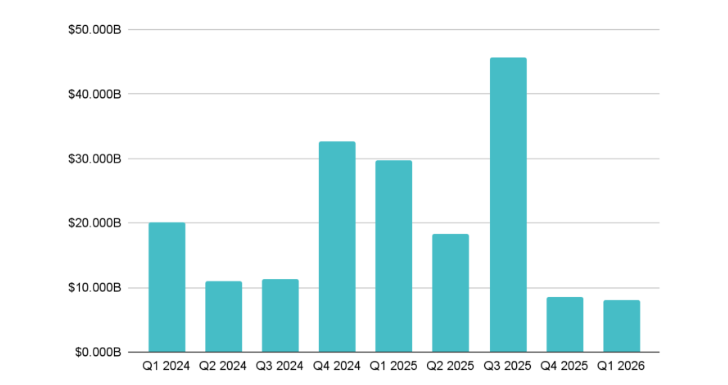
    The stablecoin market topped $315 billion in the first quarter

    However, disagreements remain over yield-bearing stablecoins, which banking groups argue could pose financial stability risks if issuers offer interest-like returns without meeting banking-level regulations. Industry organizations such as the American Bankers Association have made opposition to yield-generating stablecoins a central policy priority as legislative discussions continue.

    Disclaimer

    This content is for informational purposes only and does not constitute financial, investment, or legal advice. Cryptocurrency trading involves risk and may result in financial loss.

  • Bitcoin Could Target $110K as Strategy Absorbs Nearly Three Times New Supply

    Bitcoin Could Target $110K as Strategy Absorbs Nearly Three Times New Supply

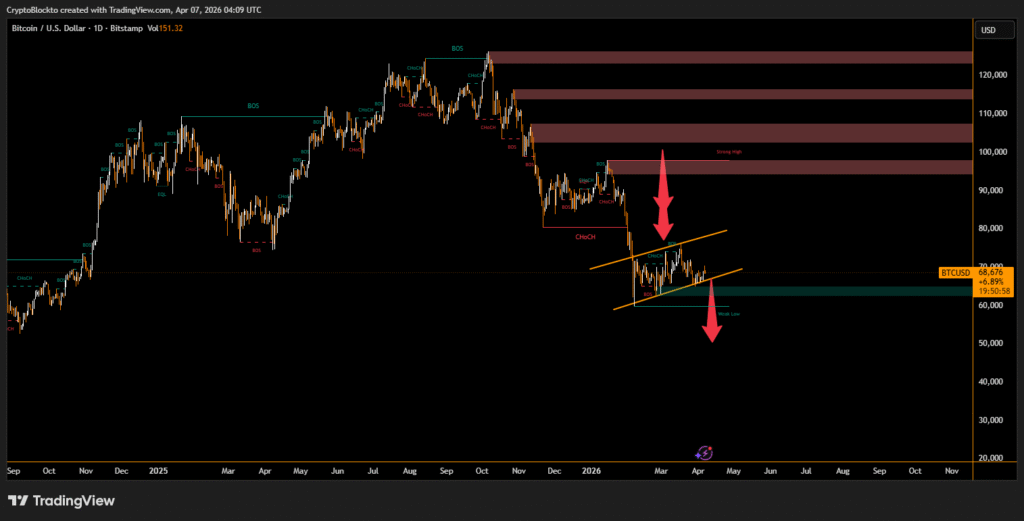
    Bitcoin remains locked inside a bear flag formation that traditionally signals a continuation of downside momentum toward sub-$50,000 levels, roughly 30% below current prices. However, aggressive buying by Strategy, led by chairman Michael Saylor, is creating strong counterpressure against bearish expectations.

    $BTC weekly price chart

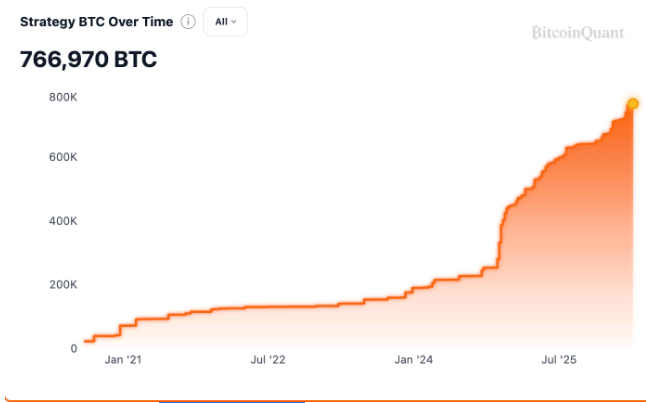
    Since March 2, Strategy has accumulated approximately 46,233 BTC, significantly outpacing the roughly 16,200 BTC mined during the same period. This means the firm absorbed nearly three times the newly created supply, tightening available liquidity and helping Bitcoin avoid a breakdown that had been anticipated for weeks.

    Much of this demand has been funded through Strategy’s STRC variable-rate preferred stock. When STRC traded near or above its $100 par value, the company increased share issuance to finance purchases. Last week alone, Strategy raised $102.6 million through STRC sales, contributing to a Bitcoin purchase exceeding $330 million. Following this activity, Bitcoin’s price climbed more than 6.65%.

    Strategy’s BTC holdings chart.

    Between March 9 and March 13, STRC sales generated about $776 million, enough to acquire over 11,000 BTC. During that period, Bitcoin gained more than 10.5%, even as the S&P 500 declined by 1.6%, highlighting divergence between crypto and traditional markets.

    Bear Flag Failure Could Trigger Rally Toward $110,000

    Bitcoin’s bearish outlook could be invalidated if price breaks above the upper boundary of the bear flag near the mid-$70,000 range. A confirmed breakout would shift market focus toward a measured upside target between $108,000 and $110,000.

    If this level continues to hold as support, analysts suggest the probability of a long-term recovery scenario increases. Still, risk remains tied to demand strength and continued institutional accumulation, particularly if STRC trading weakens, which has previously coincided with 25% to 40% Bitcoin pullbacks driven by long-term holders and large investors.

    Disclaimer

    This content is for informational purposes only and does not constitute financial, investment, or legal advice. Cryptocurrency trading involves risk and may result in financial loss.
  • Polymarket Replaces USDC.e With USDC-Backed Token in Exchange Upgrade

    Polymarket Replaces USDC.e With USDC-Backed Token in Exchange Upgrade

    Polymarket is preparing a major infrastructure overhaul that includes launching new exchange contracts and replacing its existing bridged stablecoin. The company announced plans to deploy version 2 exchange contracts designed to simplify order structure and improve how trades are matched.

    The upgraded system aims to increase trading efficiency and make it easier for developers to integrate trading bots and external applications. It will also support the EIP-1271 standard, allowing smart contract wallets such as multisignature systems to sign transactions, expanding compatibility beyond traditional wallets.

    A key part of the upgrade is the introduction of Polymarket USD, a new collateral token backed 1:1 by USD Coin. This token will replace USDC.e, the bridged version previously used on the platform. The change is expected to reduce reliance on bridged assets and provide Polymarket with greater control over settlement and risk management. For most users, the transition will occur automatically through the platform interface, requiring only a one-time approval.

    Regulatory Alignment and Growing Market Activity

    The overhaul reflects broader efforts by Polymarket to strengthen market integrity and align more closely with United States regulatory standards. In November, the company received approval from the Commodity Futures Trading Commission to operate an intermediated trading platform in the country, allowing it to return after previously exiting the US market.

    Following regulatory clearance, Polymarket outlined plans to onboard brokers and customers directly while facilitating trades through regulated venues. The platform has also introduced measures to reduce manipulation and insider-trading risks as interest in prediction markets continues to grow.

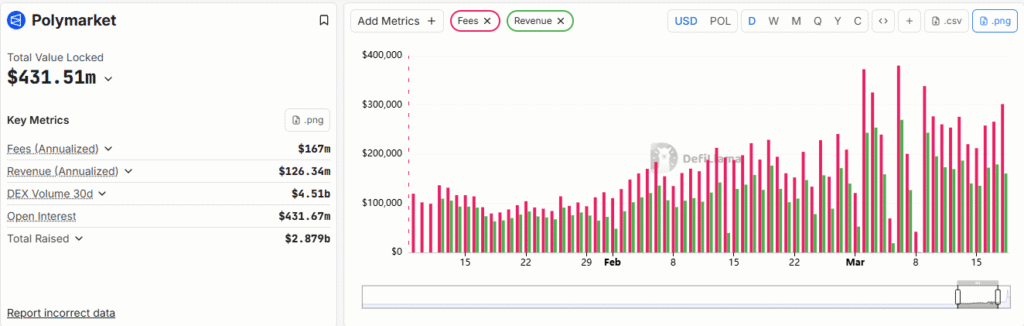
    Industry data indicates that Polymarket’s fee revenue has increased sharply in recent weeks, particularly after the platform expanded its trading fee structure, reflecting rising participation in markets tied to politics, financial events, and public policy outcomes.

    Polymarket’s fees and other revenue have climbed sharply since the end of March: DeFiLlama
    Disclaimer

    This content is for informational purposes only and does not constitute financial, investment, or legal advice. Cryptocurrency trading involves risk and may result in financial loss.
  • Chaos Labs Leaves Aave Risk Role Amid V4 Migration and Oracle Dispute

    Chaos Labs Leaves Aave Risk Role Amid V4 Migration and Oracle Dispute

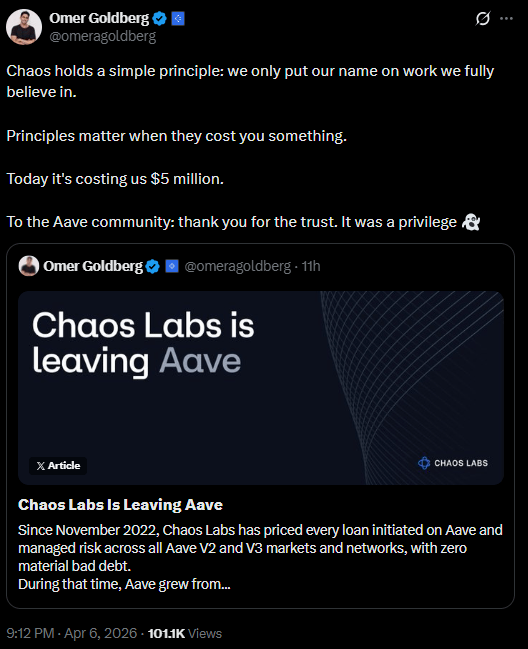
    Chaos Labs has stepped down as a primary risk service provider for Aave after three years, citing disagreements over risk management strategy and operational expectations. Founder Omer Goldberg said the decision “was not made in haste” and followed extended discussions with DAO contributors. He noted that Aave Labs supported raising Chaos Labs’ compensation to $5 million to retain its services.

    Goldberg warned that the planned migration to Aave V4 would significantly increase operational demands. He explained that until V4 fully absorbs V3 liquidity and markets, both systems must run simultaneously, doubling workloads rather than reducing them. He also stressed the absence of a clear regulatory framework defining responsibility if a protocol failure occurs, stating that risk managers face uncertainty if systems break.

    Aave Rejects Sole Risk Control and Oracle Changes

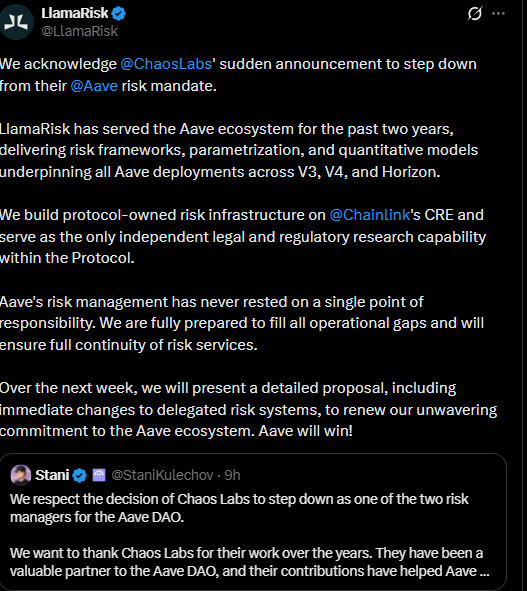
    Chief executive Stani Kulechov said Chaos Labs proposed becoming the sole risk provider, which would have forced the removal of LlamaRisk and replacement of price feeds from Chainlink. Aave declined the proposal to preserve its two-layer risk model.

    Risk concerns intensified after a user reportedly lost $50 million on March 12. Aave later introduced the “Aave Shield” feature, while confirming operations remain stable and collaboration with LlamaRisk will continue.

    LlamaRisk
    Disclaimer

    This content is for informational purposes only and does not constitute financial, investment, or legal advice. Cryptocurrency trading involves risk and may result in financial loss.

  • Bitcoin Options Market Signals Rising Risk of Sharp Downside Move

    Bitcoin Options Market Signals Rising Risk of Sharp Downside Move

    Bitcoin’s recent stable trading range may be masking growing downside risk, as derivatives data shows traders quietly positioning for a potential price drop. According to a recent report from Bitfinex, options activity suggests increasing concern about a break below key support levels despite relatively calm spot market behavior.

    Negative Gamma Risk Below $68,000 Raises Sell Pressure Concerns

    The report highlighted a widening gap between implied and realized volatility, with implied volatility holding between 48% and 55% while actual price swings remain limited. This divergence indicates traders are paying a premium for downside protection even as Bitcoin trades quietly near $68,767.

    $BTC 4h price chart

    Analysts pointed to a critical “negative gamma environment” below the $68,000 level. In this scenario, market makers who have sold downside protection may be forced to sell Bitcoin as prices fall in order to hedge risk. This hedging activity can intensify downward momentum, creating what the report described as a “self-reinforcing feedback loop.” If support breaks, Bitcoin could accelerate toward the $60,000 level.

    Weak Demand and Supply Pressure Create Fragile Market Balance

    Despite Bitcoin moving sideways between roughly $64,000 and $74,000, underlying demand conditions remain weak. The report described current market stability as a “fragile equilibrium,” supported by a shrinking base of buyers. Recent liquidations exceeding $247 million in long positions have not fully reset market positioning.

    Corporate treasury participation has also narrowed, with fewer companies actively accumulating Bitcoin. While Strategy (MSTR) continues to add holdings, others have reduced exposure, including a notable sale by Marathon (MARA).

    At the same time, significant supply remains concentrated near the $74,000 level, where investors who purchased at higher prices may look to exit during rallies. These combined pressures suggest Bitcoin’s calm trading range could give way to a sharper move if support levels fail.

    Disclaimer

    This content is for informational purposes only and does not constitute financial, investment, or legal advice. Cryptocurrency trading involves risk and may result in financial loss.