Author: tristan

  • Crypto Investment Inflows Rebound as XRP Tops $224 Million Weekly Gains

    Crypto Investment Inflows Rebound as XRP Tops $224 Million Weekly Gains

    Cryptocurrency investment products recorded $224 million in inflows last week, rebounding from $414 million in outflows the previous week, according to CoinShares. Total assets under management now stand at approximately $131.8 billion, roughly in line with last year’s levels. Year-to-date inflows reached $1.2 billion, compared with $960 million over the same period in 2025, reflecting a cautious but improving investor sentiment amid mixed macro data and policy expectations.

    XRP Leads Weekly Inflows, Bitcoin Follows

    XRP led the weekly gains with around $120 million in inflows, accounting for more than half of net inflows and marking its largest weekly inflows since mid-December 2025. Year-to-date, XRP inflows total $159 million.
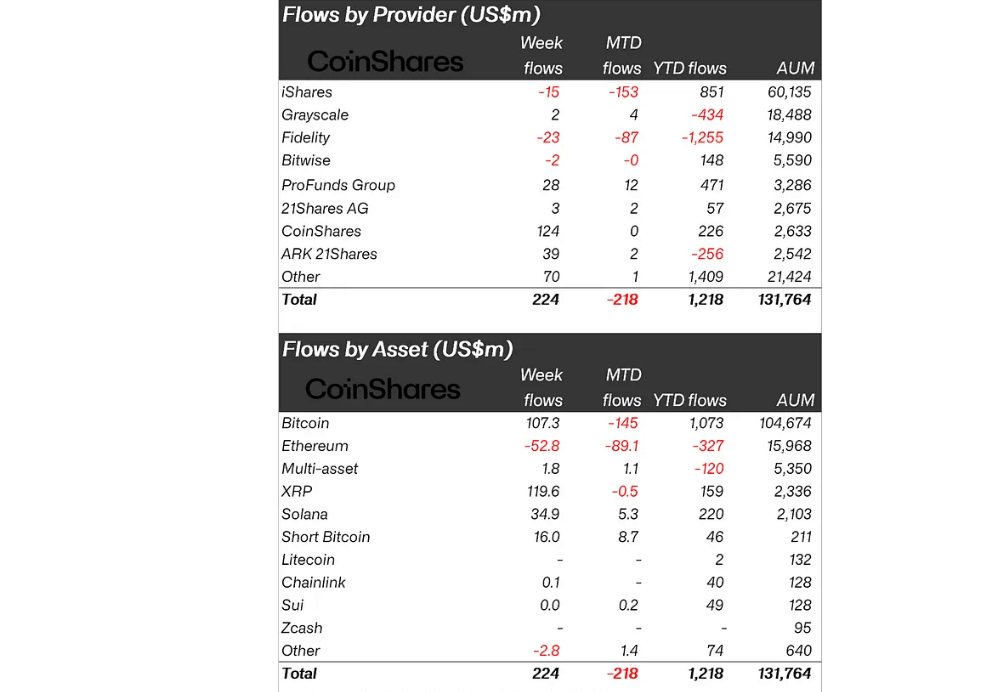
    Crypto ETP flows by asset 

    Bitcoin ETPs followed closely with $107 million in inflows, bringing year-to-date flows to just over $1 billion. US spot Bitcoin ETFs contributed only $22 million, remaining in negative territory year-to-date. Solana also saw minor inflows of $35 million, representing 10% of total assets under management.

    Ether Outflows Continue Amid Regulatory Concerns

    Ether (ETH) investment products lagged, posting $53 million in outflows, following $222 million in outflows the prior week. Year-to-date Ether outflows now total $327 million, with negative sentiment linked to developments around the CLARITY Act affecting Ethereum-based stablecoins.

    Geographical Distribution of Inflows

    Switzerland led inflows with roughly $157 million, followed by Germany and the US at about $28 million each, and Canada with $11 million.

    These trends indicate selective investor confidence, with XRP and Bitcoin drawing interest while Ether continues to face regulatory-related headwinds.

    Disclaimer

    This content is for informational purposes only and does not constitute financial, investment, or legal advice. Cryptocurrency trading involves risk and may result in financial loss.

  • Bitcoin Whale Moves $20 Million to Binance Amid Market Activity

    Bitcoin Whale Moves $20 Million to Binance Amid Market Activity

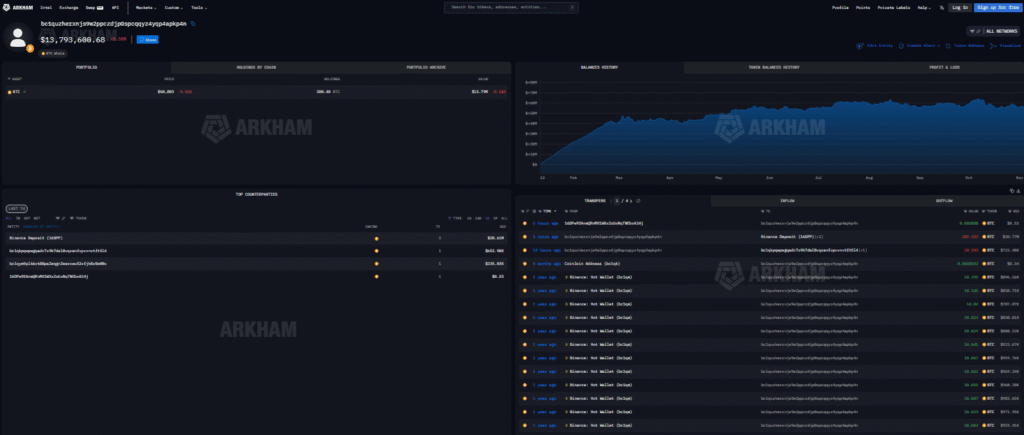
    A bitcoin whale transferred approximately 300 BTC, valued at over $20 million, to a Binance deposit address on Tuesday, according to Arkham Intelligence. The wallet, labeled “bc1q…kp4n,” still retains roughly 200 BTC, worth about $13.75 million.

    Between January and March 2025, this wallet accumulated 513 BTC, valued at $50 million at the time, suggesting an average purchase price of $97,541 per bitcoin. While it is unclear if the whale intends to sell, such transfers to exchanges often indicate potential market activity. Selling now would result in a loss, with BTC trading near $68,692.

    Whale Activity Trends in Crypto Markets

    This move follows a wave of recent whale activity. Last month, a bitcoin wallet moved 2,100 BTC ($147.7 million) that had been dormant for over 13 years. Another whale transferred $33 million in BTC to Binance.

    Bitcoin edged down 0.6% in the past 24 hours, maintaining a price near $68,892. Btc remains down roughly 45% from its all-time high of $124,900, recorded in October 2025, reflecting continued volatility and active participation from large holders.

    Disclaimer

    This content is for informational purposes only and does not constitute financial, investment, or legal advice. Cryptocurrency trading involves risk and may result in financial loss.
  • Trump Threatens Iran – “Whole Civilization Will Die Tonight” Over Strait of Hormuz

    Trump Threatens Iran – “Whole Civilization Will Die Tonight” Over Strait of Hormuz

    U.S. President Donald Trump threatened on Tuesday that Iran’s “whole civilization will die tonight” if it does not reopen the Strait of Hormuz by his 8 p.m. ET deadline. Trump described the moment as “one of the most important in the long and complex history of the world” in a post on his social media platform, Truth Social.

    Potential Impact on Global Oil and Security

    The Strait of Hormuz, a vital channel for roughly 20% of global oil supply, has been closed since the start of the conflict. While relatively little Middle Eastern oil reaches the U.S., the closure has caused volatility in global commodity markets and contributed to a 39% rise in U.S. gas prices since the conflict began, with the national average at $4.14 per gallon.

    Trump’s warning represents a potential sharp escalation in U.S.-Israeli operations against Iran, raising uncertainty over energy markets and regional stability. Analysts note that even if the strait reopens, pump prices may take weeks to adjust.

    Disclaimer

    This content is for informational purposes only and does not constitute financial, investment, or legal advice. Cryptocurrency trading involves risk and may result in financial loss.

  • Iran Pushes Permanent End to War After Turning Down 45‑Day Plan

    Iran Pushes Permanent End to War After Turning Down 45‑Day Plan

    The average price of a gallon of US regular gasoline rose 2 cents on Tuesday, reaching $4.14, according to the latest data from AAA. Prices have now increased 39% since the start of the Iran conflict, with last week marking the first time gas crossed $4 per gallon since 2022.

    Trump Issues Ceasefire Deadline, Strait of Hormuz Remains Key Factor

    President Donald Trump has threatened attacks on Iran’s power plants and bridges unless Tehran reopens the Strait of Hormuz by 8 p.m. ET Tuesday. The strait has been closed to about 20% of global oil supply since the conflict began, creating volatility in global commodity markets.

    Oil futures showed only slight gains in early trading, as investors awaited Trump’s next moves, noting that prior deadlines have been reversed, triggering sharp drops in prices.

    Global Supply Disruptions Affect Domestic Prices

    Although relatively little Middle Eastern oil reaches the US, the strait’s closure has impacted global oil and gas pricing, which in turn drives pump prices domestically. Analysts note that even if the strait reopens and oil futures fall, gas prices may take weeks to reflect any decline, keeping American drivers exposed to high costs.

    Disclaimer

    This content is for informational purposes only and does not constitute financial, investment, or legal advice. Cryptocurrency trading involves risk and may result in financial loss.

  • Solana Foundation Launches STRIDE to Strengthen DeFi Security

    Solana Foundation Launches STRIDE to Strengthen DeFi Security

    New Framework and Incident-Response Network Target Protocol Vulnerabilities

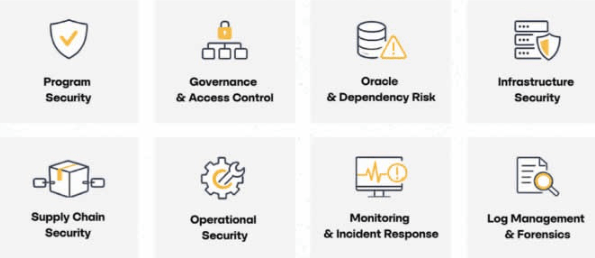
    The Solana Foundation, in collaboration with Web3 security firm Asymmetric Research, unveiled a new security initiative called STRIDE (Solana Trust, Resilience and Infrastructure for DeFi Enterprises) to improve protocol safety and transparency across the Solana ecosystem. STRIDE evaluates protocols on eight pillars: program security, governance and access control, oracle and dependency risk, infrastructure security, supply chain security, operational security, monitoring and incident response, and log management and forensics. Findings are independently assessed and published publicly, providing users and investors insight into each protocol’s security posture.

    Solana Incident Response Network (SIRN)

    Alongside STRIDE, the Solana Foundation announced the Solana Incident Response Network (SIRN), a coalition of security firms sharing threat intelligence, coordinating responses, and contributing to STRIDE’s evolution in real time.

    STRIDE’s eight pillars of security: Asymmetric Research

    The move follows major DeFi attacks, including the $280 million exploit of Drift Protocol and AI-assisted thefts on Step Finance. Overall, over $168 million was stolen from 34 DeFi protocols in Q1 2026, though this is lower than the $1.58 billion lost in Q1 2025, highlighting ongoing security challenges. STRIDE and SIRN aim to mitigate such risks and protect the growing Solana DeFi ecosystem.

    Disclaimer

    This content is for informational purposes only and does not constitute financial, investment, or legal advice. Cryptocurrency trading involves risk and may result in financial loss.

  • AI Infrastructure Boom Intensifies Competition Between Bitcoin Mining and Data Centers

    AI Infrastructure Boom Intensifies Competition Between Bitcoin Mining and Data Centers

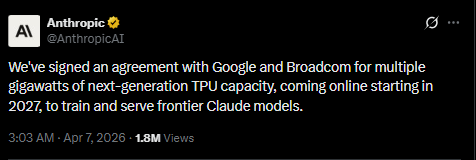
    Anthropic announced a partnership with Google and Broadcom to secure multiple gigawatts of next-generation TPU compute capacity, scheduled to begin coming online in 2027. The agreement marks the company’s most significant infrastructure commitment to date and follows rapid revenue expansion to a $30 billion annual run rate, up sharply from $9 billion at the end of 2025.

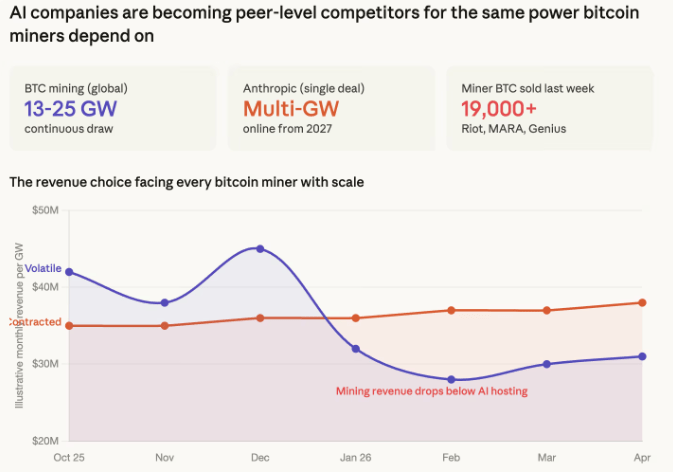
    This scale of compute demand highlights growing competition between artificial intelligence developers and bitcoin miners for scarce resources such as grid connections, land permits, cooling systems, and low-cost electricity. According to a Cambridge tracking estimate, bitcoin mining globally consumes between 13 and 25 gigawatts of continuous power, depending on hardware efficiency assumptions.

    Bitcoin Miners Weigh AI Hosting as Revenue Stability Shifts

    Anthropic’s expansion adds to existing capacity across AWS Trainium, Google TPUs, and Nvidia GPUs, showing how quickly AI demand is reaching levels comparable to large industrial users. At the same time, OpenAI recently raised $122 billion and described compute infrastructure as a strategic moat, expanding across five cloud providers and four chip platforms.

    A gigawatt dedicated to bitcoin mining produces revenue that fluctuates with bitcoin price and network difficulty, while leasing that same capacity to AI firms generates contracted and predictable income. With bitcoin near $69,000, difficulty at all-time highs, and electricity costs rising, leasing often provides stronger returns.

    Mining Firms Shift Strategy as Economics Tighten

    Core Scientific converted a significant portion of its mining capacity to AI hosting through a deal with CoreWeave. Iris Energy and Hut 8 expanded high-performance computing services, while Riot Platforms, MARA Holdings, and Genius Group disclosed selling more than 19,000 BTC from treasuries last week.

    Anthropic also reported that the number of customers spending over $1 million annually on Claude doubled from 500 to more than 1,000 in under two months. Despite these shifts, bitcoin’s network hashrate continues to set records above 1 zetahash per second, suggesting miners may increasingly operate as infrastructure providers renting power capacity alongside mining operations.

    Disclaimer

    This content is for informational purposes only and does not constitute financial, investment, or legal advice. Cryptocurrency trading involves risk and may result in financial loss.

  • Bitcoin Decline Triggers $14.5 Billion Unrealized Loss for Strategy in Q1

    Bitcoin Decline Triggers $14.5 Billion Unrealized Loss for Strategy in Q1

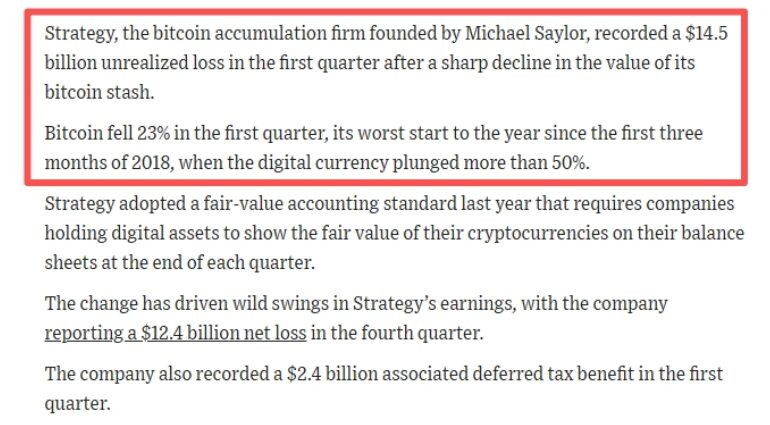
    Strategy Inc. recorded an unrealized loss of about $14.5 billion in the first quarter after a sharp decline in the value of its Bitcoin holdings. Bitcoin fell more than 20% during the three-month period, marking the digital asset’s steepest first-quarter decline since 2018.

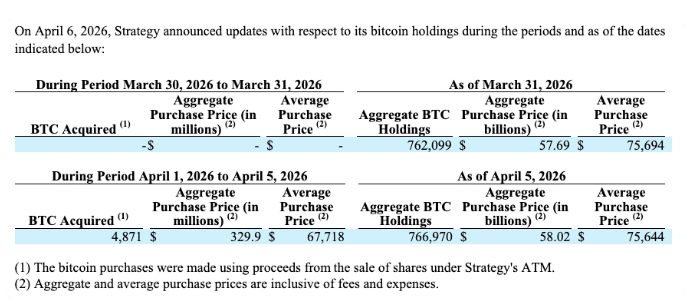
    By the end of the quarter, the company held more than $50 billion in cryptocurrency, but the market downturn pushed the value of those holdings below the firm’s average purchase price of over $75,000 per Bitcoin. Updated accounting rules adopted last year require fair-value adjustments on Bitcoin holdings to be reflected directly in earnings, contributing to large swings in reported financial results.

    Recent Bitcoin Purchases and Funding Strategy

    Between April 1 and April 5, Strategy purchased 4,871 Bitcoin for approximately $330 million, at an average price of about $67,700. The acquisition was funded through sales of Class A common stock and at-the-market offerings of Stretch preferred shares.

    The company also reported a $2.42 billion deferred tax benefit during the quarter.

    Preferred Shares and Capital Strategy Outlook

    Strategy plans to raise additional funds through $21 billion in Class A stock and $21 billion in perpetual preferred shares. These preferred securities carry an 11.5% annual yield, resetting monthly to maintain a $100 par value.

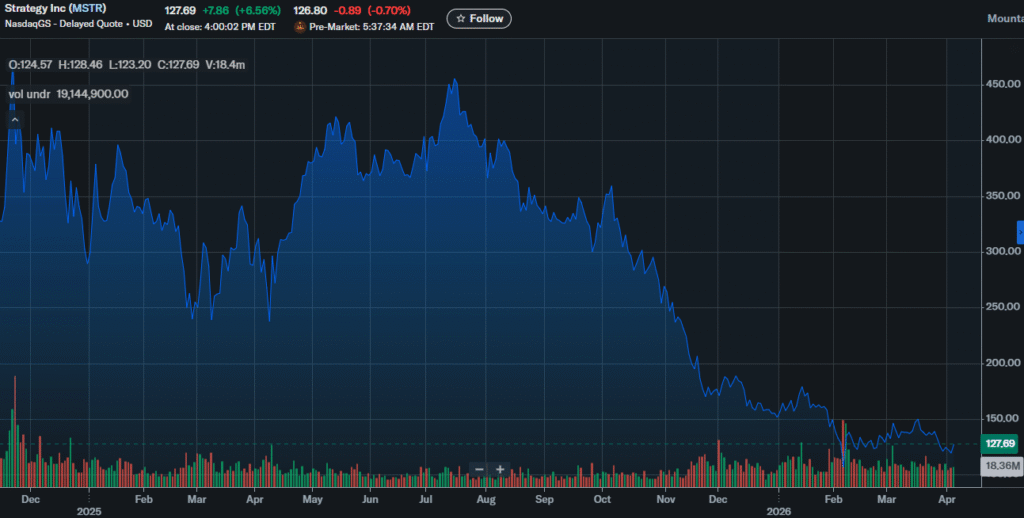
    MSTR stock price chart

    While selling common stock dilutes shareholders, preferred shares create fixed financial obligations. Strategy currently holds about $2.25 billion in cash reserves, enough to cover interest and distributions for more than two years, but long-term sustainability depends on Bitcoin appreciating faster than the company’s financial commitments grow.

    Disclaimer

    This content is for informational purposes only and does not constitute financial, investment, or legal advice. Cryptocurrency trading involves risk and may result in financial loss.
  • On-Chain Evidence Secures Convictions of Three Terrorism Financiers in Indonesia

    On-Chain Evidence Secures Convictions of Three Terrorism Financiers in Indonesia

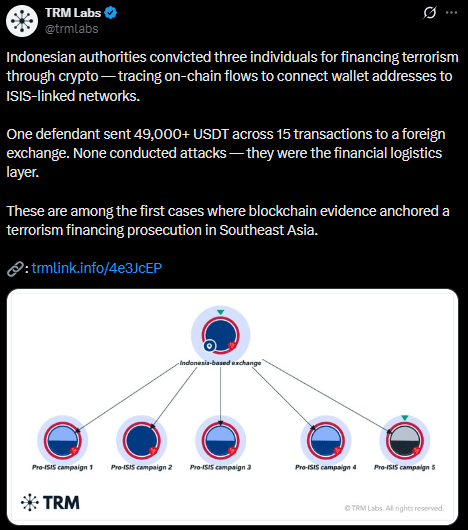
    Three individuals were convicted for terrorism financing in Indonesia during 2024–2025, with on-chain cryptocurrency evidence playing a central role, according to TRM Labs. Courts accepted wallet addresses, transaction histories, and blockchain flows as admissible evidence, demonstrating a shift toward recognizing digital assets in legal proceedings.

    Indonesian authorities traced one defendant sending over $49,000 in USDt across 15 transactions from a local exchange to an international platform. The funds were ultimately routed to an ISIS-linked fundraising campaign in Syria. Analysis was conducted by Indonesia’s financial intelligence team and Densus 88, whose findings were accepted by the courts.

    Southeast Asia Expands Blockchain Surveillance

    TRM Labs highlighted that similar capabilities are emerging across Southeast Asia, with agencies in Singapore and Malaysia developing blockchain intelligence to trace illicit finance.

    The firm noted that stablecoin based illicit transfers reached approximately $141 billion in 2025, marking a five-year high. This trend underscores the growing importance of blockchain analytics in countering terrorism financing and other crypto-related crimes in the region.

    Disclaimer

    This content is for informational purposes only and does not constitute financial, investment, or legal advice. Cryptocurrency trading involves risk and may result in financial loss.

  • Bitcoin ETF Inflows Surge to Highest Level $471 Million Since February

    Bitcoin ETF Inflows Surge to Highest Level $471 Million Since February

    $471 Million Enter Spot Bitcoin ETFs Amid Price Stability

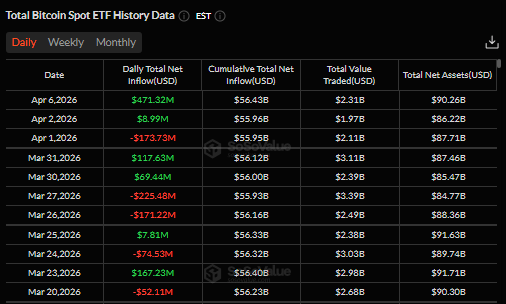
    U.S. spot bitcoin ETFs recorded $471 million in net inflows on April 6, marking their largest daily intake since February and the sixth-largest of 2026, as Bitcoin hovered near $68,780. Strong ETF demand has offset weak spot buying and ongoing selling by large holders, helping stabilize bitcoin below the $70,000 level.

    BTC Etf flows since March 20

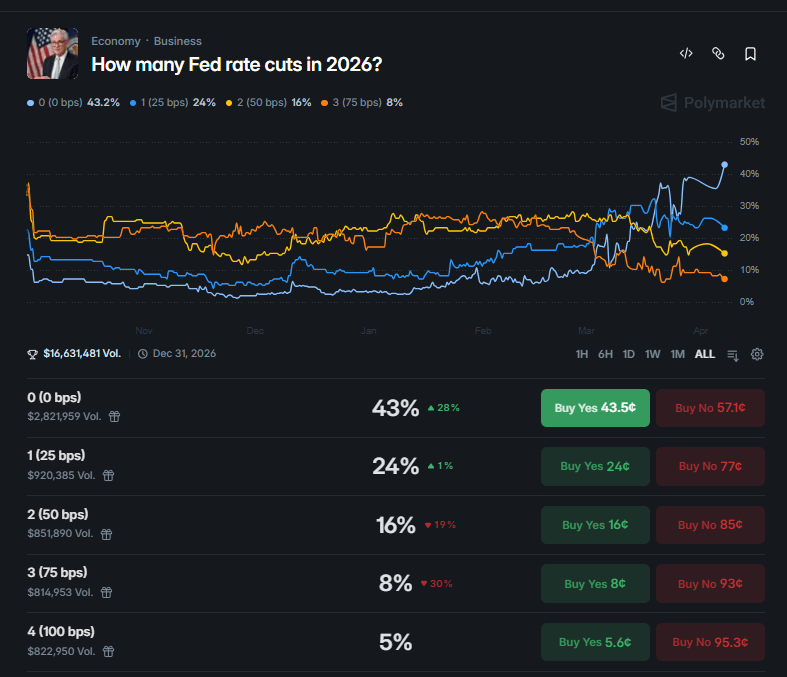
    Research indicates a shift in bitcoin’s market behavior: ETF-driven institutional flows are now front-running expected central bank actions rather than reacting afterward. According to Polymarket data, the market currently assigns a 98% probability that the Federal Reserve will hold rates steady at its April meeting.

    A Binance Research report notes that bitcoin’s correlation with the Global Easing Breadth Index tracking 41 central banks—has turned sharply negative since 2024. This suggests bitcoin may have transitioned from a “macro lagging receiver” to a “leading pricer,” with ETF inflows absorbing supply and influencing marginal pricing ahead of central bank moves.

    The combination of ETF-driven demand and weak spot accumulation by whales highlights the growing influence of institutional flows in shaping bitcoin’s near-term price dynamics.

    Disclaimer

    This content is for informational purposes only and does not constitute financial, investment, or legal advice. Cryptocurrency trading involves risk and may result in financial loss.
  • New Evidence in Libra Probe Raises Questions About Milei’s Role

    New Evidence in Libra Probe Raises Questions About Milei’s Role

    Newly uncovered phone records indicate that Javier Milei had seven calls with an entrepreneur behind the Libra token around the time he promoted the token on X, according to documents reviewed by prosecutors. The calls took place before and after Milei’s February 2025 post, which touted Libra as a tool to fund small businesses and boost Argentina’s economy. The content of the calls remains undisclosed.

    Investor Losses and Fraud Allegations

    Libra surged briefly before collapsing over 96%, causing at least $251 million in investor losses. Milei has denied wrongdoing, asserting his promotion was personal and that he had no connection to the project. Argentina’s Anti-Corruption Office cleared him of public ethics violations in June 2025, determining his posts were made in a private capacity.

    Ongoing Federal Investigation

    Federal prosecutors continue to investigate Milei’s involvement. Recent findings include a draft note on crypto lobbyist Mauricio Novelli’s phone suggesting a possible $5 million agreement linked to Milei’s Libra promotion, though it does not specify a recipient. The case remains active, with Milei named as a person of interest and legal scrutiny continuing over potential fraud charges and impeachment calls.

    Disclaimer

    This content is for informational purposes only and does not constitute financial, investment, or legal advice. Cryptocurrency trading involves risk and may result in financial loss.