Category: News

  • US Senate Targets April Timeline to Advance Crypto Market Structure Bill

    US Senate Targets April Timeline to Advance Crypto Market Structure Bill

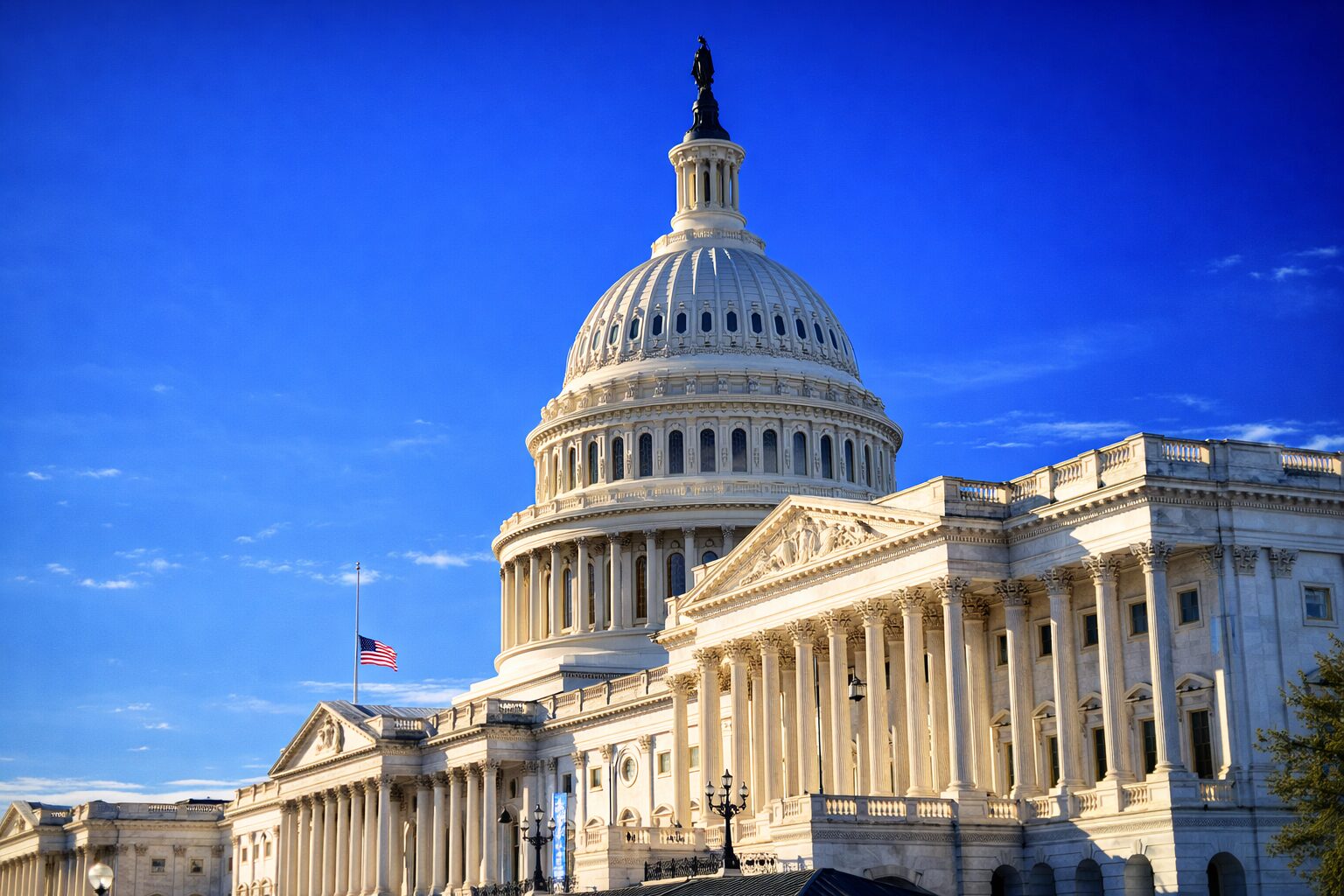
    U.S. Senator Bill Hagerty confirmed that lawmakers expect progress on digital asset market structure legislation in April, renewing momentum after months of delays. Speaking at the Digital Assets and Emerging Tech Policy Summit at Vanderbilt University, Hagerty said Republican lawmakers plan to move the bill into the Senate Banking Committee starting next week. He noted that lawmakers are close to agreement but acknowledged that “there’s still a lot more work to do.”

    CLARITY Act Progress Faces Key Regulatory and Ethics Issues

    Originally introduced as the CLARITY Act when it passed the House of Representatives in July, the legislation is considered one of the most significant crypto bills under review. It is expected to create a comprehensive regulatory framework for digital assets and shift major oversight responsibilities from the Securities and Exchange Commission (SEC) to the Commodity Futures Trading Commission (CFTC).

    US Senator Bill Hagerty at the April 6 Digital Assets and Emerging Tech Policy Summit: Blockchain Association

    Because both agencies oversee different areas, the bill must also pass through the Senate Agriculture Committee, which advanced its version in a January markup. However, Banking Committee action has been delayed due to concerns involving tokenized equities, ethics rules, and stablecoin yield provisions.

    Midterm Elections Add Pressure to Complete Bill

    Hagerty emphasized the urgency of advancing the legislation before upcoming midterm elections, stating that completing committee work in April could allow lawmakers to finalize the bill ahead of the political cycle. Similar optimism was expressed by Coinbase chief legal officer Paul Grewal, who said lawmakers are “close to a deal” on unresolved issues. Meanwhile, the advocacy group Stand With Crypto noted that lawmakers’ votes on the legislation could influence voter sentiment during the 2026 midterms.

    Disclaimer

    This content is for informational purposes only and does not constitute financial, investment, or legal advice. Cryptocurrency trading involves risk and may result in financial loss.

  • Solo Bitcoin Miner Defies 1-in-28,000 Odds to Win $210,000 Block Reward

    Solo Bitcoin Miner Defies 1-in-28,000 Odds to Win $210,000 Block Reward

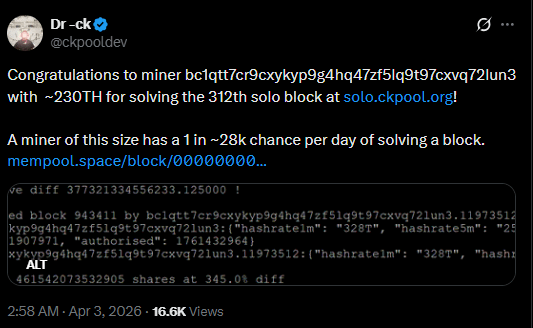
    A solo Bitcoin miner has secured a major reward after successfully validating block 943,411 despite extremely low odds, highlighting the rare but possible success of small scale mining operations. The miner, operating with roughly 230 terahashes per second (TH/s) of computing power, earned 3.139 BTC valued at about $210,000.

    Bitcoin Mining Odds and Network Share Explained

    The miner was connected to solo.ckpool.org, an anonymous solo mining pool introduced in 2014 that allows miners to retain full block rewards minus a 2% fee. With only about 230 TH/s, the miner controlled roughly 0.00002% of Bitcoin’s estimated total network hashrate of around 1 zetahash per second in early April. This translated into approximately a 1-in-28,000 chance of finding a block on any given day.

    CKpool developer Con Kolivas confirmed the win on X;

    The computing power used in this case is consistent with a small group of home-scale ASIC machines rather than a large industrial mining setup. By comparison, large listed miners such as Riot Platforms operate more than 30 exahashes of hashrate, making them vastly larger in scale.

    Rising Pattern of Rare Solo Mining Successes

    This block marked the 312th solo win recorded on CKpool since its launch and the first since Feb. 28, ending a 33-day gap. Over the past year, solo pools have discovered 20 Bitcoin blocks, distributing a combined 62.96 BTC, averaging one solo block every 18.7 days, with the longest gap lasting 58 days.

    Similar rare wins have occurred recently. In December, a miner with about 270 TH/s overcame 1-in-30,000 odds to earn a $284,633 reward. In November, a miner running just 6 TH/s beat staggering 1-in-180-million odds to secure roughly $265,000. In late February, another miner converted about $75 worth of rented cloud hashrate into a reward worth nearly $200,000 after briefly directing 1 petahash of power to the pool.

    Disclaimer

    This content is for informational purposes only and does not constitute financial, investment, or legal advice. Cryptocurrency trading involves risk and may result in financial loss.

  • Marc Andreessen Dismisses AI Job Loss Fears, Predicts Employment Growth

    Marc Andreessen Dismisses AI Job Loss Fears, Predicts Employment Growth

    Marc Andreessen, co-founder of Andreessen Horowitz and Netscape, stated that fears over artificial intelligence causing widespread job losses are “all fake.” In a recent post on X, he argued that AI will lead to a “massive jobs boom” by driving productivity and increasing demand for labor.

    Rising Long-Term Unemployment Contrasts Andreessen’s Optimism

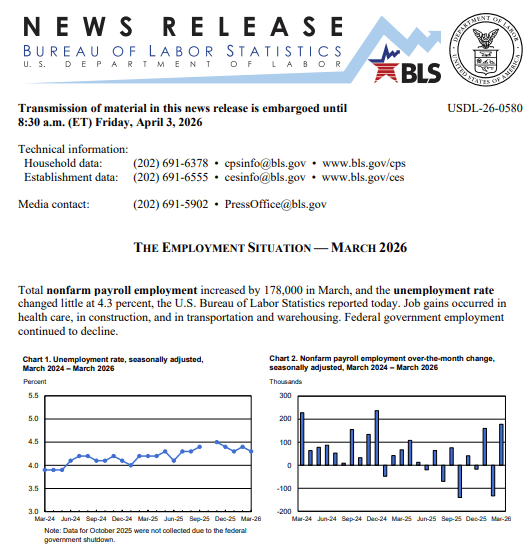
    His comments come as U.S. labor data shows mixed signals. Unemployment remained steady at 4.3% in March, while the number of people unemployed for 27 weeks or more rose by 322,000 over the past year. Despite this, tech job openings surged in 2026, with over 67,000 software engineering roles, double the number from 2023, indicating strong demand in the sector.

    Tech Firms Cite AI While Cutting Jobs

    On the other hand, companies are reducing staff amid AI adoption. Block cut 40% of its workforce, Crypto.com reduced staff by 12%, Oracle reportedly eliminated up to 30,000 jobs, and MARA decreased its workforce by 15% while pivoting toward AI and crypto related operations.

    Andreessen’s view has faced skepticism, with critics questioning accessibility and equitable distribution of AI-driven job growth. Supporters argue that if implemented broadly, AI could still generate net employment gains across sectors.

    Disclaimer

    This content is for informational purposes only and does not constitute financial, investment, or legal advice. Cryptocurrency trading involves risk and may result in financial loss.
  • Bitcoin Climbs Above $70,000 as Contrarian Bottoming Signals Gain Attention

    Bitcoin Climbs Above $70,000 as Contrarian Bottoming Signals Gain Attention

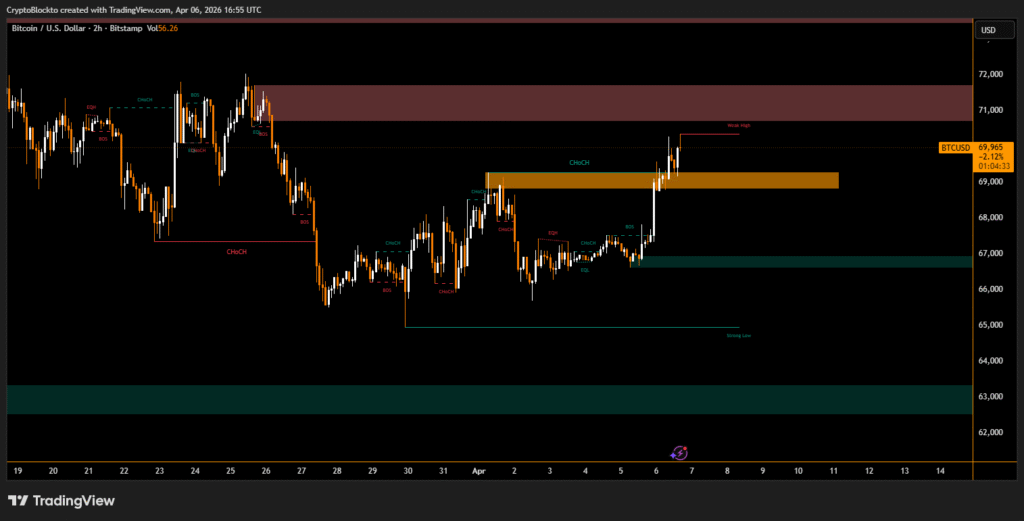
    Bitcoin climbed above $70k during U.S. afternoon trading on Monday, continuing a rally that began over the weekend and adding to signs that a potential market bottom may be forming. Btc traded near $70,144, rising nearly 4% over the past 24 hours, while Ether, and Solana recorded similar gains.

    $BTC 2h price chart

    Executive Moves and Bearish Views Seen as Contrarian Indicators

    The price gains came alongside modest advances in traditional markets ahead of President Donald Trump’s Tuesday ultimatum for Iran to reopen the Strait of Hormuz.

    Several developments have strengthened contrarian sentiment. Jeff Park exited his role as chief investment officer at ProCap Financial (BRR), a bitcoin treasury company led by Anthony Pompliano that launched in 2025 to replicate the treasury strategy popularized by Michael Saylor’s Strategy.

    Institutional Bitcoin Sales Add to Bottom Debate

    Longtime bitcoin bull Willy Woo added caution by suggesting Bitcoin could trade sideways for eight to twelve years before a major bull market begins. Meanwhile, large miners continued selling. MARA Holdings sold more than 15,000 BTC, Riot Platforms liquidated its entire March production of 3,778 BTC, and Nakamoto also reduced part of its holdings. These developments have added to growing speculation that late-cycle signals may be emerging.

    Disclaimer

    This content is for informational purposes only and does not constitute financial, investment, or legal advice. Cryptocurrency trading involves risk and may result in financial loss.
  • Kalshi Wins 2-1 Appeals Court Ruling Against New Jersey Over Sports Event Contracts

    Kalshi Wins 2-1 Appeals Court Ruling Against New Jersey Over Sports Event Contracts

    Prediction market platform Kalshi secured a major legal victory after a U.S. appeals court ruled that New Jersey gaming regulators cannot block the company from offering sports-related event contracts in the state. The decision strengthens the role of federal oversight in disputes between state regulators and federally licensed prediction markets.

    Court Backs CFTC Exclusive Jurisdiction Over Event Contracts

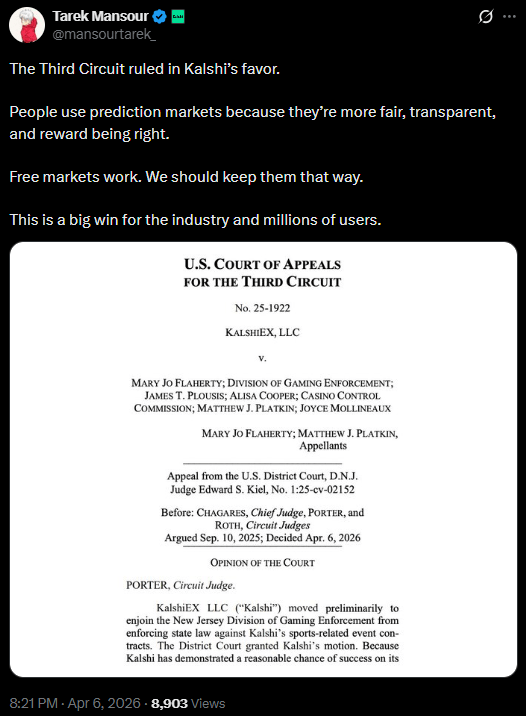
    The ruling came from the U.S. Court of Appeals for the Third Circuit, where a panel of judges issued a 2-1 decision stating that New Jersey does not have explicit authority over sports-related event contracts offered by entities regulated by the Commodity Futures Trading Commission (CFTC).

    Kalshi filed lawsuits against New Jersey and other states last year after receiving cease-and-desist orders that prevented it from offering sports-related contracts. The company argued that it operates as a federally regulated commodities exchange and designated contract market (DCM), and that the Commodity Exchange Act supersedes state authority.

    New Jersey officials argued that the Act’s savings clause preserves state jurisdiction over sports-related event contracts and maintained that such offerings violate state gambling laws. However, the majority opinion rejected this claim, stating that the clear text of the Act grants the CFTC exclusive jurisdiction over swaps, while allowing continued state regulation only for trades conducted outside designated contract markets.

    Kalshi CEO Tarek Mansour described the decision as a “big win,” stating that prediction markets are widely used because they are fair, transparent, and reward users for making accurate predictions.

    Dissenting Opinion Calls Contracts “Sports Gambling”

    While the majority sided with Kalshi, one judge issued a dissenting opinion, describing Kalshi’s actions as a “performative sleight meant to obscure the reality that Kalshi’s products are sports gambling.” The dissent argued that because Kalshi facilitates gambling-like activity, it should remain subject to state regulation.

    Disclaimer

    This content is for informational purposes only and does not constitute financial, investment, or legal advice. Cryptocurrency trading involves risk and may result in financial loss.
  • BlackRock Files iShares Nasdaq-100 ETF (IQQ) to Challenge Invesco’s QQQ Dominance

    BlackRock Files iShares Nasdaq-100 ETF (IQQ) to Challenge Invesco’s QQQ Dominance

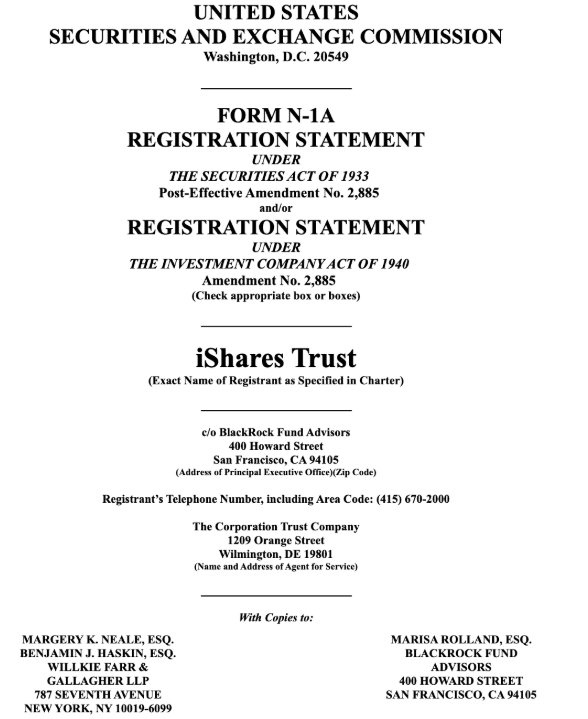
    BlackRock Inc. has filed plans to launch a new exchange-traded fund designed to track the Nasdaq-100 Index, signaling a direct challenge to Invesco Ltd., which has long dominated this segment of the ETF market. The proposed fund, named the iShares Nasdaq-100 ETF, is expected to trade under the ticker IQQ, according to a Monday filing submitted to the U.S. Securities and Exchange Commission. Details regarding the fund’s management fees have not yet been disclosed.

    SEC

    Nasdaq-100 ETF Competition and Market Position

    If approved, IQQ would become one of only a few U.S.-listed ETFs that exclusively track the Nasdaq-100 Index and notably the first such product not managed by Invesco. The Nasdaq-100 includes the 100 largest non-financial companies listed on the Nasdaq exchange and has been closely licensed since its launch in 1985.

    Invesco currently operates the dominant products tied to the index, including the Invesco QQQ Trust Series 1, which holds roughly $376 billion in assets, making it one of the most widely traded ETFs globally. Another major offering, the Invesco Nasdaq-100 ETF (QQQM), manages about $70 billion in assets.

    BlackRock Expands Nasdaq-Linked ETF Strategy

    BlackRock already manages four Nasdaq-100-tracking ETFs outside the United States and continues to expand its presence in Nasdaq-related investment products. Within the U.S., the firm also offers funds such as the iShares Nasdaq Top 30 Stocks ETF (QTOP) and the iShares Nasdaq-100 ex Top 30 ETF (QNXT).

    A Nasdaq spokesperson noted that demand for Nasdaq-100 exposure continues to grow globally, while Invesco emphasized its long-term investment ecosystem, stating that its established QQQ franchise remains a cornerstone of the Nasdaq-100 market.

    Disclaimer

    This content is for informational purposes only and does not constitute financial, investment, or legal advice. Cryptocurrency trading involves risk and may result in financial loss.

  • Onchain Perpetual DEX Volumes Decline for Five Consecutive Months

    Onchain Perpetual DEX Volumes Decline for Five Consecutive Months

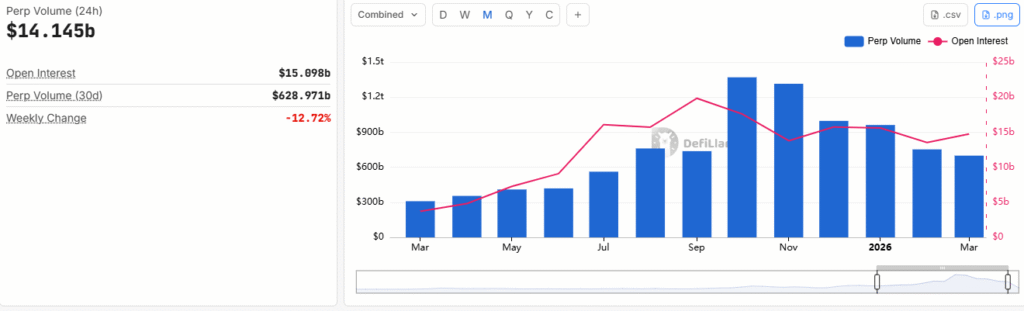
    Onchain perpetual futures trading volumes have declined for five straight months after reaching a peak in October 2025. Data from DefiLlama shows total perp decentralized exchange (DEX) volume dropped to $699 billion in March 2026, down from $1.36 trillion recorded in October. The decline continued steadily through November and December before extending into the first quarter of 2026.

    Daily Perp DEX Activity Falls Below Key Levels

    Daily trading activity also reflects weakening momentum. On April 4, perp DEX volume fell to $8.4 billion, marking the first drop below $10 billion since Sept. 6, 2025. It was also the lowest daily level recorded since July 5, 2025. These volumes are widely viewed as a proxy for speculative demand and leveraged trading interest across crypto markets.

    Perpetuals DEX monthly trading volumes

    Hyperliquid Leads Trading as Market Concentrates

    Despite the slowdown, activity remains concentrated among leading platforms. Over the past 30 days, Hyperliquid recorded approximately $185.5 billion in volume, accounting for about 34% of total activity among the top 10 perp DEXs. EdgeX followed with $73 billion, while Aster reported $68 billion.

    Other platforms recorded smaller volumes, including Lighter at around $50 billion and Grvt near $40 billion. ApeX Protocol, Variational, and StandX each posted between roughly $16 billion and $33 billion in monthly trading activity.

    Market Cooldown Follows Rapid Growth Phase

    The current slowdown follows a strong expansion period in 2025, when cumulative perp DEX volume nearly tripled to $12.09 trillion. About $7.9 trillion, or 65% of that total, was generated in 2025 alone, supported by monthly averages nearing $1 trillion during the fourth quarter.

    Disclaimer

    This content is for informational purposes only and does not constitute financial, investment, or legal advice. Cryptocurrency trading involves risk and may result in financial loss.
  • China Urges Banks to Adopt Blockchain for Lending and Data Transparency

    China Urges Banks to Adopt Blockchain for Lending and Data Transparency

    China’s tax and financial regulators have called on banks and local authorities to adopt blockchain technology and privacy computing to improve lending services and expand financing for small businesses. The State Administration of Taxation and the National Financial Regulatory Administration issued a joint policy notice urging standardized data sharing to reduce information asymmetry between tax authorities, banks, and enterprises.

    Blockchain to Improve Credit Efficiency and Financing

    The directive encourages banks to strengthen credit models, enhance approval efficiency, and increase financing supply to “honest, tax-paying enterprises.” This push aligns with China’s broader strategy to integrate blockchain into national data infrastructure. A roadmap released by the National Development and Reform Commission in January 2025 targets nationwide blockchain implementation by 2029.

    A machine translation of a joint notice from Chinese regulators

    Shen Zhulin, deputy director of the National Data Administration, stated in January 2025 that blockchain-based data systems are expected to attract about 400 billion yuan, or roughly $58 billion, in annual investments.

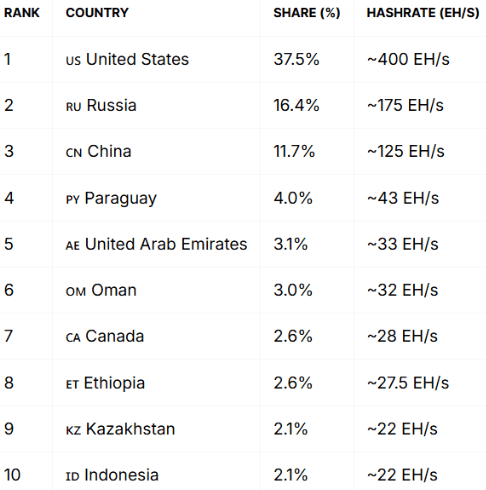
    Top Bitcoin mining countries by hashrate

    China Balances Blockchain Growth With Crypto Restrictions

    China has promoted blockchain innovation while maintaining strict controls on cryptocurrency trading. President Xi Jinping described blockchain as a key breakthrough technology in October 2019, encouraging wider adoption. Despite banning crypto mining and transactions in September 2021, China still accounted for 11.7% of global Bitcoin hashrate in January 2026.

    Disclaimer

    This content is for informational purposes only and does not constitute financial, investment, or legal advice. Cryptocurrency trading involves risk and may result in financial loss.

  • North Korean IT Workers Infiltrated DeFi Platforms for 7 Years

    North Korean IT Workers Infiltrated DeFi Platforms for 7 Years

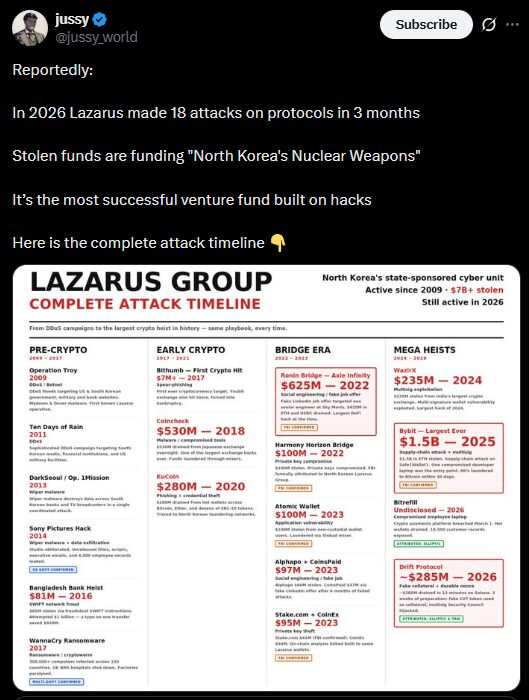
    Security researcher Taylor Monahan has revealed that North Korean IT workers have been embedding themselves in cryptocurrency companies and decentralized finance (DeFi) projects for at least seven years. According to Monahan, over 40 DeFi platforms, including widely known protocols, have employed North Korean workers at some stage of development. She emphasized that the “seven years of blockchain dev experience” on their resumes is accurate.

    North Korea-affiliated hacking collective Lazarus Group has stolen an estimated $7 billion in crypto since 2017, according to analysts at R3ACH Network. The group has been linked to the Ronin Bridge exploit ($625 million, 2022), WazirX hack ($235 million, 2024), and the Bybit heist ($1.4 billion, 2025).

    DeFi Platforms Targeted

    Drift Protocol recently reported a $280 million exploit, attributing it to North Korean-affiliated actors. These attacks often involve third-party intermediaries using fully constructed identities, employment histories, and professional networks to gain trust. Tim Ahhl, founder of Titan Exchange, recalled interviewing a candidate later identified as a Lazarus operative.

    Threat Awareness and Security Measures

    Blockchain sleuth ZachXBT explained that Lazarus threats vary in complexity but are relentless. Businesses are encouraged to use the US Office of Foreign Assets Control (OFAC) sanctions lists to screen potential hires and remain alert to IT worker fraud patterns.

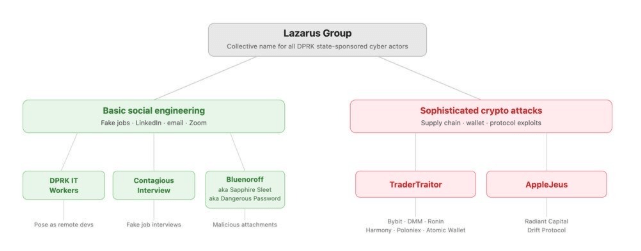
    There are two types of attack vectors, one more sophisticated than the other.
    Disclaimer

    This content is for informational purposes only and does not constitute financial, investment, or legal advice. Cryptocurrency trading involves risk and may result in financial loss.
  • IMF Warns Tokenization Could Introduce Crypto Risks Into Global Finance

    IMF Warns Tokenization Could Introduce Crypto Risks Into Global Finance

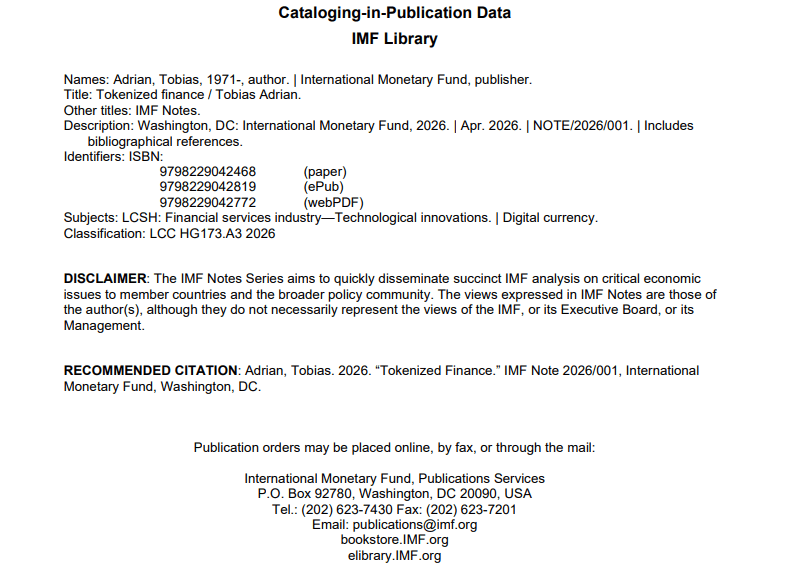
    The International Monetary Fund (IMF) has warned that tokenization could reshape financial markets while introducing new risks that regulators are not fully prepared to handle. Tokenization, which represents real-world assets such as money, bonds, and funds on blockchain networks, enables instant settlement and removes traditional intermediaries, reducing delays in financial transactions.

    Automated Markets May Increase Volatility

    In its latest report, the IMF highlighted that tokenization enables “atomic settlement,” allowing transactions to settle instantly and reducing counterparty risk. However, this speed may also create new challenges. Stress events could unfold faster, leaving less time for intervention. Automated markets and smart contracts that trigger margin calls or liquidations could accelerate selloffs and amplify volatility during downturns.

    Stablecoins were identified as a key link between crypto systems and traditional finance, but their reliability depends on reserves and redemption systems, leaving them vulnerable to sudden runs under pressure.

    Need for Global Regulation and Coordination

    The IMF also warned that tokenized assets moving instantly across jurisdictions could complicate oversight, increasing risks of capital flight and currency substitution in emerging markets. The organization called for clearer legal frameworks and stronger global coordination.

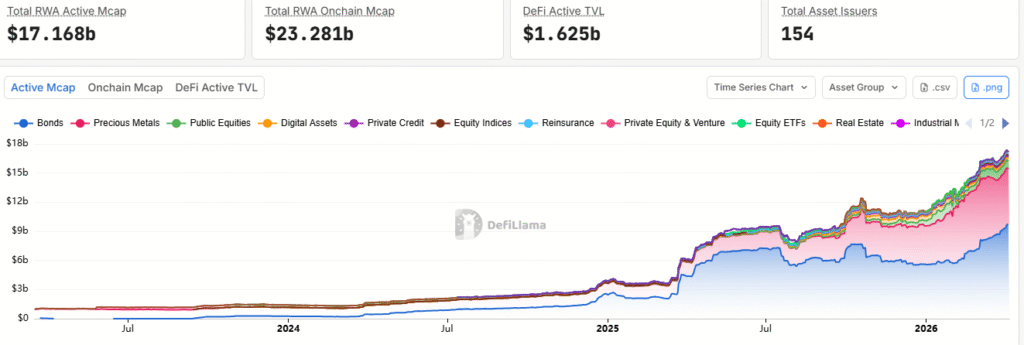
    Tokenization adoption is growing rapidly, with real-world assets on blockchain networks surpassing $23.2 billion, largely driven by tokenized gold and money market funds.

    Real-world assets added to blockchain rails have already topped $23.2 billion
    Disclaimer

    This content is for informational purposes only and does not constitute financial, investment, or legal advice. Cryptocurrency trading involves risk and may result in financial loss.