Author: tristan

  • Bitcoin Faces Near-Term Selling Pressure After Rally to $76K, CryptoQuant Reports

    Bitcoin Faces Near-Term Selling Pressure After Rally to $76K, CryptoQuant Reports

    Bitcoin is showing signs of short-term selling pressure after climbing above $76,000, according to new market analysis from CryptoQuant. The firm reported a sharp increase in Bitcoin deposits to crypto exchanges on Tuesday, a trend commonly viewed as preparation for selling activity.

    Hourly inflows surged to nearly 11,000 BTC, marking the highest level recorded since December. Analysts noted that the growing size and pace of these deposits historically serve as a warning signal that investors may be preparing to distribute holdings at major resistance levels.
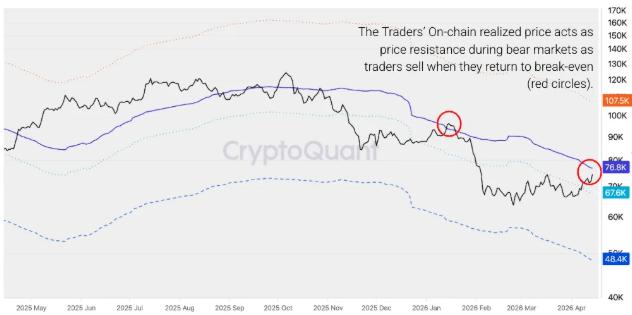
    Bitcoin is nearing its realized price (purple ), with a lower band at $67,600 serving as short term support

    The average deposit size also climbed to 2.25 BTC, the largest since July 2024. Similar patterns were observed earlier in January, when average deposits reached around 2 BTC before Bitcoin prices dropped sharply from $100,000 to $60,000.

    Market data shows Bitcoin recently reached $76,052 , its highest level since early February. CryptoQuant analysts emphasized that Bitcoin’s realized price near $76,800 could act as a short-term ceiling, encouraging traders nearing breakeven to sell and limit additional gains.
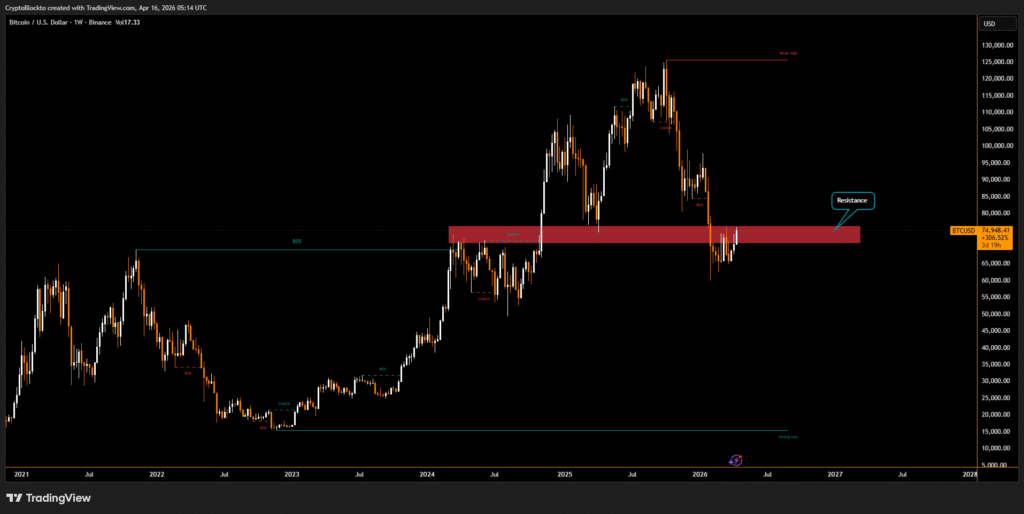
    $BTC is facing resistance on weekly timeframe

    Profit-Taking Still Developing but Risks Increasing

    Despite rising deposits, analysts noted that profit-taking remains in early stages. Daily realized profits are currently around $500 million, still below the $1 billion level that has historically coincided with local market tops. However, if Bitcoin sustains levels above $76,000 or approaches the realized price threshold, profit-taking could accelerate, increasing the risk of a market pause or price reversal.

    Disclaimer

    This content is for informational purposes only and does not constitute financial, investment, or legal advice. Cryptocurrency trading involves risk and may result in financial loss.
  • Kalshi Plans Parent Verification Portal to Prevent Minors From Accessing Prediction Markets

    Kalshi Plans Parent Verification Portal to Prevent Minors From Accessing Prediction Markets

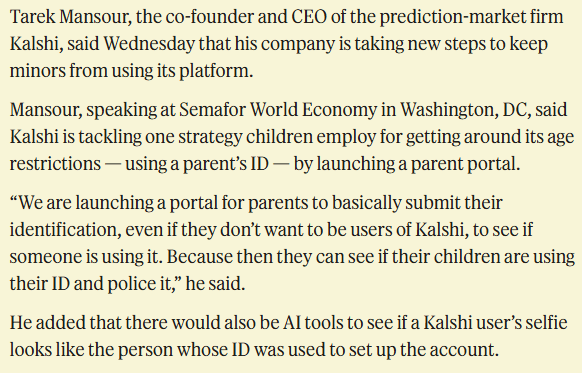
    Prediction markets platform Kalshi is preparing to launch a new parent verification portal aimed at preventing minors from bypassing age restrictions. The initiative was outlined by CEO Tarek Mansour, who said the system will allow parents to submit identification details to confirm whether their children are using accounts registered under parental credentials.

    The move follows reports of minors gaining access to the platform by using a parent’s identification to bypass the minimum age requirement of 18 years for US-based users. Alongside the portal, Kalshi plans to integrate selfie-based identity checks powered by artificial intelligence, enabling the system to compare facial data and detect mismatches between account holders and verified users.

    Increased Competition and Regulatory Scrutiny Surround Prediction Markets

    The planned safeguards come as prediction market platforms face rising scrutiny across the United States. Crypto firms have also moved to challenge Kalshi’s market presence, including recent developments from Binance, which integrated prediction market features into its wallet application, and Crypto.com, which partnered with High Roller Technologies to expand similar offerings.

    Kalshi maintains that its operations fall under the exclusive jurisdiction of the Commodity Futures Trading Commission. This stance has been supported in legal filings by Michael Selig, reinforcing the company’s regulatory position amid ongoing disputes.

    Court Decisions Shape Future of Event-Based Contracts

    Legal battles surrounding prediction markets remain active at both state and federal levels. Recently, a federal judge in Arizona blocked state authorities from applying local gambling laws to Kalshi’s event contracts. A similar ruling in New Jersey supported the argument that federal oversight under the Commodity Exchange Act takes precedence over state gambling regulations.

    Disclaimer

    This content is for informational purposes only and does not constitute financial, investment, or legal advice. Cryptocurrency trading involves risk and may result in financial loss.
  • Bitnomial Launches Injective Futures in US, Boosting ETF Prospects for INJ

    Bitnomial Launches Injective Futures in US, Boosting ETF Prospects for INJ

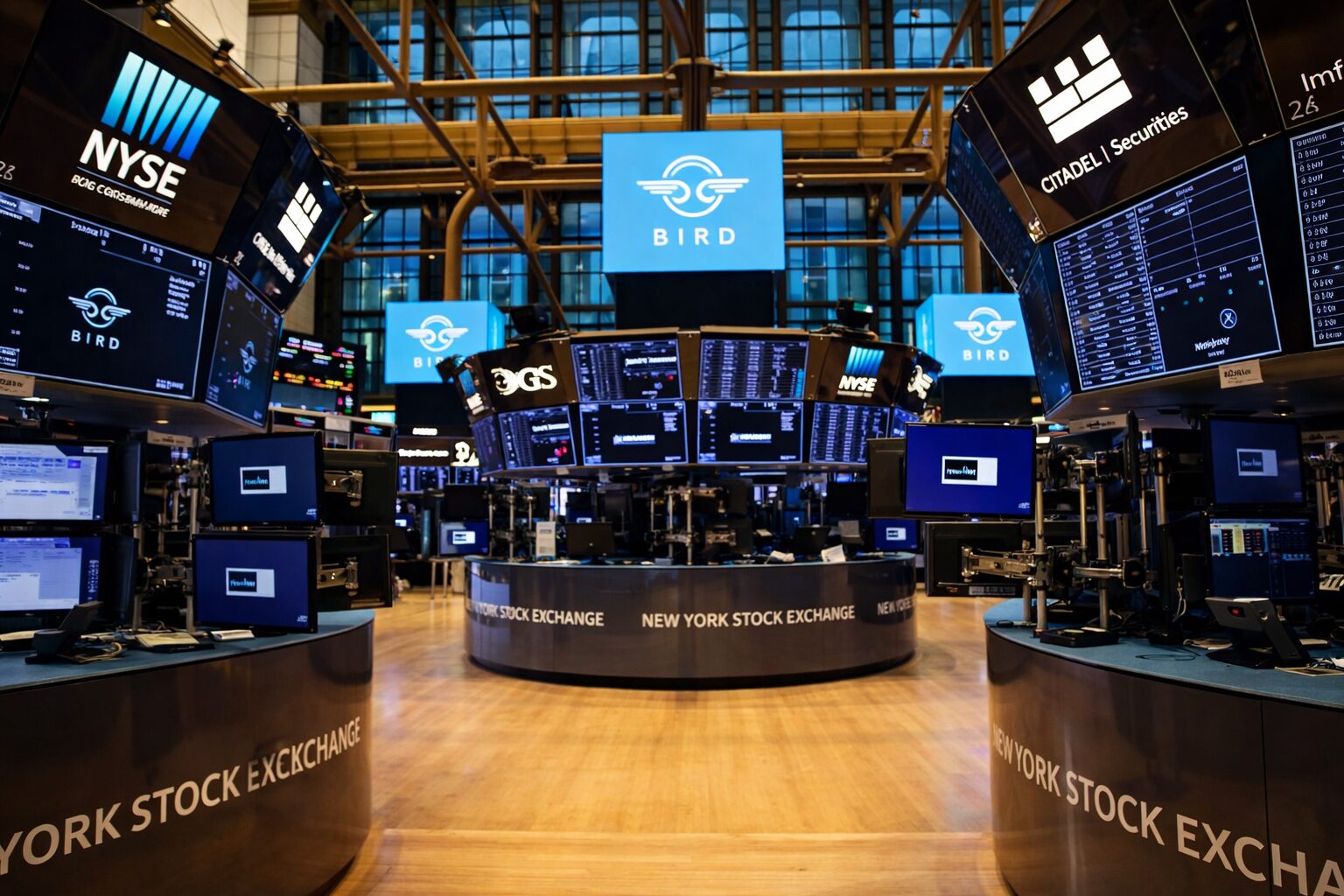
    Chicago based crypto derivatives exchange Bitnomial has launched monthly futures contracts tied to Injective (INJ), marking the first US-regulated derivatives product linked to the token. The contracts settle directly in INJ and feature monthly expiries, enabling traders to gain price exposure without holding the underlying asset.

    The futures can be margined in both cryptocurrency and US dollars through Bitnomial’s clearinghouse. Institutional clients have already been granted access, while retail participation is expected to roll out soon through the Botanical trading platform. The exchange also confirmed plans to introduce perpetual futures and options contracts tied to INJ in the future.

    Bitnomial operates a fully integrated trading venue, brokerage and clearinghouse regulated by the Commodity Futures Trading Commission, reinforcing compliance within the evolving US crypto market.

    ETF Eligibility and Injective Ecosystem Growth

    The launch begins a six-month performance track record, a key requirement that could support a potential spot ETF tied to Injective. Earlier, Canary Capital filed for a staked INJ ETF, with Cboe BZX Exchange submitting a related rule change to the US Securities and Exchange Commission.

    Injective (INJ) runs on a Layer 1 blockchain designed for financial applications, featuring an on-chain order book and cross-chain compatibility with networks such as Ethereum (ETH) and Solana (SOL).

    Expanding Altcoin Futures Competition in the United States

    Previous regulatory tensions also shaped the market. In August 2024, Bitnomial attempted to list XRP (XRP) futures through self-certification, but faced challenges from the US Securities and Exchange Commission. After filing a lawsuit in October 2025, the company later dropped the case in March and proceeded to launch regulated XRP futures as regulatory guidance evolved.

    Disclaimer

    This content is for informational purposes only and does not constitute financial, investment, or legal advice. Cryptocurrency trading involves risk and may result in financial loss.
  • Crypto-Backed PAC Spends $8 Million to Challenge Sherrod Brown in Ohio Senate Race

    Crypto-Backed PAC Spends $8 Million to Challenge Sherrod Brown in Ohio Senate Race

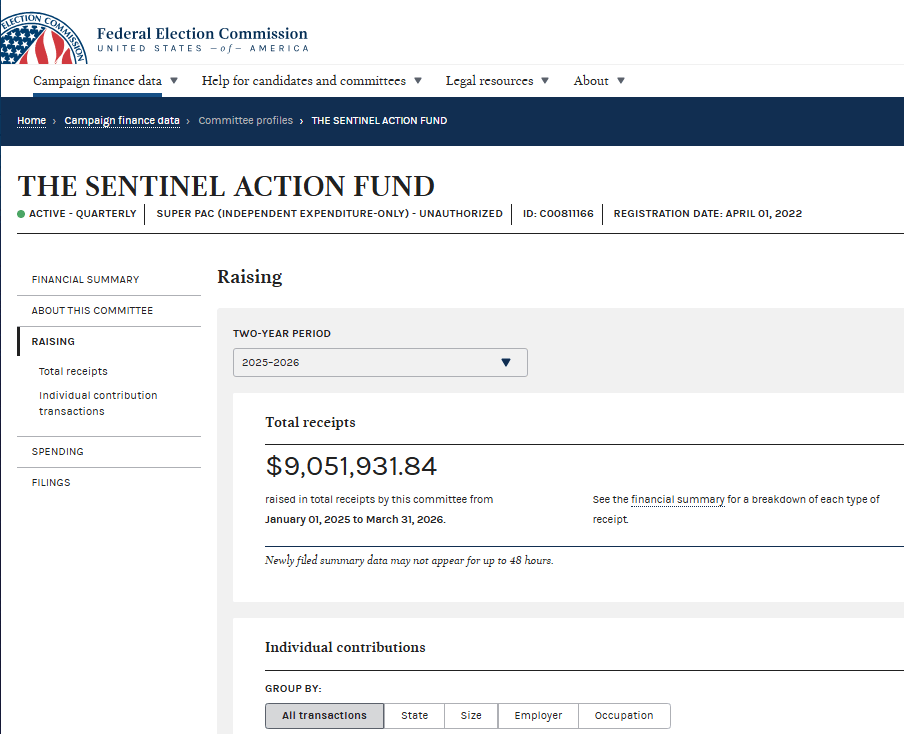
    A political action committee supported by crypto industry interests is investing millions into the Ohio Senate race, aiming to block the return of former Senator Sherrod Brown. The group, Sentinel Action Fund, announced plans to spend $8 million supporting Republican candidate Jon Husted in the closely contested election.

    Funding for the PAC includes backing from the Solana Policy Institute and venture firm Multicoin Capital. The committee criticized Brown, previously chairman of the Senate Banking Committee, for policies it claims slowed innovation in digital assets during his tenure.

     FEC

    Major Donors and Industry Support Highlight Growing Political Influence

    Several high-profile financial figures are also connected to the PAC’s funding network, including Stephen Schwarzman, Ken Fisher, Cliff Asness and Paul Singer. The largest single contribution reportedly came from Townsend Six Corp., which provided $8 million from an unidentified donor source.

    The Solana Policy Institute itself contributed $750,000 to the Sentinel Action Fund and has supported both Republican and Democratic PACs, allocating $2 million to Republican committees and $1.5 million to Democratic groups, according to federal records.

    Election Outcome Could Shape Future Crypto Regulation

    The Ohio Senate race is expected to play a significant role in determining control of Congress, particularly as Democrats seek to regain a majority amid shifting political dynamics during the administration of Donald Trump. Recent polling suggests a tightening race between Brown and Husted after earlier surveys showed a stronger lead for the Republican candidate.

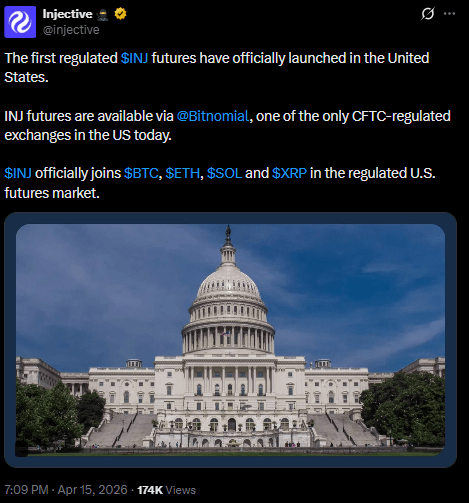
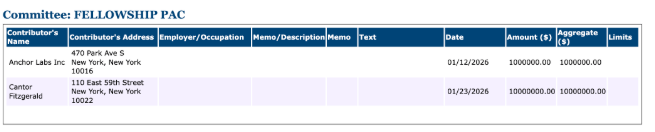
    Other crypto-aligned groups, including Fairshake and Fellowship PAC, have also emerged to support candidates seen as favorable to digital asset innovation. Analysts note that future control of Congress could significantly influence cryptocurrency legislation, though bipartisan support for the sector has steadily grown in recent years.

    Disclaimer

    This content is for informational purposes only and does not constitute financial, investment, or legal advice. Cryptocurrency trading involves risk and may result in financial loss.

  • Adam Back Urges Early Quantum Preparation for Bitcoin as Industry Debate Deepens

    Adam Back Urges Early Quantum Preparation for Bitcoin as Industry Debate Deepens

    Adam Back, an early pioneer in the cryptocurrency sector, has called on the Bitcoin community to begin preparing for quantum computing risks now, even if the technology remains in its experimental stage. Speaking at the Paris Blockchain Week 2026, Back emphasized that current quantum systems are still largely “lab experiments” with incremental progress over decades.

    Despite this, he said the safest strategy is to develop optional upgrades that would allow Bitcoin to migrate to quantum-resistant cryptography when required. Back noted that preparation ahead of time is safer than making urgent changes during a crisis, highlighting ongoing research by Blockstream into potential threat scenarios.

    Research Advances and Network Upgrades Under Consideration

    Blockstream researchers have already experimented with hash based signature systems on the Liquid Network, aiming to test alternatives capable of resisting quantum attacks. Back also pointed out that the existing Taproot upgrade could support new signature methods without disrupting current users, offering flexibility for future transitions.

    While Back previously estimated the quantum threat to be 20 to 40 years away, recent findings from Google and the California Institute of Technology suggest powerful quantum systems could emerge sooner than expected, potentially capable of breaking cryptographic protections in minutes.

    Debate Intensifies Over Freezing Vulnerable Bitcoin Holdings

    The discussion comes amid controversy surrounding a proposal from Jameson Lopp and other researchers to freeze Bitcoin held in vulnerable wallets, including coins linked to Satoshi Nakamoto. Critics such as Mark Erhardt have argued that freezing funds would contradict Bitcoin’s decentralized principles, while industry figures like Phil Geiger warned it could set a controversial precedent.

    As research continues, developers stress that proactive preparation and consensus-driven upgrades will be essential to maintaining long-term network security.

    Disclaimer

    This content is for informational purposes only and does not constitute financial, investment, or legal advice. Cryptocurrency trading involves risk and may result in financial loss.
  • Tether Adds 951 BTC to Reserves, Expands Holdings to 97,141 BTC Worth $7.2 Billion

    Tether Adds 951 BTC to Reserves, Expands Holdings to 97,141 BTC Worth $7.2 Billion

    Tether has expanded its Bitcoin reserves after withdrawing 951 BTC valued at approximately $70.47 million from Bitfinex, according to recent on-chain data. The transfer is believed to include Bitcoin acquired during the first quarter of 2026, continuing the firm’s long-standing strategy of allocating 15% of quarterly profits toward Bitcoin purchases.

    Following the latest withdrawal, Tether’s primary reserve wallet now holds 97,141 BTC, worth roughly $7.2 billion, making it the fifth largest Bitcoin holder on-chain. The steady accumulation highlights the company’s consistent approach of withdrawing purchased Bitcoin shortly after each quarter closes.

    Average Purchase Price and Unrealized Gains Highlight Strong Position

    Data from on-chain analysts indicates that Bitcoin accumulated by Tether since 2023 carries an average purchase price of about $51,312 per BTC. With Bitcoin currently trading near $74,000, the company is estimated to hold around $2.175 billion in unrealized profits from its long-term treasury strategy.

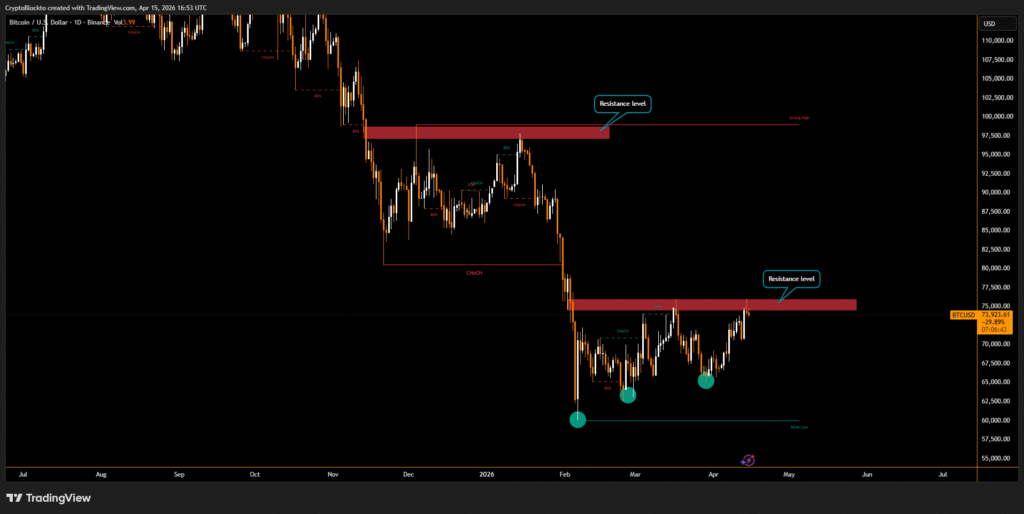
    $BTC daily price chart

    Despite the significant movement of funds, Bitcoin prices remained relatively stable, suggesting that large institutional transfers continue to be absorbed by market liquidity without triggering sharp volatility.

    Growing Institutional Holdings Reinforce Bitcoin Market Confidence

    Tether’s continued reserve expansion signals sustained confidence among major crypto firms in Bitcoin’s long-term value. The company has repeatedly emphasized using operating profits rather than debt to fund purchases, reinforcing a gradual accumulation model rather than speculative trading.

    Disclaimer

    This content is for informational purposes only and does not constitute financial, investment, or legal advice. Cryptocurrency trading involves risk and may result in financial loss.
  • Elizabeth Warren Presses Elon Musk for Details on X Money Stablecoin Plans

    Elizabeth Warren Presses Elon Musk for Details on X Money Stablecoin Plans

    US Senator Elizabeth Warren has formally questioned Elon Musk regarding the upcoming X Money payments feature expected to be integrated into the X platform. The inquiry centers on whether the service plans to issue its own dollar pegged stablecoin and how it intends to manage financial and security risks.

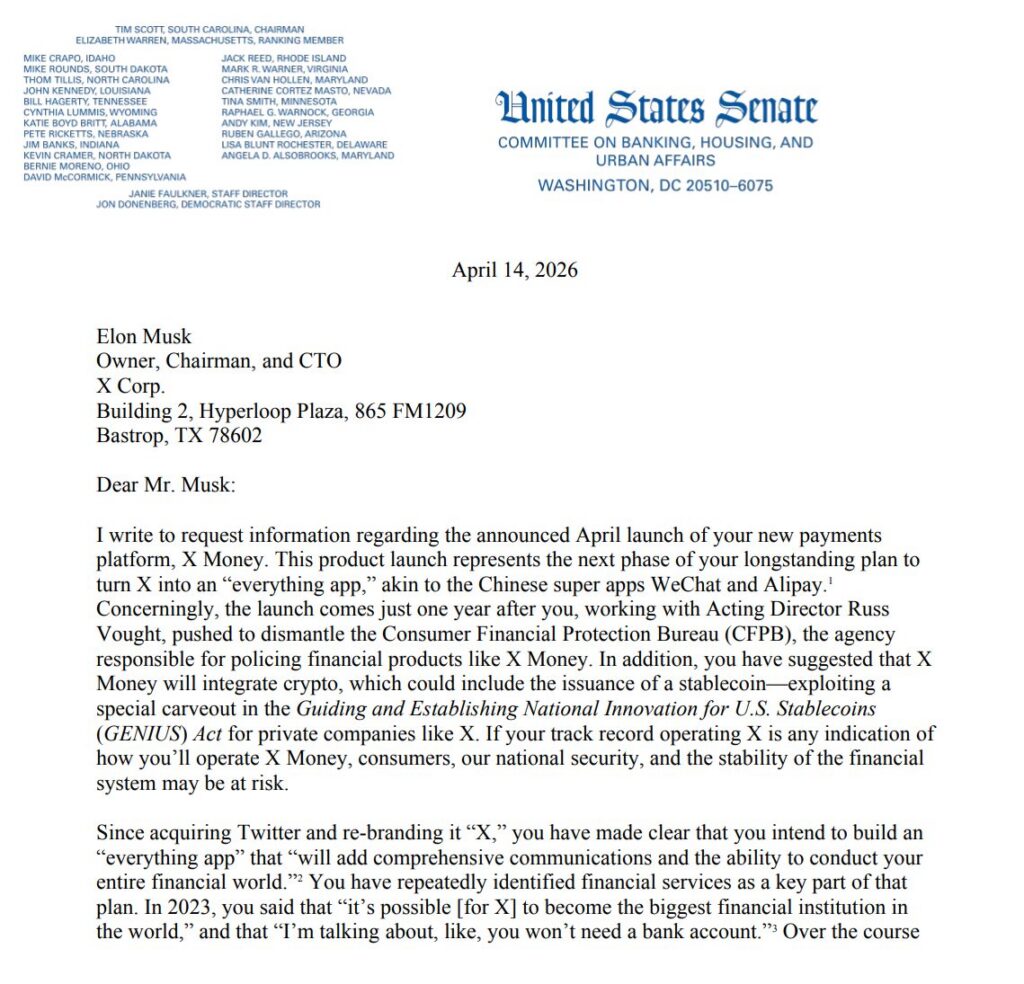
    In a letter sent Tuesday, Warren raised concerns that crypto and stablecoin integrations within X Money could pose risks to the US financial system and national security. She specifically asked whether the platform plans to use provisions under the Guiding and Establishing National Innovation for US Stablecoins (GENIUS) Act, which allows private companies to issue stablecoins under defined regulatory conditions.

    Elizabeth Warren’s letter seeking information about the upcoming X Money launch

    Questions Raised Over Interest Rates and Banking Partnerships

    Warren also highlighted reports that an early beta preview of X Money suggests the platform may offer up to 6% interest on deposits, significantly higher than the current federal funds rate range of 3.5% to 3.75%. She questioned how such yields could be supported without relying on high-risk investments or aggressive data monetization strategies.

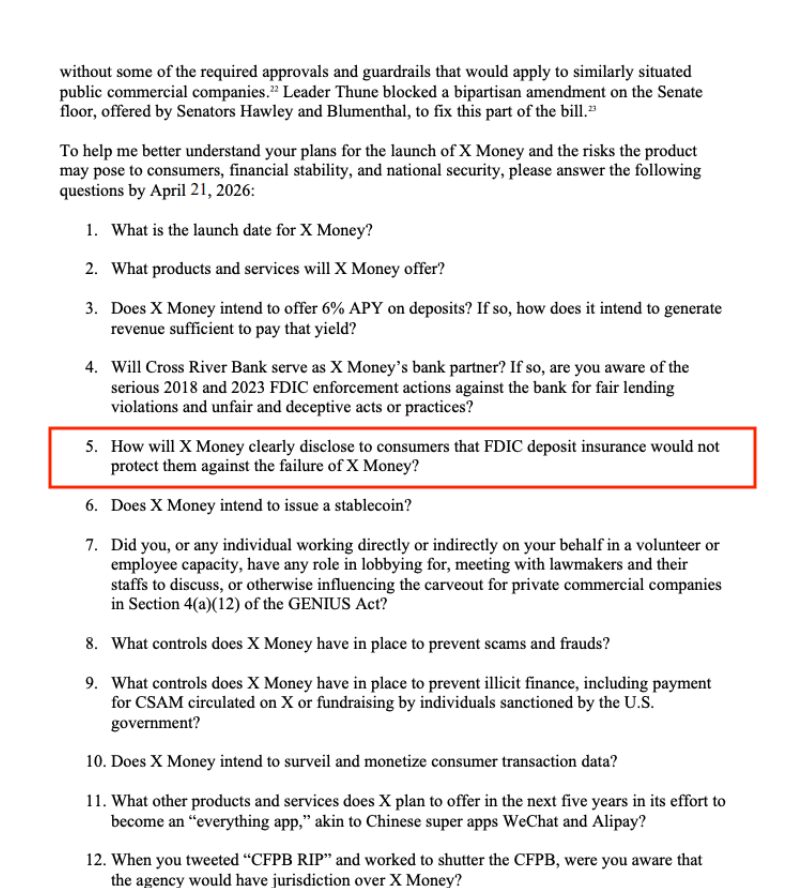
    The senator pointed to X Money’s reported partnership with Cross River Bank, which previously faced enforcement action from the Federal Deposit Insurance Corporation. She asked whether users would be clearly informed that funds held in stablecoin-based services may not be protected under traditional federal deposit insurance.

    A list of questions from the letter sent to Elon Musk by Elizabeth Warren

    Regulatory Debate Intensifies Around Stablecoin Protections

    The concerns reflect broader debate over consumer safeguards tied to stablecoins issued by private technology firms. Statements from Travis Hill have clarified that stablecoin deposits are not automatically covered by FDIC insurance under the GENIUS Act framework.

    While the law does not explicitly ban pass-through insurance coverage, regulators have suggested such arrangements could conflict with the intent of the legislation. Warren’s inquiry signals potential regulatory resistance as technology companies expand into financial services through stablecoin-powered payment platforms.

    Disclaimer

    This content is for informational purposes only and does not constitute financial, investment, or legal advice. Cryptocurrency trading involves risk and may result in financial loss.

  • North Korean Hackers Used AI-Driven Social Engineering in Zerion Crypto Attack

    North Korean Hackers Used AI-Driven Social Engineering in Zerion Crypto Attack

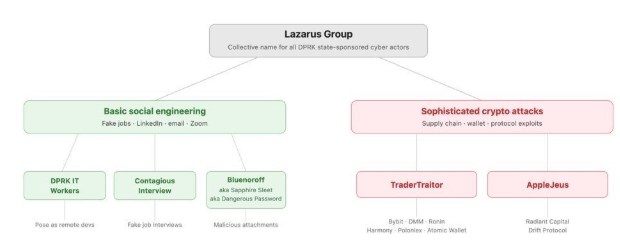
    Crypto wallet platform Zerion has confirmed that North Korean linked hackers used AI-assisted social engineering techniques to steal around $100,000 from its corporate hot wallets. The company released a post-mortem report stating that no user funds, apps, or core infrastructure were impacted, although the web application was temporarily disabled as a precaution during the investigation.

    The attack highlights how threat actors are increasingly targeting human systems rather than exploiting smart contract vulnerabilities. According to Zerion, the hackers gained access to logged-in team sessions, credentials, and private keys associated with company wallets.

    AI-Enabled Social Engineering Becoming a Key Cybersecurity Threat

    This incident marks the second major social-engineering-based crypto attack this month, following a $280 million exploit of Drift Protocol, which was also linked to North Korean actors. Security researchers note that these operations rely heavily on long-term deception strategies rather than technical exploits.

    Groups such as UNC1069 have been observed running multi-week campaigns across platforms like Telegram, LinkedIn, and Slack, often impersonating trusted contacts or compromised accounts to build credibility before executing attacks.

    Growing Use of AI Expands Cyberattack Capabilities

    Security experts warn that AI tools are now being used to enhance phishing, image manipulation, and impersonation tactics, making attacks more convincing and harder to detect. Reports from cybersecurity firms indicate that North Korean groups have been refining these methods for years, targeting developers, DeFi contributors, and crypto infrastructure workers as primary entry points into the ecosystem.

    There are 2 types of DPRK attack vectors, one more sophisticated than the other: ZachXBT
    Disclaimer

    This content is for informational purposes only and does not constitute financial, investment, or legal advice. Cryptocurrency trading involves risk and may result in financial loss.

  • IMF Warns Global Debt Could Hit 100% of GDP by 2029, Boosting Bitcoin Hedge Narrative

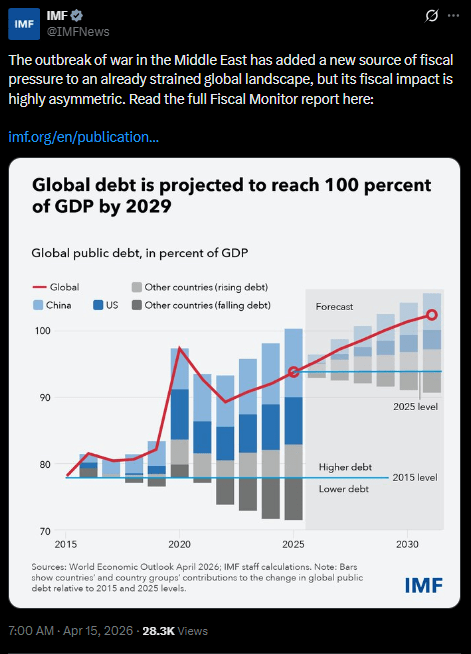
    IMF Warns Global Debt Could Hit 100% of GDP by 2029, Boosting Bitcoin Hedge Narrative

    The International Monetary Fund has warned that global public debt could approach 100% of world gross domestic product (GDP) by 2029, raising concerns about fiscal solvency and long-term bond market stability. Under current projections, major economies including the United States and China are expected to remain key contributors to rising debt levels, alongside increased global defense spending.

    If debt issuance continues to outpace economic growth, investors may begin demanding higher bond yields, reflecting concerns about governments’ ability to repay obligations.

    Bitcoin Seen as Potential Hedge Against Debt and Financial Stress

    In a scenario where bond yields rise due to solvency fears rather than monetary tightening, investors could shift funds into alternative assets such as Bitcoin. Its fixed supply cap of 21 million coins, independence from sovereign balance sheets, and decentralized structure support its role as a potential hedge against inflation and financial repression.

    Historical events reinforce this view. Bitcoin gained momentum following the 2013 Cyprus banking crisis and again during the 2023 U.S. regional banking turmoil, when stress across lenders coincided with a broader crypto market recovery.

    Rising Yields Remain a Risk Factor for Crypto Markets

    However, rising yields can also create pressure on risk assets. During 2021–2022, aggressive rate hikes by the Federal Reserve lifted Treasury yields and contributed to Bitcoin’s fall from nearly $70,000 to around $16,000.

    Unlike previous cycles driven by central bank tightening, a debt-driven yield surge could lead investors to question government solvency, potentially increasing interest in decentralized assets over the long term.

    Disclaimer

    This content is for informational purposes only and does not constitute financial, investment, or legal advice. Cryptocurrency trading involves risk and may result in financial loss.

  • XRP Tests $1.38 Resistance as Rakuten Integration Drives Japan Payment Adoption

    XRP Tests $1.38 Resistance as Rakuten Integration Drives Japan Payment Adoption

    XRP moved toward $1.38 after news that Rakuten integrated the token into its payments ecosystem, bringing new utility to millions of users. The integration allows roughly 44 million users to spend XRP across more than 5 million merchants, while also enabling customers to convert loyalty points into XRP through Rakuten Wallet.

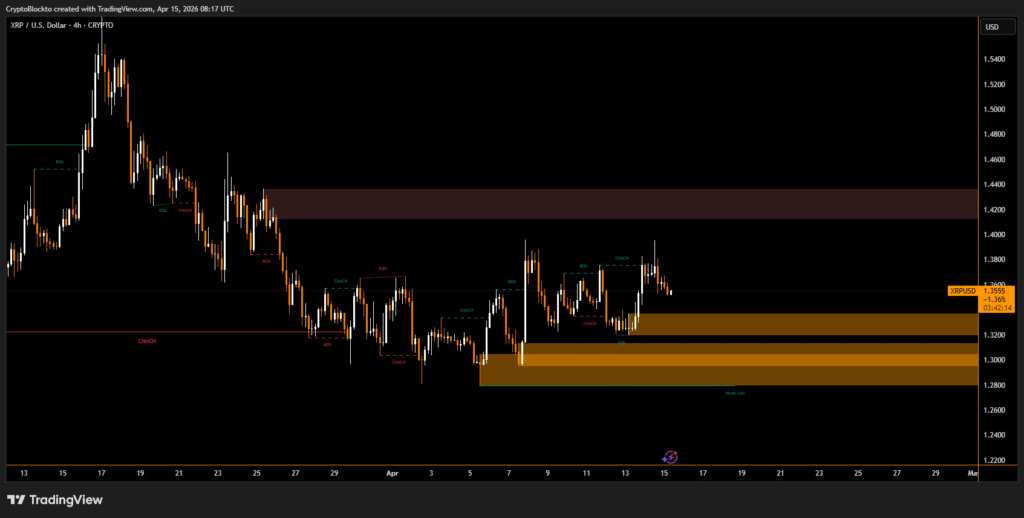
    $XRP 4h price chart

    This development links XRP to one of Japan’s largest loyalty systems, where more than $23 billion worth of reward points are actively circulating. The move strengthens XRP’s presence in Asia and builds on earlier partnerships such as SBI Ripple Asia, which has supported regional blockchain payment adoption.

    XRP Price Rally Faces Resistance After Brief Breakout

    Price action showed XRP rising from $1.32 to $1.38, breaking above the $1.325–$1.33 resistance zone with strong trading volume. However, the rally struggled to sustain momentum and pulled back slightly to around $1.35, suggesting hesitation near resistance.

    Market activity indicates that the rally was supported by steady accumulation rather than sudden price spikes. Whale buying and rising open interest signals suggest growing institutional participation behind the move, although broader market sentiment remains cautious.

    Traders are closely monitoring $1.37 as a key pivot level. Holding above this level would support continuation toward the $1.40–$1.42 resistance range, which is viewed as the threshold for confirming stronger bullish momentum.

    Disclaimer

    This content is for informational purposes only and does not constitute financial, investment, or legal advice. Cryptocurrency trading involves risk and may result in financial loss.