Author: tristan

  • Tether Launches Self-Custodial Wallet Supporting USDT, Bitcoin and Tokenized Gold

    Tether Launches Self-Custodial Wallet Supporting USDT, Bitcoin and Tokenized Gold

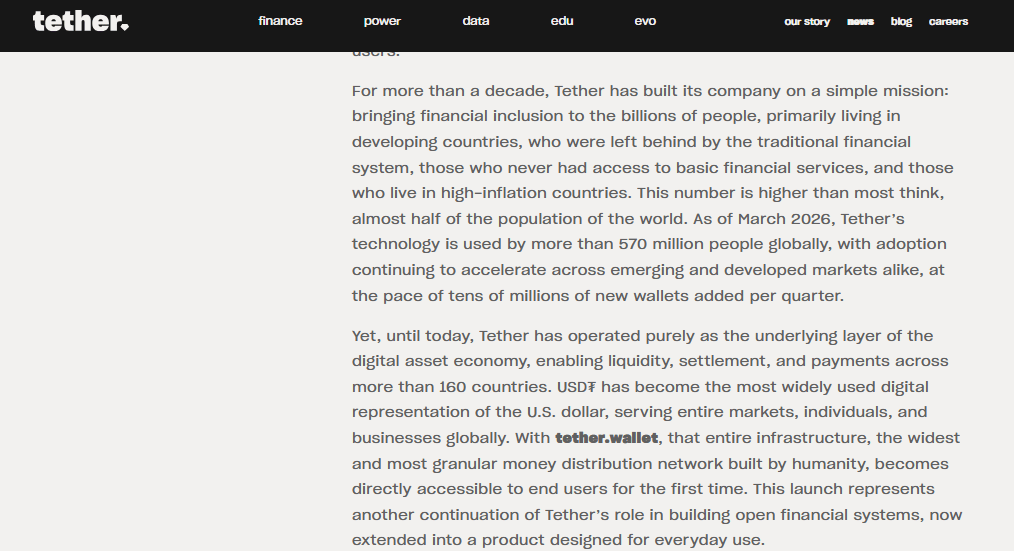
    Tether, issuer of the world’s largest stablecoin USDT, has launched a new self custodial application called tether.wallet, marking a shift from infrastructure provider to consumer facing financial services. The wallet is designed to give users direct control over digital assets instead of relying on intermediaries.

    The company said the product targets billions of people underserved by traditional finance and builds on a network that already reaches more than 570 million users globally. Until now, Tether’s infrastructure has primarily supported liquidity, settlement, and payments behind the scenes rather than functioning as a standalone user product.
    Supported Assets and Simplified Transaction Features

    The wallet supports USDT, USAT, Tether Gold (XAUT), and Bitcoin, focusing on assets the company views as essential for everyday financial activity. Users can send funds using human-readable identifiers instead of complex wallet addresses, making transfers similar to messaging.

    Transaction fees can be paid directly in the transferred asset, removing the need for separate gas tokens. Private keys remain fully user controlled, with transactions signed locally on the user’s device to maintain custody and security.

    Broader Expansion Into AI and Multi-Network Payments

    The launch reflects Tether’s broader strategy to expand into user-level products. The wallet is built using its open-source Wallet Development Kit and supports multiple networks, including Ethereum, Polygon, Arbitrum, and the Bitcoin Lightning Network.

    Company leadership has also emphasized future use cases involving AI-driven payments, suggesting that machine-to-machine transactions may rely heavily on stablecoins and bitcoin-based settlement systems.

    Disclaimer

    This content is for informational purposes only and does not constitute financial, investment, or legal advice. Cryptocurrency trading involves risk and may result in financial loss.

  • Bitcoin Bears Target $50K as Analysts Warn of Final Market Flush Before Recovery

    Bitcoin Bears Target $50K as Analysts Warn of Final Market Flush Before Recovery

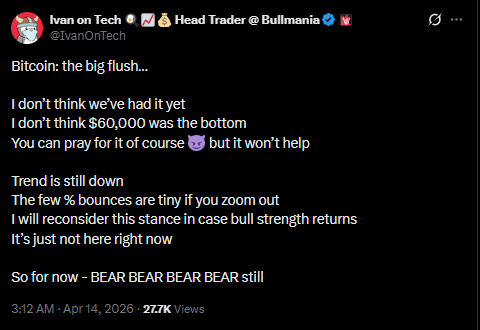
    Several crypto market analysts are warning that Bitcoin could still face a sharp decline toward the $50,000 level before any sustained recovery begins. Market commentator Ivan Liljeqvist stated that Bitcoin has yet to experience what he described as “the big flush,” arguing that the recent bounce from $60,000 does not represent a confirmed bottom. He noted that recent upward movements remain small compared with the broader downward trend, indicating persistent bearish pressure.

    Institutional Demand May Limit Deeper Declines

    $50,000 level is widely viewed as the last significant accumulation zone before any long-term recovery. Such a decline could represent a healthy cycle reset amid ongoing macroeconomic pressure and weaker capital rotation across risk assets.

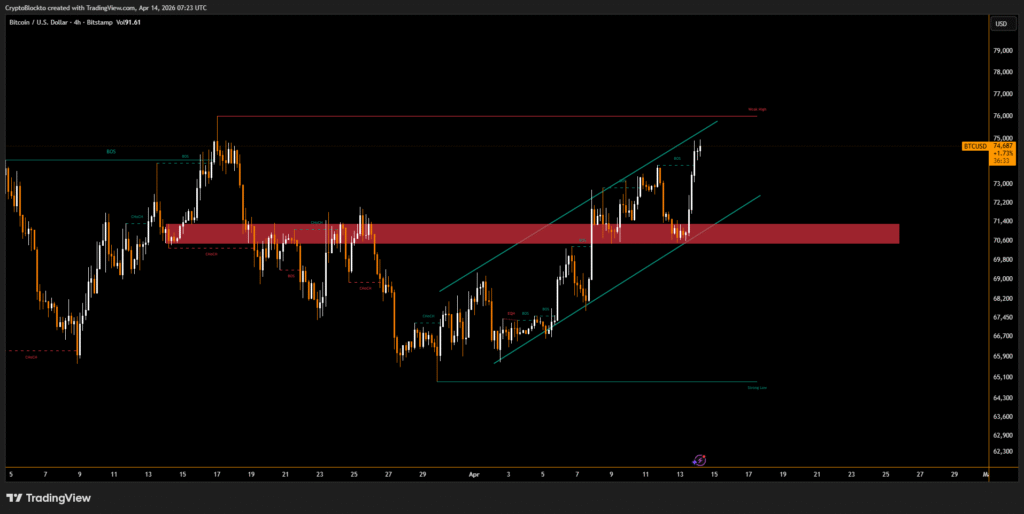
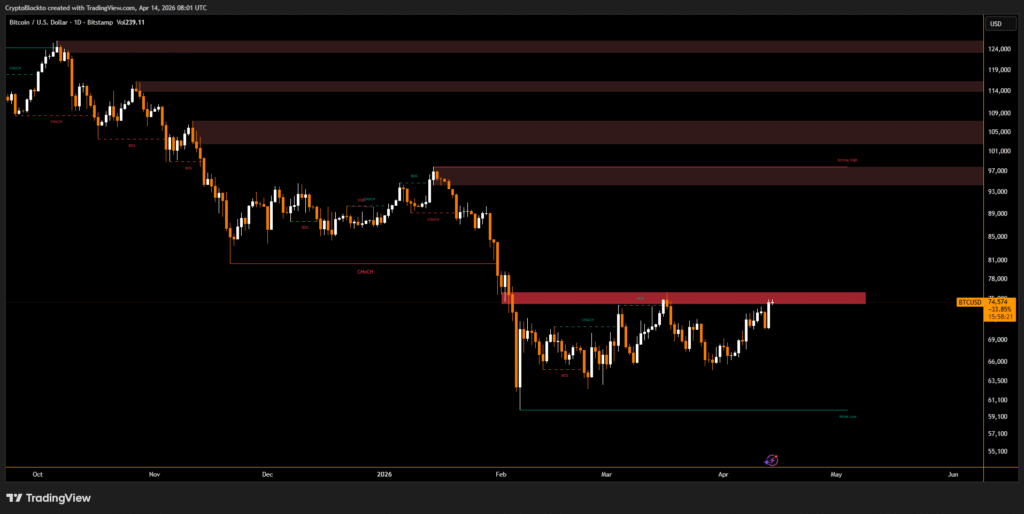
    Despite bearish warnings, Bitcoin recently climbed to just below $75,000 following renewed optimism around geopolitical negotiations, demonstrating continued volatility in the market.

    $BTC hits resistance again and remains rangebound

    Historical Drawdowns Suggest Different Cycle Behavior

    Previous Bitcoin cycles have recorded deep losses, including an 82% decline after the 2017 peak and a 77% drop following the 2021 all-time high. However, analysts note that growing institutional participation and a more macro-driven market structure may prevent the current cycle from reaching the historically typical 60% drawdown level.

    Recent research from Fidelity Digital Assets also indicated that downside volatility in 2026 has been less severe compared with earlier market cycles, suggesting stronger underlying demand even during bearish phases.

    Disclaimer

    This content is for informational purposes only and does not constitute financial, investment, or legal advice. Cryptocurrency trading involves risk and may result in financial loss.
  • US PPI Inflation Surprise Weakens Dollar Outlook as Gold Reacts Higher

    US PPI Inflation Surprise Weakens Dollar Outlook as Gold Reacts Higher

    Core PPI m/m rose just 0.1% versus a 0.4% forecast and 0.5% prior, while headline PPI m/m came in at 0.5% compared to 1.1% expected and 0.7% previously. The softer readings indicate easing upstream inflation pressures in the US economy, reducing expectations of aggressive Federal Reserve policy tightening. This typically weighs on the US dollar as yield advantage expectations soften.

    Impact on USD and Gold Market Reaction

    A weaker inflation pipeline supports a softer dollar bias and improves demand for non-yielding assets like gold. Lower PPI reduces real yield expectations, which often boosts gold attractiveness for investors seeking inflation hedges.

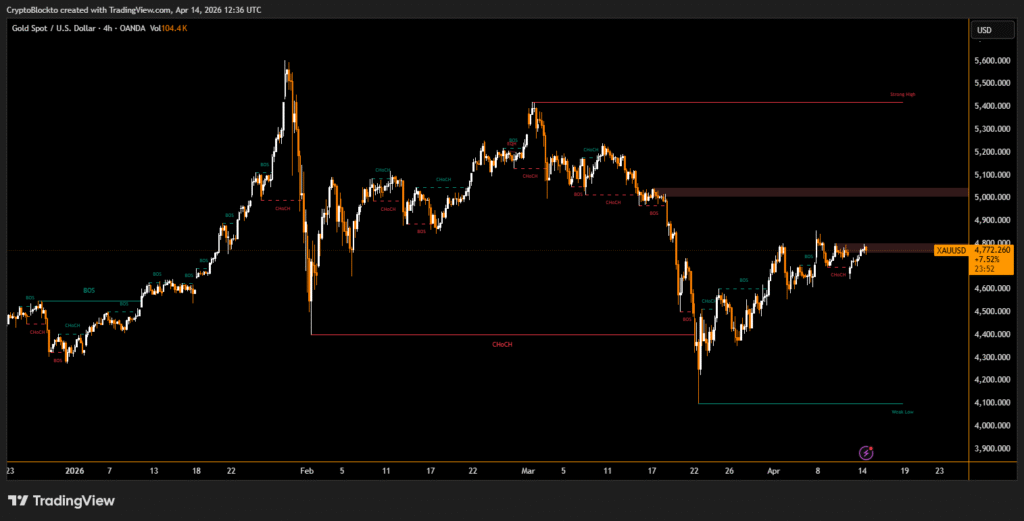
    Over the past month, gold has shown steady upward momentum with periods of consolidation near elevated levels, supported by persistent inflation uncertainty and central bank demand. Softer US data strengthens the broader bullish narrative for gold while pressuring short-term USD strength across major currency pairs.

    Gold price action since 2026 started
    Disclaimer

    This content is for informational purposes only and does not constitute financial, investment, or legal advice. Cryptocurrency trading involves risk and may result in financial loss.

  • Deutsche Börse Invests $200 Million in Kraken Parent Payward to Strengthen Crypto and Tokenization Push

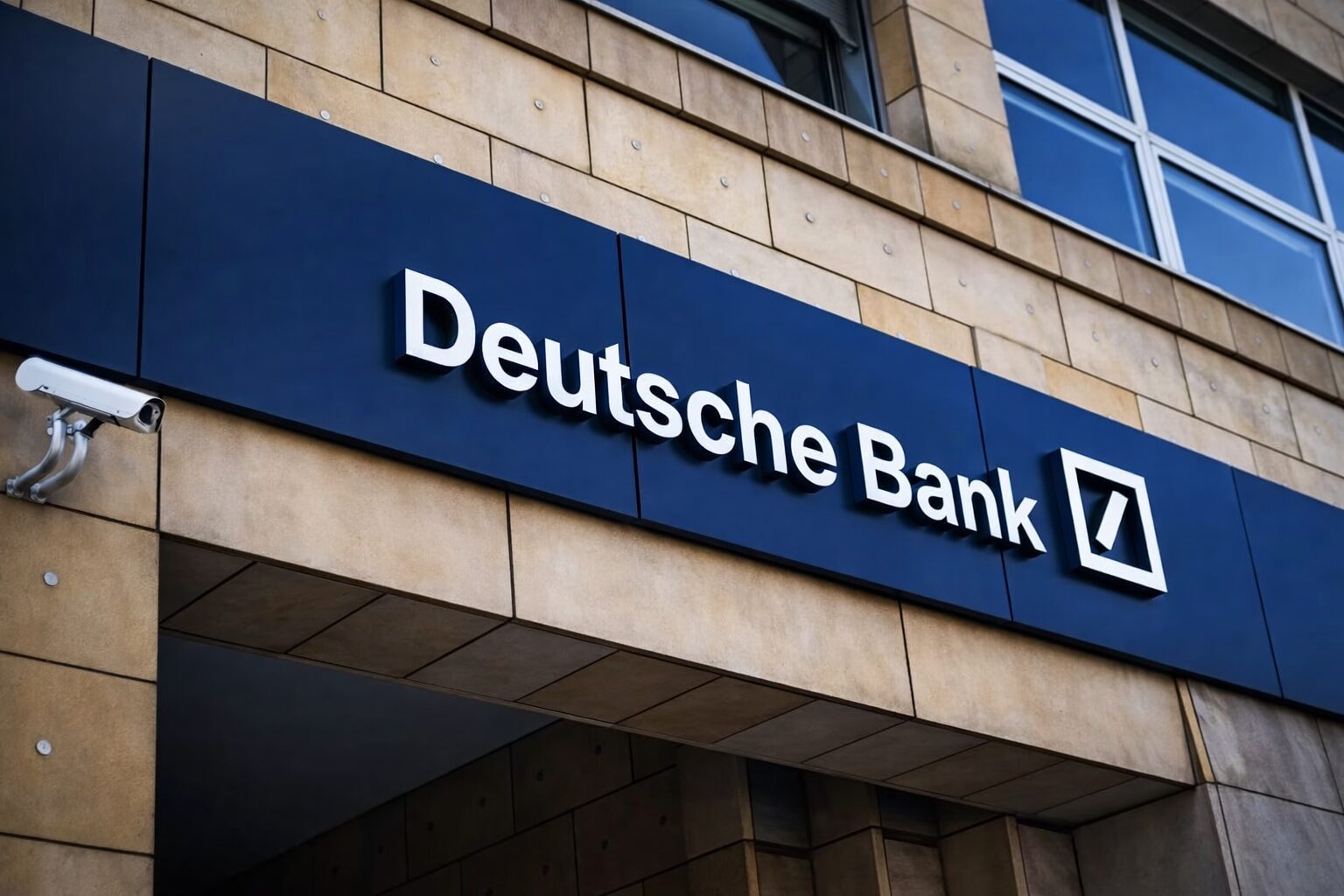
    Deutsche Börse Invests $200 Million in Kraken Parent Payward to Strengthen Crypto and Tokenization Push

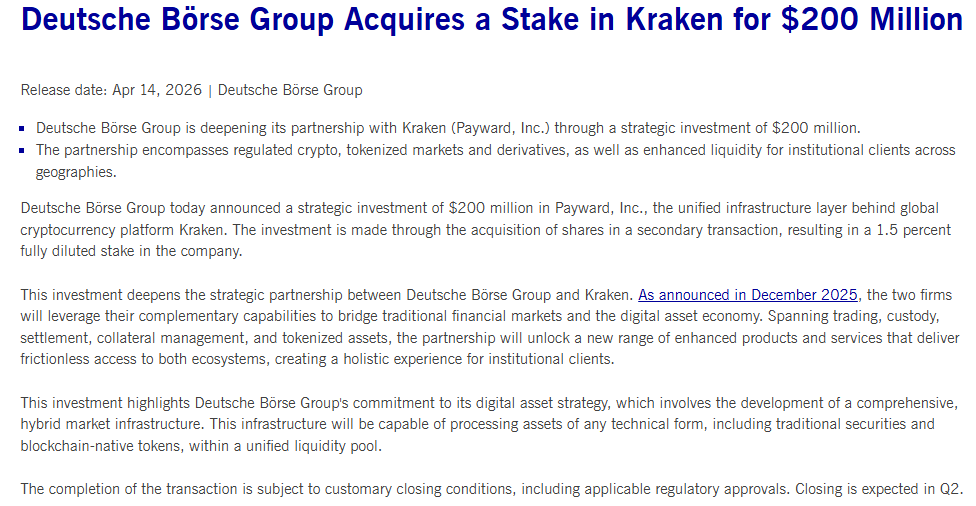
    Deutsche Borse announced it will invest $200 million in Payward, the parent company of crypto exchange Kraken, as part of its broader push into blockchain-based financial products. The investment, expected to close in the second quarter pending regulatory approval, will grant Deutsche Börse a 1.5% fully diluted stake through a secondary share purchase.

    The deal builds on a strategic partnership formed in December 2025, which focused on expanding institutional access to regulated crypto investment products. The collaboration includes integrating Kraken-backed xStocks into Deutsche Börse’s digital asset infrastructure, 360X, with plans to develop services across trading, custody, settlement, collateral management, and tokenized securities.

    Kraken has also taken steps toward a potential public listing after confidentially filing draft registration documents with US regulators in November 2025, shortly after completing an $800 million fundraising round that valued the company at $20 billion.

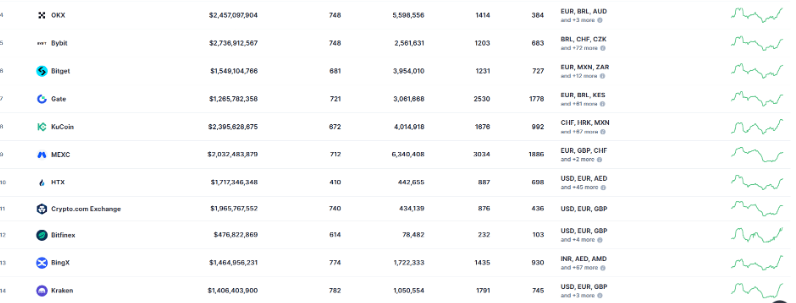
    Top crypto exchanges by trading volume

    The investment reflects growing involvement from traditional financial institutions seeking exposure to tokenized markets, derivatives, and blockchain-powered securities as digital assets move further into mainstream finance.

    Disclaimer

    This content is for informational purposes only and does not constitute financial, investment, or legal advice. Cryptocurrency trading involves risk and may result in financial loss.
  • Strategy’s STRC Posts Record Trading Volume as Estimated 7,800 Bitcoin Purchase Signals Aggressive Accumulation

    Strategy’s STRC Posts Record Trading Volume as Estimated 7,800 Bitcoin Purchase Signals Aggressive Accumulation

    The preferred security STRC, issued by Strategy (MSTR), recorded a record-breaking $1.16 billion in daily trading volume, significantly exceeding its 30-day average of $278 million. The surge is estimated to have funded the purchase of roughly 7,800 units of Bitcoin, marking what could be the largest single-day addition since the security’s debut.

    This spike in activity follows a recent $1 billion Bitcoin purchase funded entirely through STRC offerings. The security carries an 11.5% annual dividend paid monthly in cash and maintained its $100 par value throughout the trading session, indicating sustained investor confidence despite heavy trading volumes.

    Market Capitalization Growth Pushes STRC Ahead of Other Preferred Securities

    STRC has rapidly expanded in scale, reaching a market capitalization of approximately $6.4 billion. This valuation now exceeds the combined value of Strategy’s other preferred securities, including STRD at about $1.1 billion, STRK at roughly $1 billion, and STRF valued near $1.2 billion.

    Historically, trading activity tends to peak just before the ex-dividend date, scheduled for Wednesday, suggesting Tuesday’s volume could potentially surpass Monday’s record. Meanwhile, Strategy’s common shares also reflected bullish sentiment, rising 2.9% during Monday trading and gaining an additional 3.7% in pre-market activity.

    Disclaimer

    This content is for informational purposes only and does not constitute financial, investment, or legal advice. Cryptocurrency trading involves risk and may result in financial loss.
  • Iran Seeks $270B in War Reparations as US War Costs Reach $50B

    Iran Seeks $270B in War Reparations as US War Costs Reach $50B

    Iran has estimated war-related damages at approximately $270 billion following joint military strikes carried out by the United States and Israel earlier this year. The assessment was shared by government spokesperson Fatemeh Mohajerani, who noted that the figure is based on preliminary calculations and may increase as further evaluations are completed.

    Officials stated that the issue of reparations has become a central demand in ongoing diplomatic talks, including earlier negotiations held in Islamabad. Mohajerani emphasized that damage calculations are being reviewed across multiple sectors, indicating that the final figure could change as detailed assessments continue.

    Reparations Dispute Emerges as Major Obstacle in Peace Talks

    The demand for compensation has emerged as a major sticking point in negotiations aimed at ending hostilities. Iranian officials are pressing for financial accountability tied to infrastructure damage, casualties, and economic disruption caused during the conflict. Analysts suggest that disagreements over reparations could delay progress toward a lasting settlement.

    Rising War Costs Add Pressure to Negotiation Outcomes

    The financial burden of the conflict is also drawing attention in the United States, where government spending related to military operations has reportedly reached around $50 billion. With both sides facing mounting economic pressures, the unresolved reparations issue is expected to remain a key factor influencing the pace and outcome of future negotiations.

    Disclaimer

    This content is for informational purposes only and does not constitute financial, investment, or legal advice. Cryptocurrency trading involves risk and may result in financial loss.
  • Bitcoin ETF Outflows Hit $291 Million as BTC Surges Above $74,000

    Bitcoin ETF Outflows Hit $291 Million as BTC Surges Above $74,000

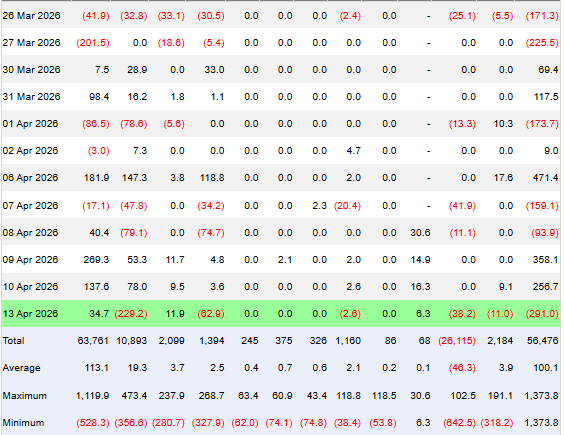
    US-listed spot Bitcoin exchange-traded funds recorded $291 million in net outflows on Monday, marking the largest daily redemption since March 27. The decline came even as Bitcoin surged roughly 5% to trade above $74,000, reaching its highest level in nearly four weeks.

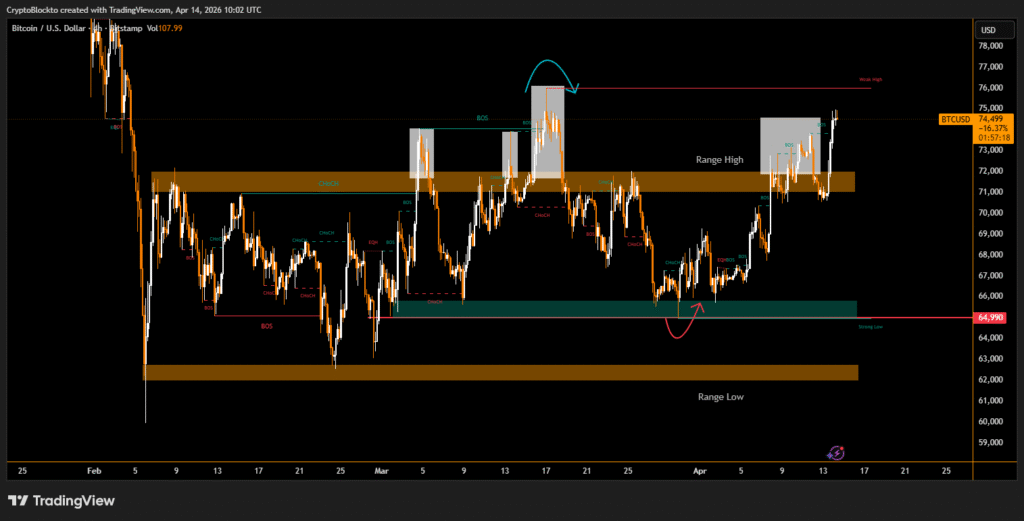
    $BTC 4h price chart

    The majority of withdrawals were driven by the Fidelity Wise Origin Bitcoin Fund (FBTC), which alone accounted for $229 million in outflows. Market data indicated that selling pressure was concentrated within a limited number of funds rather than spread across the entire ETF sector, suggesting selective repositioning rather than broad investor panic.

    Select Funds Maintain Positive Momentum Amid Market Divergence

    Despite overall ETF outflows, several funds continued to attract new capital. The BlackRock spot Bitcoin ETF recorded approximately $35 million in inflows on Monday, extending its positive streak to four consecutive trading days. This brought its cumulative inflows during the period to about $482 million, reflecting continued institutional demand.

    Daily spot Bitcoin ETF flows (in millions of dollars) from March 26

    Another notable performer was the Morgan Stanley Bitcoin Trust ETF (MSBT), which maintained its inflow trend following its launch on April 8, accumulating roughly $68 million in total inflows. Despite these gains, the broader spot Bitcoin ETF market has returned to negative territory for the year, recording about $160 million in year-to-date outflows.

    Altcoin ETFs Hold Steady While Market Sentiment Slowly Improves

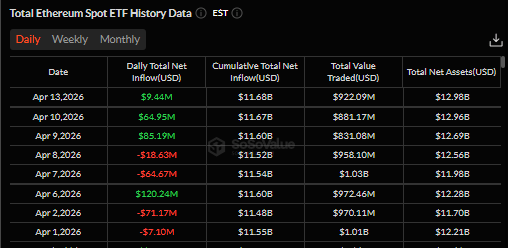
    While Bitcoin-focused funds faced outflows, altcoin ETFs recorded modest gains. Spot Ether ETFs saw $9.4 million in inflows, extending their three-day streak to around $160 million. Funds tied to XRP recorded $1.5 million in new capital, while Solana funds showed no inflow activity.

    Daily spot Ether ETF flows from April 1

    Investor sentiment indicators also showed slight improvement, with the Crypto Fear and Greed Index rising above 20 for the first time since mid-March, though it remains within the “extreme fear” range. Analysts noted that sustained price growth would likely require renewed capital inflows into derivatives markets and rising open interest levels to confirm a durable bullish trend.

    Disclaimer

    This content is for informational purposes only and does not constitute financial, investment, or legal advice. Cryptocurrency trading involves risk and may result in financial loss.
  • Senator Thom Tillis Prepares Draft to Resolve Stablecoin Yield Dispute in Clarity Act

    Senator Thom Tillis Prepares Draft to Resolve Stablecoin Yield Dispute in Clarity Act

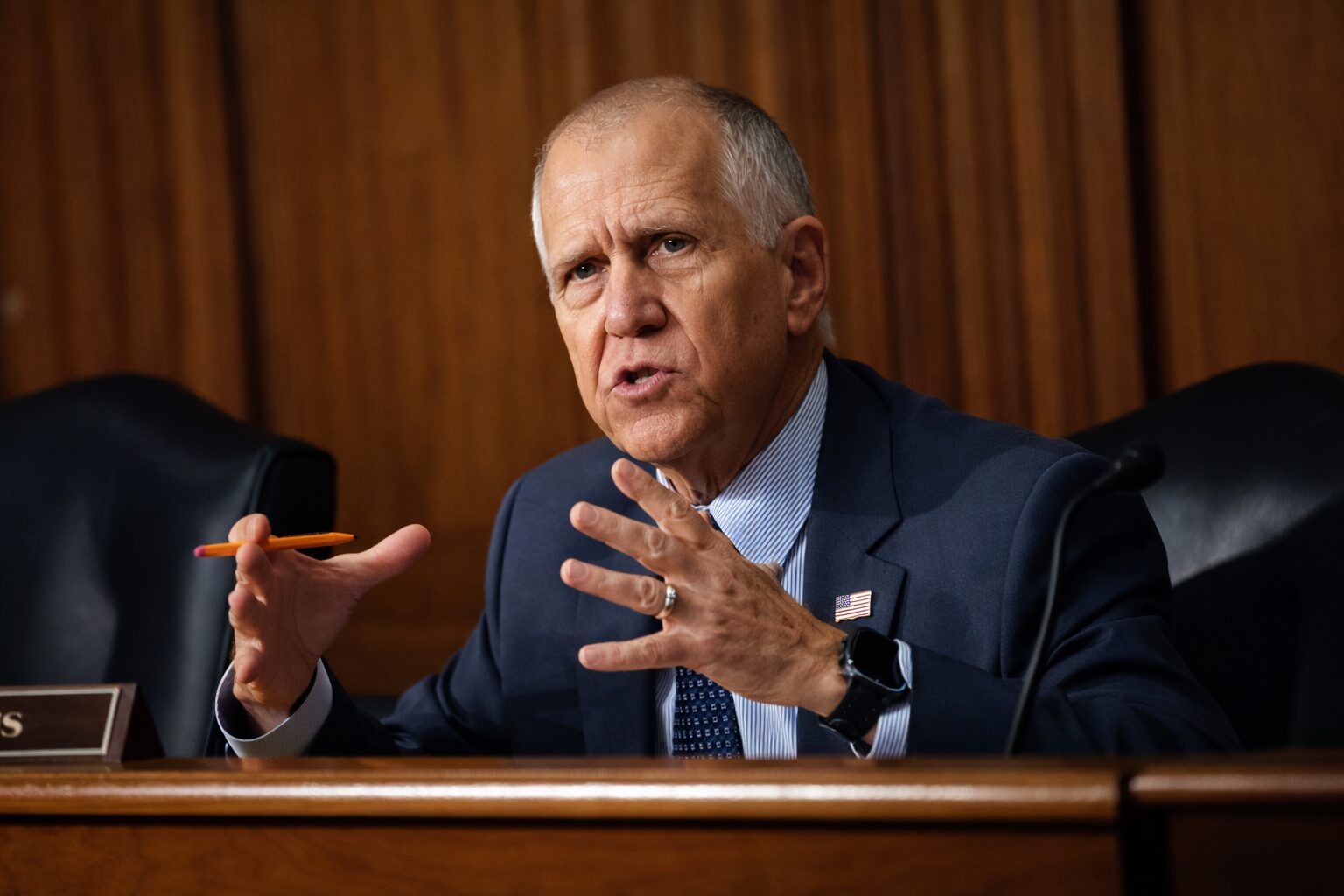
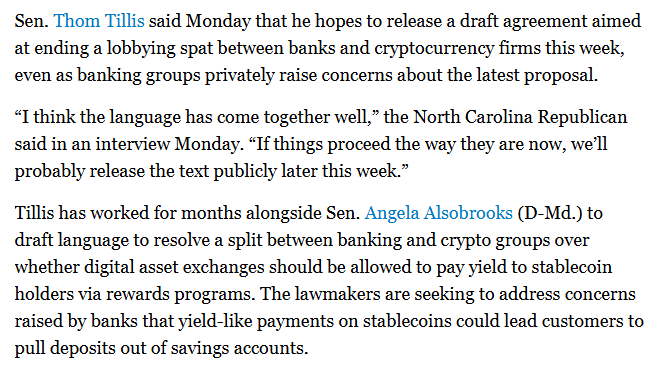
    Thom Tillis is expected to release a draft agreement this week aimed at resolving the ongoing stablecoin yield dispute tied to the proposed Clarity Act. The proposal is being developed in collaboration with Angela Alsobrooks, with the goal of settling disagreements over whether cryptocurrency companies should be allowed to offer rewards on idle stablecoin balances.

    According to reports, the draft language has already been reviewed by both banking institutions and crypto industry representatives. However, banks have reportedly expressed concerns and signaled resistance to certain provisions, indicating that further revisions may be necessary before public release.

    Banking Sector and Crypto Firms Remain Divided on Yield Payments

    The debate over stablecoin rewards has become one of the most contentious issues within the Clarity Act framework. Traditional banks argue that allowing crypto platforms to provide yield on stablecoins could trigger major deposit outflows from conventional institutions, potentially disrupting the banking system’s funding structure.

    Meanwhile, crypto companies, including Coinbase, have maintained that prohibiting such rewards would limit innovation and reduce competition within the financial sector. Supporters of yield programs argue that they could encourage new financial services rather than weaken existing ones.

    Legislative Path Remains Complex Despite Ongoing Negotiations

    Even if lawmakers reach consensus on stablecoin yield language, the Clarity Act still faces multiple legislative steps. The bill must first pass the Senate Banking Committee before moving to the United States Senate Agriculture Committee, followed by reconciliation and a full Senate floor vote.

    In addition, Senator Tillis has suggested organizing a large-scale discussion event informally described as a “crypto-palooza” to bring banking and crypto leaders together at Capitol Hill to address remaining disagreements and accelerate progress toward a unified regulatory framework.

    Disclaimer

    This content is for informational purposes only and does not constitute financial, investment, or legal advice. Cryptocurrency trading involves risk and may result in financial loss.

  • Justice Department Opens Compensation Program for Victims of $4B OneCoin Crypto Fraud

    Justice Department Opens Compensation Program for Victims of $4B OneCoin Crypto Fraud

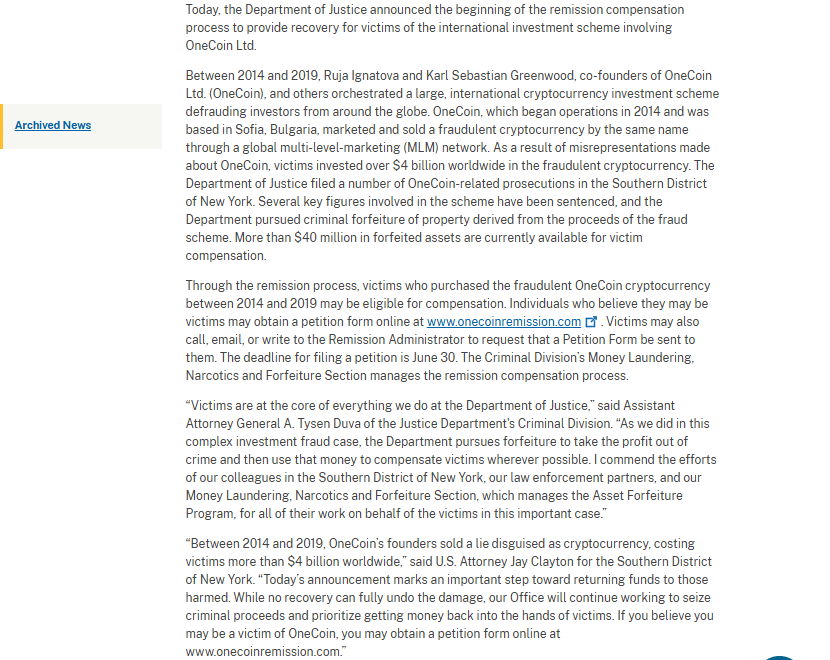
    The United States Department of Justice has launched a compensation process aimed at reimbursing victims of the massive OneCoin fraud, which caused billions of dollars in losses worldwide. Officials confirmed that more than $40 million in forfeited assets is now available for distribution to individuals who purchased OneCoin between 2014 and 2019 and recorded a net financial loss.

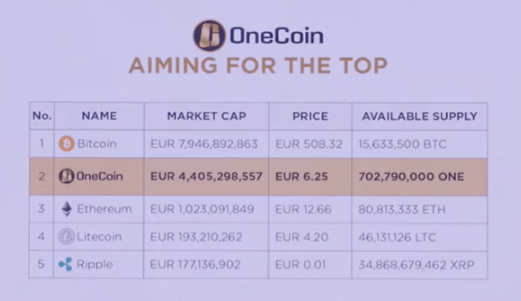
    Jay Clayton described the initiative as a key step toward returning funds to affected investors, noting that authorities remain committed to seizing criminal proceeds linked to the scheme. OneCoin was initially launched in 2014 with claims it would surpass Bitcoin, briefly gaining global attention before collapsing when investigators discovered the tokens had no real utility or blockchain infrastructure.

    OneCoin rose to become the second-largest cryptocurrency by market capitalization Before it collapsedYouTube 

    Founders’ Roles and Global Investigation History

    The fraudulent operation was created in Bulgaria by Ruja Ignatova and Karl Sebastian Greenwood, attracting millions of investors across multiple countries. Authorities estimate the scheme stole more than $4 billion from around 3.5 million victims between 2014 and 2016, while broader estimates suggest total losses could have reached $19 billion globally.

    Greenwood was arrested following a 2018 police raid on company offices and later sentenced to 20 years in prison in September 2023 for his involvement. Ignatova disappeared in 2017 after boarding a flight to Athens and remains one of the Federal Bureau of Investigation “Ten Most Wanted Fugitives,” with a $5 million reward offered for information leading to her capture.

    Disclaimer

    This content is for informational purposes only and does not constitute financial, investment, or legal advice. Cryptocurrency trading involves risk and may result in financial loss.

  • Bank of Japan Policy Shift Supports Bitcoin Rally as Yen Carry Trade Stays Intact

    Bank of Japan Policy Shift Supports Bitcoin Rally as Yen Carry Trade Stays Intact

    Bitcoin’s breakout above $74,000 has been strengthened by a softer tone from the Bank of Japan, which signaled it is unlikely to raise interest rates at its April 28 meeting. Governor Kazuo Ueda adopted a cautious stance amid uncertainty over the economic impact of the Iran conflict, easing pressure on global risk assets.

    $btc 4H PRICE CHART

    The policy shift matters for crypto because it keeps the yen weak and preserves cheap funding conditions for leveraged strategies. A similar setup reversed sharply in August 2024, when a surprise BOJ rate hike triggered a yen carry trade unwind that caused Bitcoin to fall from $64,000 to $49,000 in just 48 hours.

    Yen Carry Trade Liquidity Fuels Bitcoin Futures Positioning

    The yen carry trade where investors borrow in low interest yen to invest in higher-yielding assets remains active and continues to support risk markets, including crypto derivatives. The yen is currently near 160 per U.S. dollar, keeping funding costs low and encouraging leverage.

    Japan’s 20-year bond auction also reinforced the outlook, recording its strongest demand since 2019 with a bid-to-cover ratio of 4.82 versus a 12-month average of 3.27. Yields briefly eased afterward, signaling confidence that tightening is on hold.

    Geopolitics and Inflation Outlook Add Further Support

    Japan’s exposure to Middle East energy routes, especially the Strait of Hormuz, means any easing in oil prices from potential U.S.-Iran negotiations could further reduce inflation pressure. That would give the BOJ even less reason to tighten policy.

    Recent data also showed billions in new Bitcoin and Ether futures open interest, suggesting renewed leveraged positioning, likely supported by continued yen liquidity. With macro risks easing, the BOJ’s stance has become a key tailwind behind Bitcoin’s sustained breakout above resistance levels.

    Disclaimer

    This content is for informational purposes only and does not constitute financial, investment, or legal advice. Cryptocurrency trading involves risk and may result in financial loss.