Author: tristan

  • Federal Judge Temporarily Blocks Arizona Criminal Case Against Kalshi

    Federal Judge Temporarily Blocks Arizona Criminal Case Against Kalshi

    A federal judge has temporarily stopped the state of Arizona from bringing criminal charges against prediction market operator Kalshi, delivering a short-term legal win for the company and federal regulators.

    Michael Liburdi, serving in the U.S. District Court for the District of Arizona, issued a temporary restraining order preventing Arizona officials from proceeding with an arraignment scheduled for April 13. The state had previously announced plans to file 20 criminal charges against Kalshi, alleging that its event-based contracts violated state gambling laws.

    CFTC Argues Federal Authority Overrides State Laws

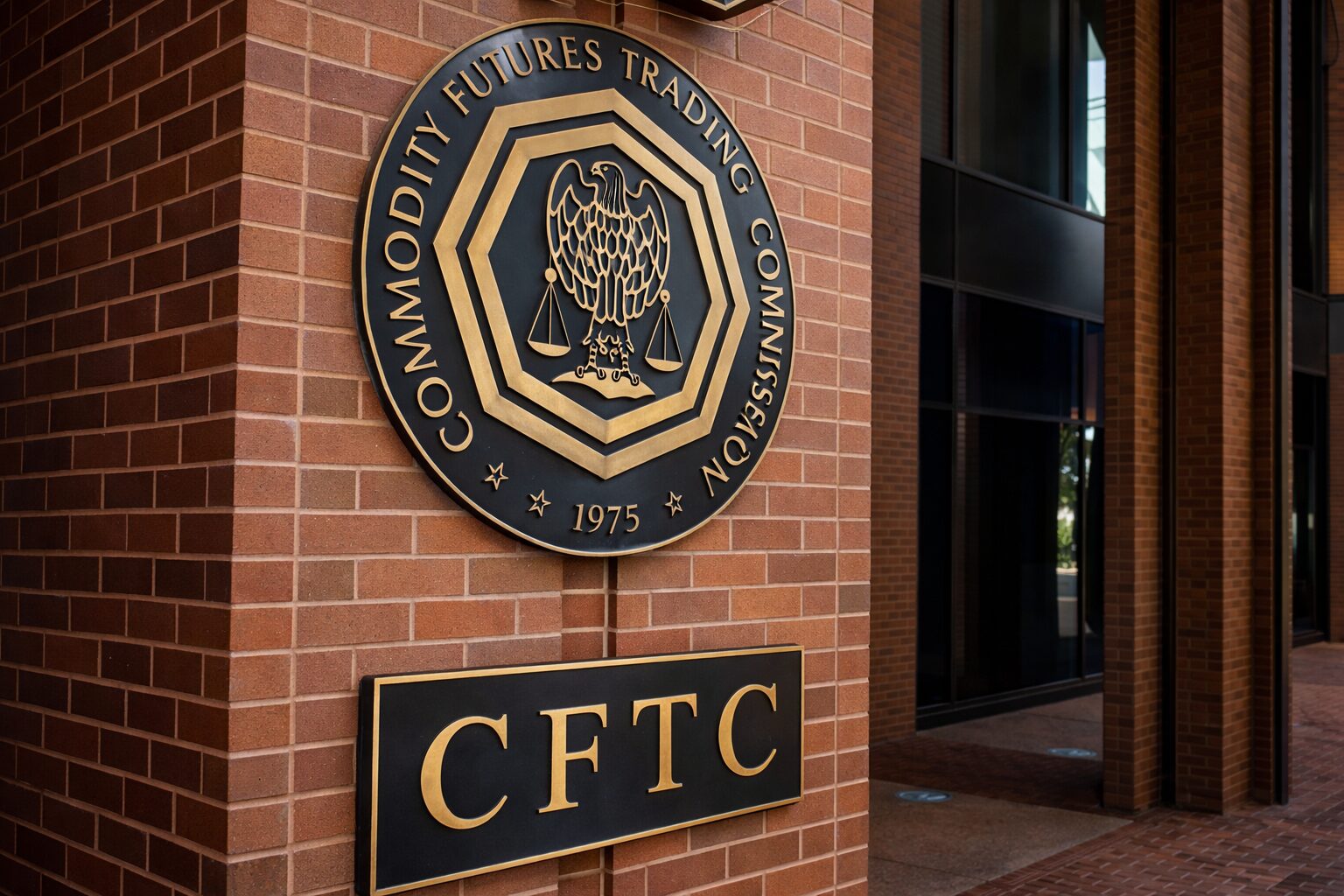
    The restraining order followed a motion from the Commodity Futures Trading Commission, which argued that prediction markets qualify as financial swaps regulated at the federal level.

    Michael Selig praised the ruling, stating that using state criminal law against federally compliant companies could create a dangerous precedent. The regulator has filed lawsuits against multiple states, asserting that its authority over designated contract markets takes precedence over state-level gambling restrictions.

    Mixed Court Outcomes Highlight Ongoing Legal Uncertainty

    Legal outcomes surrounding prediction markets remain inconsistent across jurisdictions. Courts in Nevada previously allowed state regulators to temporarily block Kalshi operations, while the U.S. Court of Appeals for the Third Circuit recently ruled that prediction markets fall under federal supervision.

    Meanwhile, the U.S. Court of Appeals for the Ninth Circuit declined to intervene in the Nevada dispute but is expected to hear arguments next week in a consolidated case involving multiple industry participants.

    Disclaimer

    This content is for informational purposes only and does not constitute financial, investment, or legal advice. Cryptocurrency trading involves risk and may result in financial loss.

  • CoreWeave Signs Multi-Year Anthropic Deal as AI Demand Pulls Miners Toward Data Centers

    CoreWeave Signs Multi-Year Anthropic Deal as AI Demand Pulls Miners Toward Data Centers

    CoreWeave has secured a multi year agreement with artificial intelligence developer Anthropic to run workloads for its Claude AI models. The partnership will be introduced in phases, with the possibility of expanding as demand for computing power increases.

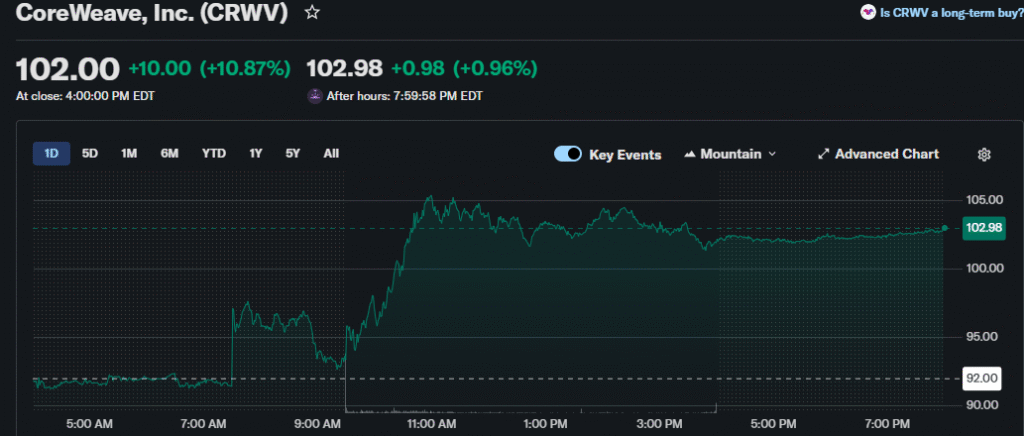
    Following the announcement, CoreWeave shares jumped more than 12%, trading near $102.73. The deal also strengthens the company’s role in supporting major AI developers, as it reported serving nine of the ten largest builders of large language models.

    CoreWeave’s stock price rose following the announcement

    $8.5 Billion Funding Boost Signals Shift From Crypto Mining

    The agreement comes after CoreWeave raised $8.5 billion in financing led by Meta Platforms. Unlike traditional crypto mining loans backed by graphics hardware, the funding was secured using deployed computing capacity tied to predictable revenue streams.

    CoreWeave originally operated in cryptocurrency mining but shifted focus to AI infrastructure in 2019 following the downturn that followed the 2018 Crypto Market Crash.

    Bitcoin Mining Profitability Pressures Drive AI Transition

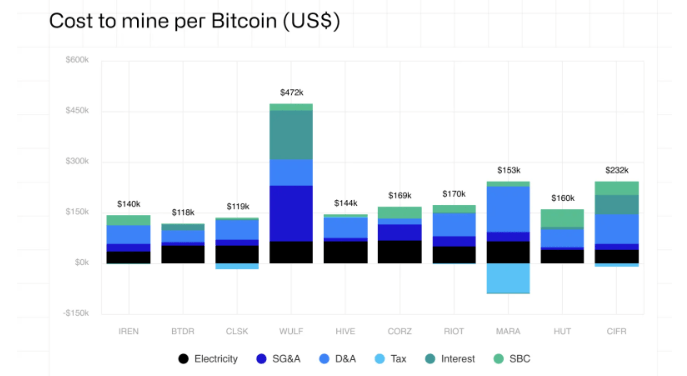
    Rising energy costs, shrinking mining rewards and falling asset prices have forced many Bitcoin miners to explore AI computing opportunities. According to asset manager CoinShares, as many as 20% of miners are currently operating at a loss.

    Average cost to mine Bitcoin in US dollars for several major mining companies

    Market pressures intensified after the October 2025 Crypto Market Crash, when Bitcoin fell from about $126,000 to the low $60,000 range before stabilizing near $73,000. Analysts, including Ran Neuner, note that AI data centers now compete directly with miners for electricity, often offering higher returns.

    Disclaimer

    This content is for informational purposes only and does not constitute financial, investment, or legal advice. Cryptocurrency trading involves risk and may result in financial loss.
  • Prediction Market Traders Watch Artemis II Splashdown as Bets Focus on NASA Statements

    Prediction Market Traders Watch Artemis II Splashdown as Bets Focus on NASA Statements

    Users on prediction platforms are closely tracking the return of the Artemis II, the first crewed Moon mission in more than 50 years led by NASA. The 10-day mission is scheduled to conclude with the splashdown of the Orion spacecraft in the Pacific Ocean at approximately 12:07 am UTC on Saturday.

    Traders on prediction platforms such as Kalshi and Polymarket have created event contracts tied not only to the splashdown outcome but also to the statements expected during NASA’s post-mission press conference.

    Event Contracts Focus on Keywords and Mission Outcomes

    With more than $4,000 in trading volume recorded, participants anticipate that NASA officials may reference words such as “president,” “prime minister,” “radiation,” or “damage” while discussing the mission results. These keyword-based wagers highlight how prediction markets increasingly focus on specific communication outcomes rather than only mission success.

    The mission launched from Kennedy Space Center on April 1 with a four-member crew and completed a lunar flyby. It follows the uncrewed Artemis I in 2022 and supports plans for a future crewed lunar landing targeted for 2028.

    Prediction Markets Face Scrutiny Over Event-Based Betting

    Prediction markets have faced criticism from lawmakers due to bets placed on sensitive geopolitical developments, including conflicts involving the United States and Iran. Some officials argue that suspicious timing of wagers could raise insider trading concerns, prompting calls for clearer regulation.

    Separately, Starcloud, backed by Nvidia, announced plans in March to mine Bitcoin from Earth orbit using solar-powered data centers equipped with ASIC mining hardware, expanding the role of space-based infrastructure in cryptocurrency operations.

    Disclaimer

    This content is for informational purposes only and does not constitute financial, investment, or legal advice. Cryptocurrency trading involves risk and may result in financial loss.

  • Iran Struggles to Fully Reopen Strait of Hormuz After Mine Deployment

    Iran Struggles to Fully Reopen Strait of Hormuz After Mine Deployment

    Iran is reportedly facing difficulties fully reopening the Strait of Hormuz after failing to locate all the naval mines it deployed in the waterway. The situation has left shipping traffic heavily restricted, raising concerns across global energy markets.

    Naval mines, once placed, can drift due to ocean currents or shift from their original coordinates, making them extremely difficult to track. Experts warn that mine warfare often creates long-term hazards, even for the side that deployed the explosives. In this case, the inability to identify and safely remove all mines has complicated Iran’s efforts to restore normal maritime movement.

    Global Oil Supply at Risk From Restricted Traffic

    The Strait of Hormuz remains one of the world’s most critical energy corridors, handling roughly 20% of global oil shipments. Any prolonged disruption increases the risk of supply shortages and higher energy prices worldwide. Shipping companies are reportedly exercising extreme caution, delaying or rerouting cargo until safe passage can be guaranteed.

    Mine Removal Challenges Highlight Strategic Risks

    Military specialists emphasize that clearing sea mines during periods of tension is both dangerous and time-consuming. Mine removal operations require specialized vessels, trained personnel, and precise mapping — resources that may be limited during ongoing regional instability. The incident underscores how mine deployment can backfire, turning a tactical defense into a lasting navigational threat.

    Disclaimer

    This content is for informational purposes only and does not constitute financial, investment, or legal advice. Cryptocurrency trading involves risk and may result in financial loss.

  • Bitcoin Community Debates Iran’s Reported Crypto Tolls for Oil Tankers

    Bitcoin Community Debates Iran’s Reported Crypto Tolls for Oil Tankers

    The crypto sector is closely watching reports that Iran may accept Bitcoin payments from oil tankers crossing the Strait of Hormuz, a vital shipping lane that carries nearly 20% of global oil supply. The discussion began after a report from Financial Times claimed Iranian authorities were considering Bitcoin payments to bypass sanctions imposed by the United States.

    A map of the Strait of Hormuz. : Encyclopedia Britannica

    Conflicting Reports on Bitcoin, Stablecoins, and Yuan Payments

    Alex Thorn, head of firmwide research at Galaxy Digital, noted that conflicting information suggests tolls might also be payable in stablecoins or Chinese yuan. Thorn said his team is monitoring blockchain activity for signs of large transactions linked to tanker passage fees.

    Meanwhile, Bitcoin advocate Justin Bechler argued that stablecoins like USDT and USDC include blacklist controls allowing issuers to freeze funds, making Bitcoin more attractive because it lacks a central authority or freeze function.

    Payment Methods Could Use Lightning or QR Codes

    Thorn estimated tanker tolls could range from $200,000 to $2 million. Because ships reportedly have only seconds to complete payment, analysts suggest the Lightning Network could be used, though its largest recorded transfer so far is about $1 million. More likely, authorities would issue QR codes or Bitcoin addresses to vessels before passage.

    Disclaimer

    This content is for informational purposes only and does not constitute financial, investment, or legal advice. Cryptocurrency trading involves risk and may result in financial loss.

  • CFTC Names Crypto Innovation Task Force Members to Advance Market Clarity Efforts

    CFTC Names Crypto Innovation Task Force Members to Advance Market Clarity Efforts

    The Commodity Futures Trading Commission has announced the first members of its Innovation Task Force, a new initiative designed to provide clearer regulatory guidance for the digital asset sector. The task force was launched on March 24 by CFTC Chairman Mike Selig, who appointed Michael Passalacqua to lead the group.

    According to the agency, the task force aims to deliver clearer “rules of the road” for innovators operating within the U.S. crypto and technology markets.

    Task Force Includes Legal and Crypto Industry Experts

    Passalacqua will work alongside five founding members with backgrounds in law, blockchain, and financial regulation. These include Hank Balaban, Sam Canavos, Mark Fajfar, Eugene Gonzalez IV and Dina Moussa.

    Selig described the group as a team with strong technical and legal experience capable of advancing regulatory clarity while supporting responsible innovation.

    Innovation Tracker Highlights Broader Regulatory Strategy

    Alongside the task force announcement, the CFTC introduced an “innovation tracker” designed to monitor progress across key technology sectors. These focus areas include crypto and blockchain development, artificial intelligence systems, and contracts tied to prediction markets.

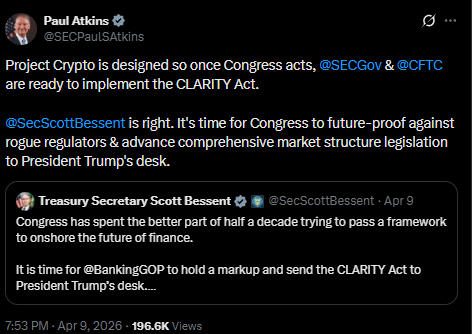
    Regulatory direction may ultimately depend on the progress of the CLARITY Act. Meanwhile, the Securities and Exchange Commission has indicated that many crypto assets may not fall under securities classification, signaling a possible shift in oversight responsibilities between federal regulators.

    SEC Chair Paul Atkins called for via X on Thursday;

    Disclaimer

    This content is for informational purposes only and does not constitute financial, investment, or legal advice. Cryptocurrency trading involves risk and may result in financial loss.

  • Bank of France Pushes Tougher MiCA Rules as France Targets Self-Custody Crypto Reporting

    Bank of France Pushes Tougher MiCA Rules as France Targets Self-Custody Crypto Reporting

    The Bank of France is urging tighter controls on stablecoin usage across Europe, particularly for non-euro-pegged assets. Denis Beau, First Deputy Governor of the central bank, made the call during remarks delivered at the EUROFI High Level Seminar, emphasizing the need to strengthen the European Union’s Markets in Crypto Assets Regulation framework.

    Beau warned that existing rules only partially address risks tied to the growing use of non European stablecoins. He highlighted that US dollar pegged stablecoins currently dominate the sector, accounting for roughly 98% of the global stablecoin market. The official also pointed to ongoing tokenization initiatives such as Pontes and Appia as part of broader efforts to modernize payment systems.

    France Advances Reporting Rules for Self-Custody Wallets

    In a parallel move, lawmakers in the National Assembly of France adopted a provision on April 7 requiring annual reporting of self hosted crypto wallets exceeding 5,000 euros in value. The measure is included in an anti fraud bill that has not yet completed the legislative process.

    The proposal has faced opposition from parts of the government and tax authorities, with concerns raised about enforcement challenges and data security risks.

    These developments highlight France’s increasingly firm regulatory stance as policymakers seek to limit reliance on foreign-issued stablecoins and strengthen oversight of private crypto holdings. The discussion comes ahead of Paris Blockchain Week scheduled for April 15–16, where Emmanuel Macron is expected to deliver a special address.

    Disclaimer

    This content is for informational purposes only and does not constitute financial, investment, or legal advice. Cryptocurrency trading involves risk and may result in financial loss.
  • Bitcoin and Ether Rally Fueled by New Long Positions in Perpetual Futures, CryptoQuant Says

    Bitcoin and Ether Rally Fueled by New Long Positions in Perpetual Futures, CryptoQuant Says

    Recent gains in Bitcoin and Ethereum were driven primarily by new long positions in perpetual futures rather than short liquidations, according to analytics firm CryptoQuant.

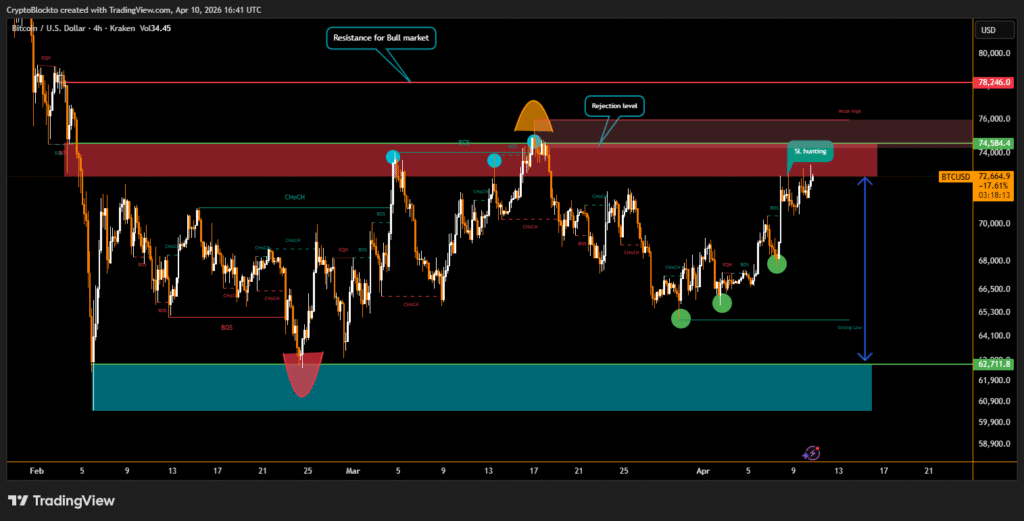
    $BTC 4h price chart

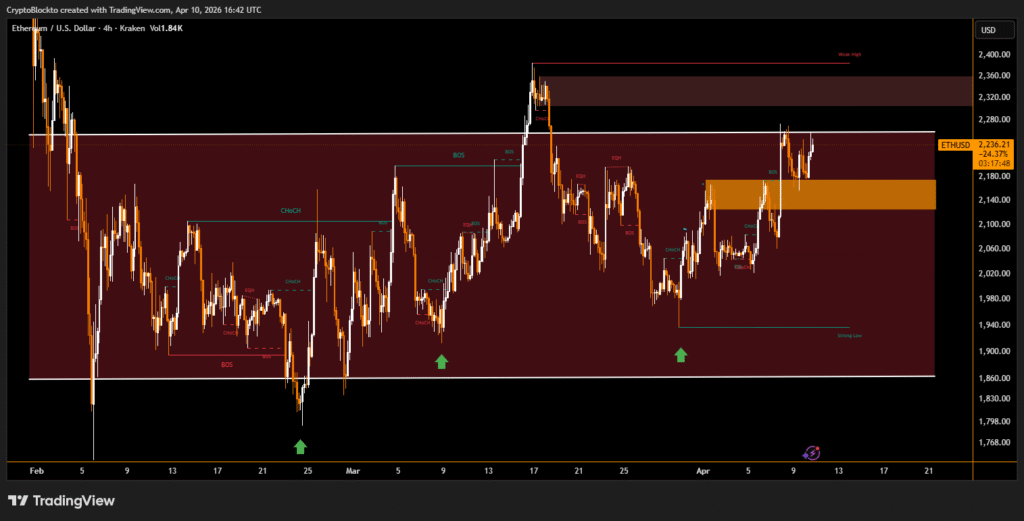
    Bitcoin climbed about 4%, while Ether advanced roughly 6% within 24 hours following Donald Trump announcing a two-week ceasefire between the United States and Iran, marking the strongest single-day price move in more than a month and reversing a recent bearish trend.

    $ETH 4h price chart

    Open Interest Surge Signals Fresh Bullish Positioning

    Julio Moreno reported that open interest in Bitcoin perpetual futures increased by $2.1 billion, while Ether perpetual futures rose by $2.2 billion within the same 24-hour period. Dollar denominated open interest for both assets reached levels not seen in nearly a month, indicating strong market participation.

    Positive US Demand and Key Bitcoin Price Levels

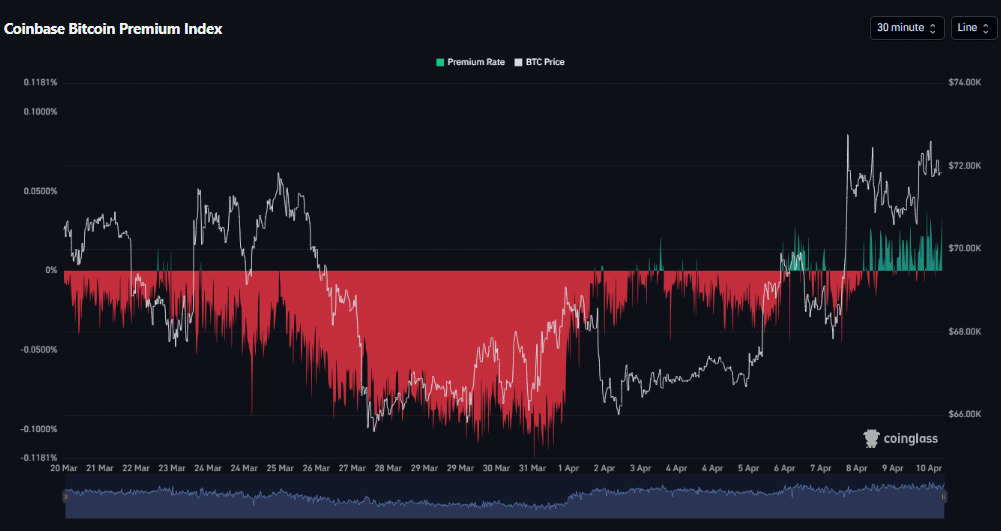
    Demand from US investors also strengthened, with the Coinbase Premium Index turning positive for both Bitcoin and Ether after remaining negative for several weeks.

    Coinbase Premium Index

    CryptoQuant noted that Bitcoin has moved above the traders’ lower realized price level near $69,400, which had acted as resistance. If the ceasefire holds and market conditions remain stable, the next key target is the traders’ realized price near $79,000, historically viewed as a major resistance level tied to broader market recovery.

    Disclaimer

    This content is for informational purposes only and does not constitute financial, investment, or legal advice. Cryptocurrency trading involves risk and may result in financial loss.
  • White House Warns Staff After Suspicious Iran Oil Bets Raise Insider Trading Concerns

    White House Warns Staff After Suspicious Iran Oil Bets Raise Insider Trading Concerns

    The White House warned staff against misusing confidential information following suspicious oil futures trades linked to policy developments involving Iran. According to reports, the internal email was sent on March 24, one day after Donald Trump ordered a five-day delay in planned attacks on Iran’s energy infrastructure.

    The warning followed a roughly $500 million bet placed on Brent crude oil and West Texas Intermediate crude futures in a one minute burst shortly before the March 23 announcement. Oil prices later fell about 15% after the policy shift, raising concerns that traders may have acted on privileged information.

    Existing Laws and Renewed Regulatory Scrutiny

    The situation has intensified scrutiny of insider trading risks tied to government decisions. Under the STOCK Act amendment, federal officials are prohibited from using non-public information obtained through their roles to trade commodities, futures or options. The amendment was signed into law on April 4, 2012.

    Officials have also raised concerns about prediction markets, where traders can bet on political or military outcomes tied to sensitive government actions.

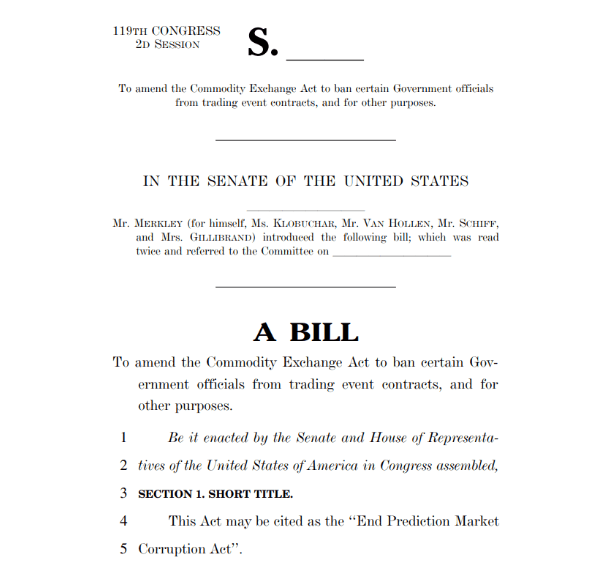
    End Prediction Market Corruption Act. 

    Lawmakers Introduce Bills Targeting Prediction Market Activity

    Several U.S. lawmakers have introduced new legislation aimed at tightening oversight of prediction market trading. Representative Adrian Smith and Representative Nikki Budzinski introduced the Preventing Real-time Exploitation and Deceptive Insider Congressional Trading Act (PREDICT Act) on March 25, proposing restrictions on prediction market participation by government officials.

    Additional proposals include the Public Integrity in Financial Prediction Markets Act of 2026 introduced by Senators Todd Young, Elissa Slotkin, John Curtis and Adam Schiff, as well as the End Prediction Market Corruption Act introduced by Senator Jeff Merkley.

    Disclaimer

    This content is for informational purposes only and does not constitute financial, investment, or legal advice. Cryptocurrency trading involves risk and may result in financial loss.

  • Bitcoin Climbs to $73K as Cooling CPI Data Offsets Historic Gas Price Surge

    Bitcoin Climbs to $73K as Cooling CPI Data Offsets Historic Gas Price Surge

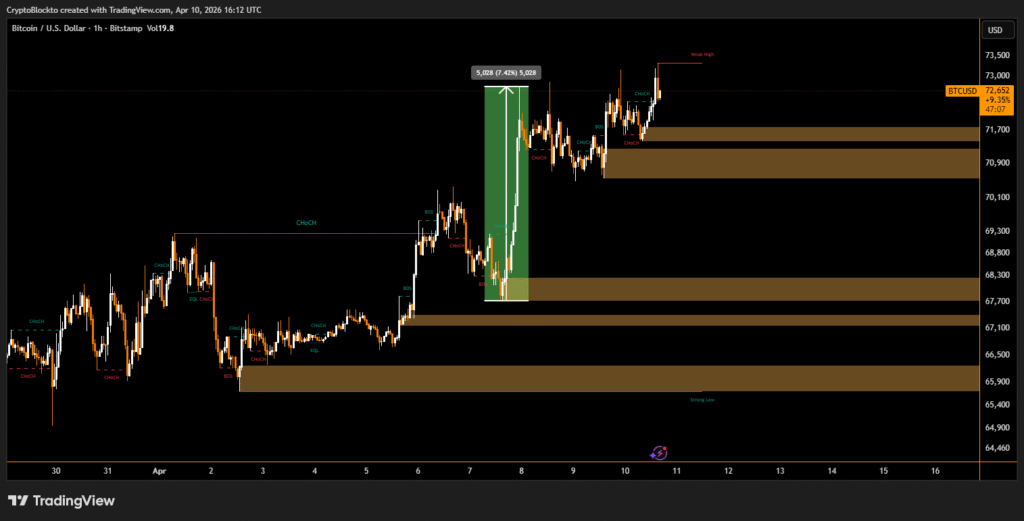
    Bitcoin briefly reached the $73,000 level following the release of March U.S. inflation data that came in slightly below market expectations. The Consumer Price Index (CPI) showed overall inflation rising 3.3% over the past 12 months, matching recent projections but still indicating persistent price pressures.

    $BTC h1 price chart

    Market data showed Bitcoin attempting to set new multi-week highs as traders reacted to the inflation report, which was widely seen as the most important macroeconomic release of the week.

    Record Gasoline Price Surge Drives Energy Inflation

    Energy costs played a major role in the latest inflation figures. According to the Bureau of Labor Statistics, the energy index rose 10.9% in March, largely driven by a 21.2% month-over-month surge in gasoline prices. Analysts at The Kobeissi Letter noted that the gasoline price jump marked the largest monthly increase since 1967, while the broader energy rise was the biggest since 2005.

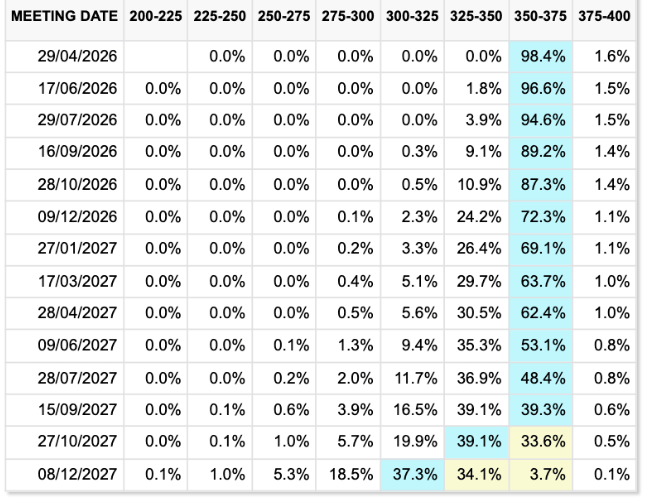
    Traders Watch Resistance Levels as Rate Cuts Fade

    Fed target rate probabilities

    Despite the positive price movement, Bitcoin and traditional markets remained cautious. U.S. stocks opened mostly flat, while traders continued mapping resistance zones above current price levels.

    Disclaimer

    This content is for informational purposes only and does not constitute financial, investment, or legal advice. Cryptocurrency trading involves risk and may result in financial loss.