Author: tristan

  • Ethereum Activity Climbs Past 1.3 Million Daily Transactions as Staking Tops 30% of Supply

    Ethereum Activity Climbs Past 1.3 Million Daily Transactions as Staking Tops 30% of Supply

    Network activity on Ethereum has surged, with the seven-day average of transactions exceeding 1.3 million, returning to levels seen at earlier peak periods. Data shows the rise is consistent rather than a short-lived spike, pointing to steady growth in real usage.
    Daily activity has also expanded significantly, with nearly 2 million wallets interacting with the network each day. Much of this momentum is linked to decentralized finance applications and Layer 2 scaling solutions that allow faster and lower-cost transactions. These platforms are encouraging users to actively trade, lend, and build applications instead of simply holding assets.

    Ethereum Staking Growth and Price Stability Trends

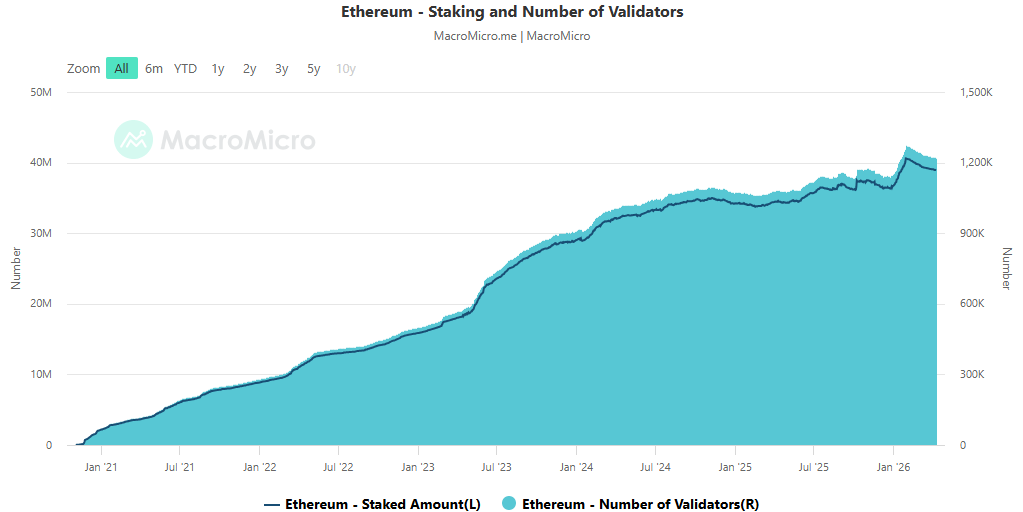
    Staking participation continues to strengthen the network. According to Token Terminal, more than 30% of total ETH supply is locked in staking, representing roughly $85 billion. This supports network security and signals long-term confidence among holders, although staking rewards have declined to around 3%–4%.

    Despite strong fundamentals, the price of Ether remains near $2,200, suggesting market prices have yet to fully reflect rising network activity and long term growth.
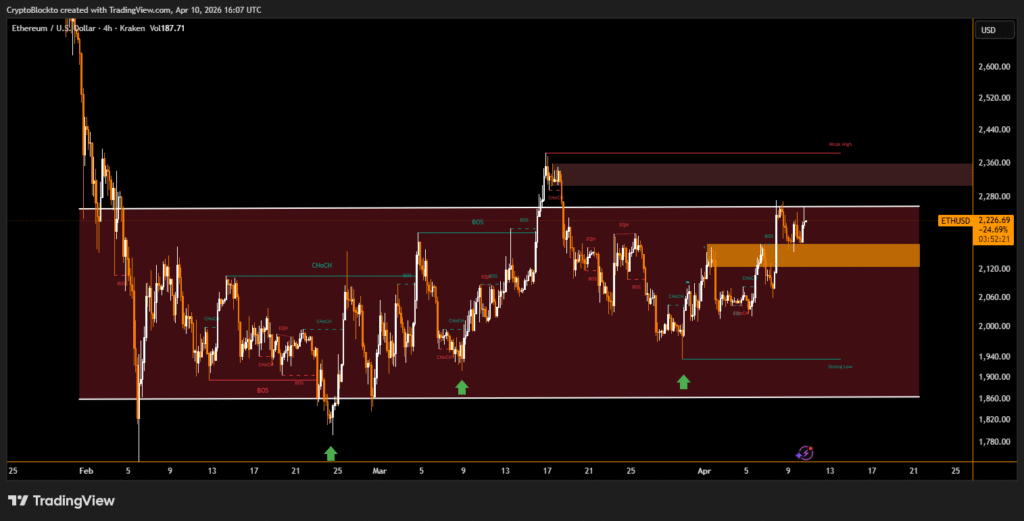
    $ETH 4h price chart
    Disclaimer

    This content is for informational purposes only and does not constitute financial, investment, or legal advice. Cryptocurrency trading involves risk and may result in financial loss.

  • World Liberty Plans Phased WLFI Token Unlock Vote After Holder Backlash

    World Liberty Plans Phased WLFI Token Unlock Vote After Holder Backlash

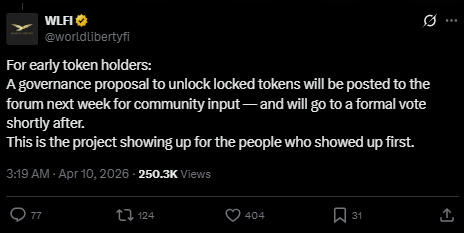
    World Liberty Financial announced plans to introduce a governance proposal next week that will outline a phased unlock schedule for WLFI tokens held by early retail buyers. The proposal will first open for community input before proceeding to a formal vote, reflecting an effort to address growing concerns among token holders.

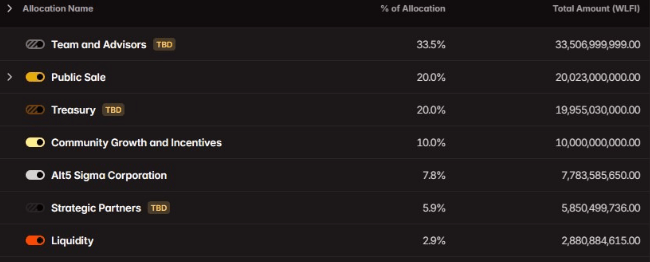
    According to the project, the plan will not allow a full and immediate token release. Instead, it proposes a structured vesting model that releases tokens gradually over time. Data from Tokenomist shows that approximately 24.67% of WLFI’s total 100 billion token supply has been released so far, while about 75.33% remains locked or pending future governance decisions.

    Allocations for WLFI tokens

    Retail Holder Pressure and Legal Threats Increase

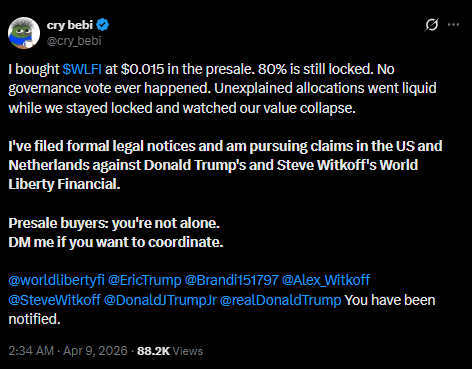
    The proposal follows increasing dissatisfaction among early WLFI buyers who have criticized prolonged token lockups. Initial sale terms stated that tokens would remain non-transferable and subject to governance approval, with unlock decisions not expected earlier than 12 months after the token sale began in mid-October 2024. The current proposal arrives roughly 18 months after the launch, during which the project raised at least $550 million across two funding rounds.

    Some self-identified presale participants have issued legal notices in the United States and the Netherlands, although no verified lawsuits have been confirmed.

    Treasury Borrowing Activity Raises Additional Questions

    Community concerns have also intensified due to treasury borrowing activity. Onchain records indicate that World Liberty Financial borrowed roughly $75 million in stablecoins from Dolomite using WLFI tokens as collateral. The borrowing activity has led some community members to question treasury management and overall transparency as governance discussions move forward.

    Disclaimer

    This content is for informational purposes only and does not constitute financial, investment, or legal advice. Cryptocurrency trading involves risk and may result in financial loss.
  • Bhutan Moves Another $18M in Bitcoin as Sovereign Holdings Continue to Decline

    Bhutan Moves Another $18M in Bitcoin as Sovereign Holdings Continue to Decline

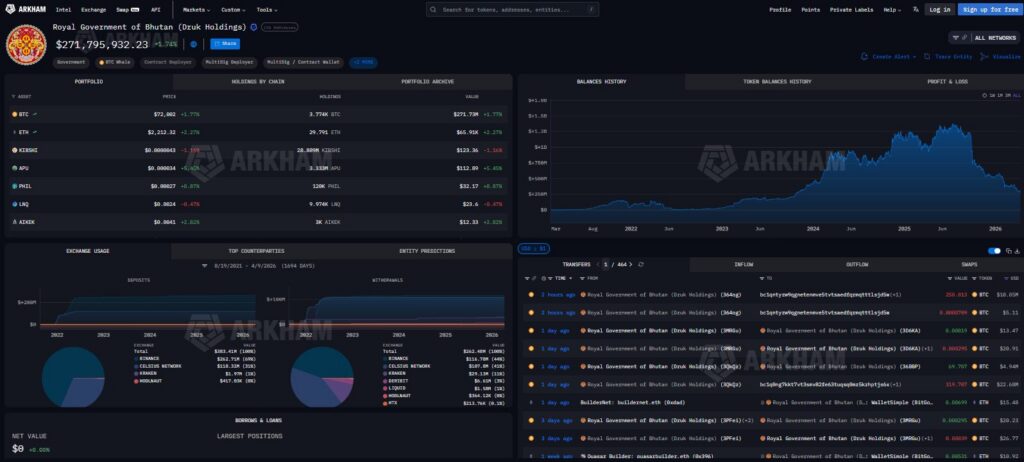
    The Bhutan government has transferred another 250 Bitcoin worth approximately $18 million to a newly created wallet, according to data from Arkham. The movement adds to a broader pattern of outflows from state-linked addresses observed throughout 2026.

    Arkham data shows that Bhutan has now moved about $233.75 million worth of Bitcoin out of its tracked wallets this year, contributing to a steady reduction in its known holdings.

    Sovereign Bitcoin Holdings Fall Sharply from Peak Levels

    Bhutan’s remaining balance is estimated at around 3,774 BTC, valued near $272.5 million at current market prices. This represents a significant decline from its peak holdings of nearly 13,000 BTC recorded in October 2024, marking a drawdown of more than 70%.

    The country’s Bitcoin strategy is managed by Druk Holding and Investments, which oversees both accumulation and mining-related activities tied to the nation’s digital asset portfolio.

    Market Context and Uncertainty Around Transfers

    The purpose of the latest transfer has not been disclosed, though large movements from sovereign wallets are often interpreted by markets as potential preparation for asset sales. No official confirmation has been provided regarding liquidation plans.

    Despite the transfers, Bitcoin continues to trade above $72,000, showing a modest 24-hour gain. However, the asset remains significantly below its all-time high of nearly $126,000 reached in late 2025, reflecting broader volatility across the crypto market.

    Disclaimer

    This content is for informational purposes only and does not constitute financial, investment, or legal advice. Cryptocurrency trading involves risk and may result in financial loss.
  • Bittensor Co-Founder Denies Covenant AI Allegations After Subnet Exit Controversy

    Bittensor Co-Founder Denies Covenant AI Allegations After Subnet Exit Controversy

    Bittensor co founder Jacob Steeves has rejected claims made by former subnet developer Covenant AI, directly denying allegations that he suspended subnet emissions or exercised unilateral control over network governance. The response follows Covenant AI’s decision to exit the ecosystem, which it described as “decentralization theatre.”

    Covenant AI founder Sam Dare had accused Steeves of taking several actions against the project, including suspending emissions, restricting moderation privileges, deprecating subnet infrastructure, and applying economic pressure through token sales during operational disputes.

    Steeves Rejects Control Allegations and Defends Token Activity

    Steeves said he does not have the ability to suspend subnet emissions and argued that changes in emissions resulted from standard market activity within the system. He stated that his token sales were minimal, representing less than 1% of his investment, and defended his right to buy and sell assets within the ecosystem.

    Governance Tension Impacts TAO Market Performance

    The dispute has added pressure to the TAO market, which dropped around 15% following Covenant AI’s exit announcement. The token briefly fell from $338 to $285 before recovering near $294, later sliding again toward $262. TAO now trades more than 65% below its all-time high of $757, r

    Disclaimer

    This content is for informational purposes only and does not constitute financial, investment, or legal advice. Cryptocurrency trading involves risk and may result in financial loss.

  • Coinbase CEO Brian Armstrong Backs Clarity Act as US Pushes for Crypto Market Rules

    Coinbase CEO Brian Armstrong Backs Clarity Act as US Pushes for Crypto Market Rules

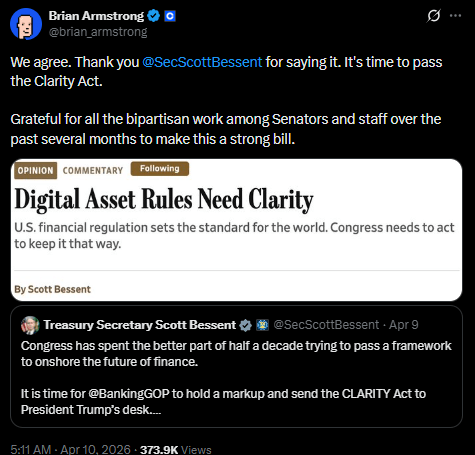
    Brian Armstrong has publicly backed the passage of the Clarity Act, signaling a shift in stance from earlier hesitation by Coinbase. His comments came after Scott Bessent urged lawmakers to move forward with the bill, emphasizing the need for clear digital asset regulations in the United States.

    Armstrong responded publicly, agreeing with Bessent’s call and expressing appreciation for bipartisan efforts among senators and staff who have worked on refining the legislation over recent months.

    Stablecoin Provisions Previously Delayed Support

    Coinbase had previously withheld support for earlier versions of the Clarity Act due to unresolved concerns surrounding stablecoin provisions, particularly those related to yield generation. The legislation aims to establish a comprehensive framework governing cryptocurrency markets, including operational rules for stablecoin issuers.

    Recent statements from Paul Grewal suggested negotiations are nearing agreement, describing the bill as “very close” to resolving outstanding issues.

    Policy Debate Continues Amid Regulatory Pressure

    Treasury officials are also advancing proposals addressing anti money laundering and sanctions risks linked to stablecoins, while policymakers continue discussions on how digital assets should integrate with traditional banking systems.

    Despite growing momentum, analysts have warned that political divisions in Washington could still complicate the passage of the Clarity Act, leaving the timeline for final approval uncertain.

    Disclaimer

    This content is for informational purposes only and does not constitute financial, investment, or legal advice. Cryptocurrency trading involves risk and may result in financial loss.
  • Bitcoin Rises Slightly After Core CPI Misses Forecast as Energy Costs Drive Headline Inflation

    Bitcoin Rises Slightly After Core CPI Misses Forecast as Energy Costs Drive Headline Inflation

    Bitcoin posted modest gains after fresh U.S. inflation data showed core prices rising less than expected in March. Core Consumer Price Index (CPI), which excludes food and energy, increased by 0.2% month over month, below the 0.3% forecast and matching February’s reading. On a yearly basis, core CPI rose 2.6%, slightly under expectations of 2.7% and up from 2.5% previously.

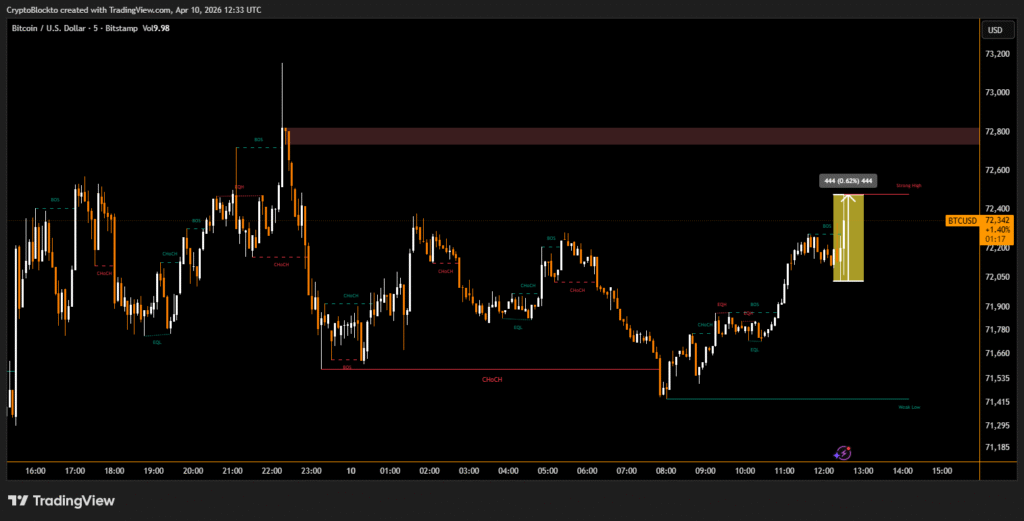
    Bitcoin had been trading near $72,000 ahead of the report but climbed to around $72,400 shortly after the data release, reflecting cautious optimism among traders.

    $BTC M5 price chart on CPI

    Headline Inflation Driven by Energy Costs and Iran Conflict

    Headline CPI increased 0.9% in March, in line with forecasts but significantly higher than February’s 0.3% rise. On a year-over-year basis, inflation reached 3.3%, matching expectations and rising from the prior 2.4%. Analysts attributed much of the increase to surging energy prices linked to geopolitical tensions involving Iran, which pushed oil costs higher and influenced broader market sentiment.

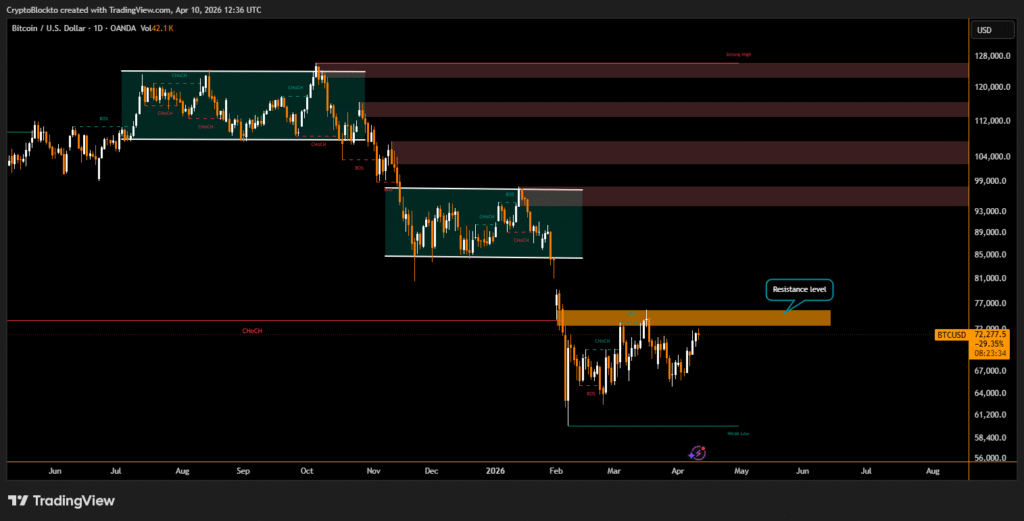
    $BTC dailyprice chart

    Federal Reserve Rate Expectations Remain Steady

    Market expectations suggest the Federal Reserve will maintain current interest rates in the near term. According to data from the CME FedWatch Tool, traders priced in roughly a 99% probability of no rate change at the late April meeting and a 97% chance of unchanged policy in mid-June.

    Recent shifts in inflation expectations have led markets to move away from earlier predictions of multiple rate cuts, reinforcing uncertainty about the timing of future monetary policy adjustments.

    Disclaimer

    This content is for informational purposes only and does not constitute financial, investment, or legal advice. Cryptocurrency trading involves risk and may result in financial loss.

  • x402 Protocol Adds Usage-Based Pricing for AI Compute Requests

    x402 Protocol Adds Usage-Based Pricing for AI Compute Requests

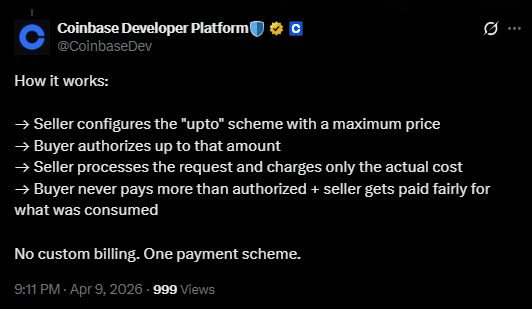
    The x402 protocol has launched a major upgrade enabling usage based pricing for AI compute requests, replacing its earlier fixed-fee system. The update was announced by Coinbase via its Developer Platform and introduces a new scheme called “Upto”, designed for variable-cost services such as large language model inference, compute workloads, and data queries.

    Previously, x402 only supported exact fixed pricing, which worked for deterministic APIs but failed for services where costs vary based on token usage, compute time, or query complexity. The new model allows sellers to set a maximum price while buyers authorize spending up to that limit, with final costs based on actual resource usage.

    EVM-Based System Enables Flexible AI Payments

    The system runs on the Ethereum Virtual Machine and supports all ERC-20 tokens, along with gasless payments through Coinbase’s facilitator infrastructure. This structure is designed to improve efficiency in AI-driven transactions and prevent users from overpaying for lighter compute tasks.

    Push Toward Agentic AI Economy

    The upgrade targets the emerging agentic AI economy, where autonomous systems handle payments and compute tasks at scale. The protocol was developed by Coinbase but has been transferred to the Linux Foundation, with participation from Google, Microsoft, and Amazon Web Services through the x402 Foundation.

    Despite early adoption, x402 activity has dropped sharply in 2026. Data shows peak usage reached 13.7 million transactions in November, fell below 1 million weekly in January, and declined further to about 112,708 weekly transactions by March, signaling reduced network activity even as development continues.

    Disclaimer

    This content is for informational purposes only and does not constitute financial, investment, or legal advice. Cryptocurrency trading involves risk and may result in financial loss.

  • Crypto Won’t Be a Topic in 5 Years, It Will Be Infrastructure: CZ

    Crypto Won’t Be a Topic in 5 Years, It Will Be Infrastructure: CZ

    Binance co founder Changpeng “CZ” Zhao has said he hopes cryptocurrencies and blockchain will no longer be discussed as separate technologies within the next five years, but instead become an invisible part of everyday systems. Speaking on the Wolf of All Streets podcast, Zhao compared crypto’s future role to the internet’s underlying protocols, which users rely on without actively thinking about TCP/IP or HTML.

    He said that while innovation will continue, the focus should shift away from the technology itself and toward real-world usage. According to CZ, blockchain should function in the background of financial systems, data storage, and digital infrastructure rather than as a standalone concept people constantly reference.

    Mainstream adoption outlook and industry forecasts

    Zhao’s comments align with broader industry expectations that crypto adoption will keep expanding. Estimates suggest around 559 million people globally use crypto in 2026. Other projections cited by industry participants suggest the sector could reach full-scale mainstream adoption within a single market cycle.

    Some forecasts are even more aggressive, with ARK Invest projecting a potential $28 trillion digital asset market by 2030. Additional research from firms like Chainalysis and Citi highlights rapid growth in stablecoin usage and tokenized financial systems over the next decade.

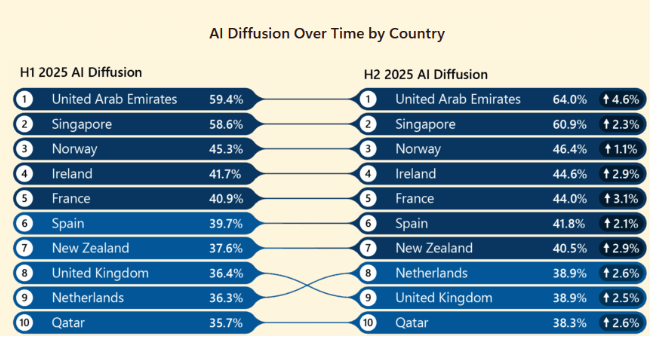
    The United Arab Emirates is the global leader in AI adoption and usage: Microsoft

    CZ also emphasized that artificial intelligence could significantly speed up blockchain development and adoption, particularly as AI agents increasingly interact with crypto systems. He added that countries failing to adopt both AI and blockchain risk falling behind economically, as he sees the internet, AI, and blockchain as the three defining industries of the modern era.

    Disclaimer

    This content is for informational purposes only and does not constitute financial, investment, or legal advice. Cryptocurrency trading involves risk and may result in financial loss.

  • Bitcoin Trades in Tight Range Ahead of CPI Data as Bittensor Dispute Shakes Market Sentiment

    Bitcoin Trades in Tight Range Ahead of CPI Data as Bittensor Dispute Shakes Market Sentiment

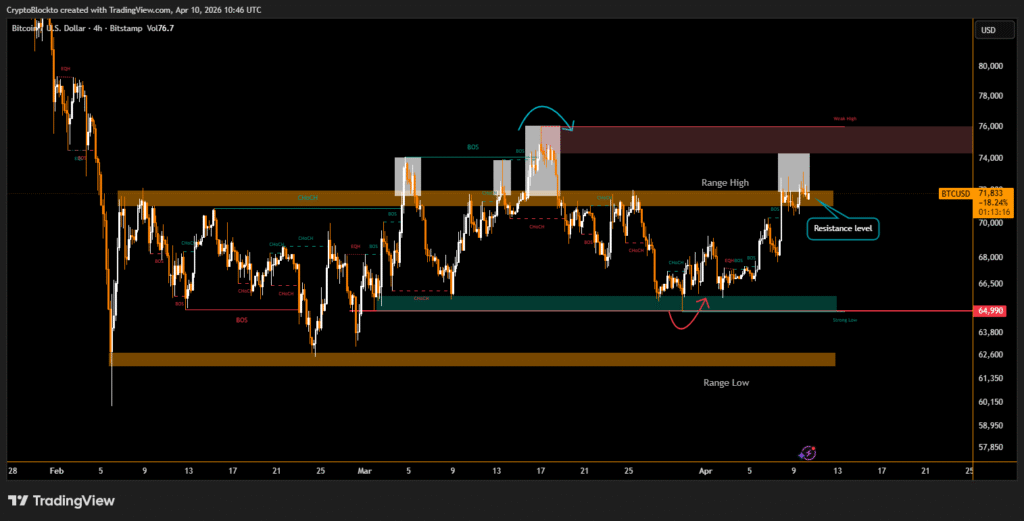
    Bitcoin traded near $72k on Friday while Ether hovered around $2,180, reflecting continued low volatility across major cryptocurrencies. Market analysts point to narrowing Bollinger Bands — a widely used volatility indicator now at their tightest levels since early 2024. Historically, such compressed ranges have preceded significant market swings of up to 40%.

    $BTC 4h price chart

    Since early February, Bitcoin has largely remained between $63k and $75k. A decisive breakout above $75,000 could trigger strong upward momentum, forcing short sellers to close positions and buy back assets. Conversely, a drop below $70,000 could liquidate roughly $200 million in long positions, increasing downside pressure.

    Inflation Data Expected to Drive Short-Term Crypto Direction

    Market participants are closely watching upcoming U.S. Consumer Price Index (CPI) data, a key macroeconomic indicator. March inflation is projected at approximately 3.3% year-over-year, driven largely by rising energy costs. Higher-than-expected inflation typically strengthens the U.S. dollar, which may reduce demand for risk-sensitive assets like Bitcoin and Ether.

    Options market data shows traders increasingly positioning for upward movement, particularly through Bitcoin call options targeting the $80,000 strike level.

    Sentiment has also been affected by turmoil in the Bittensor ecosystem following the departure of a major developer who criticized the platform’s governance and decentralization model. The dispute has raised broader questions about leadership and network control.

    Disclaimer

    This content is for informational purposes only and does not constitute financial, investment, or legal advice. Cryptocurrency trading involves risk and may result in financial loss.
  • Hong Kong Issues First Stablecoin Licences to Anchorpoint Financial and HSBC Under New Regulatory Framework

    Hong Kong Issues First Stablecoin Licences to Anchorpoint Financial and HSBC Under New Regulatory Framework

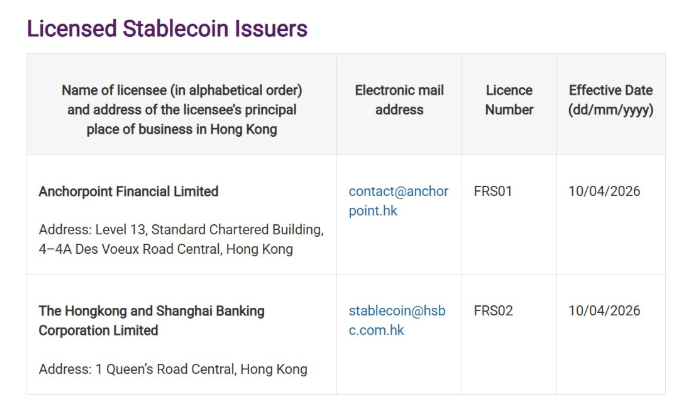
    Hong Kong has officially granted its first stablecoin issuer licences under a new regulatory regime overseen by the Hong Kong Monetary Authority. The initial approvals were awarded to Anchorpoint Financial and The Hongkong and Shanghai Banking Corporation Limited, marking a key milestone in the region’s digital asset oversight strategy.

    Anchorpoint Financial is a joint venture formed by Standard Chartered Bank (Hong Kong), Animoca Brands, and Hong Kong Telecommunications. The HSBC linked entity is also one of the city’s three traditional note-issuing banks.

    Name of licensees in the public register

    Stablecoin Compliance Rules and Regulatory Oversight

    The stablecoin licensing regime took effect in August 2025 and requires issuers of fiat-referenced stablecoins to meet strict standards. These include maintaining full reserve backing, ensuring redemption rights for users, establishing a local presence, and complying with anti-money laundering controls. The regulator also has authority to investigate violations and impose enforcement actions such as fines, licence suspensions, or revocations.

    Delays and Limited First Batch Approvals

    The announcement follows earlier delays after authorities missed an expected March timeline for the first approvals. Officials had previously indicated that only a very small number of issuers would be selected in the initial round. The new licences confirm a cautious rollout approach as Hong Kong positions itself as a regulated hub for stablecoin innovation and broader digital finance development.

    Disclaimer

    This content is for informational purposes only and does not constitute financial, investment, or legal advice. Cryptocurrency trading involves risk and may result in financial loss.