Author: tristan

  • Bitcoin Bearish Sentiment Climbs to Five-Week High as FUD Returns to Market

    Bitcoin Bearish Sentiment Climbs to Five-Week High as FUD Returns to Market

    Bearish sentiment surrounding Bitcoin has surged to its highest point in five weeks, reflecting growing fear among crypto market participants. Data from the crypto sentiment platform Santiment shows that negative commentary across social media platforms has increased significantly, signaling a lack of optimism within the community.

    According to Santiment, fear, uncertainty, and doubt (FUD) have reappeared in recent days. The firm analyzed a broad sample of crypto focused accounts on platforms such as X, Reddit, and other social channels to measure the ratio between bullish and bearish Bitcoin (BTC) comments.
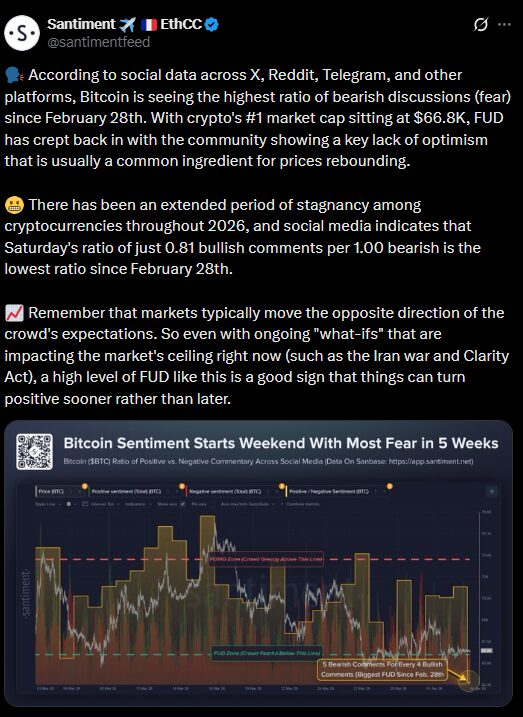
    On Saturday, the ratio of bullish to bearish Bitcoin comments dropped to 0.81, the lowest level recorded since Feb. 28. This means there were roughly five bearish comments for every four bullish ones, highlighting a shift toward pessimism among traders.

    Markets Often Move Opposite to Crowd Sentiment

    Santiment noted that financial markets frequently move against prevailing expectations. The firm suggested that rising levels of FUD are often seen as a potential signal that prices could rebound sooner rather than later.

    Bitcoin was trading at $67,170 at the time of reporting, showing a decline of 5.53% over the past 30 days.
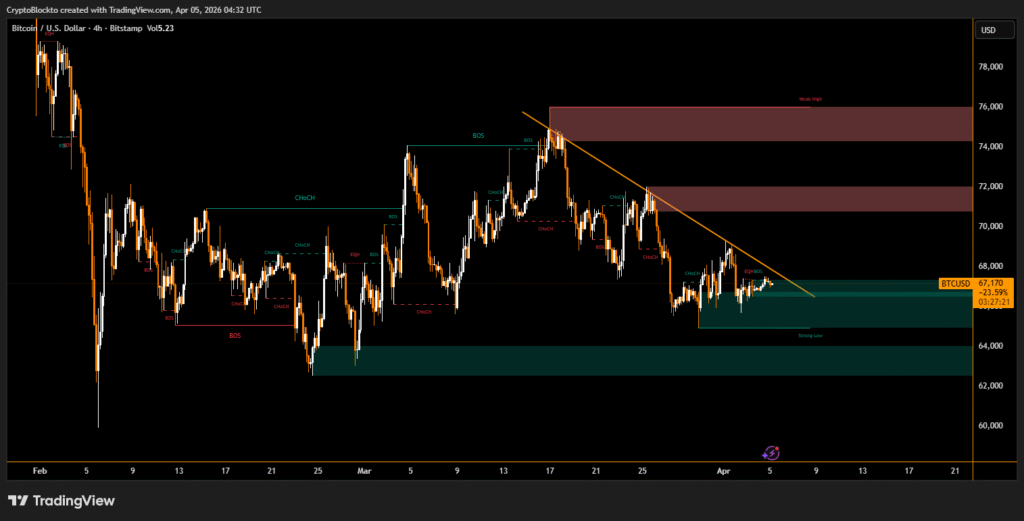
    $BTC 4h price chart

    US CLARITY Act and Extreme Fear Index Influence Market Outlook

    Santiment also identified the US CLARITY Act as a possible factor slowing price momentum, describing it as a key “what-if” catalyst being closely watched by the crypto industry.

    Separately, Coinbase chief legal officer Paul Grewal said the legislation is moving toward a markup hearing in the US Senate Banking Committee. He noted that the bill could proceed to a floor vote if senators resolve the ongoing dispute surrounding stablecoin yield and finalize the markup schedule.

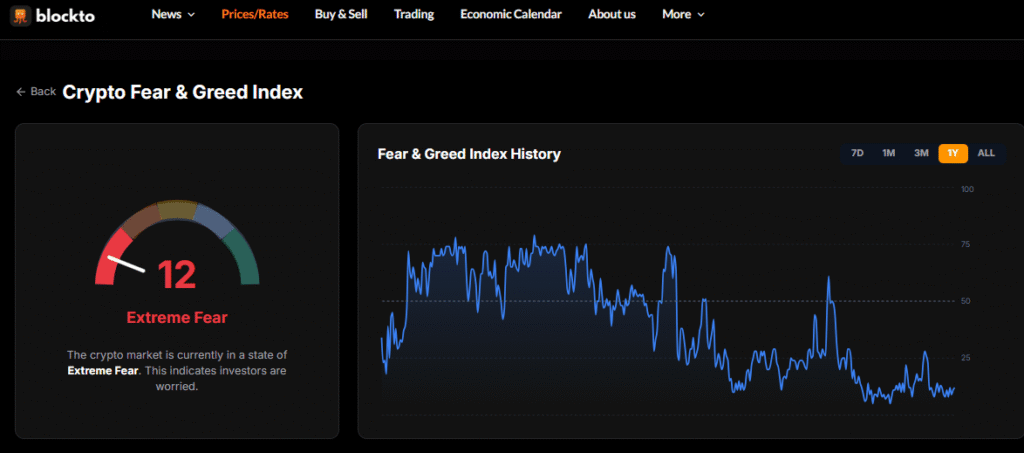
    Meanwhile, the Crypto Fear & Greed Index remained in “Extreme Fear” territory, recording a score of 12 on Sunday, signaling continued caution among investors.
    Disclaimer

    This content is for informational purposes only and does not constitute financial, investment, or legal advice. Cryptocurrency trading involves risk and may result in financial loss.


  • Drift Protocol Reveals Investigation Into $285 Million Theft, Links Attack to DPRK-Linked Group

    Drift Protocol Reveals Investigation Into $285 Million Theft, Links Attack to DPRK-Linked Group

    Drift Protocol has released preliminary findings of its investigation into the $285 million theft that occurred on April 1, 2026. The investigation indicates that the attack was a long term, organized infiltration operation lasting approximately six months.

    Since fall 2025, attackers posed as a quantitative trading firm, engaging Drift team members at multiple international crypto conferences. Over this period, they compromised devices through code repository links and a TestFlight application, establishing trust with contributors by investing over $1 million of their own capital and conducting detailed discussions on trading strategies and vault integrations.

    Attack Vectors and Methodology

    Drift’s forensic analysis identifies three potential attack vectors:

    1. Code repository compromise – exploiting known VSCode and Cursor vulnerabilities from December 2025 to February 2026, allowing silent execution of malicious code.
    2. TestFlight application – downloaded under the guise of a wallet product.
    3. Other targeted interactions – meticulously staged over months, including in-person meetings at conferences.

    All remaining protocol functions have been frozen, compromised wallets removed from the multisig, and attacker wallets flagged across exchanges and bridges.

    Possible DPRK-Linked Attribution

    Preliminary evidence, supported by the SEALS 911 team, links the operation to the same actors behind the October 2024 Radiant Capital hack, associated with UNC4736, a North Korean state-affiliated group also tracked as AppleJeus or Citrine Sleet. Operational overlaps and on-chain fund flows suggest medium-high confidence, although Mandiant has not formally attributed the exploit, pending full device forensics.

    Community Guidance and Ongoing Investigation

    Drift emphasized that the in-person attackers were not North Korean nationals but third-party intermediaries used for relationship building and infiltration. The investigation highlights the sophisticated, professional identities built by the attackers, including employment histories and public credentials.

    Drift urges ecosystem teams to audit access, secure devices, and monitor for similar threats. For assistance, the team recommends reaching out to @SEAL911. Drift also thanked experts @tayvano_, @tanuki42_, @pcaversaccio, and @bax1337 for their contributions to the investigation.

    Disclaimer

    This content is for informational purposes only and does not constitute financial, investment, or legal advice. Cryptocurrency trading involves risk and may result in financial loss.
  • IMF Warns Tokenized Finance Could Amplify Financial Crises

    IMF Warns Tokenized Finance Could Amplify Financial Crises

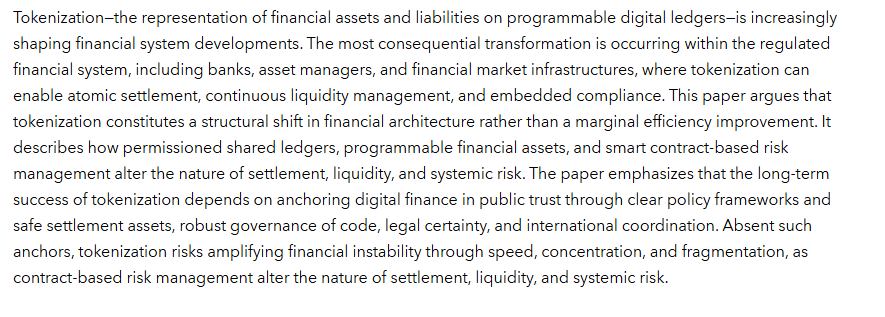
    Tokenized finance could make market crises unfold faster than regulators can respond, according to a report released by the International Monetary Fund (IMF). IMF Financial Counselor Tobias Adrian described tokenization as a structural shift in financial architecture rather than a marginal efficiency gain, warning that the removal of traditional settlement delays could increase systemic risk.

    IMF

    Traditional two-day settlement cycles currently provide time for central banks to mobilize liquidity, net exposures, and intervene before trades are finalized. Adrian argued that tokenized systems remove these buffers by enabling instant settlement. Automated margin calls and algorithmic feedback loops in 24/7 markets could compress response time, while existing central bank emergency lending tools were designed for business-day cycles, not continuous operations.

    Stablecoin Risks and Legal Uncertainty in Tokenized Systems

    Adrian compared stablecoins to money market funds, noting that while they function well in stable conditions, they can become vulnerable to runs when confidence declines. He stated that stablecoins without access to central bank reserves require higher liquidity buffers and conservative margining to offset settlement asset risk. Even fully backed stablecoins depend on issuers’ operational capacity and the liquidity of underlying government securities markets.

    The report also noted that tokenized lending has not grown meaningfully due to blockchain pseudonymity, which limits credit assessment and forces lenders to rely on overcollateralization. Adrian challenged the “code is law” principle, arguing that legal mandates for stability must override automated execution. He recommended predefined override mechanisms in critical smart contracts.

    Three Future Scenarios and Policy Recommendations

    The IMF outlined three scenarios for tokenized finance: a coordinated system anchored by wholesale central bank digital currencies, a fragmented network of incompatible national platforms, or a system dominated by private stablecoins that weakens public backstops.

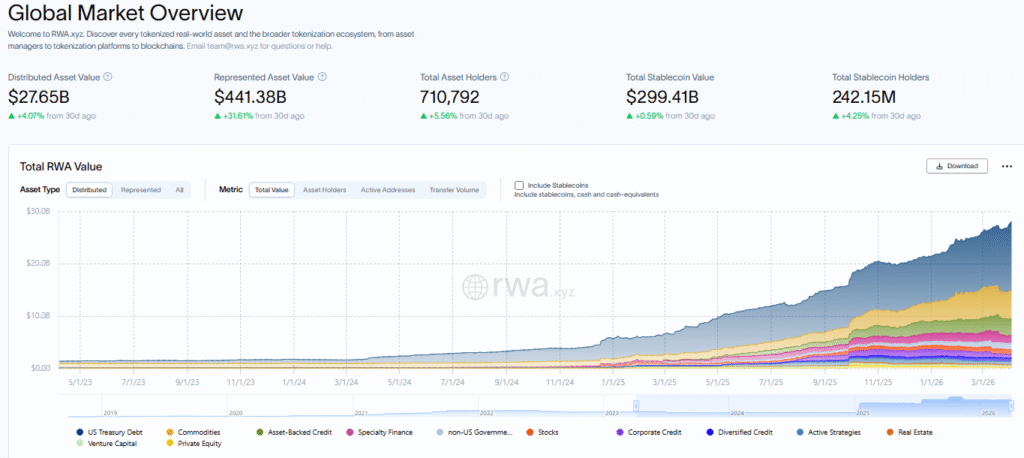
    Tokenized real-world assets have reached roughly $27.7 billion in distributed onchain value:RWA.xyz data

    A five-pillar roadmap recommended settlement anchored in safe money, consistent regulation across equivalent activities, legal certainty for tokenized assets, interoperability standards, and adapting central bank tools for continuous-operation financial environments.

    Disclaimer

    This content is for informational purposes only and does not constitute financial, investment, or legal advice. Cryptocurrency trading involves risk and may result in financial loss.
  • Jimmy Song: Bitcoin Needs a “Conservative” Node Client to Protect Decentralization

    Jimmy Song: Bitcoin Needs a “Conservative” Node Client to Protect Decentralization

    Bitcoin advocate Jimmy Song argued that the Bitcoin ecosystem requires a more “conservative” node client to preserve its monetary integrity and maintain decentralization.

    Song is co founder of ProductionReady, a nonprofit initiative focused on funding open-source Bitcoin node software and educational efforts. He emphasized that their development philosophy favors minimal code changes unless there is overwhelming community agreement.

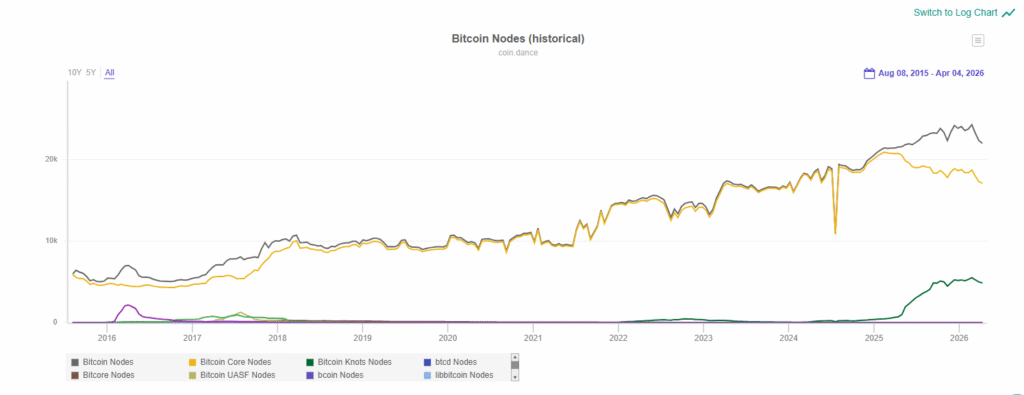
    The number of Bitcoin nodes, broken down by software implementation, between 2016 and 2026: Coin Dance

    His core principle is simple: if developers are uncertain whether a modification improves Bitcoin as money, it should not be implemented. This cautious stance aims to prevent unintended technical changes that could weaken Bitcoin’s reliability as a decentralized financial system.

    Restoring OP_Return Limits to Reduce Network Costs

    One of ProductionReady’s goals is to restore the 83-byte limit on OP_Return, which controls how much arbitrary data can be included in transactions.

    Song warned that increasing this limit significantly raises storage and bandwidth demands on node operators. If running a node becomes expensive, fewer individuals will operate them, increasing the risk of centralization.

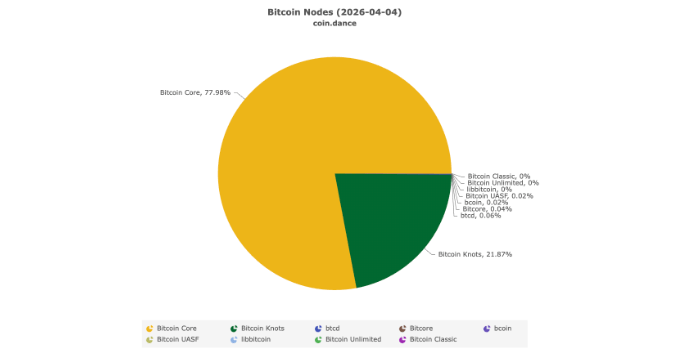
    Bitcoin Core continues to be the software of choice for node runners, with 77.8% of the network :Coin Dance

    Lower operating costs allow more users to run nodes independently, strengthening network security and reducing the chances of transaction fraud or collusion among large operators.

    Bitcoin Core Changes Spark Community Backlash

    The controversy began after the release of Bitcoin Core 30, which increased the OP_Return data limit from 83 bytes to 100,000 bytes. The update received strong criticism from many community members, with the proposal receiving roughly four times more downvotes than upvotes on its GitHub page.

    Following the update, many users migrated to alternative software such as Bitcoin Knots. Adoption of Bitcoin Knots surged dramatically, reaching 4,746 nodes—over 21.7% of the network—compared to roughly 1% usage in 2024.

    Decentralization Remains the Core Goal

    Song stressed that maximizing the number of independent node operators is essential for keeping Bitcoin decentralized and resistant to manipulation. A conservative development model, he argued, ensures that technical upgrades do not unintentionally undermine Bitcoin’s long-term monetary strength or accessibility for everyday users.

    Disclaimer

    This content is for informational purposes only and does not constitute financial, investment, or legal advice. Cryptocurrency trading involves risk and may result in financial loss.
  • Trump Confirms Rescue of US Officer as Tehran Rejects Ultimatum Amid Ongoing Strikes

    Trump Confirms Rescue of US Officer as Tehran Rejects Ultimatum Amid Ongoing Strikes

    US President Donald Trump confirmed that an American officer, missing after his F-15E fighter jet was downed over Iran, has been rescued and is “safe and sound.” Speaking on Truth Social, Trump described the operation as “one of the most daring Search and Rescue Operations in U.S. History” and identified the rescued officer as a “highly respected Colonel.”

    Tehran Rejects 48-Hour Ultimatum

    Trump warned that attacks on Iran would intensify unless Tehran agreed to a peace deal within 48 hours. Iran, however, rejected the “helpless and nervous” ultimatum, signaling continued tension in the region.

    US and Israeli forces carried out strikes on Iranian hospitals, universities, and petrochemical facilities, killing at least five people and wounding around 170. Since the start of the conflict, over 30 universities in Iran have been targeted.

    Regional Escalation and Protests

    The Yemeni Houthi group claimed a joint long-range attack on Israel alongside Iranian and Hezbollah forces. Meanwhile, Israel’s ground invasion of southern Lebanon expanded to the city of Tyre, killing at least six people and displacing thousands.

    Protests erupted across Tel Aviv, Jerusalem, and Haifa, with hundreds demanding an end to the war in Iran.

    The US announced the arrest and revocation of permanent residency of the niece of late Iranian Major General Qassem Soleimani and her daughter. Soleimani’s daughters stated the women arrested were not related to them.

    Disclaimer

    This content is for informational purposes only and does not constitute financial, investment, or legal advice. Cryptocurrency trading involves risk and may result in financial loss.

  • Telegram Ban in Iran Backfires as VPN Usage Surges, Pavel Durov Says

    Telegram Ban in Iran Backfires as VPN Usage Surges, Pavel Durov Says

    Telegram co founder Pavel Durov said the Iranian government’s attempt to block the messaging platform has produced the opposite effect, leading to massive growth in virtual private network (VPN) usage. According to Durov, Iran banned Telegram several years ago, but tens of millions of users have continued accessing the platform through VPN services and similar tools.

    VPN technology allows users to route internet traffic through servers located in different regions, masking their Internet Protocol addresses and bypassing national internet restrictions. Durov stated that instead of pushing citizens toward state-controlled messaging applications, the ban resulted in large-scale adoption of privacy tools.

    He noted that roughly 50 million users in Iran are now part of what he described as a “digital resistance,” joined by another 50 million users in Russia who also rely on similar methods to bypass restrictions.

    Decentralized Tools Expand During Internet Restrictions

    The continued use of Telegram comes amid broader internet restrictions in Iran, including a nationwide blackout imposed in January 2026 during ongoing protests and conflict involving Israel, the United States and Iran.

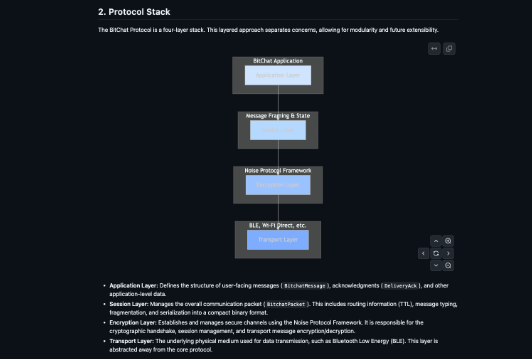
    The components of the BitChat messaging application tech stack: GitHub

    Despite the blackout, users have turned to alternative technologies such as satellite-based internet services and decentralized messaging applications. One example is BitChat, which uses Bluetooth mesh networking to allow devices to communicate directly without relying on traditional internet infrastructure.

    Similar patterns have been observed in other regions. During protests in Nepal in September 2025, downloads of BitChat surged to more than 48,000 in one week, reflecting how users increasingly adopt decentralized communication tools during periods of government-imposed digital restrictions.

    Disclaimer

    This content is for informational purposes only and does not constitute financial, investment, or legal advice. Cryptocurrency trading involves risk and may result in financial loss.
  • Digital Asset Treasuries Shift From Passive Holding to Yield Generation

    Digital Asset Treasuries Shift From Passive Holding to Yield Generation

    The role of digital asset treasuries is rapidly changing as simple accumulation strategies lose favor among investors. By early 2026, more than 200 publicly listed companies collectively held over $115 billion in digital assets, yet many are trading at discounts to their holdings. This gap reflects growing investor demand for capital efficiency and measurable returns rather than passive exposure.

    Companies are increasingly adopting transparency metrics such as “BTC per share” and implementing share buybacks to demonstrate value. The sector is transitioning from passive holding, often described as “DAT 1.0,” to active yield-focused strategies known as “DAT 2.0.”

    Staking, Trading and Credit Models Drive Treasury Returns

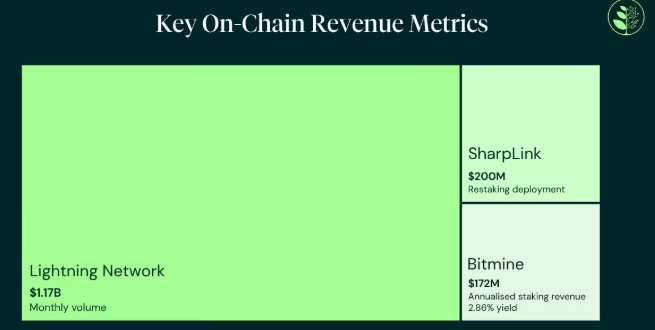
    Three primary models are emerging. The first focuses on infrastructure participation, including staking and network validation. Firms like Bitmine Immersion Technologies reported over 3 million staked ETH, generating approximately $172 million in annualized revenue, highlighting the potential of protocol-level income.

    The second model involves active trading strategies such as funding-rate arbitrage and options premiums. While these can generate strong returns, they require advanced risk management and continuous oversight. Some firms have achieved significant revenue growth through such strategies, though accounting complexities can obscure profitability.

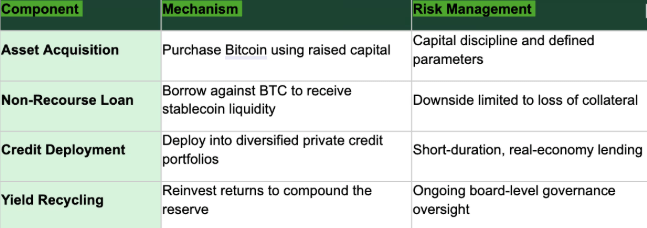
    A third approach uses digital assets as collateral to access liquidity, which is then deployed into private credit markets. This model mirrors traditional finance by combining borrowing, lending and yield generation, supported by the growing role of stablecoins in global payments and settlement systems.

    Yield Becomes Core Measure of Treasury Performance

    As the sector matures, yield generation is becoming the key benchmark for success. Companies are increasingly blending multiple strategies based on risk tolerance and operational capabilities. The shift signals a broader industry evolution where disciplined capital deployment, rather than asset size alone, determines long-term value.

    Disclaimer

    This content is for informational purposes only and does not constitute financial, investment, or legal advice. Cryptocurrency trading involves risk and may result in financial loss.
  • Bitcoin Shorts Face $2.5 Billion Liquidation Risk if BTC Reaches $72K

    Bitcoin Shorts Face $2.5 Billion Liquidation Risk if BTC Reaches $72K

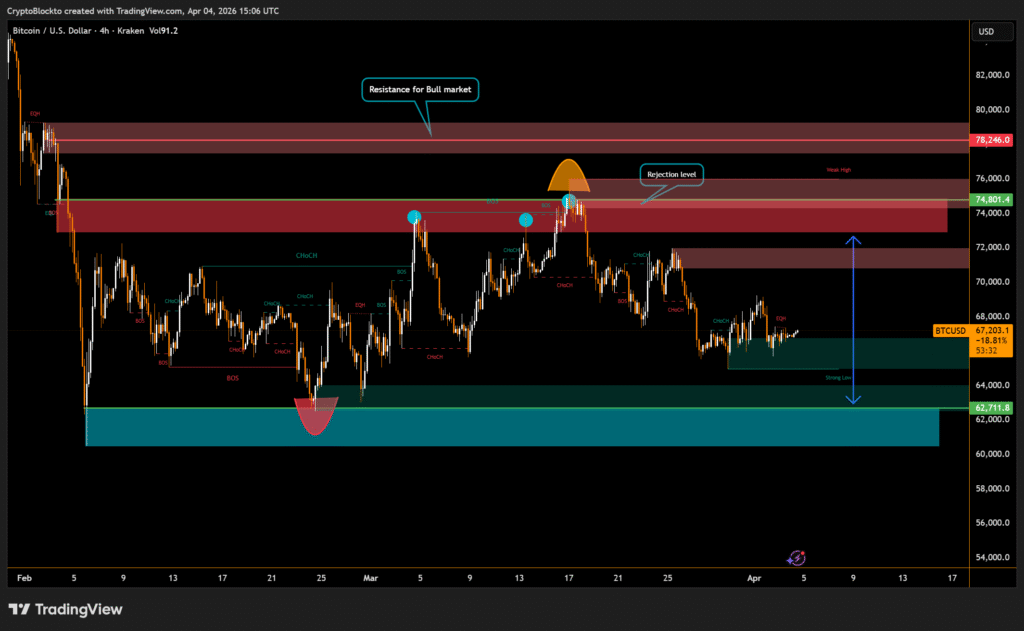
    Bitcoin could be nearing a critical turning point, with roughly $2.5 billion in short positions at risk of liquidation if the price climbs to $72,000. Current estimates show Bitcoin trading near $67,200, meaning a move of about 7.5% could trigger a wave of forced buying that may squeeze bearish traders.

    $BTC 4h price chart

    Bitcoin has struggled to reclaim the $75,000 level since March 17, while bearish futures bets have increased following geopolitical tensions linked to the war involving Iran. Oil prices have surged more than 70% since late February, raising logistics costs and reducing consumer spending, which has added pressure to risk assets like Bitcoin.

    Additional bearish pressure came after MARA Holdings announced it sold 15,133 BTC on March 26, shifting focus toward artificial intelligence computing and reducing Bitcoin reserves to pay down debt.

    ETF Demand and Ceasefire Could Reverse Market Sentiment

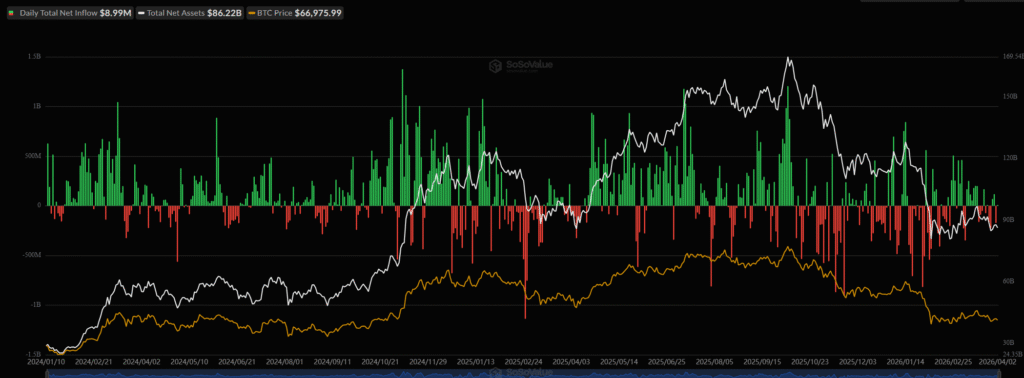
    Despite bearish sentiment, several factors could spark a reversal. Bitcoin previously jumped from $69,150 to $74,900 during a five day period ending March 16, supported by $1.5 billion in net inflows into US-listed Bitcoin exchange-traded funds.

    Market data also shows negative funding rates in perpetual futures, signaling increased confidence among bearish traders and limited demand for leveraged bullish positions.

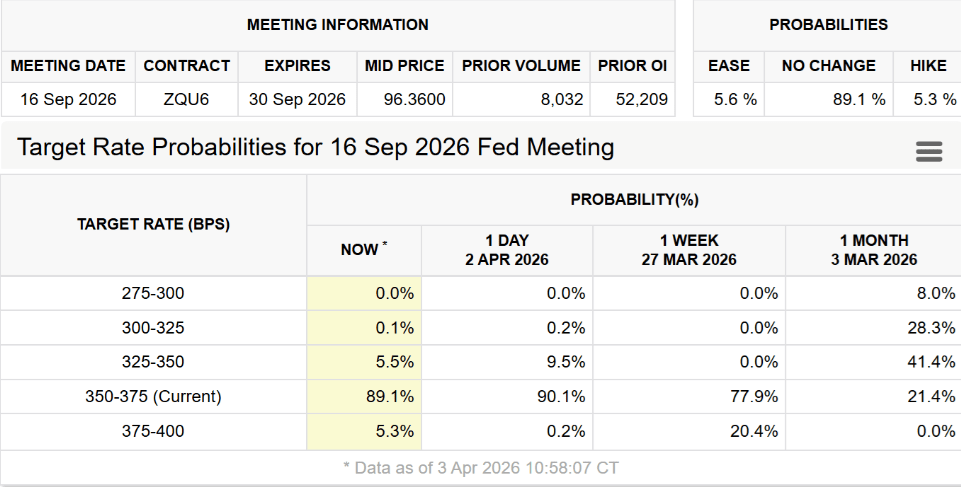
    Interest rate expectations remain steady, with traders pricing an 89% chance that the Federal Reserve will hold rates unchanged through September and only a 5% chance of a hike to 4%.

    Interest rate target odds for the Sept. FOMC meeting.: CME FedWatch Tool

    A potential ceasefire related to the Iran conflict or renewed ETF inflows could rapidly lift Bitcoin toward $72,000, potentially triggering large-scale liquidations and strengthening bullish momentum.

    US-listed Bitcoin ETF daily net flows,
    Disclaimer

    This content is for informational purposes only and does not constitute financial, investment, or legal advice. Cryptocurrency trading involves risk and may result in financial loss.

  • Former UK Chancellor Kwasi Kwarteng Supports Bitcoin as Alternative to Strained Financial Systems

    Former UK Chancellor Kwasi Kwarteng Supports Bitcoin as Alternative to Strained Financial Systems

    Former UK Chancellor Kwasi Kwarteng has voiced support for Bitcoin as part of a broader shift toward alternative financial systems, reflecting on the economic turmoil that followed his short tenure in September 2022. Kwarteng, who served as chancellor for only a few weeks, described the controversial mini budget as “very, very rushed,” noting it was introduced just two weeks after taking office on September 6 and shortly before the death of Queen Elizabeth II.

    The rapid rollout of the policy triggered sharp increases in UK government bond yields and exposed vulnerabilities in Liability Driven Investment (LDI) pension strategies. Despite criticism, Kwarteng defended the original policy goals and warned that the United Kingdom remains trapped in a fiscal “doom loop,” where government spending continues to exceed tax revenue, while rising taxes reduce economic incentives.

    He also criticized what he described as short-term decision-making in politics and financial markets, arguing that long-term planning is essential for sustainable economic growth.

    Bitcoin Treasury Strategy and Stack BTC Involvement

    Kwarteng has since moved into the digital asset sector and now serves as executive chairman of Stack BTC, a UK based bitcoin treasury firm. The company currently holds 31 BTC on its balance sheet, reflecting its strategy of integrating Bitcoin into corporate treasury management.

    The venture has drawn political interest, with Reform UK leader Nigel Farage acquiring a 6% stake in the company. Kwarteng also highlighted what he sees as the UK’s slow adoption of digital asset innovation compared to European cities such as Paris, which he described as increasingly supportive of digital finance developments.

    He pushed back against earlier criticism from former Prime Minister Boris Johnson, who had described Bitcoin as a “Ponzi,” instead advocating for a more open-minded approach toward emerging monetary technologies and alternative financial systems.

    Disclaimer

    This content is for informational purposes only and does not constitute financial, investment, or legal advice. Cryptocurrency trading involves risk and may result in financial loss.

  • Bitcoin ETFs Expected to Surpass Gold ETFs in Assets, Analyst Says

    Bitcoin ETFs Expected to Surpass Gold ETFs in Assets, Analyst Says

    Spot BTC ETFs could eventually surpass gold ETFs in total assets under management (AUM) as investor interest grows beyond the “digital gold” narrative, according to ETF analyst James Seyffart. Speaking on the podcast, Seyffart highlighted Bitcoin’s multiple roles, including as digital gold, a store of value, a portfolio diversifier, and a form of digital capital and property. He added that the market also views Bitcoin as a “growth risk asset.”

    Bloomberg ETF analyst James Seyffart spoke to Natalie Brunell on podcast.

    Seyffart noted, “There are just more use cases of why somebody would put a Bitcoin ETF in a portfolio,” contrasting this with gold, which primarily serves one purpose.

    ETF Flows Reflect Shifting Investor Preferences

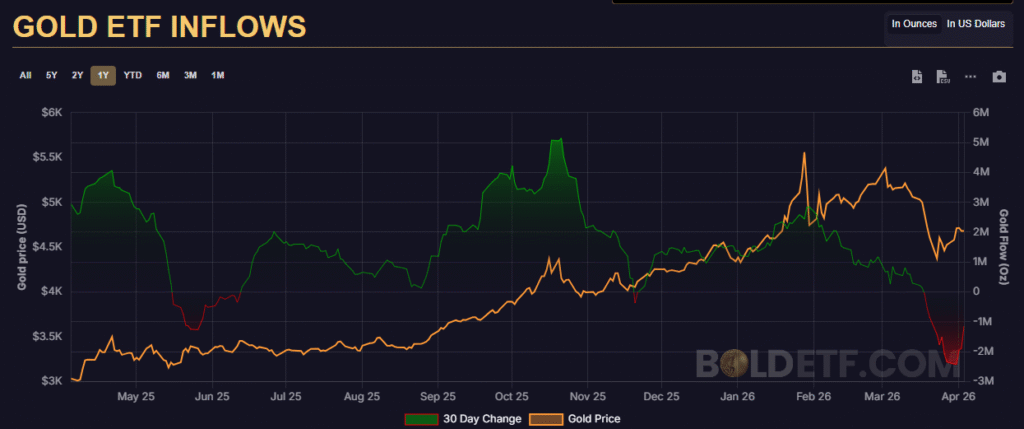
    US based gold ETFs recorded net outflows of $2.92 billion in March, while US spot Bitcoin ETFs saw $1.32 billion in net inflows over the same period. The largest US gold backed ETF, GLD, experienced a $3 billion outflow on March 4, the largest daily withdrawal in over two years.

    Gold ETF Inflows

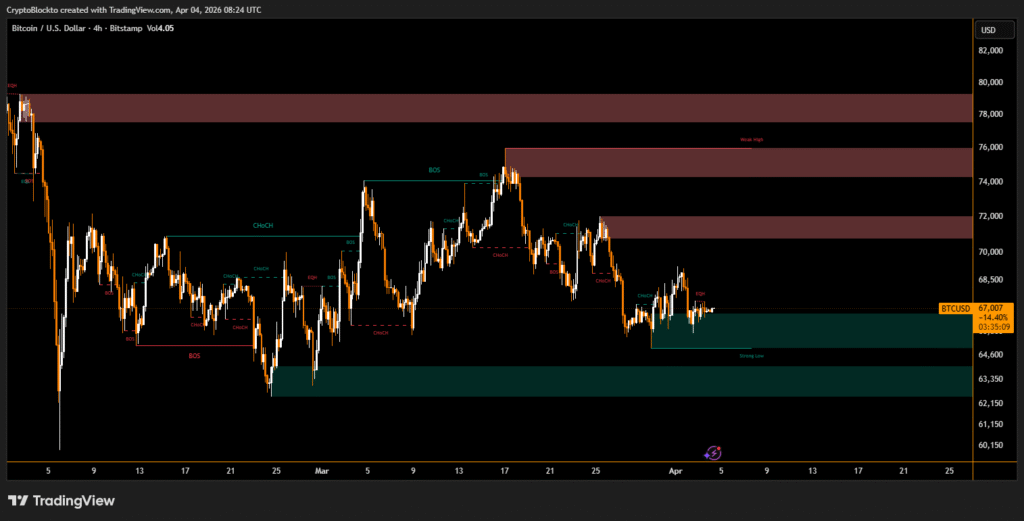
    Despite recent divergences, both Bitcoin and gold have broadly moved in tandem over the past 30 days. Bitcoin is trading around $66,818, down 8%.

    $BTC 4h price chart

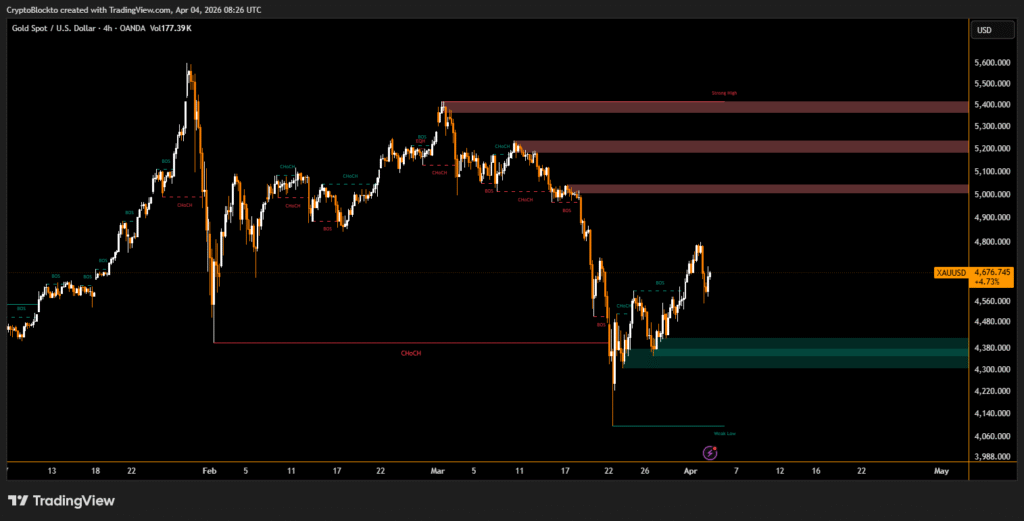
    While gold trades near $4,676, down 8%.

    Gold 4h price chart
    Disclaimer

    This content is for informational purposes only and does not constitute financial, investment, or legal advice. Cryptocurrency trading involves risk and may result in financial loss.