Author: tristan

  • CFTC Sues Illinois Over Cease-and-Desist Orders Targeting Prediction Markets

    CFTC Sues Illinois Over Cease-and-Desist Orders Targeting Prediction Markets

    The U.S. Commodity Futures Trading Commission (CFTC) and the Department of Justice have filed a lawsuit against the state of Illinois and several state officials after Illinois issued cease-and-desist letters aimed at shutting down sports related prediction market products.

    Illinois authorities argued that certain prediction market providers were offering products similar to sports gambling and should therefore be regulated under state gambling laws. However, the CFTC countered that these offerings are not traditional wagers but financial instruments classified as swaps.

    In its filing, the CFTC stated that the Commodity Exchange Act grants the agency “exclusive jurisdiction” over swaps markets. The lawsuit argues that Illinois’ enforcement actions intrude on federal authority and that federal law preempts state-level regulation in this area.

    States Push Back as Prediction Markets Expand Into Sports

    Federal regulators described event contracts as derivative instruments that allow participants to trade based on predictions about future outcomes. These events can include sports results, economic indicators, elections, climate developments, or other occurrences with financial or commercial consequences.

    Under CFTC Chairman Mike Selig, the agency has consistently maintained that prediction markets fall under federal oversight. At the same time, state regulators across political lines have pushed back, claiming that sports-linked contracts function similarly to gambling products.

    Nevada’s Gaming Control Board recently secured a temporary restraining order against Kalshi, with a related hearing scheduled soon. In addition, the CFTC is set to participate in an appeals court hearing before the Ninth Circuit, involving cases connected to the North American Derivatives Exchange, Kalshi, and Robinhood, highlighting the growing legal battle over the regulation of sports-related prediction markets.

    Disclaimer

    This content is for informational purposes only and does not constitute financial, investment, or legal advice. Cryptocurrency trading involves risk and may result in financial loss.

  • Polymarket Fee Expansion Drives Revenue Growth as Global Regulatory Pressure Intensifies

    Polymarket Fee Expansion Drives Revenue Growth as Global Regulatory Pressure Intensifies

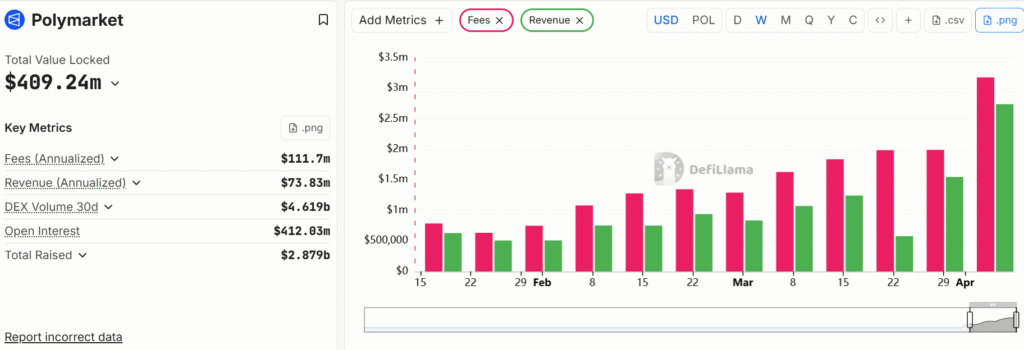
    Prediction market platform Polymarket recorded a sharp rise in daily fees and revenue following its March 30 fee model overhaul. Data from DefiLlama showed daily fees increasing from about $363,000 on Monday to more than $1 million on both Wednesday and Thursday. Revenue, representing the portion retained after incentives, reached approximately $995,000 on Wednesday before easing to around $899,000 on Thursday.

    The increase followed the expansion of taker fees beyond crypto and sports markets to include finance, politics, economics, culture, weather, and technology categories. Geopolitical and world events remained fee-free under the updated structure. The move reflects Polymarket’s efforts to strengthen monetization and maintain investor interest as regulatory scrutiny continues to grow globally.

    Polymarket fees and revenue data since feb

    Prediction Market Regulation Expands Across Multiple Jurisdictions

    Prediction markets, including Polymarket, face mounting regulatory pressure across several regions. In Europe, Hungary and Portugal moved to block or restrict access in January, citing concerns about unlicensed gambling and political betting risks.

    On March 17, a court in Argentina ordered a nationwide ban on Polymarket, stating the platform allowed betting without adequate identity and age verification, enabling minors to participate. Polymarket reports being blocked in 33 countries, while Kalshi faces restrictions in 52 jurisdictions.

    Funding Activity and Market Integrity Measures

    In the United States, at least 11 states have taken legal action against platforms such as Polymarket and Kalshi, issuing cease-and-desist orders or reviewing new regulations. Despite restrictions, both platforms are exploring funding rounds that could value each at approximately $20 billion.

    On March 24, Polymarket and Kalshi introduced new trading restrictions designed to reduce insider trading risks following criticism over unusually timed bets and concerns about overall market integrity.

    Disclaimer

    This content is for informational purposes only and does not constitute financial, investment, or legal advice. Cryptocurrency trading involves risk and may result in financial loss.
  • Coinbase Receives Conditional OCC Approval for National Trust Charter

    Coinbase Receives Conditional OCC Approval for National Trust Charter

    Coinbase has received conditional approval from the U.S. Office of the Comptroller of the Currency (OCC) for a national trust company charter, marking a major step toward operating as a federally regulated crypto custodian. The approval remains preliminary and requires the company to complete several regulatory steps before receiving a full charter.

    Compliance Requirements Before Final Charter Approval

    The conditional green light requires Coinbase to build comprehensive compliance systems, hire key personnel and undergo regulatory reviews. Regulators also expect the company to demonstrate strong risk management practices, protect client assets and meet anti-money-laundering standards. Only after satisfying these requirements can the OCC grant full approval.

    In a X post, Coinbase chief legal officer Paul Grewal said ;

    Coinbase first applied for the charter in October, alongside firms such as Ripple. More recently, Citadel-backed exchange EDX Markets also filed for a similar structure, highlighting growing demand for regulated custody services.

    Custody Services Support Institutional Crypto Adoption

    If finalized, the charter would allow Coinbase to operate a non-insured national trust company focused on digital asset custody, meaning it can hold client assets but cannot take deposits or issue loans. The move supports Coinbase’s strategy to expand institutional services and generate steadier revenue beyond trading fees, especially as it already serves as custodian for several U.S. spot bitcoin exchange-traded funds.

    Disclaimer

    This content is for informational purposes only and does not constitute financial, investment, or legal advice. Cryptocurrency trading involves risk and may result in financial loss.

  • Bitcoin and Stocks Recover as Iran Signals Cooperation on Strait of Hormuz

    Bitcoin and Stocks Recover as Iran Signals Cooperation on Strait of Hormuz

    Bitcoin trimmed earlier losses while major stock markets recovered after reports that Iran is working with Oman on a protocol to manage traffic through the Strait of Hormuz. The development eased fears of disruptions to one of the world’s most important oil shipping routes, helping risk markets stabilize.

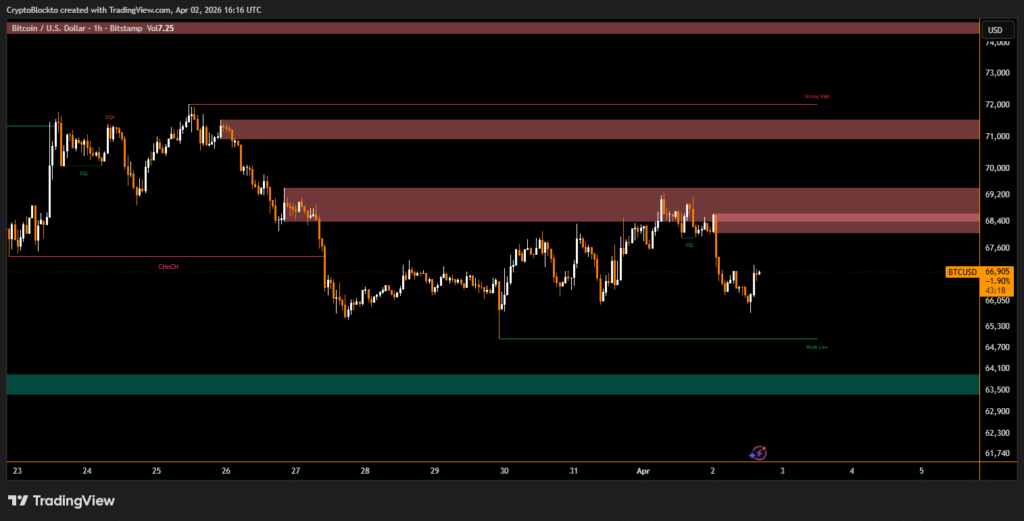
    Bitcoin traded near $66,900, down about 3%, with ether near $2,060, also lower by roughly 3% over the past 24 hours.

    $BTC h1 price chart

    Iran-Oman Protocol Eases Shipping Route Concerns

    Iranian officials said the proposed measures are intended to coordinate ship movement and ensure safe passage rather than restrict traffic. Deputy Foreign Minister for legal and international affairs Kazem Gharibabadi explained that even under normal conditions, vessel traffic should be monitored and coordinated with coastal states such as Iran and Oman to improve safety and services.

    The update followed earlier remarks from President Donald Trump, who pledged overnight to continue the war against Iran and warned that the Strait of Hormuz would “open naturally” once the conflict ends.

    Oil, Crypto, and Stocks React to Geopolitical Signals

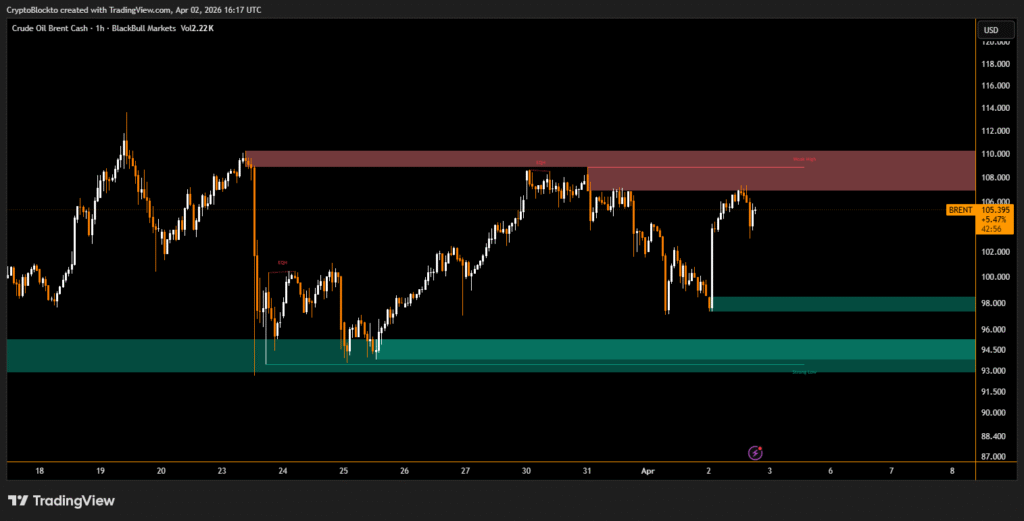
    WTI crude oil, which had surged to nearly $106 per barrel, dropped about $5 to $6 per barrel after the shipping coordination news.

    Brent crude h1 price chart
    Disclaimer

    This content is for informational purposes only and does not constitute financial, investment, or legal advice. Cryptocurrency trading involves risk and may result in financial loss.
  • Ripple Integrates XRP and RLUSD into Corporate Treasury Management

    Ripple Integrates XRP and RLUSD into Corporate Treasury Management

    Ripple has introduced native digital asset capabilities into its enterprise treasury management system, allowing CFOs to manage XRP and RLUSD alongside fiat currencies for the first time within a single platform. The new features, Digital Asset Accounts and Unified Treasury, are built on GTreasury, which Ripple acquired in 2025.

    Digital Asset Accounts for Real-Time Management

    Digital Asset Accounts enable treasury teams to create Ripple native digital asset accounts inside the platform. XRP, RLUSD, and other supported tokens are displayed alongside cash positions with real-time fiat valuations. Transactions are automatically recorded with notional amounts, fiat equivalents, and market prices at the time of each event, providing a complete audit trail. Balances are captured with 15-decimal precision to match on-chain accuracy and eliminate rounding errors.

    Unified Treasury Connects External Custodians

    The Unified Treasury feature allows integration of digital asset holdings from multiple external custodians using the same API layer already in place for bank integrations. This enables corporate finance teams to manage both fiat and digital assets without separate wallets or third-party platforms.

    Positioning Ripple Treasury Ahead of Competitors

    Ripple Treasury claims to be the first treasury management system with embedded digital asset functionality. The company plans to expand this framework to cross border settlements, intercompany payments, and yield on idle cash using stablecoins, strengthening its position as a leader in digital asset corporate finance.

    Disclaimer

    This content is for informational purposes only and does not constitute financial, investment, or legal advice. Cryptocurrency trading involves risk and may result in financial loss.
  • Bitcoin Bear Market Could Require More Months of Consolidation

    Bitcoin Bear Market Could Require More Months of Consolidation

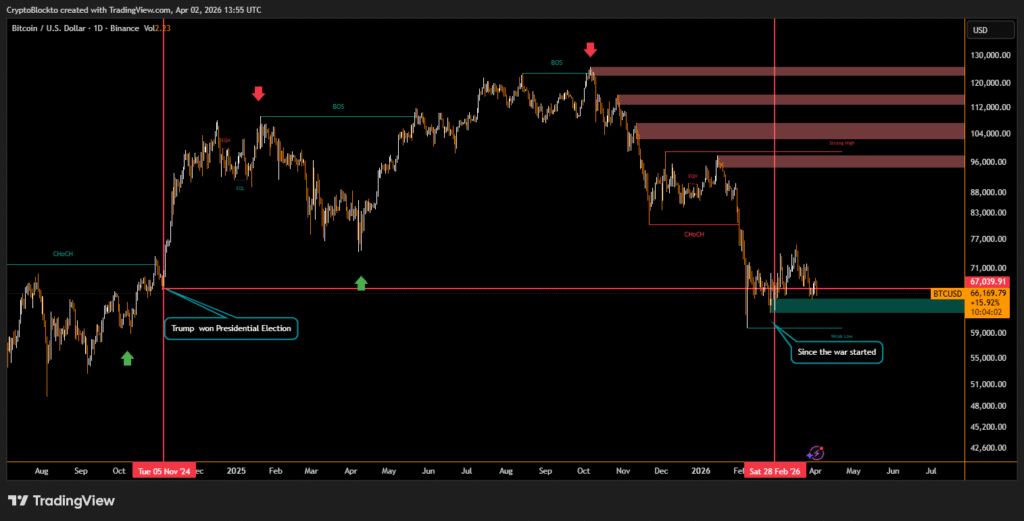
    Bitcoin is trading below $66,000, down over 3% in the past 24 hours and roughly 45% below its October all-time high, marking nearly six months of a bear market. Investors are increasingly focused on two key questions: how much lower can bitcoin fall, and how long will this bear market continue.

    $BTC daily price chart

    Price Pain vs. Time Pain

    Market challenges are not only about sharp drawdowns, known as price pain, but also slow-moving, range-bound trading, referred to as time pain. Price pain forces participants out of positions during sudden volatility, while time pain tests investor endurance as markets remain directionless for extended periods.

    Long-Term Holder Dynamics

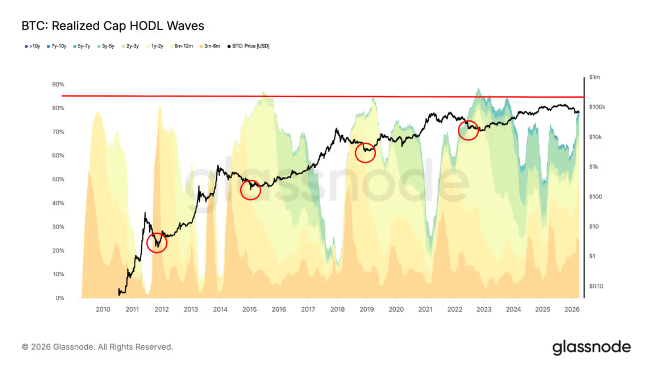
    Realized Cap HODL Waves data groups bitcoin supply based on the last time coins moved and weights them by realized price. Currently, long-term holders those holding bitcoin for six months or more control around 80% of the total supply. Historical patterns indicate bear market bottoms coincide with long-term holders controlling about 85% of supply. This suggests that although the price floor may be forming, several months of sideways trading could still be ahead.

    Implications for Investors

    Long-term holders appear to be accumulating at depressed prices, which historically signals stabilization. However, past cycles show that while price bottoms may form first, it often takes months for long-term holder supply to reach peak levels. This indicates that investors should expect continued consolidation before a sustained recovery begins.

    Disclaimer

    This content is for informational purposes only and does not constitute financial, investment, or legal advice. Cryptocurrency trading involves risk and may result in financial loss.
  • SoFi Launches 24/7 Business Banking Platform Combining Cash and Stablecoins

    SoFi Launches 24/7 Business Banking Platform Combining Cash and Stablecoins

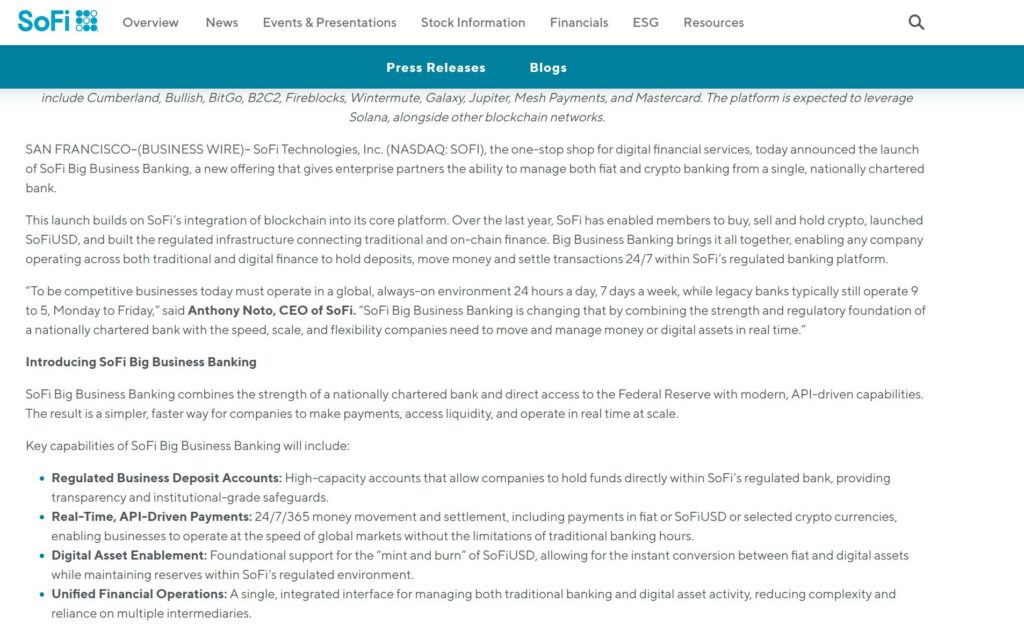
    SoFi has introduced SoFi Big Business Banking, a new platform designed to let companies manage both U.S. dollars and digital assets within a regulated banking environment. The service enables firms to hold dollars, convert funds into stablecoins such as SoFiUSD, and transfer money at any time without relying on traditional banking hours.

    The platform addresses a long standing challenge in crypto finance, where companies typically depend on separate providers for banking, stablecoin issuance and custody. These fragmented systems often slow payments and settlements, sometimes taking hours or days to complete.

    Stablecoin Conversion and Blockchain Settlement Tools

    Under the system, businesses can deposit U.S. dollars, convert them into SoFiUSD and move funds instantly across blockchain networks, including Solana. The stablecoin is issued and redeemed directly within SoFi’s regulated balance sheet, with reserves held internally.

    Industry Partners Signal Growing Adoption

    Early partners include Cumberland, Wintermute, Galaxy, BitGo and Bullish. SoFi CEO Anthony Noto stated that modern businesses require financial systems operating around the clock. The launch highlights a wider trend of merging traditional banking infrastructure with blockchain technology to simplify global money movement and reduce reliance on multiple intermediaries.

    Disclaimer

    This content is for informational purposes only and does not constitute financial, investment, or legal advice. Cryptocurrency trading involves risk and may result in financial loss.

  • Bitcoin Dips Below $66K as Crowded Shorts Signal Potential Upside Risk Ahead of Easter

    Bitcoin Dips Below $66K as Crowded Shorts Signal Potential Upside Risk Ahead of Easter

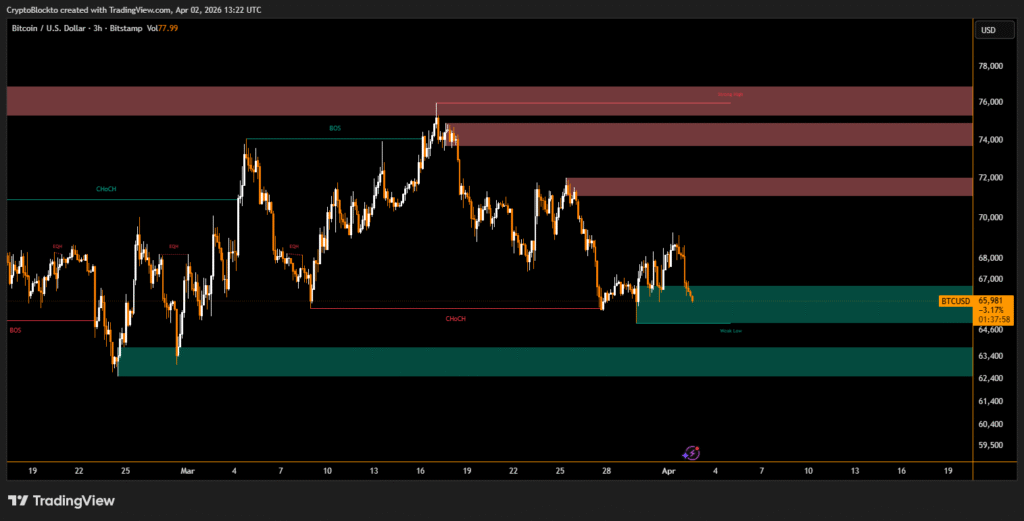
    Bitcoin has slipped below $66,000, trading around $65,973, down 3.7% in 24 hours. Analysts note that the market remains rangebound between roughly $60,000 and $70,000, with no clear catalyst for a breakout. Ether has also remained pinned near $2,000, reflecting a cautious sentiment across major cryptocurrencies.

    Spot demand is absorbing selling pressure but not strong enough to push prices higher. Approximately 8–9 million BTC remain held above current levels, creating an overhead resistance that caps rallies. Long-term holders are realizing losses at elevated prices, indicating that a redistribution phase is ongoing.

    Derivatives Positioning Raises Squeeze Risk

    Funding rates remain negative, with traders paying a premium to maintain short positions. Analysts at Bitfinex warned that this extended short bias could trigger a squeeze if upward momentum develops. Options activity has cooled, with implied volatility compressing and skew slightly favoring downside protection, signaling cautious hedging.

    Global disruptions in energy and metals supply chains are contributing to inflationary pressures, placing additional restraint on markets. Analysts describe the current period as “supply chain destruction,” making Bitcoin act as a residual risk barometer. Liquidity is concentrated around $69,000–$70,100 on the upside and $65,500 on the downside.

    Traders are entering the Easter holiday with heightened caution, following Bitcoin’s weakest first quarter since 2018.

    Disclaimer

    This content is for informational purposes only and does not constitute financial, investment, or legal advice. Cryptocurrency trading involves risk and may result in financial loss.
  • BitGo Launches Institutional Stablecoin Minting and Redemption Service

    BitGo Launches Institutional Stablecoin Minting and Redemption Service

    Crypto infrastructure firm BitGo has introduced a new service designed to allow institutional clients to mint, redeem, and manage stablecoins and other digital assets within a single operational framework. The service, called BitGo Mint, aims to simplify workflows for institutions seeking efficient and scalable digital asset infrastructure.

    The platform initially supports minting and redemption for World Liberty’s USD1, a Trump-backed stablecoin, and SoFiUSD, issued by SoFi Bank, an OCC-regulated and FDIC-insured depository institution. BitGo previously launched infrastructure support for both USD1 and SoFiUSD at the end of last year, strengthening its role in stablecoin operations.

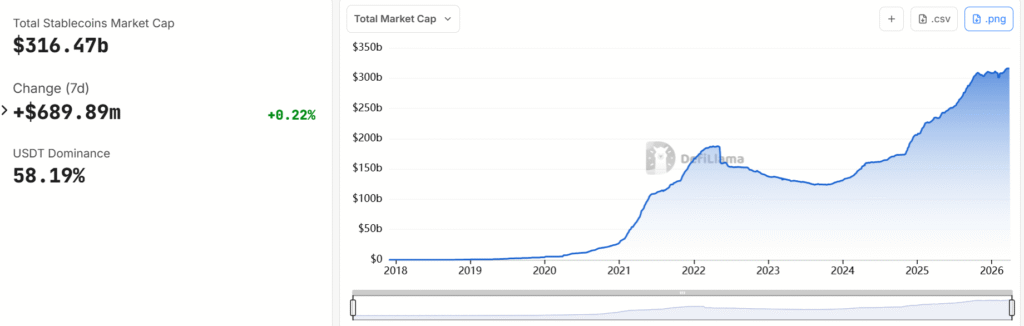
    total stablecoin supply

    Institutional Demand Drives Stablecoin Infrastructure Growth

    BitGo stated that the service targets market makers, liquidity providers, banks, exchanges, asset managers, and fintech firms interested in issuing or managing stablecoins. The goal is to reduce operational complexity by integrating minting and redemption into existing digital asset workflows used by institutional clients.

    The launch comes as the global stablecoin sector continues expanding, with major financial and payments companies increasing their involvement in tokenized dollar systems. Institutions including PayPal, Barclays, and Western Union have either introduced stablecoin initiatives or invested in related infrastructure.

    Market Performance and Industry Positioning

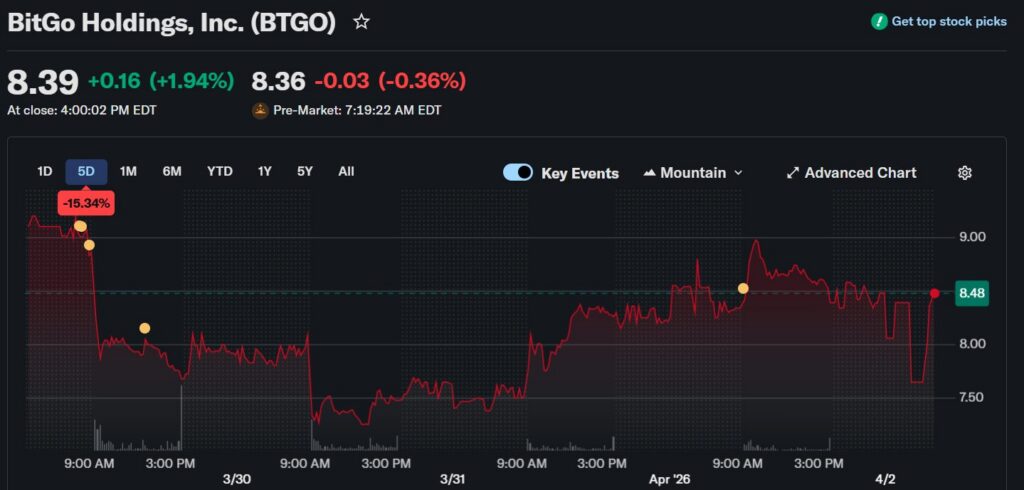
    Analysts at Mizuho described BitGo as a “military-grade custodian,” citing its strong security record and focus on institutional services as competitive advantages. Following the announcement period, BitGo shares closed up 1.94% at $8.49 on Thursday, though the stock remains down more than 50% since its January initial public offering.

    BitGo’s shares price
    Disclaimer

    This content is for informational purposes only and does not constitute financial, investment, or legal advice. Cryptocurrency trading involves risk and may result in financial loss.
  • Iran Demands Crypto or Yuan Payments for Ships Crossing Strait of Hormuz

    Iran Demands Crypto or Yuan Payments for Ships Crossing Strait of Hormuz

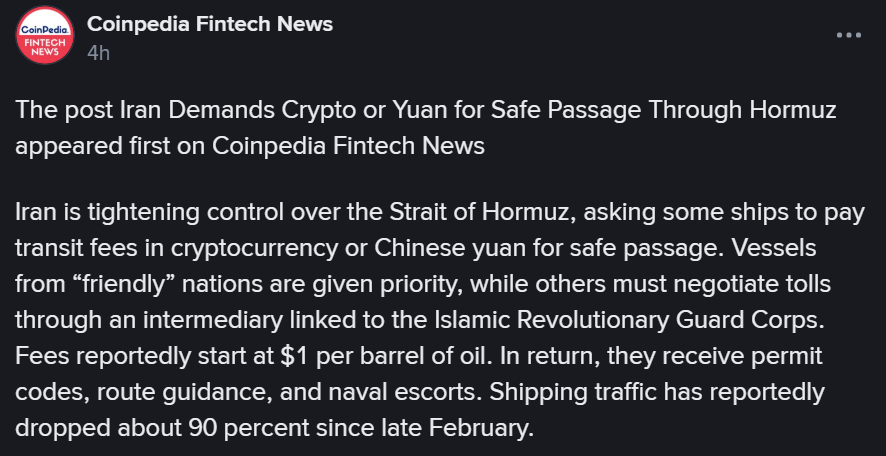
    Iran has introduced a new transit payment system requiring ships to pay in cryptocurrencies or Chinese yuan to cross the Strait of Hormuz, transforming the strategic waterway into a tightly controlled passage managed by the Islamic Revolutionary Guard Corps (IRGC). Under the new process, vessels seeking entry must submit detailed operational data, including ownership, cargo details, flag, crew information, destination, and real-time tracking data before receiving approval.

    The policy applies primarily to vessels from nations considered “friendly,” while ships heading to the United States or Israel are reportedly restricted from passage. Approved vessels receive clearance codes and are guided through designated IRGC-monitored corridors, sometimes accompanied by armed escorts to ensure safe transit.

    Impact on Global Oil Trade and Dollar-Dominated Settlements

    The Strait of Hormuz carries an estimated 20% to 25% of global oil supply, making the new toll structure highly significant for international energy markets. Payments reportedly start at about $1 per barrel of oil, meaning total transit costs for large shipments can reach millions of dollars depending on cargo volume and risk levels.

    With roughly 80% to 85% of global oil trades traditionally settled in US dollars, the introduction of yuan and crypto payment options signals a potential shift in settlement practices. Countries heavily dependent on the strait, including Japan and Singapore, rely on it for a majority of their oil imports, leaving them limited alternatives.

    Strait of Hormuz Management Plan and Shipping Disruptions

    The payment framework forms part of Iran’s Strait of Hormuz Management Plan, which establishes security procedures, environmental controls, coordination measures with Oman, and structured toll rules. The plan also restricts access for certain allied nations and introduces stricter operational oversight.

    Shipping activity through the strait has reportedly declined sharply following the rollout of the system, highlighting the growing geopolitical and economic pressure surrounding one of the world’s most critical energy corridors.

    Disclaimer

    This content is for informational purposes only and does not constitute financial, investment, or legal advice. Cryptocurrency trading involves risk and may result in financial loss.