Author: tristan

  • Solo Bitcoin Miner Scores $210K Block Reward Amid Rising Difficulty

    Solo Bitcoin Miner Scores $210K Block Reward Amid Rising Difficulty

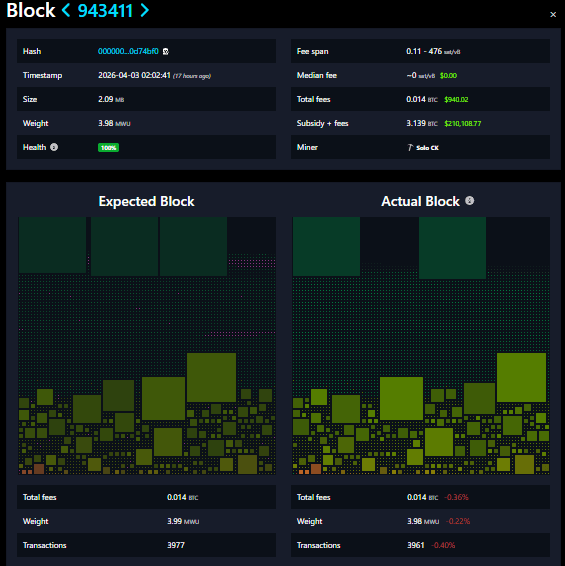
    Solo Bitcoin miner connected to CKPool secured a $210,000 block reward by successfully mining block 943,411, earning 3.139 BTC in subsidy and transaction fees. The win underscores that solo mining, though increasingly rare, can still pay off despite the dominance of industrial mining operations.

    Over the past year, only 20 Bitcoin blocks have been mined by solo operators, totaling 62.96 BTC, with an average interval of 18.7 days between wins. The longest gap reached 58 days, highlighting the highly competitive nature of mining today.
    Bitcoin Mining Difficulty Remains High

    Network difficulty, a measure of how hard it is to mine a block, recently recorded its steepest adjustment since February, dropping 7.7% before rebounding 3.87% within 24 hours. Despite this temporary relief, difficulty levels remain near historic highs, making solo block discovery increasingly unlikely.
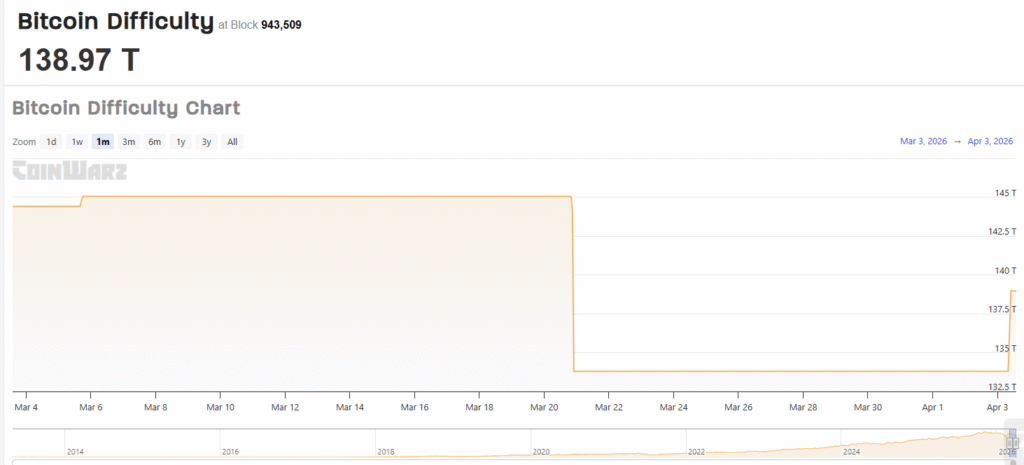
    Bitcoin difficulty over time

    Institutional Miners Adjust Strategies

    Rising operational costs have prompted major miners to adapt. Companies including Riot Platforms, MARA Holdings, Genius Group, and Nakamoto Holdings sold Bitcoin during the first quarter of 2026. The CKPool win serves as a rare reminder that individual miners can still succeed against the odds.

    Disclaimer

    This content is for informational purposes only and does not constitute financial, investment, or legal advice. Cryptocurrency trading involves risk and may result in financial loss.

  • Malta and ESMA Clash Over Centralized Crypto Supervision Under MiCA

    Malta and ESMA Clash Over Centralized Crypto Supervision Under MiCA

    European Union policymakers are considering a proposal to shift supervision of major crypto asset service providers (CASPs) to the European Securities and Markets Authority (ESMA) in Paris. The plan would move key oversight powers away from national regulators, marking a significant shift in how Europe manages its digital asset industry.

    France, Austria, and Italy have supported the proposal, arguing that centralized supervision would address differences in national approval processes and reduce regulatory shopping across member states. The issue is particularly important under the Markets in Crypto Assets Regulation (MiCA), which allows firms authorized in one country to operate across the entire European Union.

    Malta Warns Against Premature Structural Changes

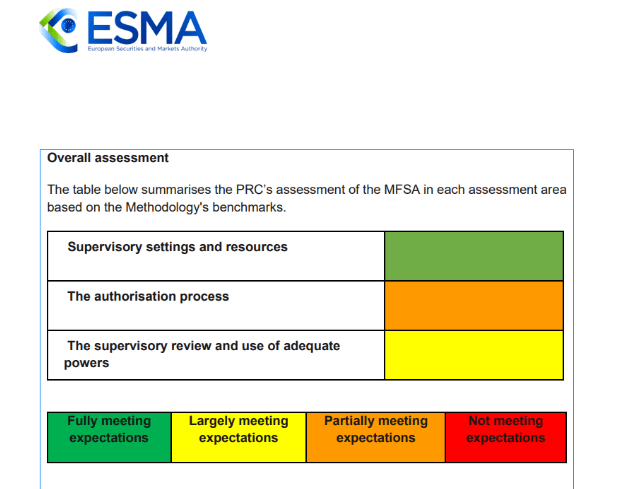
    Malta’s Financial Services Authority (MFSA) has expressed concerns, stating that MiCA has only recently been implemented and its full market impact is still being assessed. Officials warned that introducing centralized supervision too quickly could disrupt existing regulatory frameworks.

    ESMA peer review of a Malta CASP approval.: ESMA

    Industry Voices Raise Structural Concerns

    Supporters of centralization believe a single supervisor would strengthen investor protection and improve consistency. However, critics argue that splitting oversight between ESMA, national authorities, and other bodies could fragment accountability during crises and weaken local regulatory expertise.

    Disclaimer

    This content is for informational purposes only and does not constitute financial, investment, or legal advice. Cryptocurrency trading involves risk and may result in financial loss.

  • Bitcoin Supply in Profit Approaches ‘True Bear Market’ Levels

    Bitcoin Supply in Profit Approaches ‘True Bear Market’ Levels

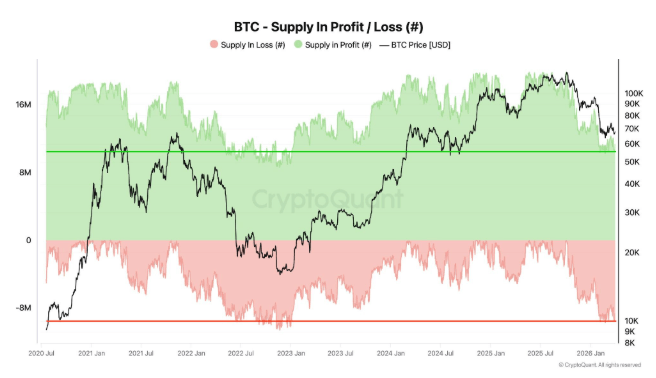
    CryptoQuant data shows that Bitcoin’s supply in profit and loss is approaching levels typical of a bear market. Currently, around 11.2 million BTC are in profit, while 8.2 million BTC are at a loss. The last bear market saw a low of 9 million BTC in profit and 10.6 million BTC at a loss, indicating that current metrics are nearing previous cycle lows.

    Bitcoin in profit and loss at bear market lows

    Analysts Debate Market Implications

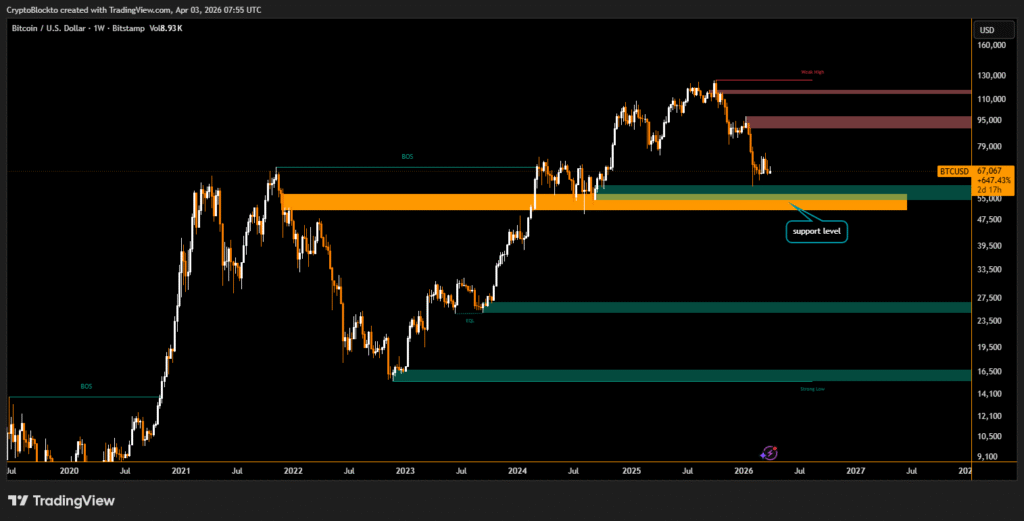
    Andri Fauzan Adziima, research lead at Bitrue exchange, cautioned that these figures indicate increasing market stress rather than immediate undervaluation. He highlighted that true capitulation bottoms involve more extreme metrics, including net unrealized profit/loss (NUPL) and market value to realized value ratio (MVRV), suggesting potential structural support near $55,000 but further downside or consolidation is likely.

    Macro Factors Impacting Recovery

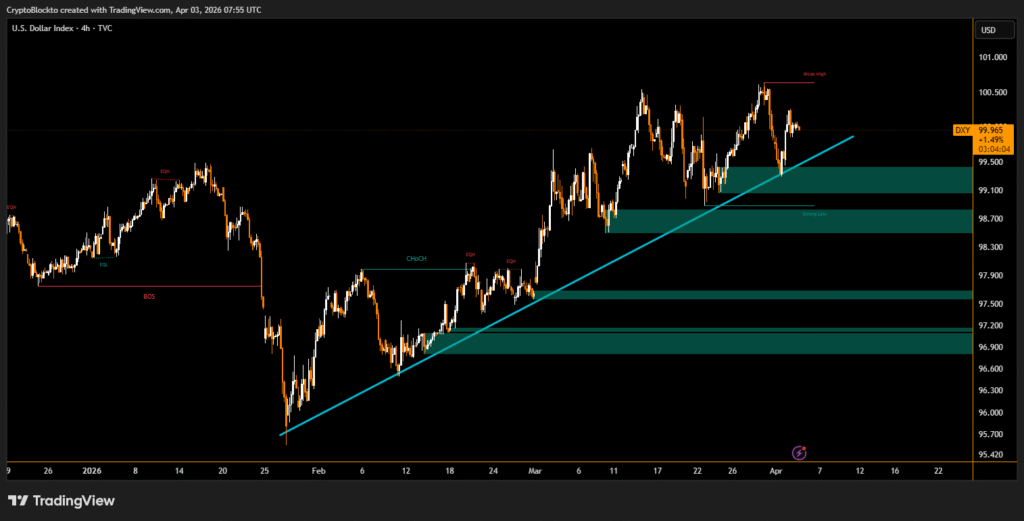
    Bitcoin’s recovery is also hampered by a strong US dollar. Timothy Peterson observed that higher dollar yields and cautious investor sentiment, particularly as the Chinese yuan weakens, limit capital inflows into crypto. The US Dollar Index (DXY) has risen about 5% over the past two months, reducing global liquidity and delaying a potential Bitcoin rebound until late 2026 or 2027.

    Disclaimer

    This content is for informational purposes only and does not constitute financial, investment, or legal advice. Cryptocurrency trading involves risk and may result in financial loss.
  • Korea Investment & Securities Considers Coinone Stake Amid South Korea Crypto Ownership Reform

    Korea Investment & Securities Considers Coinone Stake Amid South Korea Crypto Ownership Reform

    Korea Investment & Securities (KIS) is reportedly reviewing a potential investment in crypto exchange Coinone, according to local media reports. Sources familiar with the matter said KIS has begun engaging with regulators and policymakers as part of early discussions tied to a possible stake purchase.

    Coinone confirmed that no final agreement has been reached, indicating that negotiations remain at a preliminary stage. The reported talks reflect growing interest from major financial institutions seeking exposure to the digital asset market.

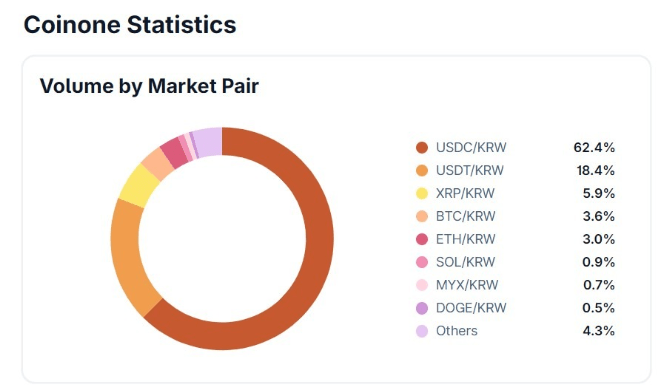
    Coinone volume by market pair.: CoinGecko

    Proposed Ownership Cap Could Drive Stake Sales

    The potential investment comes as South Korea considers introducing a 20% ownership cap for major shareholders in domestic cryptocurrency exchanges. If approved, the rule would require significant restructuring across the industry.

    Coinone Chairman Cha Myung-hoon, who controls about 53.44% of the exchange, may need to reduce his holdings to comply with the proposed law. Exchanges would reportedly have three years to adjust ownership structures after enforcement.

    Growing Competition Among Financial Institutions

    KIS, which recorded over 2 trillion won ($1.3 billion) in net profit in 2025, would join competitors expanding into crypto services. Rival Mirae Asset Group previously agreed to acquire a controlling stake in exchange Korbit, highlighting increasing institutional participation in South Korea’s evolving crypto market.

    Disclaimer

    This content is for informational purposes only and does not constitute financial, investment, or legal advice. Cryptocurrency trading involves risk and may result in financial loss.
  • U.S. March Jobs Surge to 178,000 as Unemployment Falls to 4.3%

    U.S. March Jobs Surge to 178,000 as Unemployment Falls to 4.3%

    U.S added 178,000 jobs in March, significantly surpassing economist expectations of 60,000 new positions, according to data released by the Bureau of Labor Statistics. The strong rebound followed February’s loss of 133,000 jobs, which was revised lower from earlier estimates.

    The unemployment rate declined to 4.3%, improving slightly from 4.4% in February and beating market forecasts. The stronger-than-expected labor market performance signals continued economic momentum despite recent global uncertainties.

    Financial Markets React to Employment Data

    Following the release, Btc continued trading near the $67k level, showing limited immediate reaction to the employment figures. Meanwhile, U.S. stock index futures remained slightly lower, with the Nasdaq 100 down 0.2%. The 10-year U.S. Treasury yield rose by four basis points to 4.36%, reflecting shifting expectations in bond markets.

    The strong employment growth has revived discussions around possible Federal Reserve rate hikes in 2026. Rising oil prices and continued economic resilience have increased speculation that policymakers may reconsider tightening measures if inflation pressures persist.

    Disclaimer

    This content is for informational purposes only and does not constitute financial, investment, or legal advice. Cryptocurrency trading involves risk and may result in financial loss.
  • Drift Protocol Sends Onchain Message to Wallets Linked to $280M Crypto Exploit

    Drift Protocol Sends Onchain Message to Wallets Linked to $280M Crypto Exploit

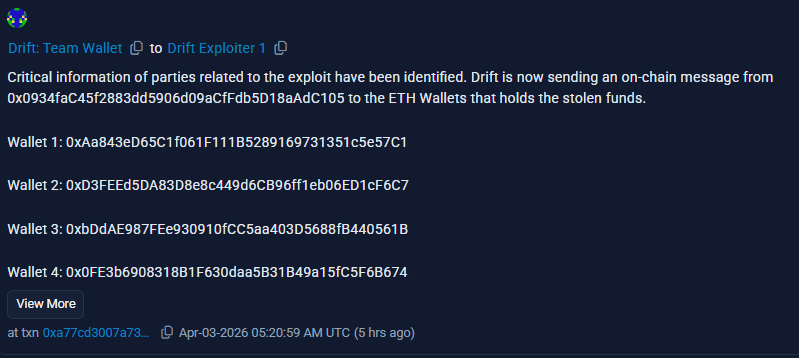
    Drift Protocol, a Solana based decentralized exchange, has initiated onchain communication with wallets tied to a major exploit estimated between $280 million and $286 million. The protocol confirmed that messages were sent from its Ethereum address to four wallets believed to hold stolen Ether, urging the attacker to establish contact through Blockscan chat.

    Onchain messaging has become a widely used tactic during exploit responses, allowing protocols to communicate anonymously with attackers. Similar outreach methods have been used in past incidents to negotiate potential fund recovery.

    Drift’s onchain message to the Drift Exploiter on Friday: Etherscan

    Anonymous Sender Adds Pressure on Attacker

    Drift’s outreach followed separate messages sent by an unknown sender using the readnow.eth name. The sender claimed to know the identities behind the exploit and demanded 1,000 ETH in exchange for withholding information. These claims remain unverified and may represent attempts to pressure or mislead the wallet holder.

    Expanding Impact Across Solana Ecosystem

    The fallout from the exploit continues to spread across the Solana ecosystem. Reports indicate that at least 20 protocols have been affected, including the DeFi platform Gauntlet, which suffered estimated losses of $6.4 million. Security analysts believe the attack was likely staged over several weeks, involving pre-signed transactions prepared before execution.

    Disclaimer

    This content is for informational purposes only and does not constitute financial, investment, or legal advice. Cryptocurrency trading involves risk and may result in financial loss.

  • Crypto Market Consolidates as Bitcoin Holds $67K and Bearish Signals Grow

    Crypto Market Consolidates as Bitcoin Holds $67K and Bearish Signals Grow

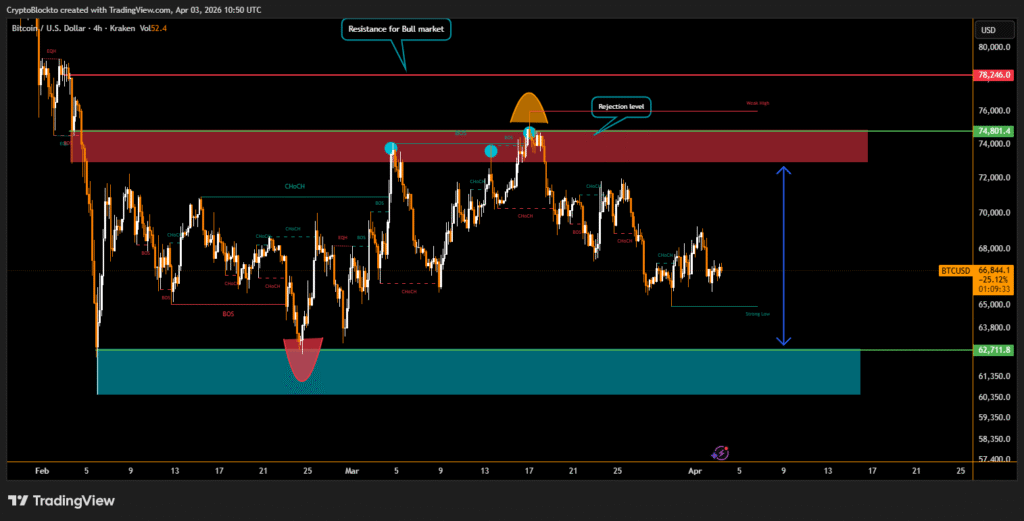
    Bitcoin continued to trade near $67,000, remaining locked within a narrow range that has persisted since early February. The broader trend still reflects a macro downtrend that began in October, marked by repeated lower highs and lower lows.

    $BTC 4h price chart

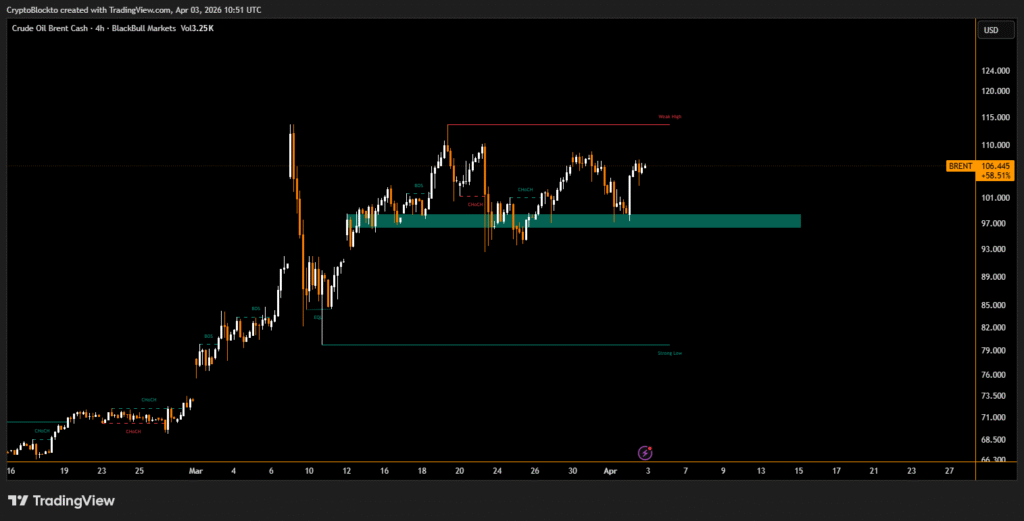
    Market volatility has cooled, while futures activity remained subdued, partly due to thin trading volumes during an extended holiday period. U.S. equities traded mostly flat, reflecting reduced risk appetite across financial markets. Meanwhile, Brent crude oil remained near $107 per barrel, signaling continued uncertainty surrounding global tensions.

    Brent crude oil 4h price chart

    Altcoins Outperform in Low-Liquidity Trading

    Despite Bitcoin’s limited movement, several altcoins recorded gains during lower liquidity trading hours, particularly in Asia. Tokens linked to DeFi and AI sectors showed relative strength, with assets such as ALGO and RENDER posting double-digit gains over the past 24 hours.

    Bearish Derivatives Positioning Raises Caution

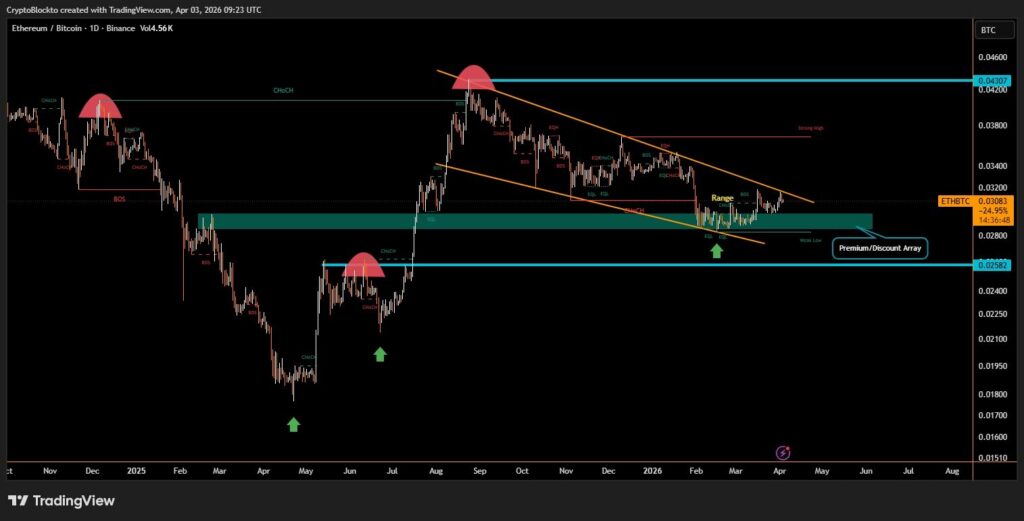
    Derivatives data showed signs of growing bearish sentiment, including negative funding rates and stable open interest levels in Bitcoin and Ethereum futures. Market observers note that altcoin outperformance during consolidation phases often fades once Bitcoin breaks decisively in either direction.

    ETH vs BTC daily price chart
    Disclaimer

    This content is for informational purposes only and does not constitute financial, investment, or legal advice. Cryptocurrency trading involves risk and may result in financial loss.
  • Stablecoin Transaction Volume Surpasses ACH in February

    Stablecoin Transaction Volume Surpasses ACH in February

    Stablecoin transaction volumes reached $7.2 trillion in February, surpassing the $6.8 trillion processed by the US Automated Clearing House (ACH) network, marking a significant milestone for the asset class. Data from blockchain analytics platform Artemis shows this 30-day adjusted rolling volume excludes MEV activity and intra exchange transfers, highlighting the increasing use of stablecoins in global payments.

    Analyst Alex Obchakevich noted that stablecoins are emerging as “foundational infrastructure for global payments,” offering borderless, 24/7 transaction capabilities compared to traditional banking systems. The ACH network processes roughly 93% of US salary payments, underscoring the significance of stablecoins surpassing it in transaction volume.

    Market Growth and Institutional Adoption

    Stablecoin supply continued to rise in Q1 2026, reaching $315 billion, up $8 billion from the previous year, with stablecoins accounting for 75% of total crypto trading volume. Analysts predict the market cap could hit $2 trillion by 2028, fueled by institutional adoption and regulatory clarity. Industry observers emphasize that traditional banks and fintech firms risk losing relevance if they fail to integrate stablecoin infrastructure, highlighting the growing influence of digital assets in global finance.

    Disclaimer

    This content is for informational purposes only and does not constitute financial, investment, or legal advice. Cryptocurrency trading involves risk and may result in financial loss.

  • Crypto Hackers Steal $169M from 34 DeFi Protocols in Q1 2026

    Crypto Hackers Steal $169M from 34 DeFi Protocols in Q1 2026

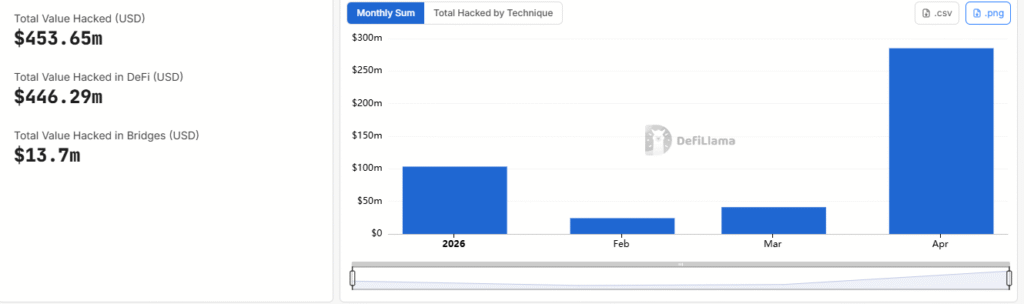
    Crypto hackers stole over $168.6 million from 34 decentralized finance (DeFi) protocols in the first quarter of 2026, according to data from DefiLlama. The largest incident was the $40 million private key compromise of Step Finance in January, followed by a $26.4 million smart contract exploit of Truebit on January 8. Another significant attack targeted stablecoin issuer Resolv Labs on March 21.

    Although these losses are substantial, they are markedly lower than the $1.58 billion stolen in Q1 2025, which included the $1.4 billion Bybit exploit. Experts caution that crypto hacks are not tied to specific calendar periods.

    The first months of 2026 saw less stolen compared to the prior year period.: DefiLlama

    Evolving Threats in the Crypto Space

    Nick Percoco, Chief Security Officer at Kraken, noted that attackers are drawn to areas with concentrated liquidity, such as bull markets, major product launches, and fast-growth phases. Threat actors range from highly coordinated groups to opportunistic hackers exploiting vulnerabilities in smart contracts and client-facing systems. North Korea linked actors continue to target Web3 infrastructure, including recent attacks on Drift Protocol.

    Percoco emphasized that crypto security must be continuous, as attackers deliberately assess infrastructure, code, and operational gaps. Transparency in blockchain makes high-value, technically complex targets particularly attractive.

    Disclaimer

    This content is for informational purposes only and does not constitute financial, investment, or legal advice. Cryptocurrency trading involves risk and may result in financial loss.

  • Ethereum Foundation Stakes $46.64M ETH, Expands Total Staked Holdings

    Ethereum Foundation Stakes $46.64M ETH, Expands Total Staked Holdings

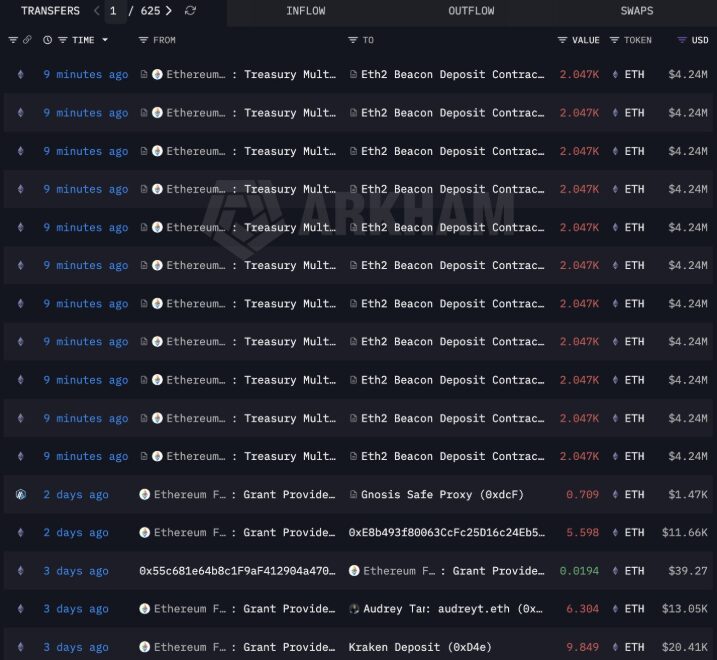
    The Ethereum Foundation has staked an additional $46.64 million worth of ETH, raising its total staked holdings to approximately $96.59 million, according to monitoring data from Arkham. The latest move marks a notable shift in the organization’s treasury approach as it strengthens its participation in network staking.

    This additional staking activity suggests a growing focus on long-term asset management rather than short-term liquidity strategies. The increased staking total reflects the foundation’s continued engagement with Ethereum’s proof-of-stake system.

    Shift From Selling ETH to Generating Yield

    The decision to expand staking follows a broader change in strategy, as the Ethereum Foundation has reportedly stopped selling ETH and instead begun allocating holdings toward yield generation. By staking ETH, the foundation can earn rewards while supporting network security and validation processes.

    This transition signals a move toward sustainability in treasury operations, emphasizing passive income generation over asset liquidation. The development may also influence market sentiment, as reduced selling pressure from major holders can impact supply dynamics within the Ethereum ecosystem.

    Disclaimer

    This content is for informational purposes only and does not constitute financial, investment, or legal advice. Cryptocurrency trading involves risk and may result in financial loss.