Category: Bitcoin news

  • Bitcoin Reclaims $74,400 as Oil Falls Below $100 and Markets Rebound

    Bitcoin Reclaims $74,400 as Oil Falls Below $100 and Markets Rebound

    Bitcoin rebounded sharply to around $74,400, erasing a weekend decline triggered by geopolitical tensions after failed US-Iran negotiations and the announcement of a blockade in the Strait of Hormuz. Prices had dropped roughly 4% from late Saturday into early Monday following news that US Vice President JD Vance left Pakistan without securing a deal and Donald Trump ordered the blockade.
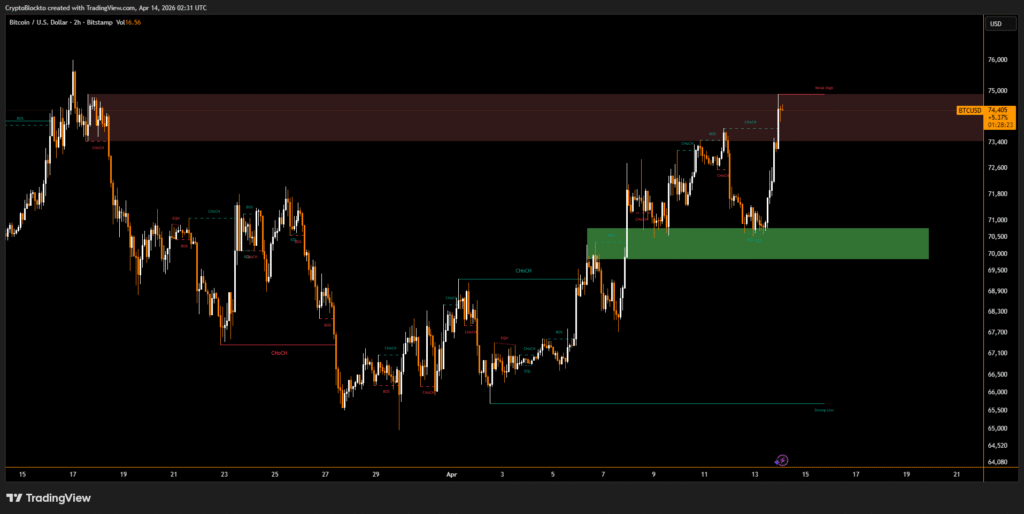
    $BTC 2h price chart

    Market sentiment reversed during Monday’s US session, with bitcoin rising more than 3% over 24 hours to trade near $73,400 at the close. Other major tokens including Ethereum, Solana, and XRP also moved higher, though with smaller gains. Crypto-linked equities advanced as well, with Circle up 11%, Gemini rising 9%, and MARA Holdings and Bullish each gaining over 8%.

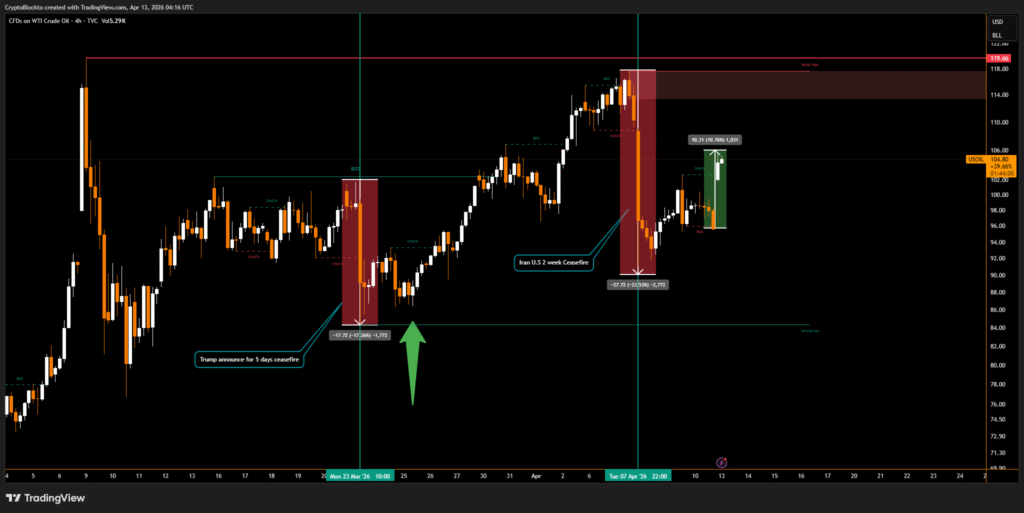
    In traditional markets, the Nasdaq rose 1.2%, while WTI crude oil retreated to about $97 per barrel after topping $105. Meanwhile, Strategy continued aggressive accumulation, buying 13,927 BTC for $1 billion via STRC preferred stock, as record $770 million trading volume signaled potential further purchases.
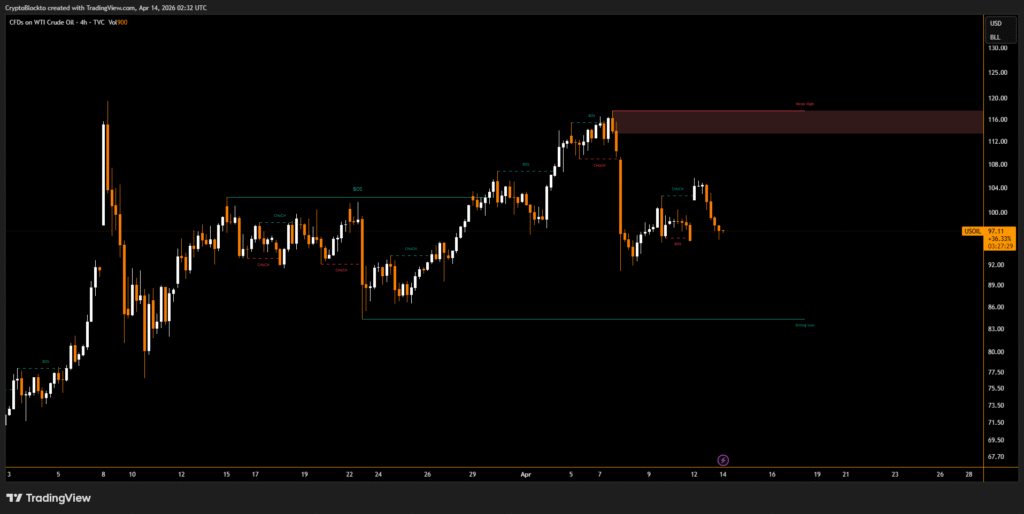
    Wti crude oil
    Disclaimer

    This content is for informational purposes only and does not constitute financial, investment, or legal advice. Cryptocurrency trading involves risk and may result in financial loss.


  • Michael Saylor’s Strategy Buys $1 Billion in Bitcoin, Holdings Reach 780,897 BTC

    Michael Saylor’s Strategy Buys $1 Billion in Bitcoin, Holdings Reach 780,897 BTC

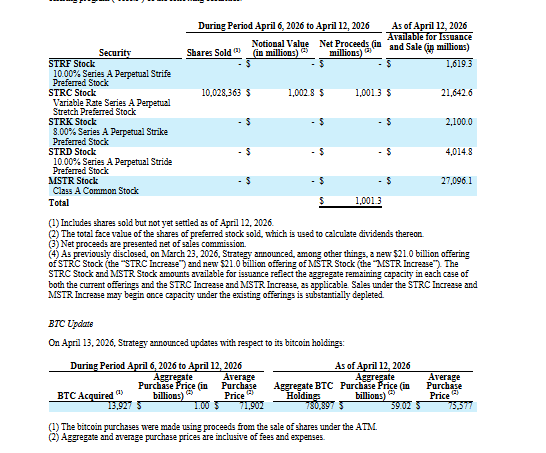
    Strategy (Michael Saylor), has purchased 13,927 Bitcoin for approximately $1 billion between April 6 and April 12, according to an SEC filing. The acquisition was made at an average price of $71,902 per BTC, marking one of the company’s largest weekly purchases of the year.

    Following the latest buy, Strategy’s total Bitcoin holdings have risen to 780,897 BTC, accumulated at an average purchase price of $75,577 per coin for a total cost of roughly $59 billion including fees. At current estimates, the stash is valued at about $55.4 billion, reflecting billions in unrealized losses, while still representing over 3.7% of Bitcoin’s fixed 21 million supply.

    SEC

    The purchases were funded through proceeds from at-the-market issuance of perpetual preferred stock, including STRC, part of Strategy’s broader capital raising framework. The company recently sold more than 10 million STRC shares, generating around $1 billion in proceeds, with tens of billions still available under existing ATM programs. These instruments form part of its wider “42/42” capital plan targeting $84 billion for future Bitcoin acquisitions.

    Ahead of the announcement, Saylor teased the move by posting “Think bigger,” signaling another large accumulation. He also reiterated that Strategy’s dividend obligations remain sustainable if Bitcoin outperforms its estimated breakeven growth rate. Despite concerns over valuation compression and declining market-to-net-asset ratios, analysts continue to view digital asset treasury companies as a lasting segment of the market.

    Disclaimer

    This content is for informational purposes only and does not constitute financial, investment, or legal advice. Cryptocurrency trading involves risk and may result in financial loss.
  • Bitcoin Faces Heavy Selling Pressure Above $70K as Profit-Taking Surges

    Bitcoin Faces Heavy Selling Pressure Above $70K as Profit-Taking Surges

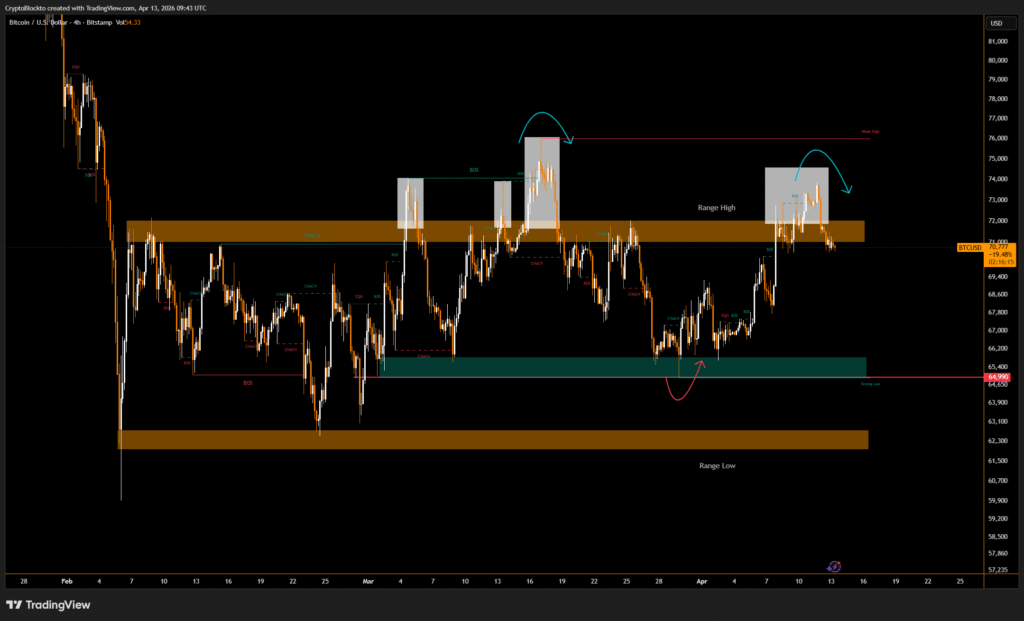
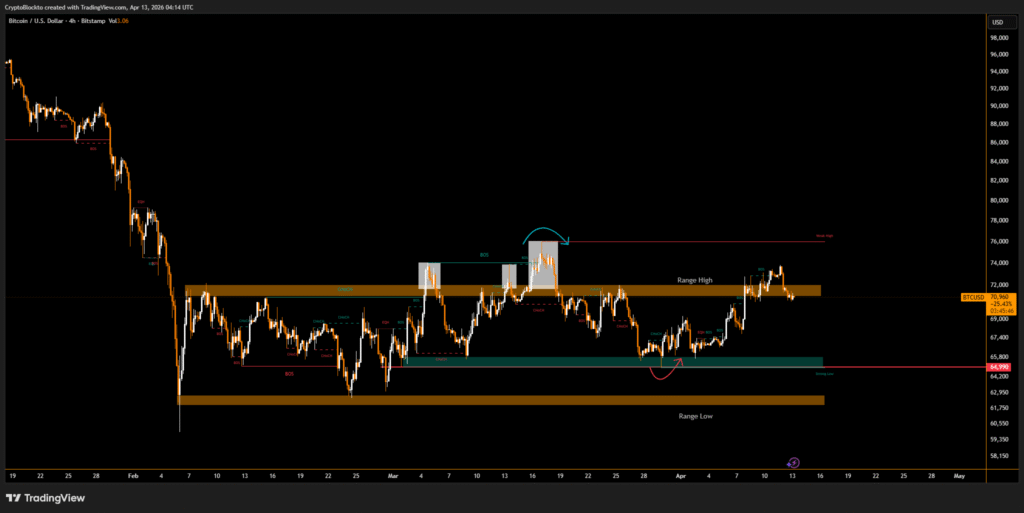
    Bitcoin is encountering intense selling pressure whenever prices move above the $70k level, with blockchain analytics data showing more than $20 million worth of BTC sold per hour during recent rallies. The consistent wave of profit-taking has created a ceiling that prevents sustained upward momentum, even during strong market attempts to push higher.

    $BTC 4h price chart

    Market behavior indicates that the $70,000–$80,000 range has evolved into a persistent distribution zone since February. Instead of buyers driving prices higher, many existing holders are using rallies as opportunities to lock in gains, leading to rapid pullbacks after each upward move.

    Recent price action highlights this pattern. Bitcoin briefly climbed to nearly $74,000 on Saturday before sliding back below $71,000, reflecting the difficulty of maintaining momentum in the face of continuous selling pressure.

    Geopolitical Tensions Add to Market Volatility

    External macro developments have also contributed to price weakness. The breakdown of U.S.–Iran peace talks in Islamabad triggered a rise in oil prices and weighed on U.S. stock futures, creating broader risk-off sentiment across financial markets. This macro-driven uncertainty added further pressure to Bitcoin during its latest rally attempt.

    Analysts suggest the current ceiling is not purely technical but behavioral. Thin liquidity in higher price zones allows relatively modest selling flows to move markets quickly. Until the pace of profit-taking declines below the $20 million-per-hour level, Bitcoin is likely to struggle to establish strong support above $70,000 and maintain sustained bullish momentum.

    Disclaimer

    This content is for informational purposes only and does not constitute financial, investment, or legal advice. Cryptocurrency trading involves risk and may result in financial loss.
  • Bitcoin Recovery Seen as Fragile as Iran War Fallout Expected to Dominate 2026 Markets

    Bitcoin Recovery Seen as Fragile as Iran War Fallout Expected to Dominate 2026 Markets

    Bitcoin (BTC) recovery remains fragile as geopolitical tensions tied to the ongoing Middle East conflict continue to pressure financial markets. If the conflict ends soon, its economic consequences are likely to dominate market sentiment throughout 2026, particularly during the second quarter. Puckrin said expectations for interest rate cuts remain uncertain, noting he does not expect reductions until late Q3 or Q4, if they occur at all.

    Bitcoin closing the week above $71,000 could signal continued upward momentum, though resistance remains near the $74,000 level, while the asset still trades below its 200-day exponential moving average.

    BTC faces resistance at the $74,000 level

    Inflation Pressures and Policy Uncertainty Weigh on Market Sentiment

    The ongoing conflict has contributed to rising inflation, according to the U.S. Bureau of Labor Statistics (BLS) Consumer Price Index report, reducing optimism around monetary easing in 2026. Interest rate decisions from the Federal Open Market Committee (FOMC) remain divided, with officials warning that persistent inflation above the 2% target could even lead to a rate hike.

    Market data from the CME FedWatch Tool indicates more than a 98% probability that the current 350–375 basis point target rate range will remain unchanged at the April 29 and June 17 meetings. Expectations shift later in the year, with about a 65% chance of holding rates steady at the July 29 meeting and a 33.6% probability of a 25-basis-point cut.

    Failed Negotiations and Naval Blockade Trigger Market Volatility

    Bitcoin previously climbed about 5.8% from April 6, briefly rising above $73,000, before retreating to around $71,000 on April 11 after failed negotiations between the United States and Iran. Analysts at Kobeissi Letter described the breakdown as a worst-case scenario for markets. Following the stalled talks, U.S. President Donald Trump ordered a naval blockade around the Strait of Hormuz, directing naval forces to intercept vessels paying tolls to Iran, a move that further intensified uncertainty across global markets.

    Disclaimer

    This content is for informational purposes only and does not constitute financial, investment, or legal advice. Cryptocurrency trading involves risk and may result in financial loss.
  • Bitcoin Falls to $70.6K as Oil Surges After US Hormuz Blockade Announcement

    Bitcoin Falls to $70.6K as Oil Surges After US Hormuz Blockade Announcement

    Geopolitical Tensions Trigger Crypto Dip and Oil Price Spike

    Bitcoin (BTC) fell to $70,623 on Sunday after the United States announced a naval blockade of the Strait of Hormuz following failed peace talks with Iran. The cryptocurrency initially dropped 1.9% to $71,686 after U.S. President Donald Trump confirmed the blockade in a Truth Social post, stating negotiations collapsed because Iran refused to end its nuclear weapons program, which he described as the only issue that “really mattered.”

    $BTC 4h price chart

    Crude oil jumped about 9.5% to $105 per barrel within 30 minutes of market opening, reflecting fears of supply disruptions tied to escalating regional tensions.

    Wti crude oil

    Strait of Hormuz Conflict Drives Market Volatility

    The dispute over control of the Strait of Hormuz, a route responsible for nearly one-fifth of global oil trade, has created significant financial market instability over the past six weeks. Oil markets have recorded their highest volatility since early 2022, when global energy markets were disrupted by Russia’s invasion of Ukraine.

    In earlier negotiations, Iran requested war reparations payments and the unfreezing of blocked financial assets, though these demands were not addressed in the U.S. response. Instead, the United States accused Iran of placing naval mines in the waterway and demanding toll payments, actions described as “world extortion.” U.S. naval forces were ordered to block vessels paying such tolls and remove the mines.

    Bitcoin Maintains Gains Since Conflict Began

    Despite recent declines, Bitcoin has risen about 7.4% to around $71,194 since the conflict escalated on Feb. 28, when a U.S. airstrike reportedly killed Iran Supreme Leader Ayatollah Ali Khamenei. The digital asset has continued to outperform the S&P 500 and gold during the same period.

    Disclaimer

    This content is for informational purposes only and does not constitute financial, investment, or legal advice. Cryptocurrency trading involves risk and may result in financial loss.

  • Bitcoin Miners Face Rising Costs and Strategic Shifts Ahead of 2028 Halving

    Bitcoin Miners Face Rising Costs and Strategic Shifts Ahead of 2028 Halving

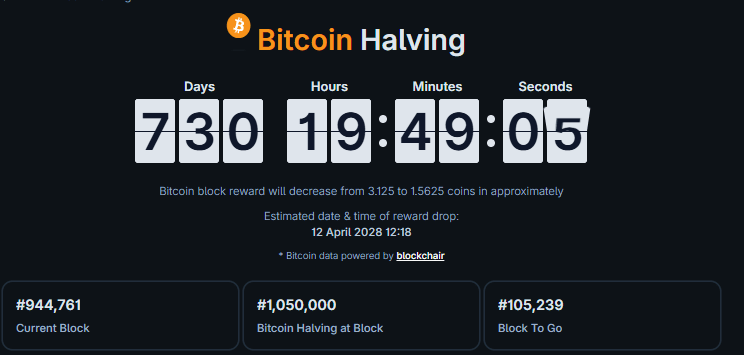
    Bitcoin miners are entering the run up to the April 2028 halving with significantly tighter margins than in previous cycles, as rising energy prices and higher operational costs reshape the sector. During the last halving in April 2024, block rewards were reduced from 6.25 BTC to 3.125 BTC, while the next event will cut rewards further to 1.5625 BTC per block, increasing pressure on profitability.

    Bitcoin Halving Countdown.: CoinGecko

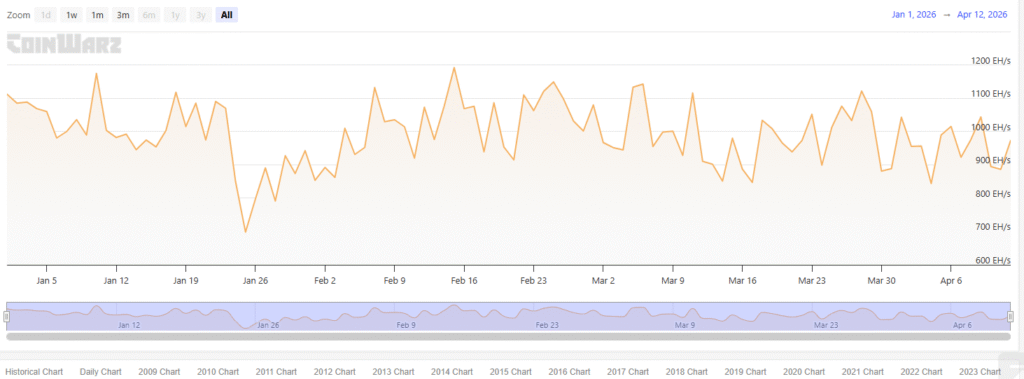
    Record network hashrates and more expensive power contracts are forcing mining firms to rethink strategies. Energy security has become a major concern following geopolitical disruptions, pushing companies to secure long-term electricity agreements across multiple regions rather than relying on short-term low cost tariffs.

    Bitcoin Hashrate 2026: CoinWarz

    Mining Firms Reduce Bitcoin Holdings to Strengthen Balance Sheets

    Several mining companies have already taken steps to strengthen finances ahead of the next halving cycle. MARA Holdings sold more than 15,000 BTC in March to reduce leverage, while Riot Platforms sold over 3,700 BTC in the first quarter. Cango also liquidated 2,000 BTC to repay debt, and Bitdeer reported zero Bitcoin holdings as of February 20.

    Industry leaders now view mining operations increasingly as energy and infrastructure businesses, exploring additional revenue streams such as grid services, heat reuse, and high-performance computing workloads to remain competitive.

    Disclaimer

    This content is for informational purposes only and does not constitute financial, investment, or legal advice. Cryptocurrency trading involves risk and may result in financial loss.
  • Bitcoin Shows Signs of Seller Exhaustion as Realized Losses Decline

    Bitcoin Shows Signs of Seller Exhaustion as Realized Losses Decline

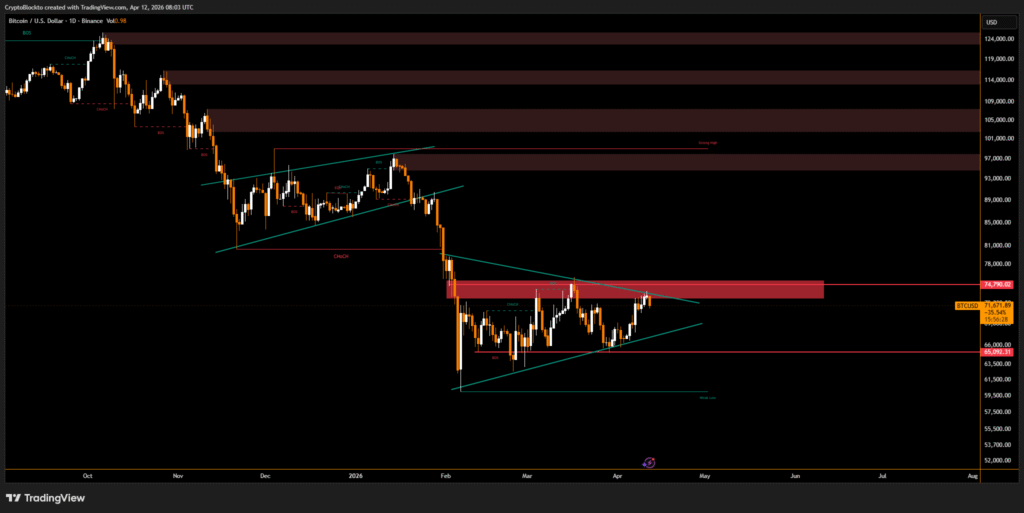
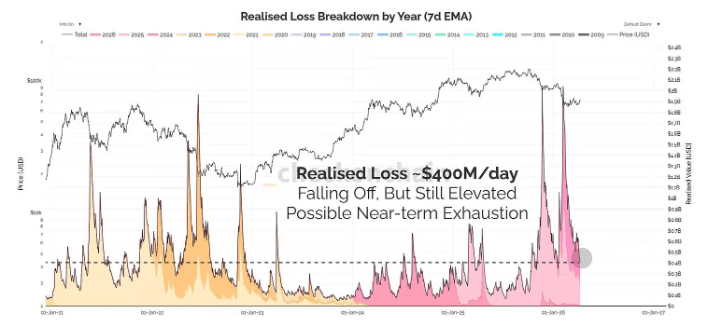
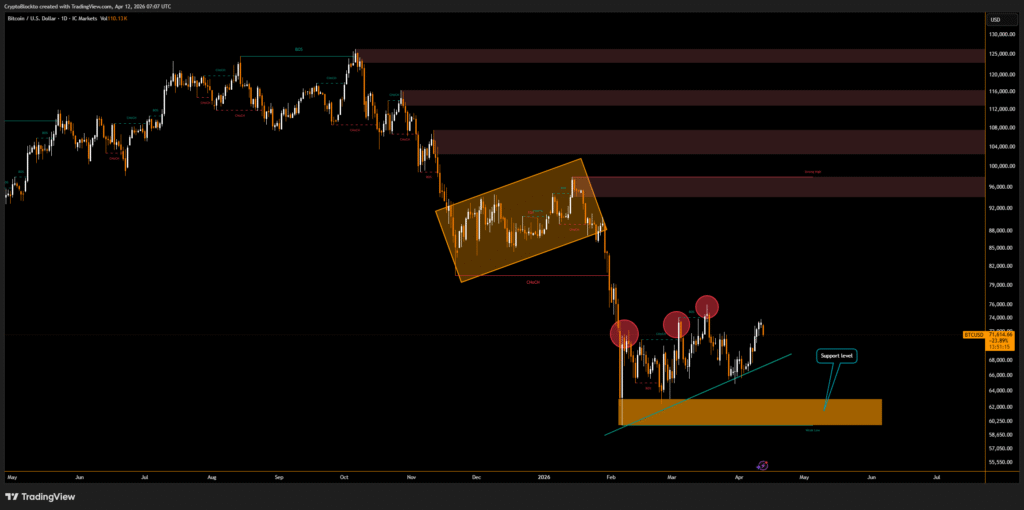
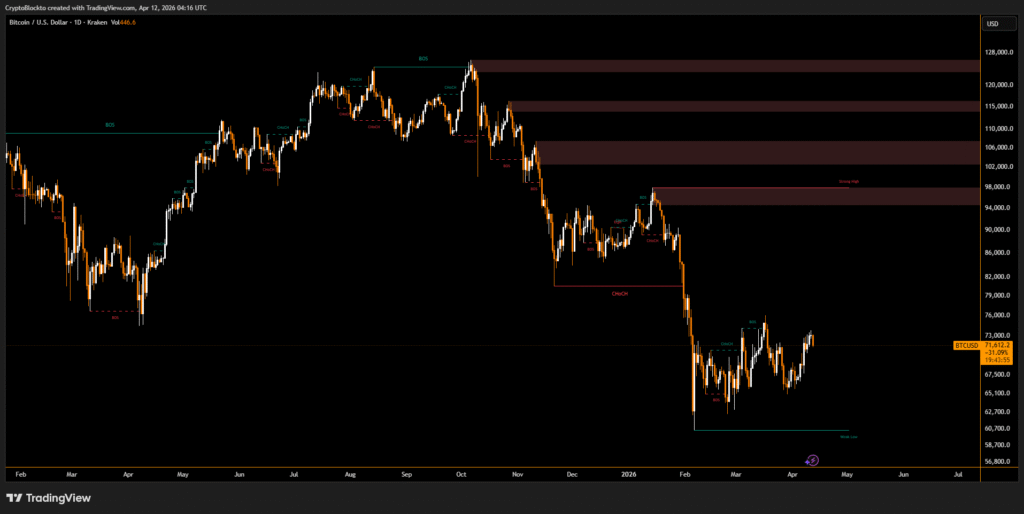
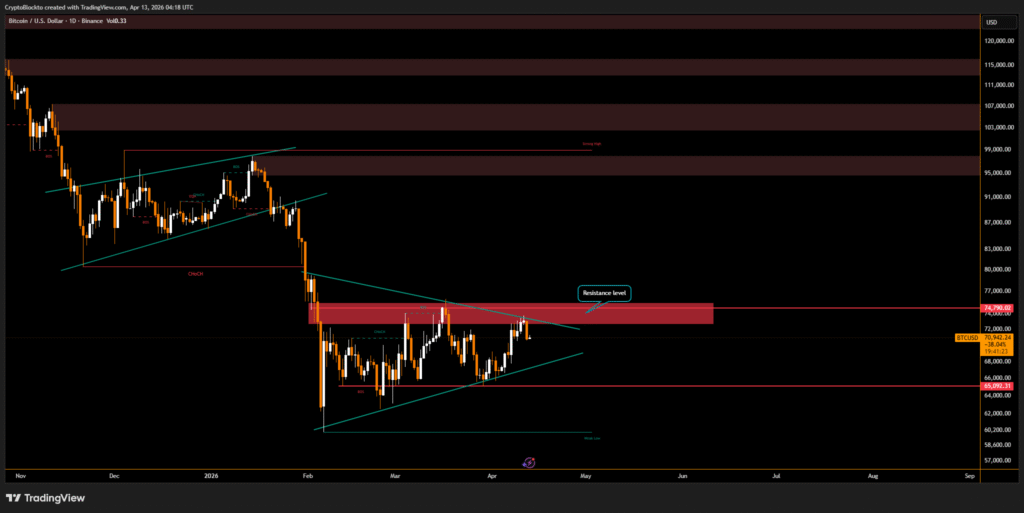
    Bitcoin may be entering a phase of seller exhaustion, as on chain data indicates a steady decline in realized losses and improving market balance. After reaching a low near $60k on Feb. 5, 2026, Bitcoin has spent more than two months consolidating, gradually moving toward the $70k range despite broader macroeconomic uncertainty and rising oil prices linked to geopolitical tensions.

    $BTC daily price chart

    Recent blockchain analytics show that realized losses have dropped to approximately $400 million per day, a sharp decrease from peak levels of nearly $2 billion recorded on Nov. 21, 2025, and again on Feb. 5, 2026. Those earlier spikes exceeded losses seen during the 2022 bear market, highlighting how intense selling pressure had been before the recent slowdown.

    Additional on-chain indicators suggest a gradual transition from heavy selling to renewed buying interest. The profit-to-loss ratio has risen to 1.4, its highest level since January 2026, indicating that realized profits are now exceeding realized losses.

    Seven day average realized profits currently stand near $300 million per day, close to 12-month lows, suggesting investors who purchased Bitcoin near $60,000 are beginning to secure modest gains.

    Together, declining realized losses and improving profitability metrics signal fading sell-side pressure, increasing the likelihood that Bitcoin is approaching a stabilization phase as market participants shift toward cautious accumulation.

    Disclaimer

    This content is for informational purposes only and does not constitute financial, investment, or legal advice. Cryptocurrency trading involves risk and may result in financial loss.

  • Bitcoin and Ether Approach Key Levels That Could Signal Market Trend Reversal

    Bitcoin and Ether Approach Key Levels That Could Signal Market Trend Reversal

    Bitcoin and Ether are approaching price levels that could indicate a potential trend reversal in the crypto market, according to macro analyst Jordi Visser. Despite growing sentiment that a bear market may continue through 2026, Visser believes a sustained recovery could begin if both assets cross key resistance levels.

    Jordi Visser spoke to Anthony Pompliano on Friday.: Anthony Pompliano

    Bitcoin moving above $76,000 and Ether rising beyond $2,400 would likely mark the start of a more durable upward move this year. At current levels, Bitcoin trading near $71,646 would need to gain approximately 6.1%, while Ether at around $2,214 would require an increase of roughly 8% to reach those thresholds.

    $BTC daily price chart

    Inflation Outlook and Recession Expectations Shape Market Sentiment

    Visser noted that persistent inflation could support alternative assets such as cryptocurrencies. He argued that investors may seek returns outside traditional equities if stock market growth remains limited. Recent data from the U.S. Bureau of Labor Statistics (BLS) showed the Consumer Price Index (CPI) increased 3.3% year-over-year in April, reinforcing expectations that inflation may remain elevated.

    Prediction market data also reflects shifting sentiment, with recession expectations for 2026 falling to 24%, down 10% over the past 30 days.

    Mixed Forecasts as Some Traders Expect Further Declines

    Not all analysts share an optimistic outlook. Veteran trader Peter Brandt suggested Bitcoin could still fall below its Feb. 6 yearly low of $60,000, possibly retesting levels seen during September or October 2026 before forming a long-term bottom.

    Visser, however, cautioned against rigid bull-versus-bear classifications, noting that market cycles often shift gradually rather than through clearly defined turning points.

    Disclaimer

    This content is for informational purposes only and does not constitute financial, investment, or legal advice. Cryptocurrency trading involves risk and may result in financial loss.
  • Crypto Market Recovery After October 2025 Crash Remains Fragile as Liquidity Stays Weak

    Crypto Market Recovery After October 2025 Crash Remains Fragile as Liquidity Stays Weak

    Bitcoin Orderbook Depth Shows Ongoing Liquidity Decline

    Six months after the Oct. 10, 2025 crypto flash crash, digital asset markets continue to show signs of fragility, with liquidity remaining well below pre crash levels. The October event wiped out a record $19 billion in leveraged positions, while several altcoins dropped between 40% and 80%, triggering widespread speculation about market maker losses and allegations of exchange-related disruptions.

    $BTC daily price chart

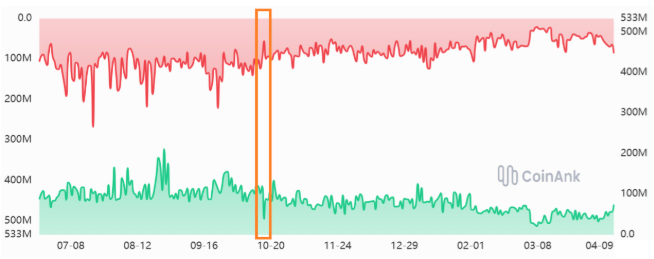
    Before the crash, Bitcoin orderbook depth typically ranged between $180 million and $260 million in September 2025, with about $90 million in active bids on most trading days. During the crash, technical disruptions and auto-deleveraging events caused liquidity to shrink rapidly. By mid-November 2025, orderbook depth stabilized near $150 million, but current levels rarely exceed $130 million, marking a 50% decline from September figures.’

    Aggregate Bitcoin spot +1% to -1% orderbook depth, USD

    Derivatives Activity and ETF Volumes Reflect Lower Risk Appetite

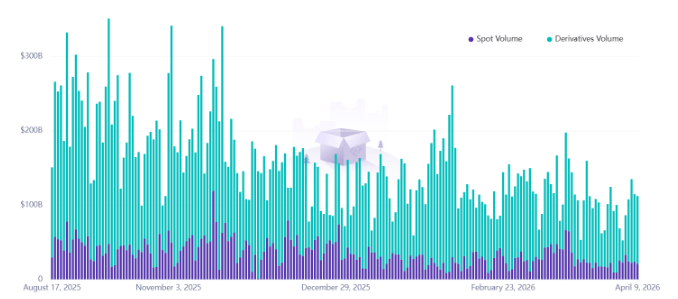
    Market conditions weakened further in February 2026, when Bitcoin orderbook depth fell below $60 million for nearly 10 days as prices struggled to hold $65,000. Cryptocurrency derivatives volumes have fluctuated between $40 billion and $130 billion over the past month, significantly below the $200 billion levels commonly recorded in September 2025.

    Total crypto trading volume, USD

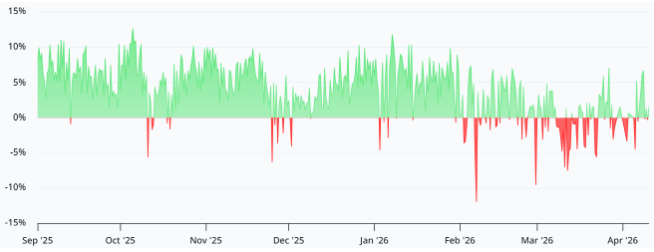
    Bitcoin perpetual futures funding rates remained stable through November 2025, but dropped sharply in February 2026, indicating weaker demand for leveraged long positions. Meanwhile, U.S.-listed spot Bitcoin ETFs recorded strong activity after the crash, reaching $11.5 billion daily volume by late November. However, ETF volumes declined again in early April 2026, with Bitcoin ETF trading falling below $3.3 billion per day and Ether ETF volumes averaging $1 billion, down from $2 billion in September 2025.

    Bitcoin perpetual futures annualized funding rate: Laevitas

    Overall, liquidity, derivatives participation, and ETF flows suggest that while the October crash did not permanently damage market structure, crypto markets in April 2026 remain less healthy than they were six months earlier, indicating cautious sentiment and limited bullish momentum.

    Disclaimer

    This content is for informational purposes only and does not constitute financial, investment, or legal advice. Cryptocurrency trading involves risk and may result in financial loss

  • Bitcoin and Major Cryptocurrencies Drop After U.S.–Iran Ceasefire Talks Fail

    Bitcoin and Major Cryptocurrencies Drop After U.S.–Iran Ceasefire Talks Fail

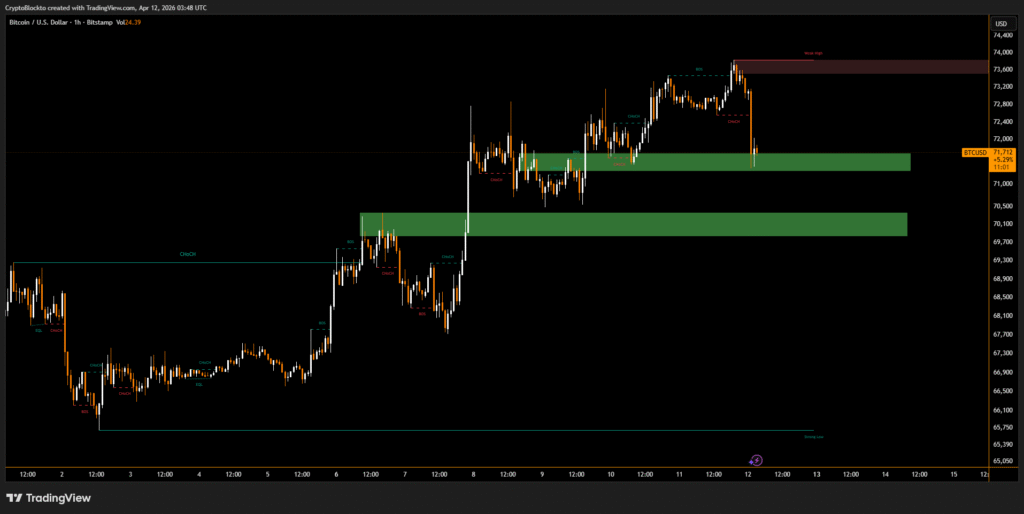
    Bitcoin and other major cryptocurrencies declined between 1.5% and 2% late Saturday after U.S. Vice President J.D. Vance confirmed that negotiations between the United States and Iran ended without reaching an extended ceasefire agreement. The talks took place in Pakistan after nearly six weeks of U.S. military operations against Iran, raising global market tensions.

    $BTC h1 price chart

    During a press conference following the daylong meeting, Vance stated that the two sides had “not reached an agreement,” emphasizing that the United States clearly outlined its red lines and areas where compromise was possible. A key sticking point involved Washington’s demand that Iran not pursue nuclear weapons or the tools needed to rapidly develop them.

    Ethereum, XRP and Crypto Market Index Also Decline

    Market reaction was immediate across digital assets. Bitcoin traded near $71,600, while Ether (ETH) dropped to about $2,200. XRP declined to roughly $1.33.

    Iran Response Highlights Ongoing Dispute Areas

    Esmaeil Baqaei, spokesperson for Iran’s Ministry of Foreign Affairs, stated that numerous messages and texts had been exchanged between both sides. He noted that discussions in the past 24 hours covered major issues including the Strait of Hormuz, nuclear concerns, war reparations, sanctions relief, and a complete end to hostilities in the region.

    Disclaimer

    This content is for informational purposes only and does not constitute financial, investment, or legal advice. Cryptocurrency trading involves risk and may result in financial loss