Category: Bitcoin news

  • BlackRock Bitcoin ETF Sees $269M Inflows as US Spot Funds Hit 5-Week High

    BlackRock Bitcoin ETF Sees $269M Inflows as US Spot Funds Hit 5-Week High

    BlackRock’s iShares Bitcoin Trust recorded $269.3 million in inflows on Thursday, marking its strongest single day performance in five weeks. The inflows helped reverse two consecutive days of net outflows across the 12 US spot Bitcoin ETFs, pushing total net inflows for the day to $358.1 million. The rebound signals renewed investor interest in Bitcoin exposure through regulated financial products.

    Fidelity and Morgan Stanley Also See Positive Demand

    Fidelity’s Wise Origin Bitcoin Fund attracted $53.3 million in inflows, ranking second among competitors. Morgan Stanley’s newly launched Bitcoin Trust (MSBT) added $14.9 million on just its second trading day, contributing to overall market momentum. Smaller inflows were also recorded by Bitwise and ARK 21Shares, while Franklin Templeton and VanEck products collectively added around $2 million.
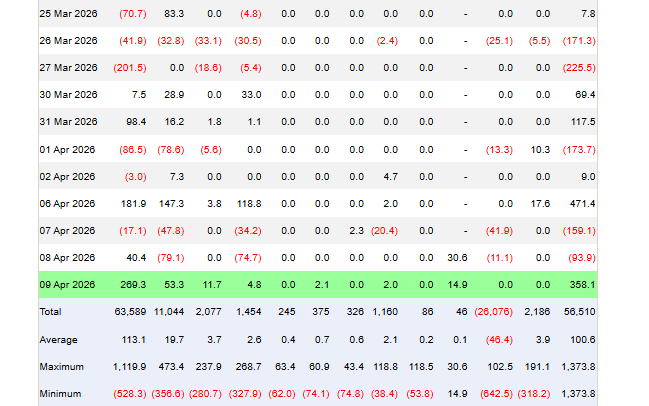
    Flow data for the US spot Bitcoin ETFs since March 25. Source: Farside Investors

    Institutional Interest Strengthens ETF Market Position

    BlackRock’s Bitcoin ETF alone has now accumulated roughly $1.5 billion in net inflows year-to-date, even as Bitcoin prices have experienced volatility, falling from a 2026 high near $97,000 to around $72,100. Analysts note that inflows suggest long-term accumulation strategies from institutional investors rather than short-term trading behavior.

    Combined ETF flows are now close to turning positive year-to-date, sitting just $80 million below earlier 2025 inflow levels. Market data indicates that sustained institutional participation continues to play a key role in stabilizing demand for Bitcoin-linked investment products.

    Disclaimer

    This content is for informational purposes only and does not constitute financial, investment, or legal advice. Cryptocurrency trading involves risk and may result in financial loss.

  • Bitcoin Struggles Below $73,000 as Market Faces Repeated Rejection After Ceasefire Rally

    Bitcoin Struggles Below $73,000 as Market Faces Repeated Rejection After Ceasefire Rally

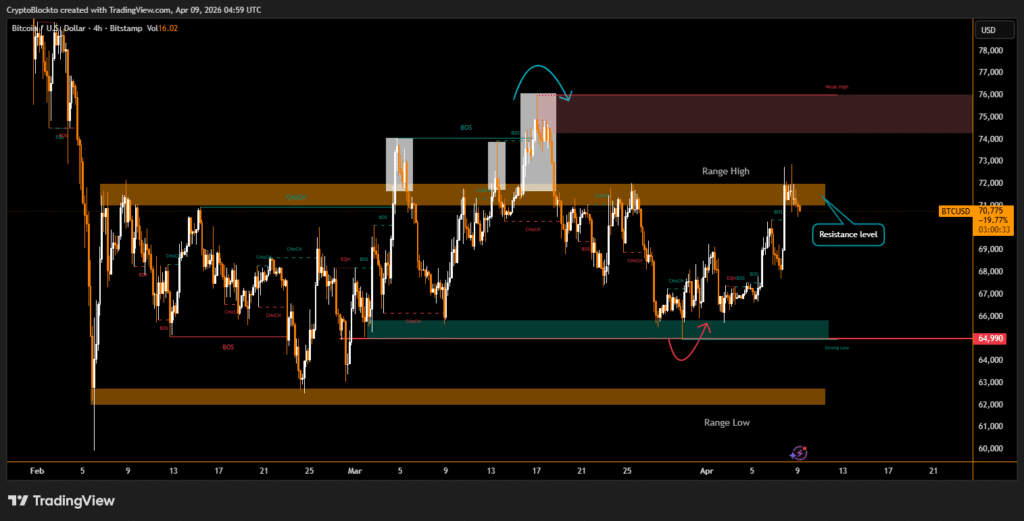
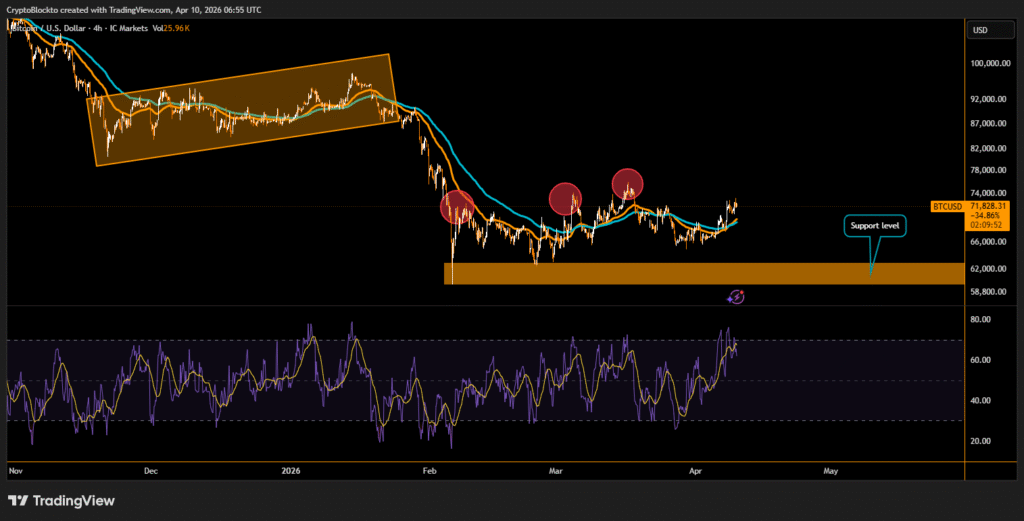
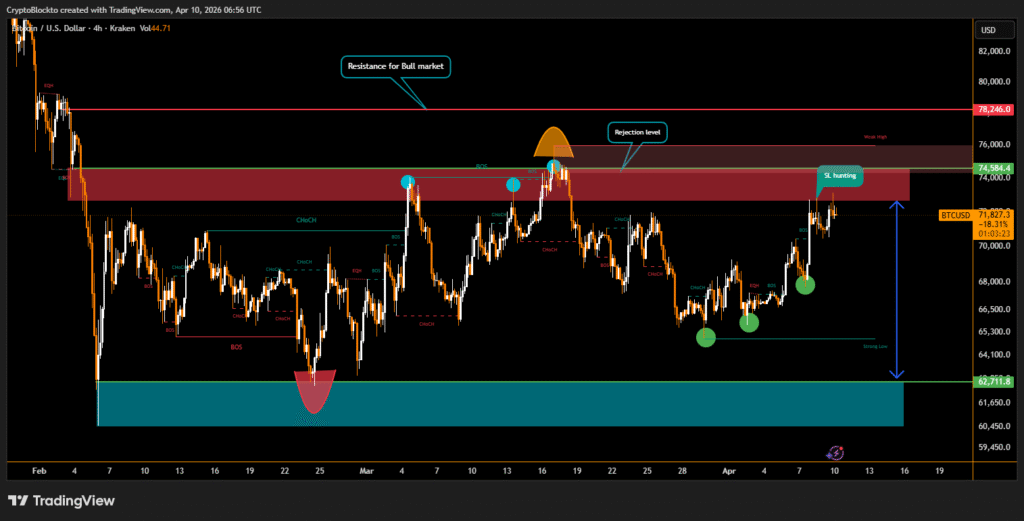
    Bitcoin continues to trade in a tight range, repeatedly failing to break above $73,000 for the third time since the Iran ceasefire announcement. The level has acted as a strong resistance zone throughout the conflict, rejecting every upward attempt since late February. After the latest rejection, Bitcoin slipped back to around $71,843, despite posting its strongest weekly performance during the conflict period.

    $BTC 4h price chart

    Market structure shows Bitcoin holding above its rising 50-day moving average, which has turned upward for the first time since tensions escalated. Even so, analysts say the asset remains trapped between $70,000 and $73,000, with no clear breakout confirmed.

    Analysts Identify $75K–$80K Zone as Bullish Confirmation Range

    Market analysts suggest Bitcoin must first break and hold above $75,000 to signal a renewed bullish phase. Sustained strength above $74,000 is needed before a move toward $80,000 becomes realistic.

    $BTC 4h price chart

    Separately, Mike Novogratz said Bitcoin would need to consolidate above $74,000 and then break $80,000 to confirm a stronger uptrend, potentially triggering renewed market optimism.

    Broader Crypto Market Also Range-Bound Amid Geopolitical Risk

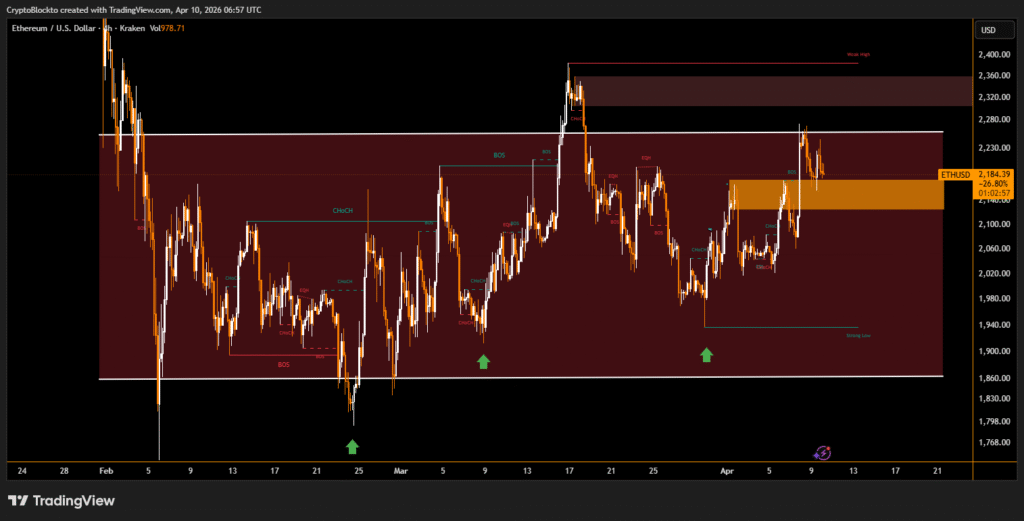
    Major altcoins remain mixed as Ethereum trades near $2,189, down slightly from recent highs and still inside a $2,000–$2,400 consolidation range. Other large tokens such as Solana, XRP, and Dogecoin posted modest weekly gains, while several altcoins including Algorand, Aptos, and Polkadot declined sharply, signaling rotation rather than new capital inflows.

    $ETH 4h price chart

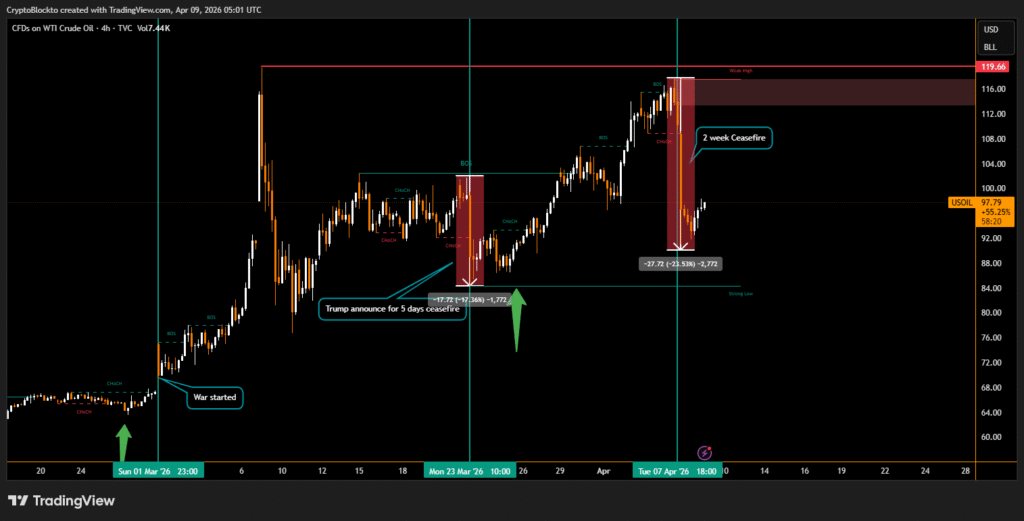
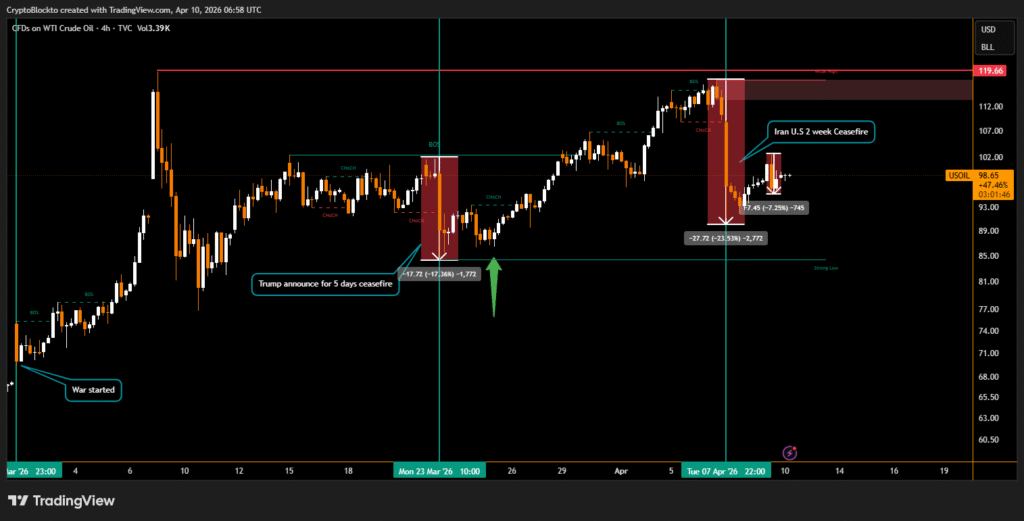
    Geopolitical uncertainty continues to weigh on sentiment as tensions around the fragile ceasefire persist and the Strait of Hormuz remains only partially reopened with operational constraints. Oil prices have rebounded above $98 after a sharp earlier drop.

    USOIL4h price chart

    Market Sentiment Improves but Key Level Holds

    The Fear and Greed Index has moved out of extreme fear territory for the first time in weeks, indicating improving sentiment. However, traders say failure to break $73,000 repeatedly reinforces it as a strong technical ceiling.

    Disclaimer

    This content is for informational purposes only and does not constitute financial, investment, or legal advice. Cryptocurrency trading involves risk and may result in financial loss.
  • Bitcoin Quantum-Safe Transaction Method Proposed Without Network Upgrade

    Bitcoin Quantum-Safe Transaction Method Proposed Without Network Upgrade

    A new proposal by Avihu Levy, chief product officer at StarkWare, outlines a method designed to make Bitcoin transactions resistant to quantum computing threats without requiring a soft fork or protocol upgrade. The concept, called Quantum Safe Bitcoin (QSB), aims to protect funds even against powerful quantum machines capable of running Shor’s algorithm, which is widely considered a major risk to traditional cryptographic systems.

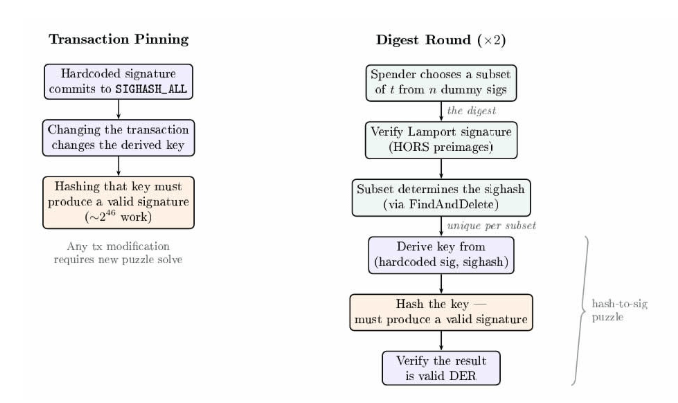
    Instead of relying solely on elliptic curve signatures, the system introduces a hash-based puzzle that requires senders to find inputs producing outputs that resemble valid signatures. This brute-force process is designed to remain secure even if quantum computers become capable of breaking current encryption methods.

    Far more computing power is required for QSB.: GitHub

    Costs, Limitations, and Industry Reactions

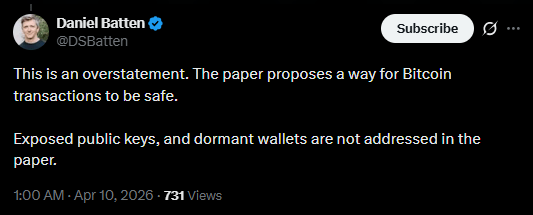
    The method comes with significant trade-offs. Each QSB transaction may cost between $75 and $150 in GPU computing power, making it suitable mainly for large-value transfers rather than everyday payments. Eli Ben-Sasson, StarkWare’s CEO, described the concept as a major step toward immediate protection. However, Daniel Batten, a Bitcoin ESG specialist, argued that it does not address vulnerable early wallets, including an estimated 1.7 million BTC stored in older P2PK addresses.

    Long-Term Quantum Security Debate Continues

    Researchers acknowledged that protocol-level upgrades remain the preferred long-term solution, especially because the approach does not cover systems such as the Lightning Network. Meanwhile, Olaoluwa Osuntokun, chief technology officer at Lightning Labs, introduced a quantum “escape hatch” prototype allowing users to verify wallet ownership using seed phrases without exposing them. A recent quantum research paper from Google has also intensified urgency around preparing Bitcoin for future cryptographic threats.

    Disclaimer

    This content is for informational purposes only and does not constitute financial, investment, or legal advice. Cryptocurrency trading involves risk and may result in financial loss.
  • Bitcoin Surges Above $72,000 as Middle East Ceasefire Optimism Lifts Markets

    Bitcoin Surges Above $72,000 as Middle East Ceasefire Optimism Lifts Markets

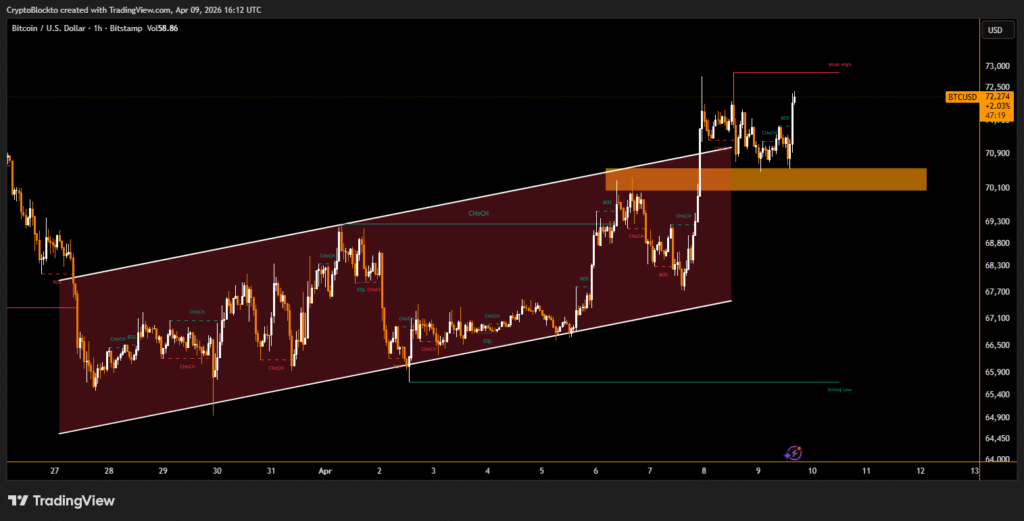
    Bitcoin climbed sharply above $72k, reversing earlier losses after renewed optimism surrounding a possible Middle East ceasefire. The rally followed reports that Israeli Prime Minister Benjamin Netanyahu signaled willingness to begin negotiations with Lebanon focused on disarming Hezbollah.

    $BTC h1 price chart

    Market sentiment improved further after reports indicated that US leadership had urged restraint in military actions, supporting previously announced ceasefire efforts. As geopolitical tensions eased, bitcoin gained nearly 3% intraday, reaching approximately $72,300, marking a 2% increase over 24 hours.

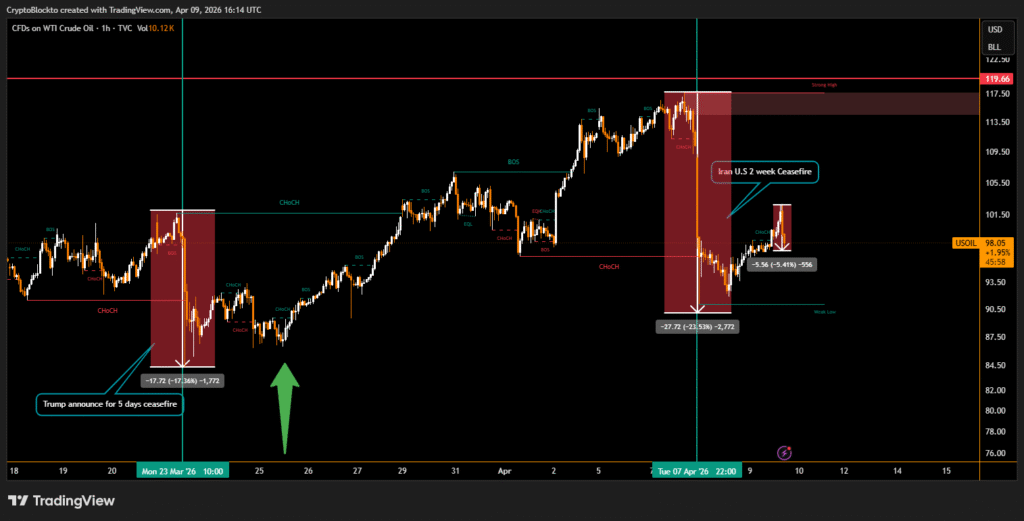
    Oil markets reacted simultaneously, with WTI crude retreating from an earlier peak near $103 per barrel to around $98.60, helping reduce inflation-related fears that had pressured risk assets earlier in the day.

    Cfds on WTI crude oil h1 price chart

    Bitcoin Diverges From Software Stocks Performance

    Bitcoin has also shown growing independence from traditional technology equities. Over the past month, the cryptocurrency advanced roughly 9%, while the iShares Expanded Tech-Software ETF (IGV) declined about 12%, highlighting diverging market trends.

    Disclaimer

    This content is for informational purposes only and does not constitute financial, investment, or legal advice. Cryptocurrency trading involves risk and may result in financial loss.
  • Bhutan Transfers $23 Million in Bitcoin as Holdings Drop 70% from Peak

    Bhutan Transfers $23 Million in Bitcoin as Holdings Drop 70% from Peak

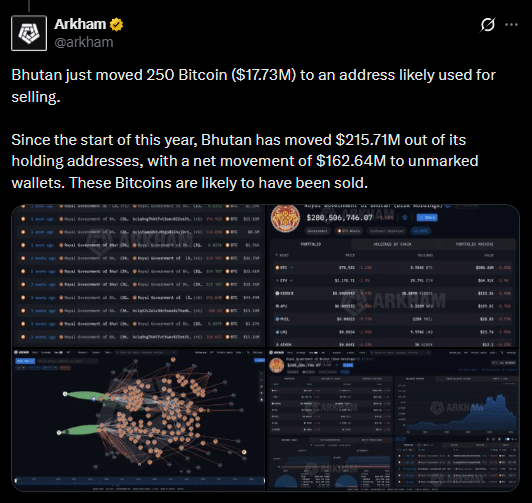
    The Royal Government of Bhutan recently moved approximately 319.7 BTC, valued at $22.68 million, across two wallets on Thursday, according to on-chain data. One recipient wallet reportedly routed funds for sales via Galaxy Digital and OKX, while the second was a new, unmarked address.

    Year-to-Date Bitcoin Transfers

    Arkham data shows Bhutan has transferred around $215.7 million worth of bitcoin from its holding addresses so far in 2026, with $162.6 million directed to unlabeled wallets. These transactions follow a broader trend, leaving Bhutan with 3,954 BTC, worth roughly $280.6 million. At its peak in October 2024, the country held nearly 13,000 BTC. Druk Holding and Investments Ltd., Bhutan’s sovereign wealth fund, manages these assets.

    Mining and Market Context

    Historically, Bhutan’s bitcoin accumulation came from hydropower-backed mining operations. However, reports suggest mining may have slowed or paused, as the last inflow exceeding $100,000 was over a year ago. Bitcoin prices fell 1.3% in the past 24 hours to $70,859, down from an all-time high of around $124,900 in October 2025.

    The exact purpose of the recent transfers remains unclear, though such activity is often linked to potential asset sales or portfolio adjustments by the sovereign fund.

    Disclaimer

    This content is for informational purposes only and does not constitute financial, investment, or legal advice. Cryptocurrency trading involves risk and may result in financial loss.

  • Bitcoin Depot Reports $3.7 Million Loss After Security Breach Hits Company Wallets

    Bitcoin Depot Reports $3.7 Million Loss After Security Breach Hits Company Wallets

    Unauthorized Access Leads to 50.9 BTC Theft From Corporate Wallets

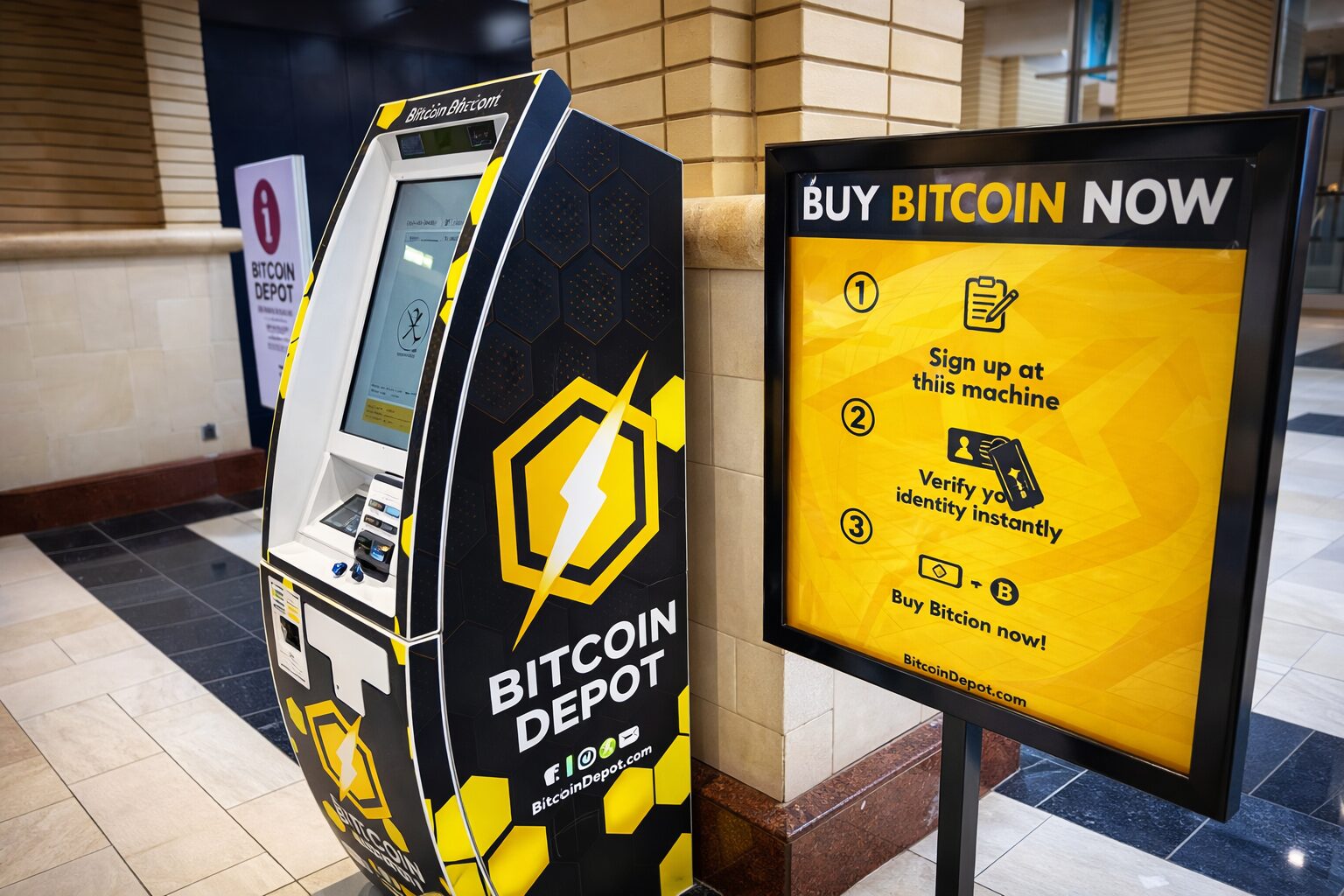
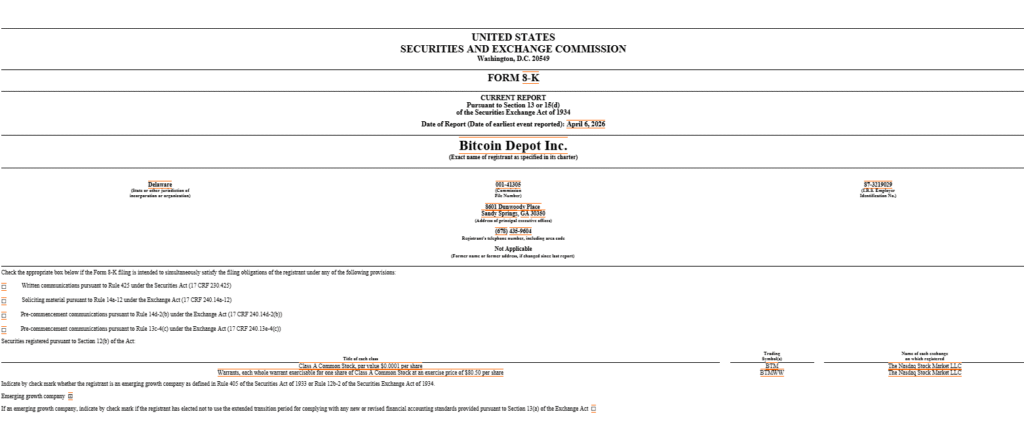
    Bitcoin ATM operator Bitcoin Depot has disclosed a cybersecurity incident that resulted in the loss of approximately $3.7 million worth of Bitcoin from its company controlled wallets. The Nasdaq listed firm confirmed that unauthorized access to its internal IT systems was detected on March 23 according to details shared in a regulatory filing.

    Investigators determined that the attacker gained control of login credentials connected to the company’s crypto settlement accounts. Following the breach, a total of 50.9 Bitcoin, valued at roughly $3.66 million at the time, was transferred out of the affected wallets.

    sec

    The company stated that its incident response procedures were activated immediately after detecting suspicious activity. External cybersecurity specialists were engaged to investigate the matter, and law enforcement agencies were notified. Bitcoin Depot emphasized that the breach did not affect its customer-facing platforms or expose user data, though a third-party investigation remains ongoing.

    Regulatory Pressure and Operational Changes Add to Company Challenges

    The security incident comes during a period of heightened regulatory scrutiny and operational adjustments for Bitcoin Depot. In a recent enforcement action, regulators in Connecticut suspended the company’s money transmission license after alleging that transaction fees exceeded the state’s 15% cap on more than 1,000 transactions. Authorities estimated that about $150,426 in excess fees were charged to more than 500 customers.

    Leadership changes have also taken place, with Alex Holmes recently appointed as chairman and chief executive officer. The company previously reported net income of $4.7 million for 2025, down from $7.8 million in 2024. Looking ahead, Bitcoin Depot expects revenue from its core business to decline by 30% to 40% in 2026, citing increased compliance demands and regulatory pressure as key factors.

    Despite these challenges, company shares closed higher in the latest trading session, although the stock remains significantly lower compared with its performance over the past six months.

    Disclaimer

    This content is for informational purposes only and does not constitute financial, investment, or legal advice. Cryptocurrency trading involves risk and may result in financial loss.
  • Bitcoin Holds Near $71K as Iran Ceasefire Tensions Trigger Crypto Market Pullback

    Bitcoin Holds Near $71K as Iran Ceasefire Tensions Trigger Crypto Market Pullback

    Bitcoin remained near the $71,000 level on April 9 as cryptocurrency markets pulled back following renewed uncertainty around the recently announced ceasefire between Iran and the United States. The two-week truce, which initially fueled a strong rally across global markets, began showing signs of strain less than 48 hours after its announcement.

    $BTC 4h price chart

    Bitcoin traded around $70,781, slipping about 0.6% over the past 24 hours but still holding a weekly gain of approximately 6.1%. The digital asset continues to move within a multi-month trading range between $65,000 and $73,000, with current price action testing the upper half of that zone.

    Iranian officials reported that three clauses of the ceasefire agreement had been breached, although specific details were not disclosed. Meanwhile, continued military activity in Lebanon and limited tanker movement through the Strait of Hormuz have increased concerns about the durability of the agreement.

    Altcoins Decline as Oil Prices Rebound Toward $97

    Major cryptocurrencies moved lower alongside Bitcoin as broader market sentiment weakened. Ether declined 2.6% to about $2,180 after leading earlier gains, while Solana dropped 3.1% to roughly $81.96. XRP fell 3% to around $1.33, and Dogecoin lost 3.4% to approximately $0.091. BNB remained comparatively stable near $600 but still recorded a 2.2% decline.

    Energy markets also reacted sharply to the geopolitical uncertainty. Brent crude oil rebounded roughly 2% to near $97 per barrel after experiencing a drop of more than 10% the previous day, reflecting renewed fears about supply disruptions linked to the Strait of Hormuz.

    Cfds on wti crude oil 4h price chart

    Global Markets Face Pressure From Rates and Geopolitical Uncertainty

    Beyond geopolitical developments, global financial markets are facing additional pressure from tightening monetary conditions. The Federal Reserve continues to warn about persistent inflation risks, reinforcing expectations that interest rates may remain elevated for an extended period.

    Despite the recent pullback, Bitcoin’s ability to hold above $70,000 following the earlier surge from around $67,000 to $72,700 is viewed by market observers as a constructive signal, indicating resilience even as geopolitical tensions remain unresolved.

    Disclaimer

    This content is for informational purposes only and does not constitute financial, investment, or legal advice. Cryptocurrency trading involves risk and may result in financial loss.
  • Bitcoin Has 3–5 Years to Prepare for Quantum Computing Threat, Bernstein Says

    Bitcoin Has 3–5 Years to Prepare for Quantum Computing Threat, Bernstein Says

    Advances in quantum computing could eventually challenge Bitcoin’s cryptographic security, but analysts believe the threat remains manageable rather than catastrophic. A recent research report by Bernstein, led by Gautam Chhugani, Mahika Sapra, Sanskar Chindalia, and Harsh Misra, described the quantum threat as a “manageable upgrade cycle” rather than an existential risk to the network.

    Quantum Computing Advances Shorten Security Timelines

    Recent breakthroughs, including research showing reduced resource requirements to break modern encryption, have accelerated projections for quantum related risks. However, building cryptographically relevant quantum computers (CRQCs) capable of breaking Bitcoin encryption still faces major technical and financial hurdles.

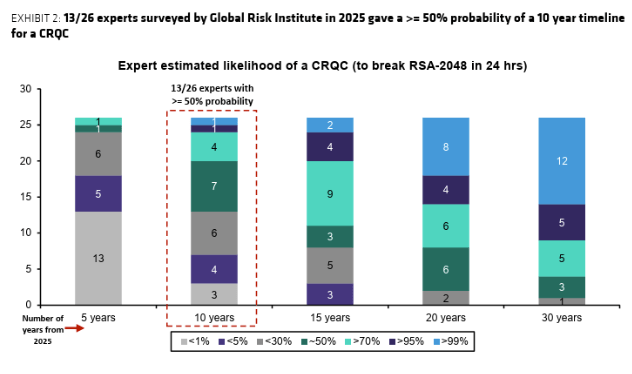
    Quantum experts generally give a 10-year timeline for cryptographically relevant quantum computers (CRQCs), or machines capable of breaking today’s encryption.

    Bernstein estimates the cryptocurrency industry has roughly three to five years to prepare for post-quantum cryptography, giving developers time to implement upgrades through Bitcoin’s open-source consensus process.

    Legacy Wallets Face the Highest Quantum Risk

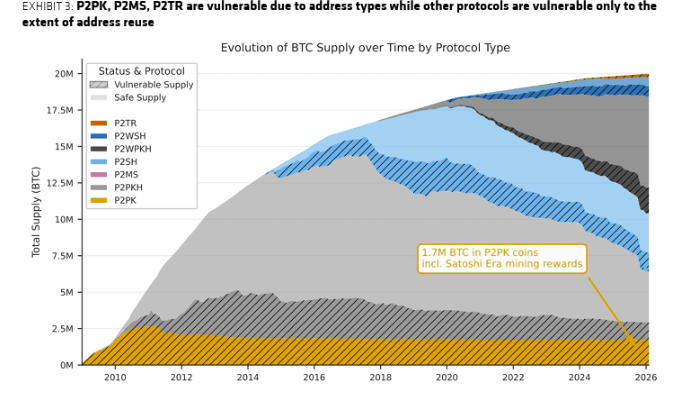
    The report highlights that vulnerabilities are concentrated in older wallets, particularly those using pay-to-public-key (P2PK), pay-to-multisig (P2MS), and pay-to-Taproot (P2TR) address formats. Approximately 1.7 million BTC, including an estimated 1.1 million BTC linked to Satoshi Nakamoto, remain stored in early P2PK addresses, where public keys are permanently exposed.

    Bernstein identifies P2PK, P2MS and P2TR address types as the most vulnerable to quantum risks

    Bitcoin Mining Remains Secure

    Despite concerns around wallet encryption, Bitcoin’s mining process, which relies on SHA-256 hashing, is not considered significantly vulnerable to quantum attacks. Analysts believe improved wallet standards and reduced address reuse will play a key role in strengthening long-term network security.

    Disclaimer

    This content is for informational purposes only and does not constitute financial, investment, or legal advice. Cryptocurrency trading involves risk and may result in financial loss.

  • Quantum Computing Threat to Bitcoin Seen as Real but Manageable, Says Bernstein

    Quantum Computing Threat to Bitcoin Seen as Real but Manageable, Says Bernstein

    Growing advances in quantum computing are raising concerns about Bitcoin’s long term cryptographic security, but analysts say the threat remains manageable rather than immediate. A recent report from Bernstein, led by analyst Gautam Chhugani, noted that while timelines are shortening, Bitcoin still has time to adapt through technical upgrades.

    Quantum Computing Advances Accelerate Crypto Risk Timeline

    Quantum computing operates using qubits, which can exist in multiple states simultaneously through superposition and entanglement, allowing complex calculations to be processed faster than classical computers.

    Recent breakthroughs, including reduced qubit requirements reported by Google Quantum AI, suggest encryption vulnerabilities may emerge sooner than previously expected. Systems such as elliptic curve encryption, widely used in crypto wallets, could eventually be weakened by sufficiently powerful quantum machines.

    Legacy Wallets Face Higher Exposure

    The report highlighted that risk is concentrated in roughly 1.7 million BTC stored in older legacy wallets, while newer wallet practices reduce vulnerability. Importantly, Bitcoin mining operations, which rely on SHA-based hashing, are considered largely secure even under advanced quantum scenarios.

    Bernstein estimates the crypto industry has three to five years to transition toward post quantum cryptography, including updated wallet standards, reduced address reuse, and regular key rotation. Researchers also noted that quantum-based mining attacks would require energy output comparable to a star, reinforcing the view that the threat is significant but not existential.

    Disclaimer

    This content is for informational purposes only and does not constitute financial, investment, or legal advice. Cryptocurrency trading involves risk and may result in financial loss.
  • Bitcoin Dip Buyers Accumulate 850,000 BTC Between $60K and $70K

    Bitcoin Dip Buyers Accumulate 850,000 BTC Between $60K and $70K

    Recent blockchain data indicates that Bitcoin buyers have accumulated nearly 850,000 BTC in the $60,000 to $70,000 price range, signaling strong demand during recent dips below $70,000.

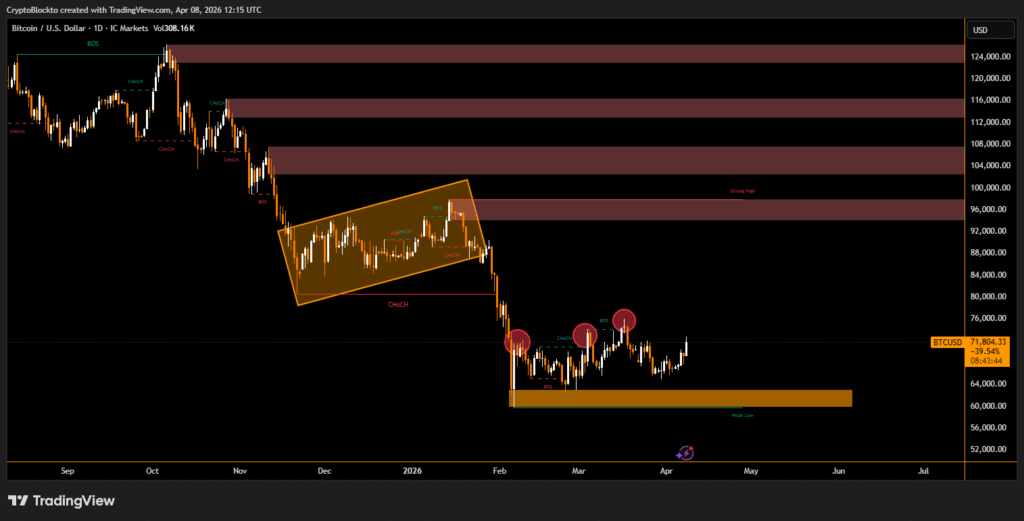
    $BTC daily price chart

    Supply Concentration Signals Market Floor

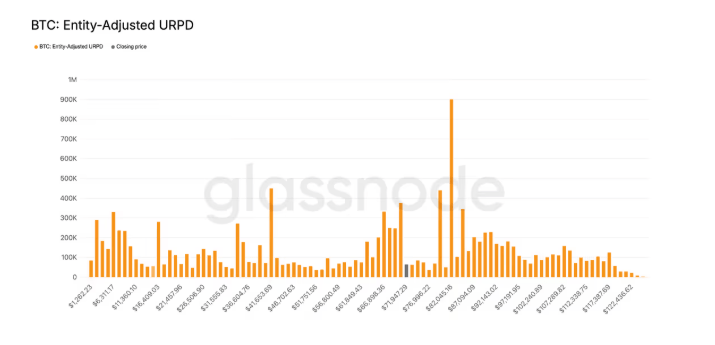
    According to the Realized Price Distribution (URPD) metric, the total amount of BTC last moved in this range now stands at 1,845,766 BTC, up from 1,001,491 BTC on January 1, representing a gain of 844,275 BTC. This accounts for roughly 9.23% of Bitcoin’s circulating supply, suggesting that valuations below $70,000 may act as a strong support level, as sellers are likely reluctant to sell below their acquisition price.

    Potential Price Movement Above $70K

    The supply above $70,000 is comparatively thin, with only 400,000 BTC held between $70,000 and $80,000. This “air gap” may allow for rapid price movements or consolidation in that range. Following the temporary U.S.-Iran ceasefire, Bitcoin rebounded above $70,000, reflecting resilience relative to traditional risk assets, including oil and stocks. Analysts note that this dip buying activity demonstrates continued confidence among investors, anchoring a significant portion of supply and providing a potential floor for future price action.

    Disclaimer

    This content is for informational purposes only and does not constitute financial, investment, or legal advice. Cryptocurrency trading involves risk and may result in financial loss.