Category: News

  • Warren Accuses SEC Chair Atkins of Misleading Congress Over Enforcement Data

    Warren Accuses SEC Chair Atkins of Misleading Congress Over Enforcement Data

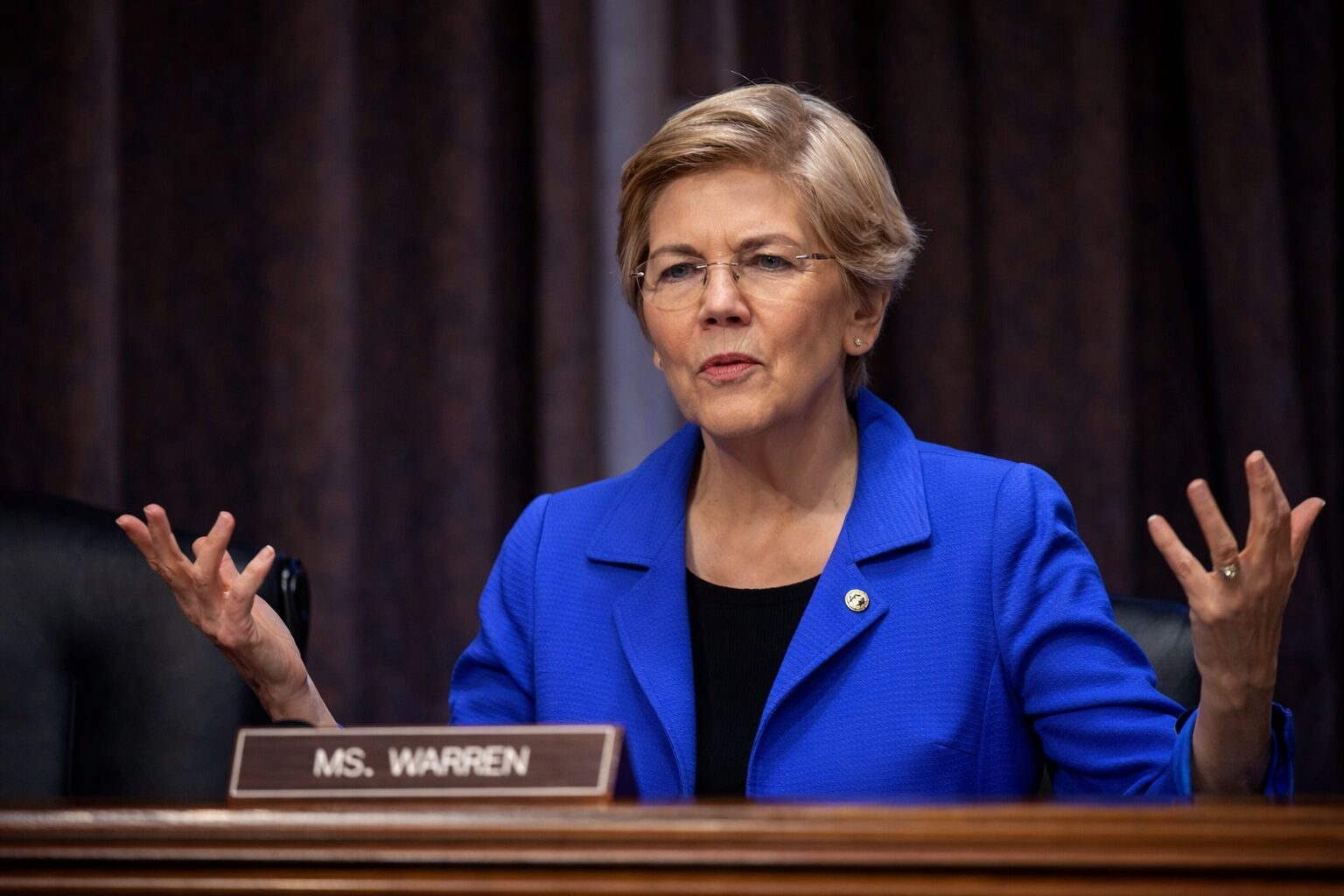
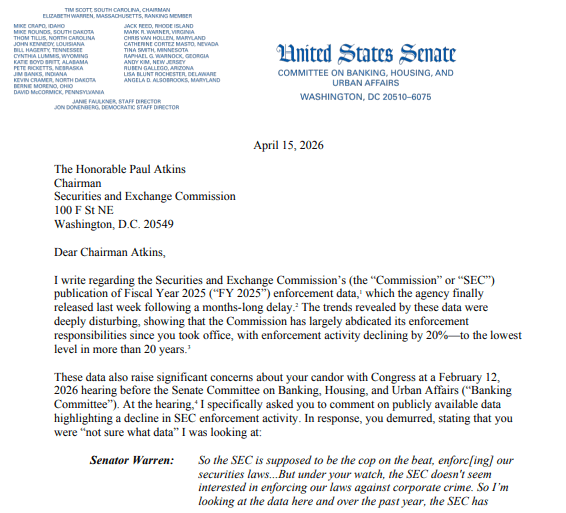
    US Senator Elizabeth Warren has accused Paul Atkins, head of the U.S. Securities and Exchange Commission, of potentially misleading Congress regarding the agency’s enforcement record. In a formal letter dated Wednesday, Warren said recently released enforcement data for fiscal year 2025 raised serious concerns about statements made by Atkins during a February congressional hearing.

    According to the newly published figures, the number of enforcement actions initiated by the SEC fell to its lowest level in the past decade. Warren noted that during the February 12 hearing, Atkins said he was uncertain about the data she referenced when she questioned him about declining enforcement activity.
    Crypto Enforcement Rollbacks Draw Criticism

    Warren described the enforcement slowdown as “deeply disturbing,” arguing that the agency has significantly reduced oversight responsibilities under recent policy shifts. She also pointed to the rollback of several enforcement cases against cryptocurrency companies, many of which were originally launched during the previous administration.
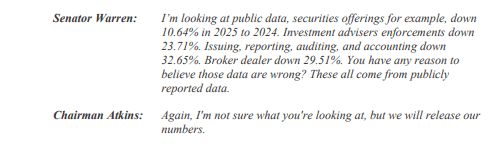
    An excerpt from Elizabeth Warren’s letter to Paul Atkins claiming she gave him an opportunity “to correct the record” on SEC enforcement.: SBC

    The senator stated that Atkins’ earlier response now appears misleading, suggesting he may have attempted to cast doubt on data that clearly showed declining enforcement activity. She emphasized that the hearing occurred more than four months after the end of fiscal year 2025, making the lack of clarity particularly concerning.

    SEC Asked to Respond by Late April

    Warren’s letter includes multiple questions seeking clarification on whether Atkins was aware of the enforcement trends at the time of his testimony. She also requested a detailed explanation for the sharp drop in enforcement actions recorded by the agency.

    The SEC chair has been asked to provide formal responses by April 28. As of now, the regulatory body has not publicly commented on the allegations or the concerns raised in the letter.

    Disclaimer

    This content is for informational purposes only and does not constitute financial, investment, or legal advice. Cryptocurrency trading involves risk and may result in financial loss.

  • Trump Sets April 22 Deadline for Iran Deal, Warns Bombing Could Resume

    Trump Sets April 22 Deadline for Iran Deal, Warns Bombing Could Resume

    April 22 Deadline Raises Risk of Renewed US Airstrikes

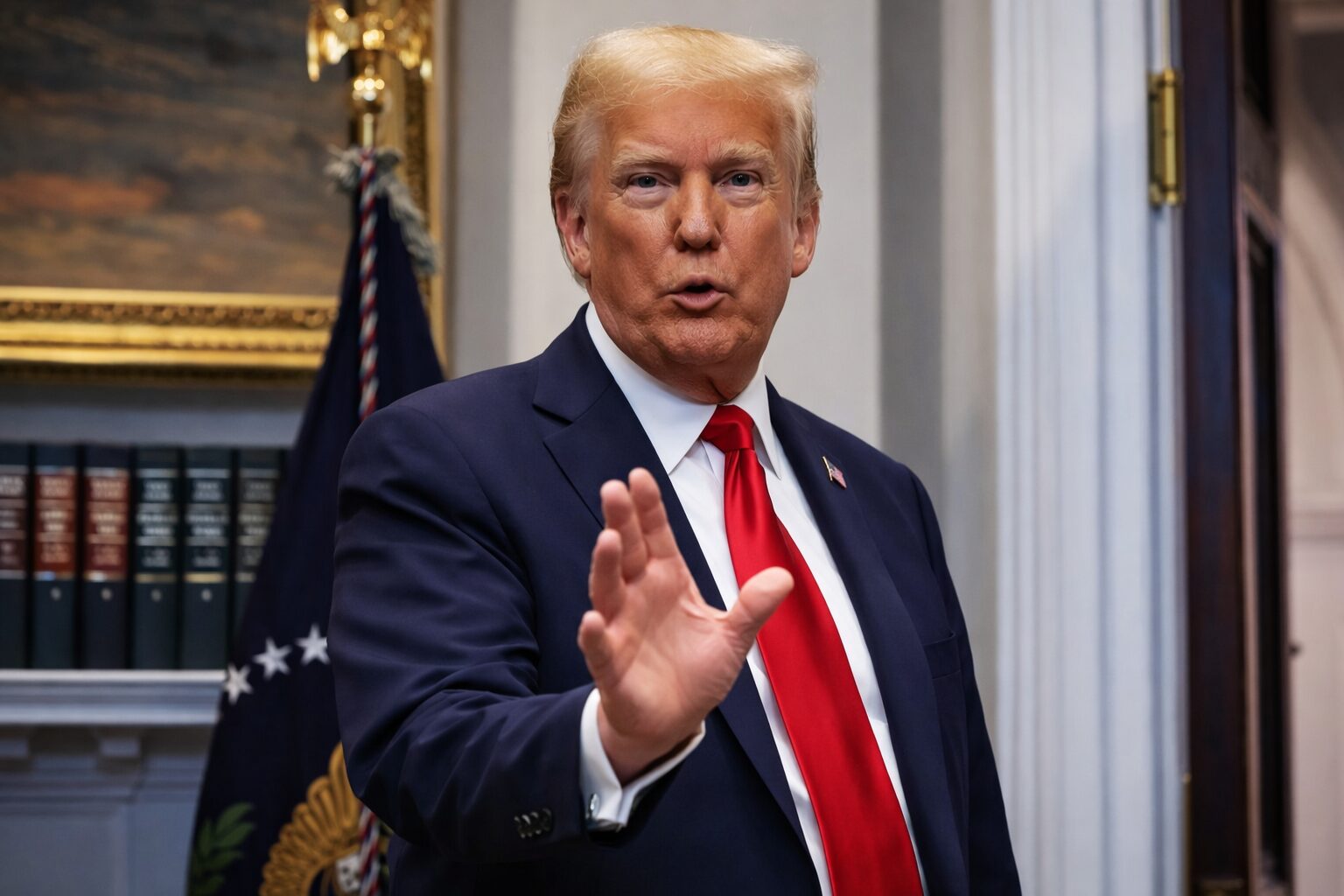
    US President Donald Trump has set April 22 as a deadline for reaching a long-term agreement with Iran, warning that American bombing operations could resume if negotiations fail. The ultimatum comes as a fragile two-week ceasefire approaches its end, increasing pressure on both sides to reach a resolution.

    Trump confirmed that preventing Iran from developing a nuclear weapon remains the top priority and stressed that the United States will maintain its blockade of Iranian ports during negotiations. He stated that failure to reach a deal would leave Washington with few alternatives, highlighting the high-stakes nature of the ongoing diplomatic efforts.

    Nuclear Dispute and Port Blockade Stall Negotiations

    Negotiations remain stalled due to major disagreements over Iran’s nuclear stockpile and the continuing US blockade. Iranian officials have rejected proposals to transfer enriched uranium abroad, while US leaders insist that uranium control is essential for long-term security.

    Iran’s parliamentary leadership has warned that the Strait of Hormuz may not remain open if the blockade continues. Pakistan has been involved in mediation efforts, but no confirmed breakthrough has been announced as talks continue under tight deadlines.

    Global Oil Markets and Regional Stability at Risk

    The ongoing tensions have already affected global energy markets, with disruptions around the Strait of Hormuz driving oil price volatility and raising inflation concerns worldwide. Shipping companies remain cautious due to reported security threats and maritime restrictions.

    If an agreement is reached before April 22, it could lead to phased peace measures and gradual easing of restrictions. However, failure to secure a deal could result in renewed airstrikes and expanded naval operations, increasing the risk of broader regional conflict and economic disruption.

    Disclaimer

    This content is for informational purposes only and does not constitute financial, investment, or legal advice. Cryptocurrency trading involves risk and may result in financial loss.
  • Iran Considers Bitcoin Strategic Asset While USDt Dominates Oil Toll Payments

    Iran Considers Bitcoin Strategic Asset While USDt Dominates Oil Toll Payments

    Iran Adopts Bitcoin as Strategic Payment Option for Oil Transit

    Iran’s decision to include Bitcoin as a payment method for oil vessels passing through the Strait of Hormuz highlights its growing role as a strategic financial tool. According to Sam Lyman, head of research at the Bitcoin Policy Institute, the move reflects Bitcoin’s censorship-resistant nature and its ability to function without centralized control.

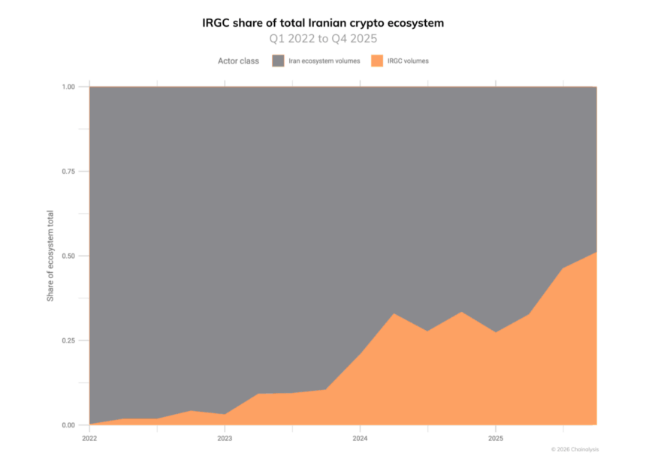
    Transactions carried out by the Iranian Revolutionary Guard Corps account for nearly half of the total crypto market volume in Iran.: BPI

    He explained that Bitcoin was selected because it cannot be easily frozen or blocked by foreign authorities, making it attractive for transactions exposed to sanctions pressure. Iran currently accepts toll payments in Chinese yuan, US dollar-pegged stablecoins and Bitcoin. However, there has been no confirmed onchain evidence showing that Bitcoin has yet been used for actual toll settlements.

    USDt Stablecoins Continue to Dominate Iran Crypto Transactions

    Despite Bitcoin’s strategic appeal, US dollar backed stablecoins, particularly USDt, remain the dominant digital payment method within Iran’s financial activity. Reports indicate that Iran has moved nearly $3 billion worth of cryptocurrency since 2022, with the majority conducted using stablecoins rather than Bitcoin.

    Authorities have managed to freeze approximately $600 million in crypto-linked assets during that period, leaving about $2.4 billion successfully transferred. Analysts suggest that stablecoins remain widely used despite potential wallet-freezing risks, as their liquidity and global acceptance make them practical for large-scale payments.

    Disclaimer

    This content is for informational purposes only and does not constitute financial, investment, or legal advice. Cryptocurrency trading involves risk and may result in financial loss.

  • $292 Million Kelp DAO Exploit Becomes Largest DeFi Hack of 2026

    $292 Million Kelp DAO Exploit Becomes Largest DeFi Hack of 2026

    Kelp DAO Bridge Attack Drains 116,500 rsETH Across 20 Chains

    A major security breach has struck the decentralized finance sector after an attacker drained 116,500 rsETH tokens, valued at roughly $292 million, from Kelp DAO’s cross-chain bridge. The stolen amount represents about 18% of the token’s circulating supply, making it the largest DeFi exploit recorded in 2026 so far.

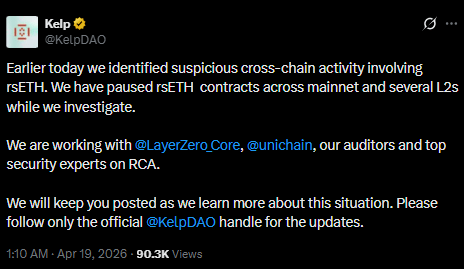
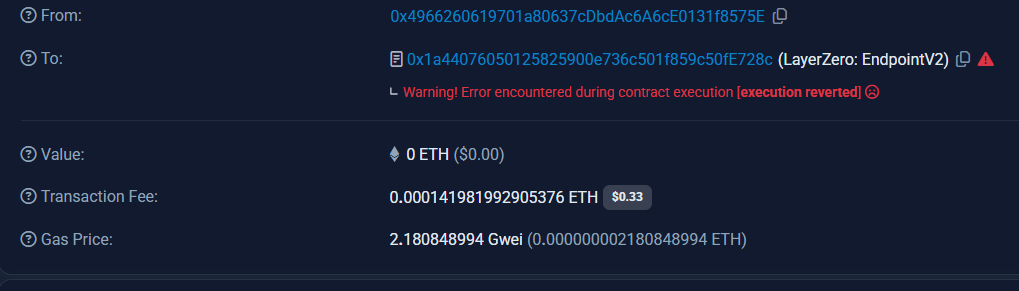
    The attack targeted a LayerZero powered bridge used to move rsETH across more than 20 blockchain networks. Investigators said the attacker manipulated the cross chain messaging system, making the bridge believe it had received a valid transaction request from another network. This triggered the release of funds to an address controlled by the attacker.

    Kelp DAO responded by freezing core contracts within 46 minutes of detecting the exploit, successfully blocking two additional attempts that aimed to withdraw another 40,000 rsETH.

    DeFi Platforms Freeze Markets as rsETH Backing Concerns Grow

    The incident triggered widespread defensive actions across major decentralized platforms. Lending protocols including Aave, SparkLend and Fluid suspended rsETH-related markets to limit exposure and prevent further losses. The freeze followed concerns that the drained bridge held reserves backing wrapped versions of rsETH on multiple layer-2 networks.

    Because those reserves supported tokens across chains such as Base, Arbitrum and Scroll, the loss raised uncertainty about whether wrapped assets remain fully backed. Market pressure increased as investors monitored redemption activity and liquidity risks.

    The exploit adds to a growing series of decentralized finance attacks in recent weeks, intensifying concerns about cross-chain bridge security and systemic risks across interconnected blockchain ecosystems.

    Disclaimer

    This content is for informational purposes only and does not constitute financial, investment, or legal advice. Cryptocurrency trading involves risk and may result in financial loss.
  • Poland Parliament Fails Again to Override Presidential Veto on Crypto Regulation Bill

    Poland Parliament Fails Again to Override Presidential Veto on Crypto Regulation Bill

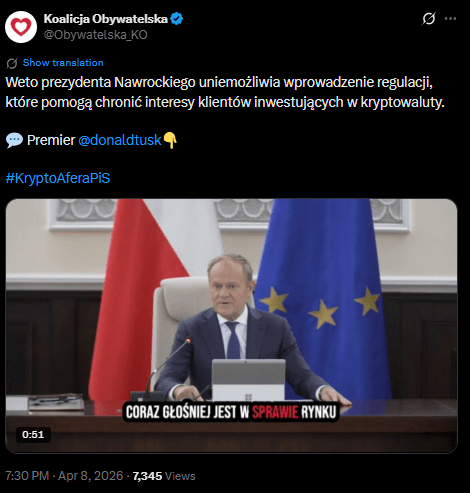
    Poland’s parliament has once again failed to overturn a presidential veto blocking a major cryptocurrency regulation bill, prolonging uncertainty around digital asset oversight in the country. During a vote held on Friday, lawmakers were unable to secure the required 263 votes to override the veto issued by President Karol Nawrocki. Reports indicate that 243 members of parliament voted against the veto, while 191 supported the attempt.

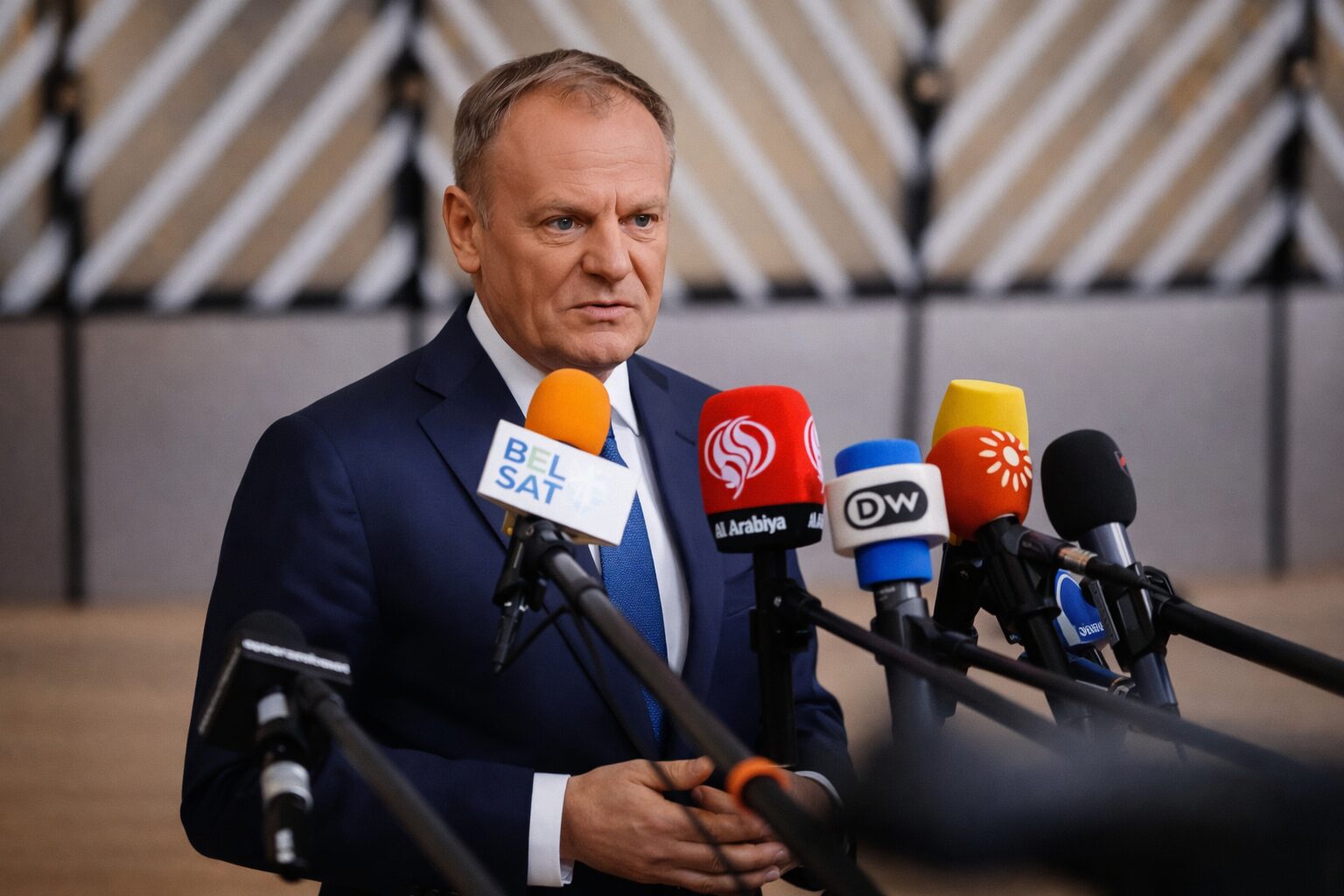
    The legislation, supported by Prime Minister Donald Tusk, was designed to align Poland with the European Union’s Markets in Crypto-Assets Regulation framework introduced in 2024. Poland remains the only European Union member state yet to fully implement the MiCA rules, raising concerns among policymakers about regulatory gaps.

    President Nawrocki defended his veto, citing worries about excessive regulation, limited transparency and increased pressure on small businesses operating in the crypto sector.

    Tusk criticizes president for vetoing the bill.

    Government Warns of Investor Risks Without Crypto Rules

    Government officials have warned that delaying regulation leaves investors exposed to fraud and market abuse. Finance Minister Andrzej Domański cautioned that the absence of clear legal standards could turn the crypto market into what he described as an “El Dorado for fraudsters,” increasing risks for both consumers and businesses.

    This marks the second failed attempt to override the veto after a similar rejection in December. Lawmakers had previously introduced a revised version of the bill, claiming improvements, though critics argued it remained largely unchanged. President Nawrocki vetoed the updated proposal again in February, stating that repeated approval does not make a flawed law acceptable.

    Zonda Exchange Drawn Into Political Dispute

    The ongoing political standoff has also drawn attention to Zonda, Poland’s largest cryptocurrency exchange. Prime Minister Tusk accused the platform of possible links to illicit funding, referencing intelligence claims about connections to criminal networks.

    Zonda CEO Przemysław Kral rejected the allegations, calling them harmful to the country’s innovation sector and stating he may pursue legal action to defend his reputation. He also addressed concerns about a cryptocurrency wallet reportedly holding $330 million, saying control remained with former CEO Sylwester Suszek before his disappearance in 2022.

    Disclaimer

    This content is for informational purposes only and does not constitute financial, investment, or legal advice. Cryptocurrency trading involves risk and may result in financial loss.
  • U.S. Military Plans to Board Iran-Linked Ships as Hormuz Tensions Escalate

    U.S. Military Plans to Board Iran-Linked Ships as Hormuz Tensions Escalate

    U.S. Naval Operations Expand Targeting Iran-Linked Vessels

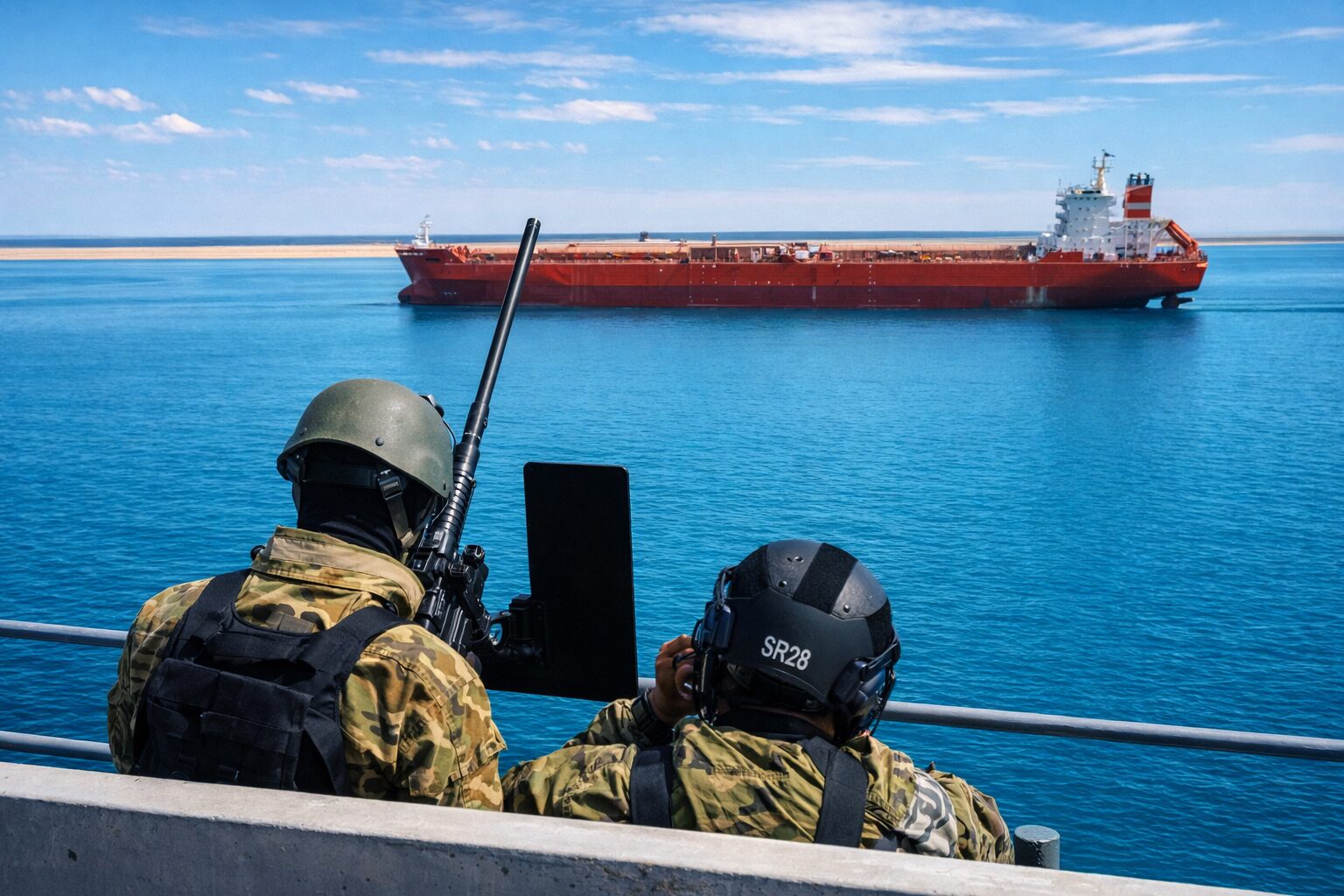
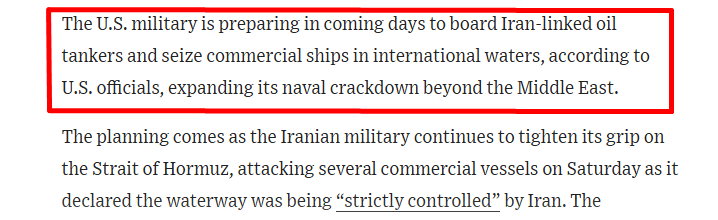
    The United States military is preparing to board oil tankers and seize commercial vessels suspected of links to Iran in the coming days, according to officials familiar with the planning. The move signals an expansion of Washington’s maritime enforcement strategy, described by officials as part of a broader “Economic Fury” campaign aimed at disrupting Iran related shipping activities beyond the Middle East.

    Officials indicated that U.S. forces may pursue vessels across international waters, marking a wider operational scope than earlier regional patrols. The preparations reflect growing concern over maritime security and the movement of Iran-linked cargo through global shipping routes.

    Strait of Hormuz Security Crisis Raises Global Shipping Concerns

    The military planning follows renewed tensions in the Strait of Hormuz, where Iranian forces reportedly attacked several commercial vessels on Saturday and declared the waterway under strict control. The escalation came shortly after Iran’s foreign minister announced that the strait was fully open to commercial traffic, a statement that had been positively received by U.S. President Donald Trump.

    Shipping companies reacted quickly to the changing situation, adjusting routes and delaying transit plans amid rising security risks in one of the world’s most strategically important maritime corridors.

    Disclaimer

    This content is for informational purposes only and does not constitute financial, investment, or legal advice. Cryptocurrency trading involves risk and may result in financial loss.
  • Trump Rejects Hormuz Pressure, Says Iran Cannot Blackmail the United States

    Trump Rejects Hormuz Pressure, Says Iran Cannot Blackmail the United States

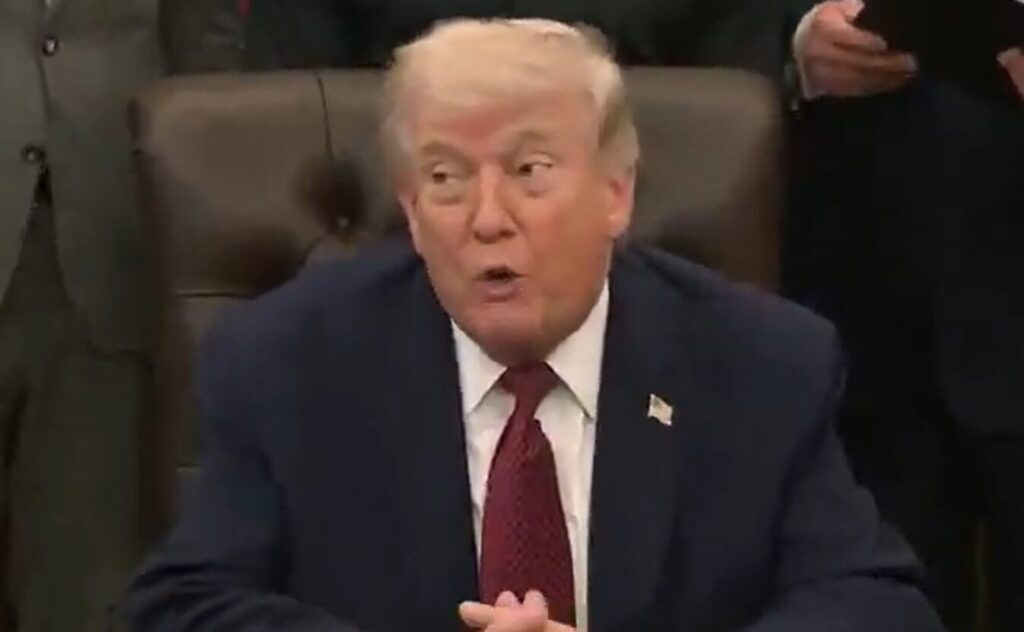
    US President Donald Trump said on Saturday that diplomatic discussions with Iran were progressing positively, even as tensions remained high over activity in the Strait of Hormuz. Speaking to reporters, Trump described the ongoing engagement as “very good conversations,” indicating that negotiations between the two sides were still active and developing.

    Donald Trump speaking to reporters on Saturday

    He stated that Iran had recently attempted to shut the strategic waterway again, a move that has raised concerns about regional stability and global shipping routes. The Strait of Hormuz remains one of the world’s most critical maritime passages for oil and energy transport, making any disruption highly sensitive for international markets.

    Trump Rejects Pressure and Signals Possible Updates

    Trump also rejected what he characterized as pressure tactics from Tehran, stressing that the United States would not accept threats related to the waterway. He warned that Iran could not use the Strait of Hormuz as leverage, stating clearly that the country “cannot blackmail the US.”

    He added that further details regarding the talks and regional developments could be released later in the day, suggesting that negotiations were still unfolding and may soon produce new updates.

    Disclaimer

    This content is for informational purposes only and does not constitute financial, investment, or legal advice. Cryptocurrency trading involves risk and may result in financial loss.
  • Former UK Prime Minister Links Economic Decline to Bitcoin Interest and Calls for Reform

    Former UK Prime Minister Links Economic Decline to Bitcoin Interest and Calls for Reform

    Liz Truss Warns of UK Economic Weakness and Currency Debasement

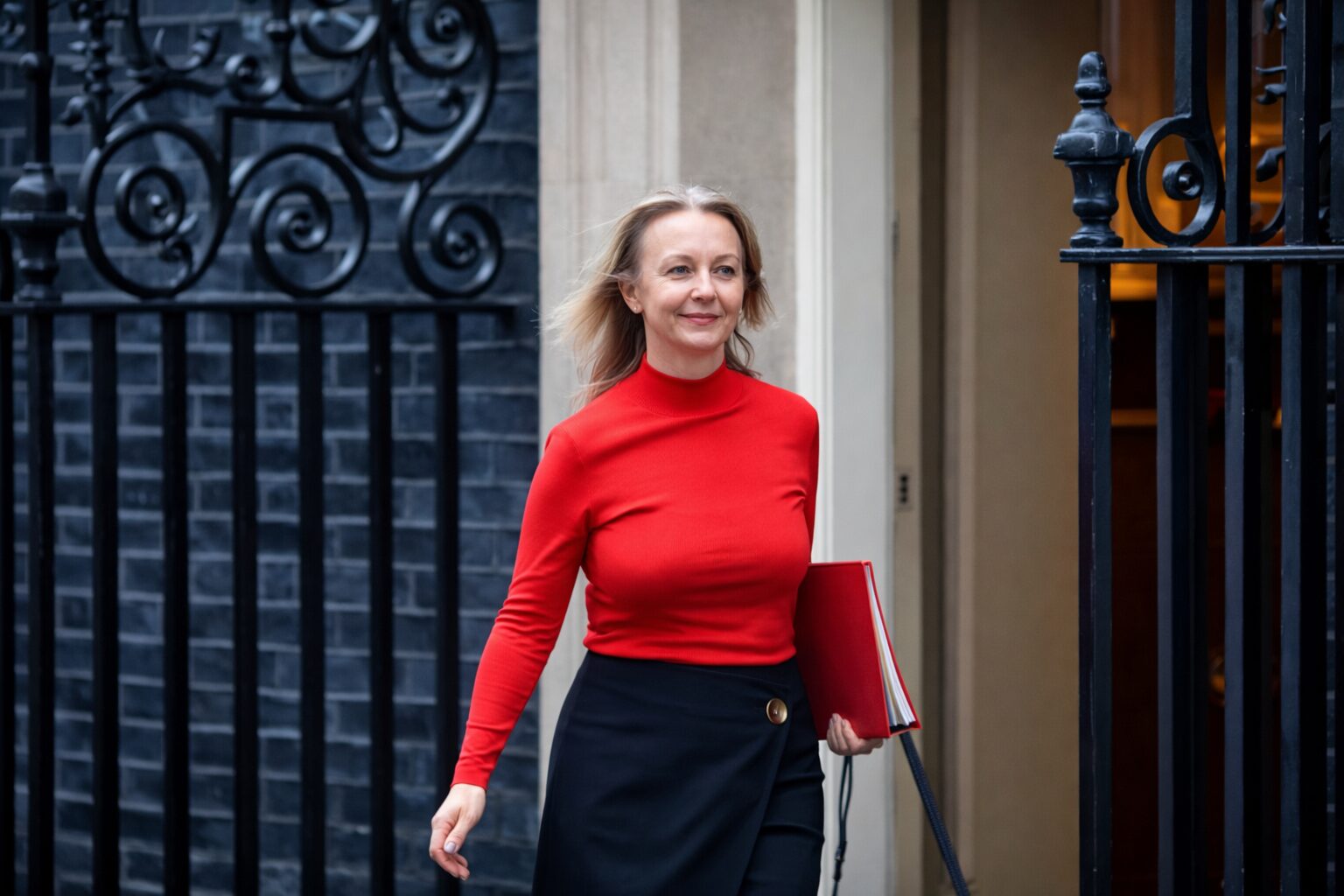
    Former UK Prime Minister Liz Truss has warned that the British economy is on a “very negative trajectory,” arguing that decades of weak growth, high taxes, and heavy regulation are leaving the country “relatively poorer, very quickly.” In a recent interview, she linked rising inflation and inequality to what she described as the “debasement of currency,” pointing to monetary expansion and loss of confidence in sterling. She also said the lack of open debate around monetary policy within government and academia has become “quite sinister,” suggesting that key economic discussions are being avoided despite their importance.

     tool against debasement

    Truss, who briefly served as prime minister in 2022, defended her controversial mini-budget, arguing that the market instability that followed revealed deeper structural weaknesses in the financial system rather than causing them. She highlighted risks within leveraged pension strategies and broader financial fragility exposed during that period.

    Bitcoin Support and Launch of CPAC UK Movement

    Now outside frontline politics, Truss has expressed growing interest in bitcoin, describing it as a potential safeguard against currency debasement and excessive central control. She first encountered the cryptocurrency during her time at the Treasury and said it continues to represent financial independence and resistance to overregulation.

    She is also launching CPAC UK, a three-day conference aimed at building a “sovereignty and liberty” movement focused on political and economic reform.

    Disclaimer

    This content is for informational purposes only and does not constitute financial, investment, or legal advice. Cryptocurrency trading involves risk and may result in financial loss.
  • SEC Files $16M Crypto Fraud Lawsuit Over ‘Insured’ Bitcoin Latinum Token Claims

    SEC Files $16M Crypto Fraud Lawsuit Over ‘Insured’ Bitcoin Latinum Token Claims

    SEC Accuses Donald Basile of Misleading Investors With False Insurance Claims

    The U.S. Securities and Exchange Commission has filed a lawsuit against crypto executive Donald Basile, accusing him of orchestrating a $16 million fraud scheme tied to misleading claims about an “insured” cryptocurrency called Bitcoin Latinum.

    According to the complaint filed in the U.S. District Court for the Eastern District of New York, Basile allegedly raised funds between March and December 2021 through companies he controlled, including Monsoon Blockchain Corp. and GIBF GP Inc.. Investors were offered Simple Agreements for Future Tokens (SAFTs), which promised delivery of Bitcoin Latinum tokens at a later date.

    Funds Allegedly Used for Personal Spending and Luxury Purchases

    SEC alleges that no insurance company ever provided coverage or documentation to support those claims.

    Instead of supporting the project, the complaint states that millions of dollars were diverted to personal expenses. These reportedly included real estate purchases, credit card payments and the acquisition of a horse valued at approximately $160,000. Authorities argue that these transactions violated investor trust and misrepresented the true purpose of the funds.

    Bitcoin Latinum website not working: Bitcoin Latinum

    SEC Seeks Penalties and Ban From Securities Activities

    The SEC is requesting permanent injunctions, repayment of allegedly ill-gotten gains with interest, civil penalties and a ban preventing Basile from participating in future securities offerings. Regulators are also seeking an officer-and-director restriction that would prevent him from leading publicly traded companies.

    The case comes as the SEC, under Chair Paul Atkins, shifts its enforcement priorities toward fraud, market manipulation and significant abuses of investor confidence rather than broader registration disputes.

    Disclaimer

    This content is for informational purposes only and does not constitute financial, investment, or legal advice. Cryptocurrency trading involves risk and may result in financial loss.
  • Judge Rules JENNER Memecoin Is Not a Security in U.S. Class Action Case

    Judge Rules JENNER Memecoin Is Not a Security in U.S. Class Action Case

    A U.S. federal judge has ruled that the $JENNER memecoin, launched by media personality and former Olympic athlete Caitlyn Jenner, does not qualify as a security under federal law.

    The decision came from Stanley Blumenfeld Jr., who relied on the Howey Test, a legal standard established in the SEC v. W.J. Howey Co.. The ruling focused on whether investors participated in a “common enterprise,” a key requirement for classifying an asset as a security.

    Investor Loss Claims and Token Promotion Allegations

    The lawsuit was filed by Lee Greenfield, who alleged losses exceeding $40,000 after purchasing the $JENNER token on both the Ethereum and Solana networks in May 2024.

    Greenfield claimed that Jenner promoted the token heavily on social media, suggesting her involvement could increase its value. The complaint referenced posts that included promotional imagery and messaging implying potential profits for investors.

    The original case, filed in late 2024, also named Jenner’s manager, Sophia Hutchins, who died in July 2025. Defendants argued that the Ethereum based token did not meet the definition of a statutory security sale.

    Judge Finds No Evidence of Common Enterprise

    In his ruling, Judge Blumenfeld stated that although investors clearly used money to purchase tokens, the complaint failed to demonstrate the existence of a shared financial structure among participants. The court found no indication that investors pooled resources, shared profits or losses, or created capital beyond purchasing the token itself.

    Because the judge determined that neither horizontal nor vertical commonality existed, the case did not satisfy the “common enterprise” requirement of the Howey Test. As a result, the court concluded that the token sale could not be classified as an investment contract under federal securities law.

    While federal securities claims were dismissed, the judge noted that other non-federal allegations may still proceed in state court. The ruling marks a notable legal development in ongoing debates over how memecoins and celebrity-backed digital assets are regulated under U.S. securities law.

    Disclaimer

    This content is for informational purposes only and does not constitute financial, investment, or legal advice. Cryptocurrency trading involves risk and may result in financial loss.