Category: News

  • Aztec Transfers Final 5,020 ETH to Coinbase, Completing Movement of Public Auction Funds

    Aztec Transfers Final 5,020 ETH to Coinbase, Completing Movement of Public Auction Funds

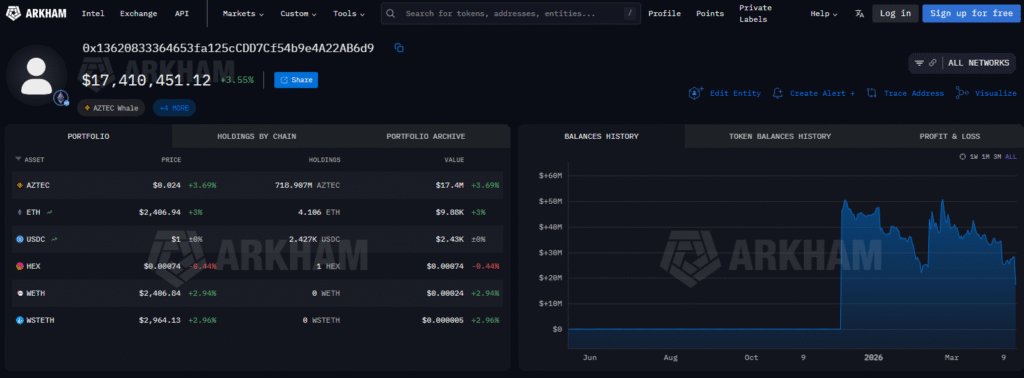
    The Aztec team has completed the transfer of all Ether collected during its December public token auction, marking the end of a months long movement of treasury funds. During the public sale held in December 2025, the project sold 15% of its total AZTEC token supply, equal to 1.5 billion tokens. The auction generated 19,388.4 ETH, valued at approximately $59.13 million at the time, with an average sale price near $0.0473 per token according to Arkham. Current market levels place the token at roughly 50% below the original auction price, reflecting broader market pressure and post launch volatility.
    Liquidity Funding at TGE and Gradual Transfers to Coinbase

    At the token generation event (TGE) in February, Aztec allocated 4,234.6 ETH—worth about $12.91 million—to establish initial liquidity support. According to on-chain monitoring cited by analyst Yujin, the remaining 15,154 ETH from the auction proceeds was transferred to Coinbase in multiple batches over the following three months.

    Final 5,020 ETH Transfer Marks Completion of Treasury Movement

    The final tranche of 5,020 ETH, valued at roughly $12.33 million, was moved to Coinbase on April 17 at 16:44 UTC. This transaction effectively completed the transfer of all remaining Ether raised during the public auction, confirming that the project has fully relocated its sale proceeds into exchange custody.

    Disclaimer

    This content is for informational purposes only and does not constitute financial, investment, or legal advice. Cryptocurrency trading involves risk and may result in financial loss.

  • Russia Introduces Bill to Criminalize Unregistered Crypto Services

    Russia Introduces Bill to Criminalize Unregistered Crypto Services

    Russia’s government has submitted a draft law to the State Duma proposing criminal liability for individuals and entities offering cryptocurrency services without official registration. The legislation seeks to amend the country’s legal code to require businesses involved in organizing digital currency circulation to obtain approval from the Bank of Russia before operating.

    Under the proposed rules, individuals providing unlicensed crypto services could face fines of up to $4,000 and prison sentences of up to four years. The bill outlines harsher penalties if violations involve organized groups or large-scale financial damage, including compulsory labor for up to five years or imprisonment for up to seven years. Authorities also proposed an additional penalty of up to 1 million rubles (about $13,100) or an amount equal to a convicted person’s income over a five-year period.

    RBC

    Supreme Court Raises Concerns as Related Crypto Issues Emerge

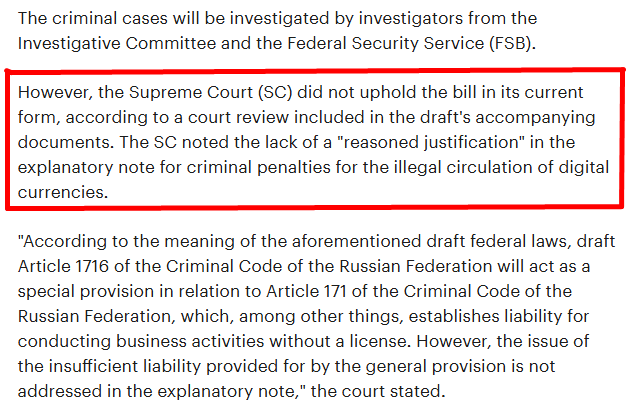
    The draft law follows a package of proposals introduced in March that targeted illegal cryptocurrency mining activities. However, the Supreme Court of Russia has expressed reservations, stating the bill lacks “reasoned justification” for criminal penalties and describing the measure as premature until Russia’s Digital Currency and Digital Rights law takes effect in July. If approved, the legislation would significantly expand government oversight of the digital asset sector.

    Meanwhile, cybersecurity risks continue to affect the industry. The Russia based exchange Grinex recently suspended trading after losing more than 1 billion rubles (approximately $13.7 million) in a cyberattack believed to involve entities from hostile states. The company reported the incident to law enforcement agencies and filed a criminal complaint as investigations continue.

    Disclaimer

    This content is for informational purposes only and does not constitute financial, investment, or legal advice. Cryptocurrency trading involves risk and may result in financial loss.

  • Iran Threatens to Close Strait of Hormuz Again as US Blockade Continues

    Iran Threatens to Close Strait of Hormuz Again as US Blockade Continues

    Iran’s military has indicated it could close the Strait of Hormuz again, according to reports carried by Iranian state media. The warning follows remarks from Iran’s parliament speaker, who stated that the critical shipping route would “not remain open” if the United States continues its blockade of Iranian ports.

    The Strait of Hormuz remains one of the world’s most important oil transit routes, handling a significant share of global crude shipments. Any threat to its accessibility typically raises concerns across energy and financial markets.

    Conflicting Messages From Washington and Tehran Add Uncertainty

    Recent statements from both governments have created confusion over the waterway’s status. Donald Trump said on Friday that the blockade would remain in place until a peace agreement is reached, while also stating that the strait is “open and ready for business.”

    At the same time, Iran’s foreign minister previously said the Strait of Hormuz would remain fully open to commercial shipping for the duration of the current ceasefire. However, the latest military warning suggests the situation remains fluid and potentially unstable.

    Shipping Activity Continues Despite Rising Tensions

    Data from maritime tracking service MarineTraffic shows that several oil tankers continued crossing the waterway on Saturday, indicating that commercial operations have not yet been halted.

    Further adding to the uncertainty, Trump claimed that Iran had agreed to multiple conditions, including the removal of enriched uranium to the United States. Iranian officials have denied those claims, highlighting ongoing disagreements between both sides.

    Markets Watch Developments Closely

    The evolving situation has drawn attention from global markets, as any confirmed closure of the Strait of Hormuz could disrupt oil supply chains and increase volatility across commodities, equities and digital assets. Traders and policymakers are expected to monitor developments closely as diplomatic negotiations continue.

    Disclaimer

    This content is for informational purposes only and does not constitute financial, investment, or legal advice. Cryptocurrency trading involves risk and may result in financial loss.

  • Oil Market Suspicion Grows After Large Short Positions Appear Before Iran-Linked Headlines

    Oil Market Suspicion Grows After Large Short Positions Appear Before Iran-Linked Headlines

    Unusual Oil Short Trades Spark Debate Over Timing and Market Transparency

    A wave of unusually large oil short positions has raised questions in trading circles after reports of timing closely aligned with major geopolitical developments involving Iran and the Strait of Hormuz. Market commentary points to three notable cases: a $500 million short on March 23, reportedly placed shortly before delayed Iran strike decisions; a $950 million short on April 7, ahead of a US–Iran ceasefire; and a $760 million short on April 17, minutes before announcements that Hormuz shipping lanes were reopening.

    The repeated pattern has led some traders to question whether there is access to non-public information, especially given the size and timing of the positions relative to oil price swings.

    Regulatory Scrutiny and Insider Trading Claims Remain Unverified

    The U.S. Commodity Futures Trading Commission is reported to be reviewing related market activity, although no confirmed enforcement action or attribution has been disclosed.

    However, market analysts note that oil is one of the most heavily traded macro assets globally, where large hedge funds and algorithmic systems frequently position around expected geopolitical volatility. Iran–U.S. tensions, Strait of Hormuz risk, and ceasefire speculation are widely monitored factors that often drive anticipatory trading.

    Despite speculation, no verified evidence has identified the traders behind these positions or confirmed access to insider information. In regulated markets, proving insider trading requires documented links between non-public information and trading decisions, which has not yet been established in this case.

    Disclaimer

    This content is for informational purposes only and does not constitute financial, investment, or legal advice. Cryptocurrency trading involves risk and may result in financial loss.

  • X Cashtags Feature Generates $1 Billion Trading Volume Within 48 Hours

    X Cashtags Feature Generates $1 Billion Trading Volume Within 48 Hours

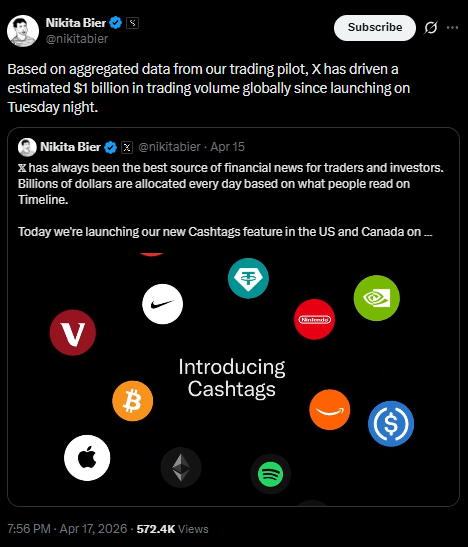
    X has recorded approximately $1 billion in trading volume within the first two days of launching its new Cashtags feature, highlighting growing interest in social-based trading tools. The milestone was confirmed by Nikita Bier, who cited data collected from the platform’s early trading pilot after the feature launched on Tuesday night.

    Cashtags allow users to tag specific stocks, cryptocurrencies or smart contract addresses directly in posts. When tapped, the tags display live price charts and related discussions, creating a seamless experience that blends social media engagement with market data access. The feature is currently available to users in the United States and Canada using iPhones.

    Wealthsimple Partnership Enables Direct Trading Access

    The Cashtags rollout includes integration with Wealthsimple, allowing Canadian users to move directly from tagged assets to live trading interfaces. However, the feature has not yet been connected to a United States-based brokerage platform.

    With more than 550 million monthly users, X holds significant reach, positioning it to compete with established financial data providers and accelerate adoption of integrated trading services.

    X Money Expansion Signals Broader Financial Strategy

    Alongside Cashtags, the company is developing X Money, a payments ecosystem expected to include yield-bearing accounts, cashback debit cards and additional financial tools. An early beta demonstration showed transactions between Elon Musk and William Shatner, illustrating the platform’s payment capabilities.

    Over recent years, X has secured money transmitter licenses in more than 40 U.S. states and registered with the Financial Crimes Enforcement Network, laying the groundwork for broader peer-to-peer payment integration and potential cryptocurrency functionality in the future.

    Disclaimer

    This content is for informational purposes only and does not constitute financial, investment, or legal advice. Cryptocurrency trading involves risk and may result in financial loss.

  • Worldcoin Drops 13% as Iris-Scanning Identity Tech Expands to Major Platforms

    Worldcoin Drops 13% as Iris-Scanning Identity Tech Expands to Major Platforms

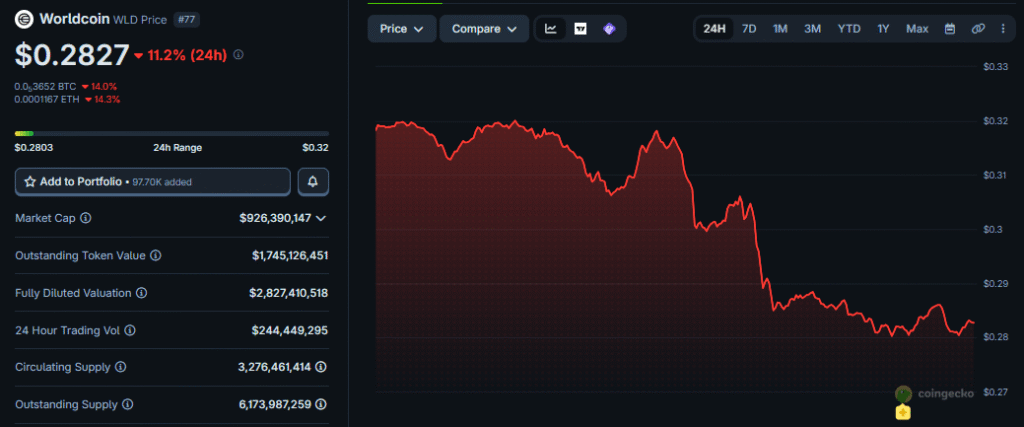
    The native token of Worldcoin fell 13.4% to around $0.28 after new integrations were announced by World, the digital identity firm led by Sam Altman. The decline came even as the broader cryptocurrency market gained roughly 2.2%, supported by easing geopolitical tensions and the reopening of the Strait of Hormuz.

    World revealed that its “proof of human” technology, based on iris-scanning biometric authentication, is expanding across several mainstream platforms. The video conferencing service Zoom is integrating World’s Deep Face authentication system to reduce deepfake risks, while digital agreement platform DocuSign is adopting World ID verification technology for contract authentication. Dating platform Tinder is also expanding its World ID verification to users in the United States.

    Deepfake Concerns Drive Demand for Biometric Verification

    The rapid growth of AI-generated content has increased the risk of impersonation scams, where deepfake technology can bypass traditional identity checks. World stated that as AI agents increasingly act on behalf of individuals, reliable infrastructure proving human identity is becoming essential for digital trust.

    World’s system relies on its Orb device, which scans a user’s iris to generate a unique digital identity that confirms humanity without revealing sensitive personal details. The company also introduced an account-based model featuring key recovery tools and multi-device support to enhance usability and security.

    WLD’s change in price over the last 24 hours

    Additional Partnerships Expand Ecosystem Reach

    Beyond recent integrations, World has collaborated with companies including Amazon Web Services, Shopify, Browserbase, Exa, VanEck and Coinbase.

    In March, Coinbase confirmed plans to use World’s AgentKit developer tools to verify AI agents linked to authenticated identities, highlighting growing demand for identity solutions in AI-powered ecosystems.

    Disclaimer

    This content is for informational purposes only and does not constitute financial, investment, or legal advice. Cryptocurrency trading involves risk and may result in financial loss.
  • Circle Launches USDC Bridge to Enable Native Cross-Chain Stablecoin Transfers

    Circle Launches USDC Bridge to Enable Native Cross-Chain Stablecoin Transfers

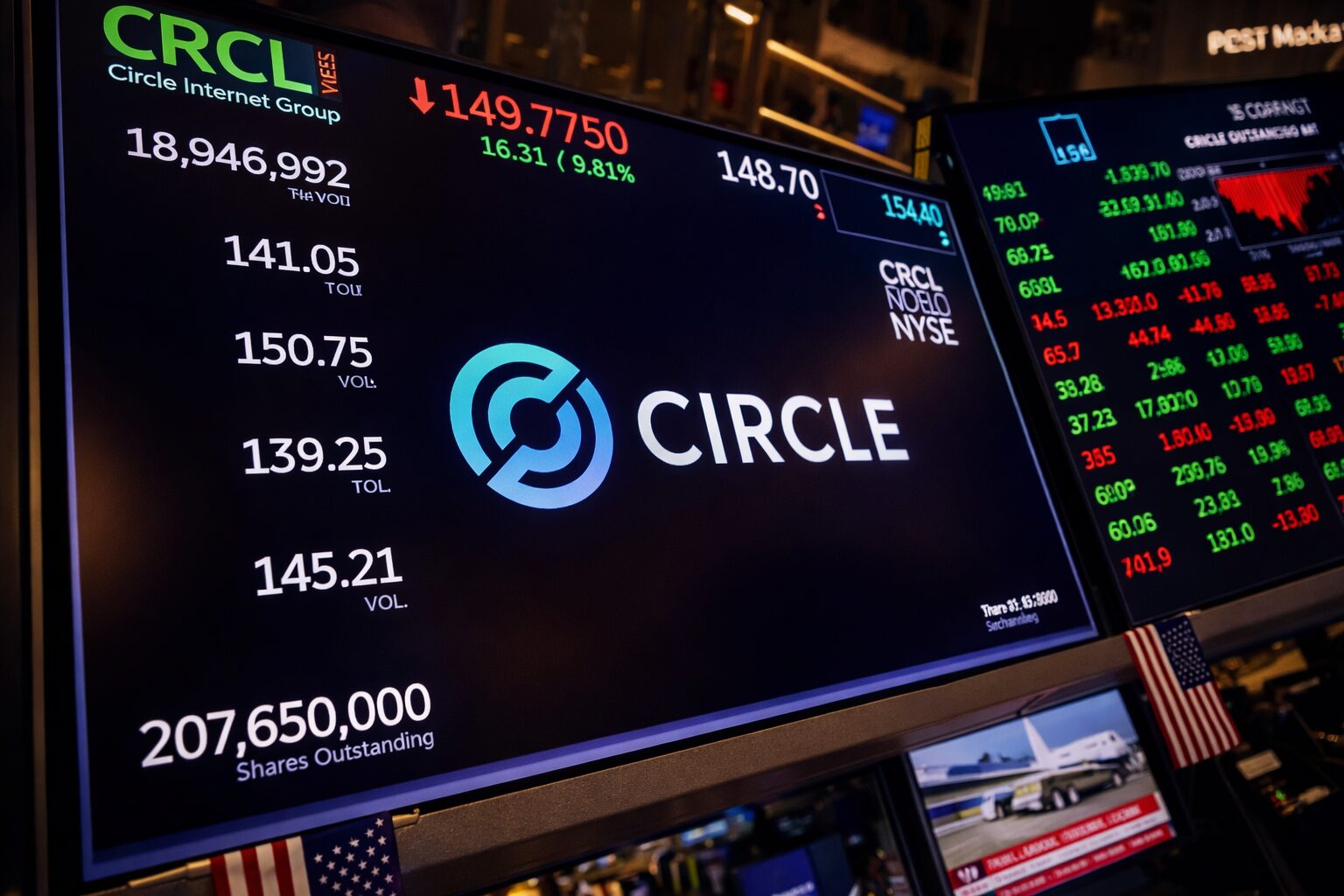
    Circle has introduced a new cross chain transfer solution called USDC Bridge, designed to provide a standardized method for moving native versions of USD Coin across multiple blockchain networks. The company described the system as a predictable and transparent way to transfer stablecoins between chains while avoiding reliance on wrapped or synthetic assets.

    USDC Bridge operates using Circle’s Cross-Chain Transfer Protocol (CCTP), enabling transfers through a 1:1 burn-and-mint process. This mechanism burns USDC tokens on the source chain and mints the same amount on the destination chain, ensuring that only native USDC versions remain in circulation. The platform also displays transfer progress and provides clear fee estimates before transactions begin.

    Supports EVM Chains With Transparent Fee Structure

    At launch, the bridge supports EVM-compatible blockchains, including networks such as Sei and Monad. While the broader CCTP system supports multiple Layer 1 and Layer 2 networks, USDC Bridge currently excludes some non-EVM chains, including Solana.

    Transaction costs vary depending on configuration, but an example test showed that moving $20 worth of USDC from Ethereum to Optimism cost approximately $0.20 in fees. Circle noted that destination gas conversion is handled automatically, simplifying the transfer process for users unfamiliar with cross-chain mechanics.

    Expansion Reflects Broader Multi-Chain Strategy

    Circle originally launched CCTP in 2023 and has since upgraded the system, including a major Version 2 update last year. The protocol now supports a wide range of networks where USDC is issued natively, including Avalanche and additional Layer 2 ecosystems such as Polygon.

    total stablecoin supply

    USDC remains the second largest stablecoin by market capitalization, and Circle has expanded its issuance strategy across dozens of chains and applications, including platforms like Polymarket, as competition in the multi-chain stablecoin ecosystem continues to intensify.

    Disclaimer

    This content is for informational purposes only and does not constitute financial, investment, or legal advice. Cryptocurrency trading involves risk and may result in financial loss.

  • Singapore Gulf Bank Launches 24/7 Stablecoin Mint and Redemption Using Solana

    Singapore Gulf Bank Launches 24/7 Stablecoin Mint and Redemption Using Solana

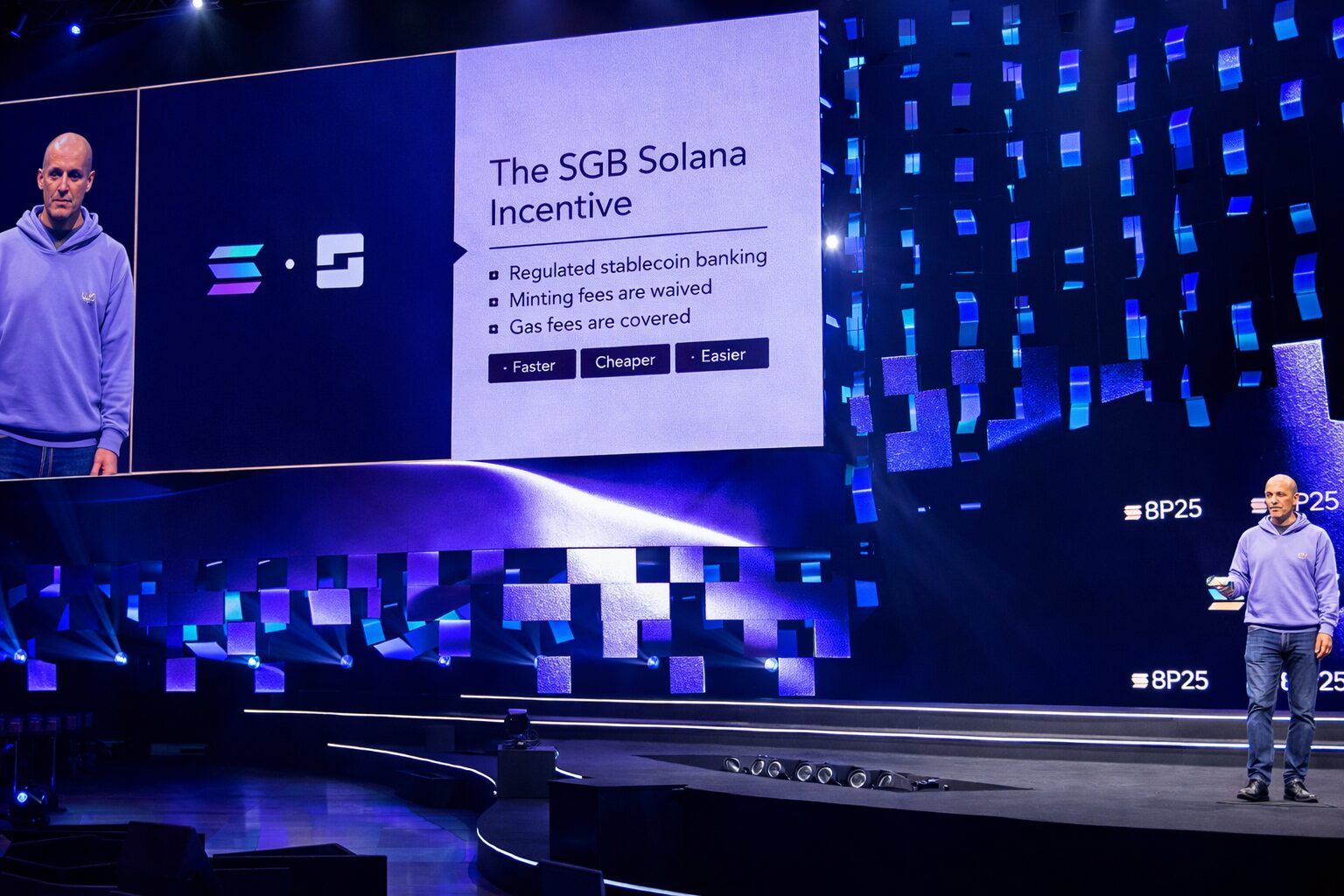
    Singapore Gulf Bank has introduced a new service allowing institutional clients to mint and redeem stablecoins directly from their bank accounts, enabling continuous settlement between fiat and digital assets. The system operates on the Solana blockchain, providing round-the-clock transaction capabilities without depending on traditional banking settlement hours.

    The service initially supports transactions involving USD Coin issued by Circle, with a minimum transfer threshold set at $100,000. The bank also announced temporary fee waivers for minting and redemption transactions conducted through the Solana network, aiming to encourage early institutional adoption.

    Additional stablecoins, including Tether, USDe and Global Dollar, are expected to be supported in future phases.

    Integration Removes Need for Intermediary Banking Networks

    According to the bank, the stablecoin minting and redemption service is integrated directly into its internal clearing infrastructure. This design allows funds to move seamlessly between onchain digital balances and traditional fiat accounts without relying on intermediary banks, reducing settlement times and operational complexity.

    The launch reflects a wider industry shift toward blockchain-based settlement systems aimed at improving speed and reducing transaction costs. Financial institutions globally are increasingly adopting stablecoin-based infrastructure as part of broader digital transformation strategies.

    Global Institutions Accelerate Stablecoin Adoption

    Major financial players are continuing to expand stablecoin-related initiatives. For example, Mastercard recently agreed to acquire stablecoin infrastructure firm BVNK in a deal valued at up to $1.8 billion, signaling growing institutional interest in blockchain settlement solutions.

    Meanwhile, Visa has begun operating validator nodes on the Tempo network, allowing participation in transaction processing and stablecoin reward mechanisms.

    total stablecoin supply

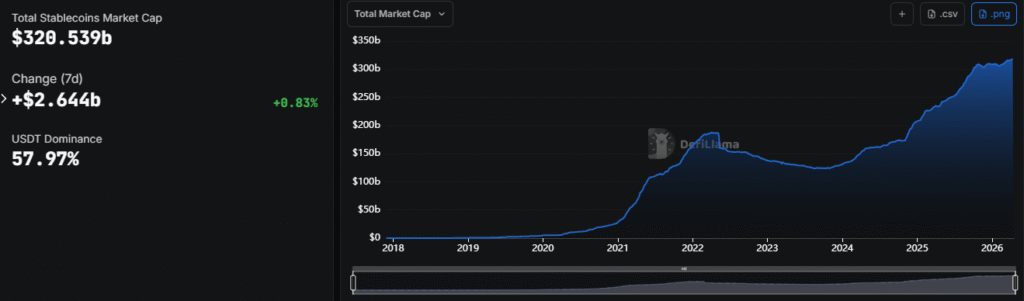
    These developments come as the global stablecoin market capitalization surpasses $320 billion, highlighting sustained growth and expanding adoption across banking, payments and cross-border financial systems.

    Disclaimer

    This content is for informational purposes only and does not constitute financial, investment, or legal advice. Cryptocurrency trading involves risk and may result in financial loss.

  • Crypto Council for Innovation Adds Digital Energy Council as First Energy-Focused Member

    Crypto Council for Innovation Adds Digital Energy Council as First Energy-Focused Member

    Energy Policy Takes Center Stage in Crypto Advocacy

    The Crypto Council for Innovation announced the addition of the Digital Energy Council as its first member dedicated specifically to digital energy policy, marking a significant step toward integrating energy considerations into cryptocurrency development strategies.

    According to the announcement, the Digital Energy Council will focus on advancing policies that promote energy development, grid resilience, U.S. competitiveness and national security. The move comes as demand for electricity continues to rise alongside the expansion of crypto mining, artificial intelligence data centers and other compute-intensive technologies that rely on stable and scalable power infrastructure.

    Shifting Government Approaches to Crypto Mining

    Energy use linked to cryptocurrency mining has been a subject of policy debate across U.S. administrations. Under former President Joe Biden, the U.S. Department of Energy conducted surveys of crypto mining companies to assess electricity consumption levels, citing concerns that rising Bitcoin prices could drive additional mining activity and increase strain on power systems. Officials warned that higher electricity demand could create operational challenges and impact consumer energy costs.

    In contrast, policies under Donald Trump have taken a more favorable stance toward digital assets, emphasizing efforts to retain cryptocurrency innovation within the United States. Recently, Republican lawmakers introduced legislation aimed at strengthening crypto mining and formalizing a strategic Bitcoin reserve initiative.

    Industry Push for Coordinated Energy Strategy

    Hunter Budd said the organization was founded on the belief that crypto mining and energy infrastructure must evolve together to support long-term grid stability. He noted that joining the Crypto Council for Innovation would provide broader collaboration opportunities and amplify policy advocacy at a global level, ensuring that energy remains a central issue in digital asset regulation discussions.

    Disclaimer

    This content is for informational purposes only and does not constitute financial, investment, or legal advice. Cryptocurrency trading involves risk and may result in financial loss.
  • France Signals Policy Shift Toward Euro Stablecoins as Digital Currency Race Heats Up

    France Signals Policy Shift Toward Euro Stablecoins as Digital Currency Race Heats Up

    French Government Supports Euro-Pegged Stablecoin Expansion

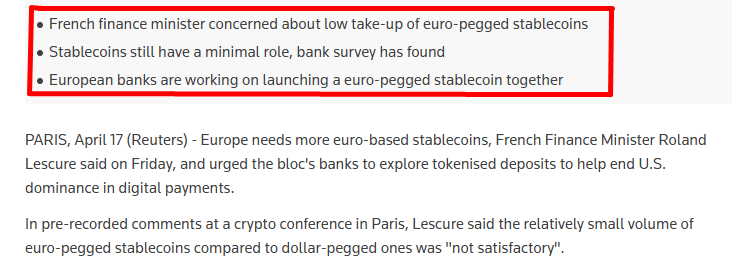
    Roland Lescure has called for stronger adoption of euro denominated stablecoins and urged European Union banks to explore tokenized deposits, marking a notable shift in France’s stance on digital assets. His remarks signal growing support within the French government and may indicate a softer regulatory approach from policymakers who previously expressed skepticism toward privately issued digital currencies.

    Lescure backed the banking consortium Qivalis, which includes major institutions such as BBVA, ING, UniCredit and BNP Paribas. The group is preparing to launch a euro-pegged stablecoin in the second half of 2026, aiming to strengthen Europe’s position in global digital payments and reduce reliance on U.S. dollar–dominated stablecoins.

    He stated that the current dominance of dollar pegged stablecoins over euro-based alternatives is “not satisfactory” and emphasized the need for European banks to accelerate innovation in tokenized financial products.

    Shift Contrasts With Earlier European Skepticism

    The new position contrasts with earlier views expressed by former French Finance Minister Bruno Le Maire, who previously argued that privately issued stablecoins posed risks to monetary sovereignty and should be restricted within Europe.

    Similarly, Bank of France Governor François Villeroy de Galhau has warned that stablecoins and tokenized private money could lead to the “privatization of money” and weaken control over monetary systems. Despite these concerns, recent statements suggest a shift toward embracing regulated euro-based digital alternatives rather than opposing them outright.

    Disclaimer

    This content is for informational purposes only and does not constitute financial, investment, or legal advice. Cryptocurrency trading involves risk and may result in financial loss.