Category: News

  • Senator Blumenthal Presses DOJ and Treasury Over Binance Compliance Monitor and Iran Sanctions Concerns

    Senator Blumenthal Presses DOJ and Treasury Over Binance Compliance Monitor and Iran Sanctions Concerns

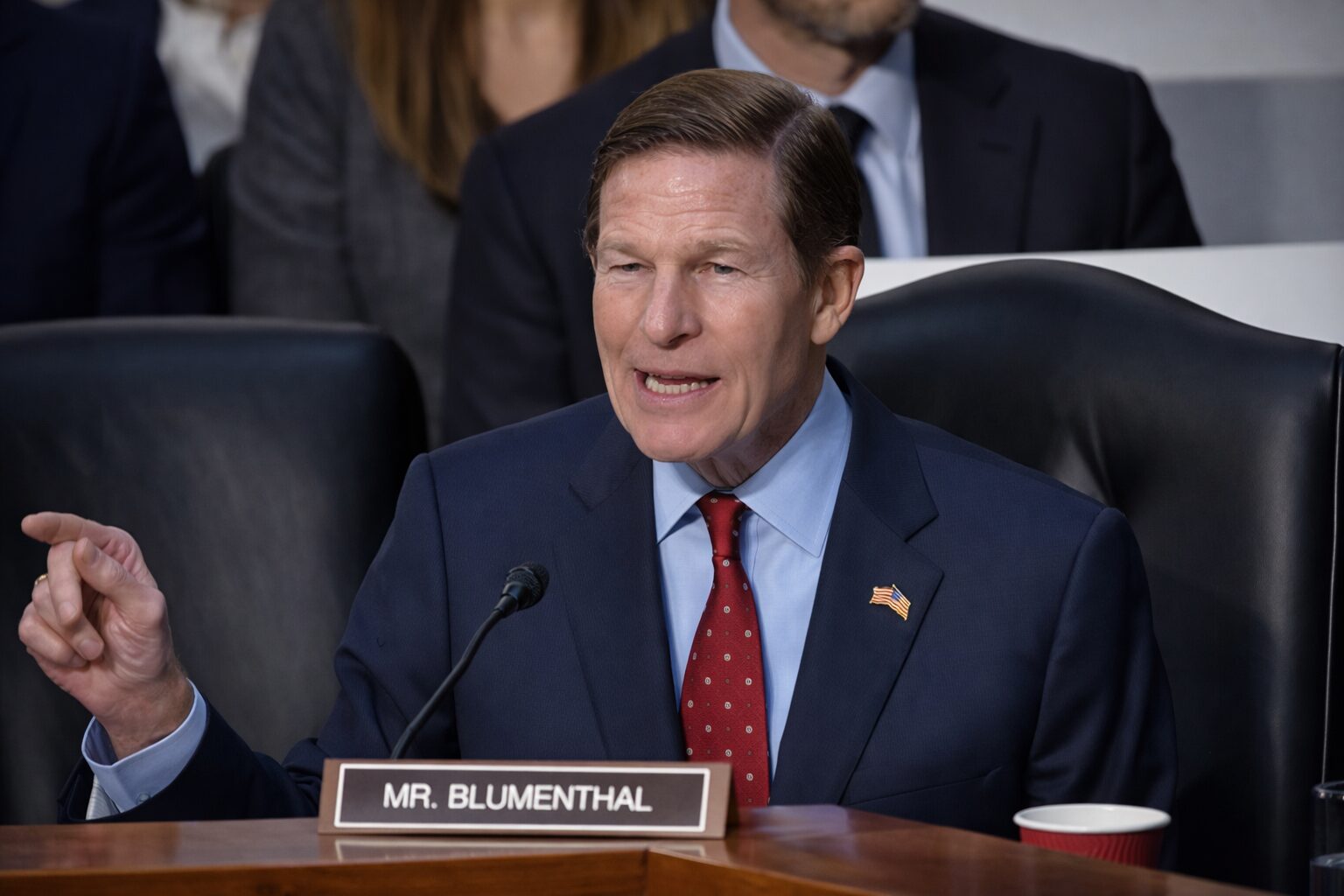
    Richard Blumenthal has sent a new letter to the U.S. Department of Justice and the U.S. Department of the Treasury seeking detailed information about oversight measures imposed on Binance following its 2023 guilty plea.

    In November 2023, Binance admitted to failing to register as a money transmitting business and breaching U.S. sanctions laws. The company agreed to pay more than $4 billion in penalties and retain an independent compliance monitor for three years. Blumenthal’s latest inquiry specifically asks about the status of that monitor and whether any misconduct reports have been filed since the settlement.

    Reports of Iran-Linked Transactions Trigger Renewed Scrutiny

    Blumenthal’s concerns follow media reports in early 2026 alleging Binance facilitated billions of dollars in sanctions evasion tied to Iranian entities. The reports claimed two Binance partners, Hexa Whale and Blessed Trust, acted as middlemen enabling transactions involving Iranian government-linked organizations. According to the reports, individuals involved in investigating those transactions were disciplined or dismissed, though Binance has publicly disputed the allegations.

    The case also connects to former Binance CEO Changpeng Zhao, who previously served four months in prison related to compliance failures and was later pardoned by Donald Trump.

    Requests Sent to Financial Enforcement Leaders

    Blumenthal, who serves as the top Democrat on the Senate Permanent Subcommittee on Investigations, also referenced earlier reports suggesting Binance had explored ending its compliance monitoring arrangement ahead of schedule. His latest letters were directed to Andrea Gacki and Todd Blanche, requesting records on the monitor’s work and oversight status. He asked for a formal response by April 24, as regulators continue reviewing Binance’s compliance with the 2023 settlement.

    Disclaimer

    This content is for informational purposes only and does not constitute financial, investment, or legal advice. Cryptocurrency trading involves risk and may result in financial loss.

  • Kraken Parent Payward to Acquire Bitnomial for $550 Million to Expand U.S. Crypto Derivatives

    Kraken Parent Payward to Acquire Bitnomial for $550 Million to Expand U.S. Crypto Derivatives

    Acquisition Brings Full Licensed Derivatives Infrastructure

    Payward, the parent of Kraken, has agreed to acquire Bitnomial for up to $550 million in cash and stock, giving the firm control of a fully licensed U.S. crypto derivatives stack. The transaction covers 100% of Bitnomial’s equity and is expected to close in the first half of 2026, pending regulatory approvals and customary conditions.

    Founded more than a decade ago, Bitnomial became the first crypto native platform to secure all three required U.S. derivatives licenses: a designated contract market, a derivatives clearing organization, and a futures commission merchant license. The acquisition effectively shortens years of regulatory buildout for Payward as it expands in the U.S. market.

    Payward Co-CEO Arjun Sethi emphasized that clearing infrastructure, including settlement, collateral systems and 24/7 trading capabilities, is central to shaping modern derivatives markets.

    Deal Supports Kraken Expansion and IPO Strategy

    The acquisition strengthens Payward’s derivatives push across Kraken, NinjaTrader and its business-to-business infrastructure division. The company previously acquired NinjaTrader for $1.5 billion in 2025, marking one of the largest deals connecting traditional finance and crypto trading platforms.

    Kraken has also pursued smaller acquisitions, including BCM and Small Exchange, aimed at strengthening institutional trading capabilities. The company confidentially submitted a draft S-1 filing to the U.S. Securities and Exchange Commission in November but later paused its planned IPO due to difficult market conditions.

    Combined Platform to Offer Regulated Trading Products

    After completion, the integrated platform will offer spot margin, perpetual futures and options to U.S. clients under supervision from the Commodity Futures Trading Commission. The deal also expands Payward Services, enabling banks, fintech firms and brokerages to access regulated derivatives markets through a single API integration, supporting the company’s strategy to become a multi-asset, institutional-grade trading platform.

    Disclaimer

    This content is for informational purposes only and does not constitute financial, investment, or legal advice. Cryptocurrency trading involves risk and may result in financial loss.
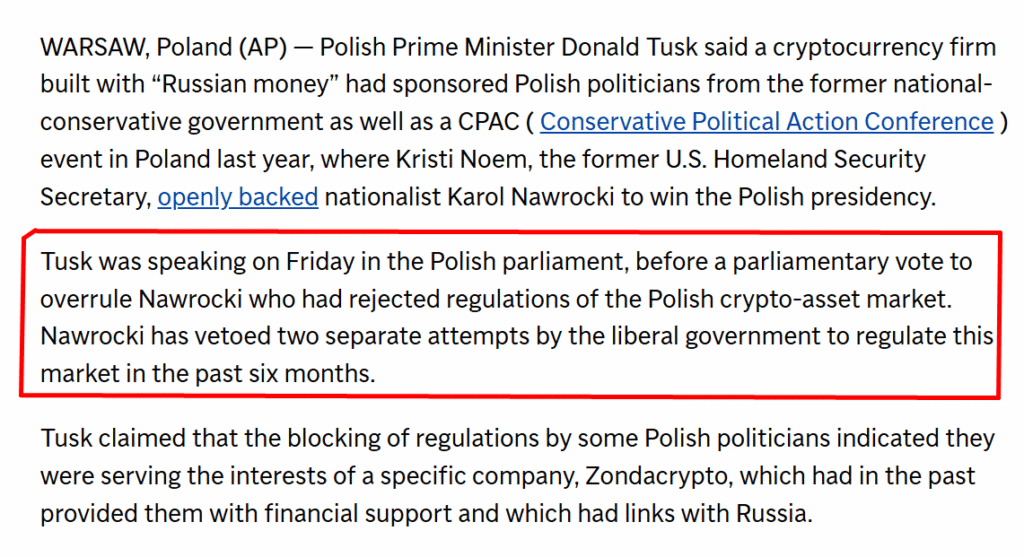
  • Polish Prime Minister Alleges Crypto Firm Linked to Russian Networks Backed Political Rivals

    Polish Prime Minister Alleges Crypto Firm Linked to Russian Networks Backed Political Rivals

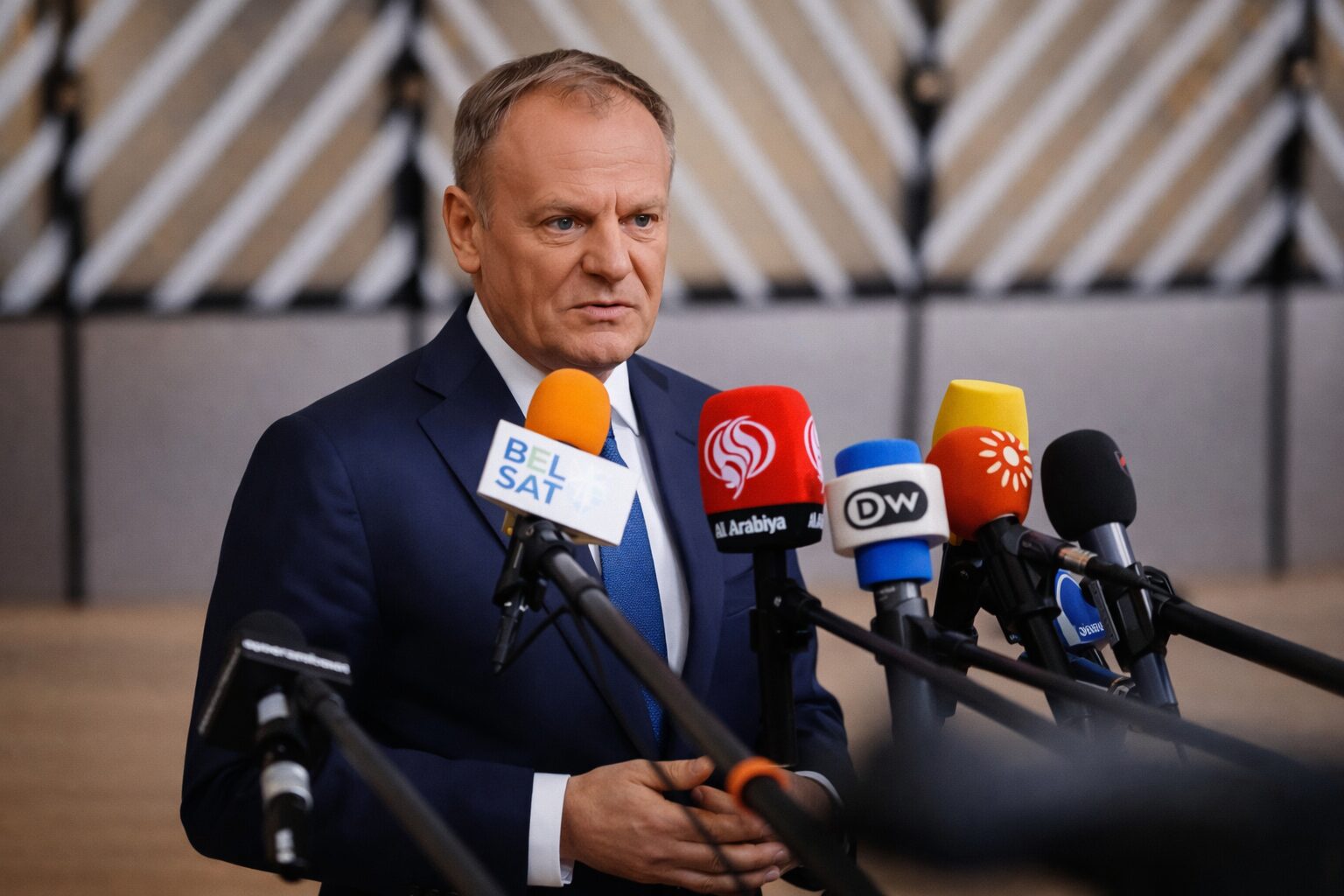
    Donald Tusk accused a crypto company of ties to Russian criminal and intelligence networks while claiming it provided financial support to his political rivals. The remarks were made during a parliamentary vote aimed at overturning a presidential veto blocking new cryptocurrency regulations in Poland.

    Tusk alleged that the crypto firm Zondacrypto had links to Russian funding sources connected to the so-called Bratva, described as one of Russia’s most influential organized crime groups. He further claimed the company’s financial success was tied not only to Russian mafia resources but also to Russian secret services.

    Political Sponsorship Claims Spark Wider Controversy

    According to Tusk, Zondacrypto sponsored a Conservative Political Action Conference event in Poland last year, where Kristi Noem expressed support for presidential candidate Karol Nawrocki. Nawrocki later won the presidential election in June and received backing from Donald Trump.

    Nawrocki’s office responded by stating that he supports regulating crypto-assets but objected to what it described as a flawed regulatory framework proposed by the government.

    Legislative Deadlock Slows Alignment With EU Crypto Rules

    Poland’s crypto policy efforts have faced repeated obstacles. In December, lawmakers failed to overturn Nawrocki’s veto of a broad cryptocurrency bill, delaying the country’s alignment with the European Union’s Markets in Crypto-Assets regulatory framework. The dispute highlights how political tensions are shaping the pace of crypto regulation across Europe.

    Disclaimer

    This content is for informational purposes only and does not constitute financial, investment, or legal advice. Cryptocurrency trading involves risk and may result in financial loss.
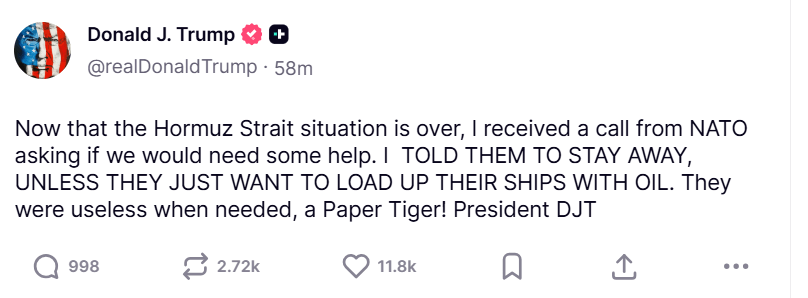
  • Trump Says Strait of Hormuz Situation Is Over, Dismisses NATO Assistance

    Trump Says Strait of Hormuz Situation Is Over, Dismisses NATO Assistance

    Trump Claims Crisis Resolved and Rejects NATO Support Offer

    Donald Trump said the situation surrounding the Strait of Hormuz has been resolved, adding that he declined an offer of assistance from the North Atlantic Treaty Organization after the crisis had already ended.

    In a public statement issued Thursday, Trump said NATO contacted him to ask whether the United States required support following tensions in the region. According to Trump, he rejected the offer and told the alliance to “stay away,” unless they intended to assist with oil shipments. He further criticized NATO’s effectiveness during the situation, describing the alliance as “useless when needed” and referring to it as a “paper tiger.”

    Strategic Importance of the Strait of Hormuz Remains Central

    Trump’s comments came amid heightened geopolitical tensions across the Middle East, where maritime security and oil transportation remain sensitive issues. While his remarks suggest that NATO reached out during the crisis, there has been no independent confirmation from NATO or other international authorities regarding the communication or the exact resolution of the situation.

    Markets and Security Risks Still Closely Watched

    Even as Trump declared the situation resolved, analysts continue monitoring developments in the region due to their potential impact on oil prices and global supply chains. Stability in the Strait of Hormuz is closely tied to energy market performance, making geopolitical statements from major leaders highly influential for investor sentiment and commodity pricing.

    Disclaimer

    This content is for informational purposes only and does not constitute financial, investment, or legal advice. Cryptocurrency trading involves risk and may result in financial loss.
  • Telegram CEO Warns EU Age Verification App Could Enable Broader Digital Tracking

    Telegram CEO Warns EU Age Verification App Could Enable Broader Digital Tracking

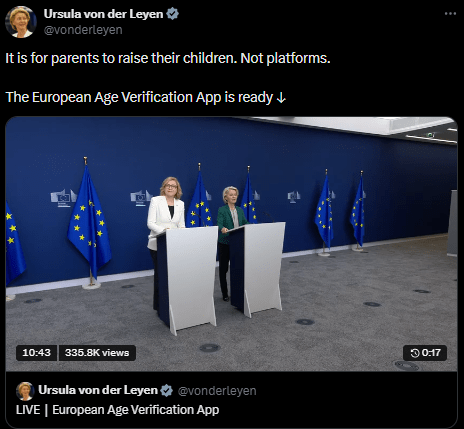
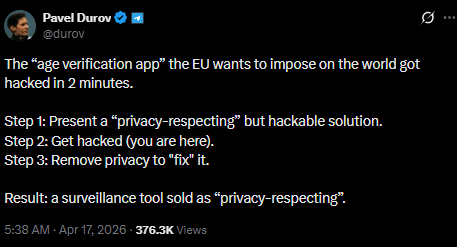
    Pavel Durov has warned that the European Union’s new age-verification application could evolve into a broader digital identity tracking system, raising concerns over long-term surveillance risks. His comments came shortly after the European Commission stated that the system was technically ready for rollout across member states.

    Durov referenced claims by security consultant Paul Moore, who reported that the app’s design could be compromised in “under two minutes,” suggesting vulnerabilities that may allow users to bypass proper identity checks or disconnect verification from the actual device or individual.

    EU Says System Is Anonymous, Critics Disagree

    The EU age-verification framework, developed under the European Commission led by Ursula von der Leyen, is designed to confirm whether users are over 18 without revealing additional personal data. Officials describe the system as “completely anonymous” and intended to integrate with future European Digital Identity Wallet infrastructure.

    However, critics argue that the architecture could create pathways for broader surveillance. Durov stated the system is “hackable by design,” warning that what begins as age verification could later expand into mandatory identity tracking across online platforms in Europe.

    Broader Debate Over Digital Identity and Regulation

    The age-verification tool was introduced as an open-source project intended to improve privacy while enabling regulatory compliance for online platforms. Despite these claims, researchers have questioned its resilience, particularly after reports suggested it could be bypassed quickly in testing environments.

    Durov further argued that such systems could set a precedent for expanded digital monitoring across social media and internet services. He also remains under judicial investigation in France over allegations linked to illegal activity on Telegram, including concerns about platform oversight and cooperation with authorities.

    Disclaimer

    This content is for informational purposes only and does not constitute financial, investment, or legal advice. Cryptocurrency trading involves risk and may result in financial loss.

  • Bitcoin Breaks Above $77,000 as Oil Plunges on Strait of Hormuz Reopening

    Bitcoin Breaks Above $77,000 as Oil Plunges on Strait of Hormuz Reopening

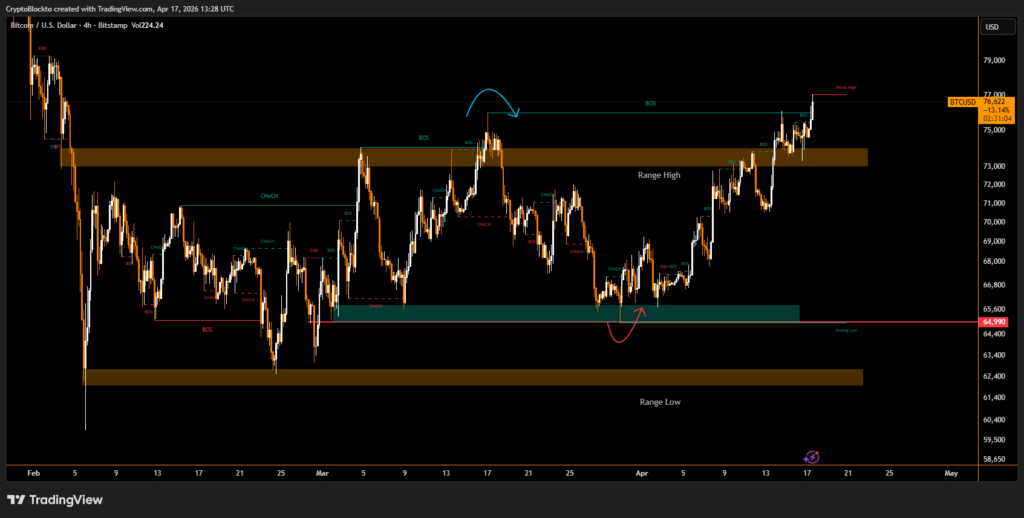
    Bitcoin surged back above the $77,000 level, as improved geopolitical conditions triggered a sharp shift in global markets. The move followed comments from Seyed Abbas Araghchi stating that the Strait of Hormuz would remain fully open for commercial shipping during the ceasefire period. The announcement was positively received by Donald Trump, who publicly welcomed the development.

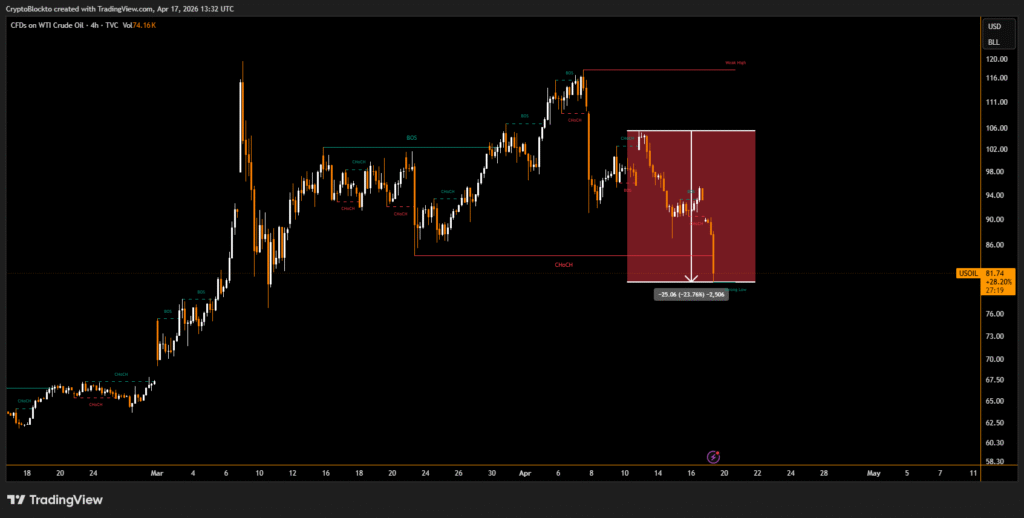
    The easing of tensions led to a steep decline in oil prices, with crude falling nearly 13% to around $81.90 per barrel, marking its lowest level since the early stages of the conflict in March. The drop reflects reduced concerns over supply disruption through one of the world’s most critical energy chokepoints.

    USOIL 4h price chart

    Bitcoin Faces Key Resistance at $76K–$78K Zone

    Bitcoin rose to approximately $76,400, gaining around 3% over the past 24 hours as risk sentiment improved across financial markets. U.S. equity futures also climbed roughly 1%, reflecting a broader risk-on environment.

    The $76,000–$78,000 range remains a significant technical resistance zone, as it previously preceded a sharp decline earlier in the year. Market participants note that repeated rejections at this level suggest strong selling pressure, although a decisive breakout above $77,000 could open the path toward higher price targets.

    $BTC 4h price chart

    Market Outlook Hinges on Sustained Energy Stability

    Traders are closely watching whether the reopening of the Strait of Hormuz leads to lasting stability in oil flows. Continued weakness in crude prices is reinforcing expectations of easing inflationary pressure, which has historically supported Bitcoin and other risk assets during macro-driven rallies.

    Disclaimer

    This content is for informational purposes only and does not constitute financial, investment, or legal advice. Cryptocurrency trading involves risk and may result in financial loss.
  • U.S.–Iran $20 Billion Uranium Deal Talks Advance as Oil Prices Weaken

    U.S.–Iran $20 Billion Uranium Deal Talks Advance as Oil Prices Weaken

    Nuclear Material Swap at Center of Draft Agreement

    The United States and Iran are negotiating a three page framework aimed at ending the conflict, with a proposal under discussion to release $20 billion in frozen Iranian funds in exchange for Iran surrendering its enriched uranium stockpile. Officials said the talks have made steady progress this week, though major gaps remain unresolved.

    President Donald Trump said negotiators are expected to meet again this weekend, with discussions likely taking place in Islamabad. The mediation effort is being led by Pakistan with support from Egypt and Turkey. A broader diplomatic meeting involving Saudi Arabia is also expected on the sidelines of regional talks in Turkey.

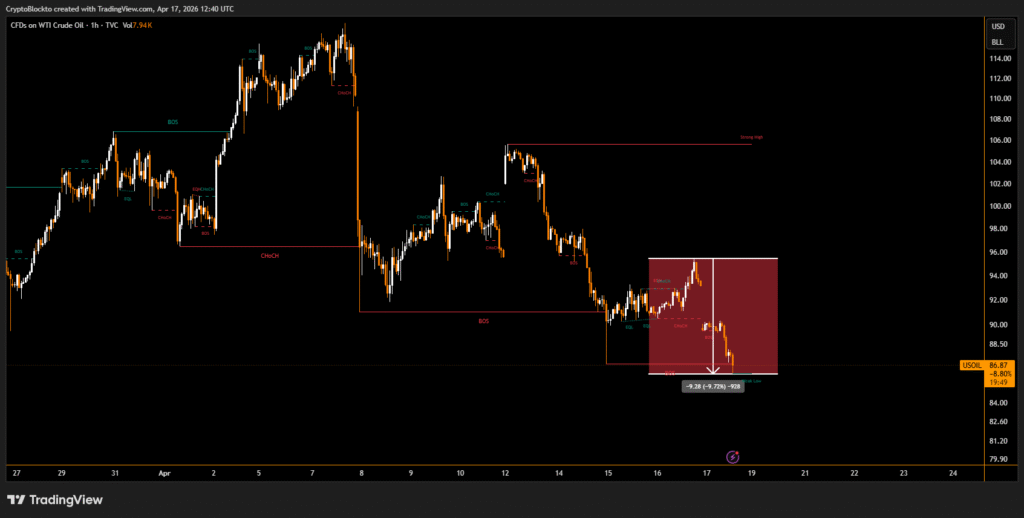
    Oil markets showed weakness during the talks.Wti Crude drops to $86 per barrel.

    WTI crude oil h1 price chart

    Funding Demands and Diplomatic Positions

    Earlier discussions included a $6 billion humanitarian release, while Iranian negotiators reportedly demanded $27 billion. U.S. officials said Iran has shown some movement but not enough for a final deal.

    Iran is also seeking the ability to sell oil at global market rates without sanctions and re-enter the international financial system, while U.S. officials insist the agreement must include full nuclear rollback measures. White House spokesperson Anna Kelly called the talks productive but declined to confirm details, citing sensitivity.

    Political Pressure and Ceasefire Outlook

    Senator Lindsey Graham said President Trump has communicated directly with Iranian officials during negotiations. Trump stated Iran agreed in principle to give up enriched uranium and pledged not to pursue nuclear weapons. He also warned that if no deal is reached, conflict could resume but said the ceasefire could be extended beyond April 21 if needed.

    Disclaimer

    This content is for informational purposes only and does not constitute financial, investment, or legal advice. Cryptocurrency trading involves risk and may result in financial loss.
  • Citadel Securities Signals Possible Entry Into Prediction Markets

    Citadel Securities Signals Possible Entry Into Prediction Markets

    Firm Explores Non-Sports Prediction Market Opportunities

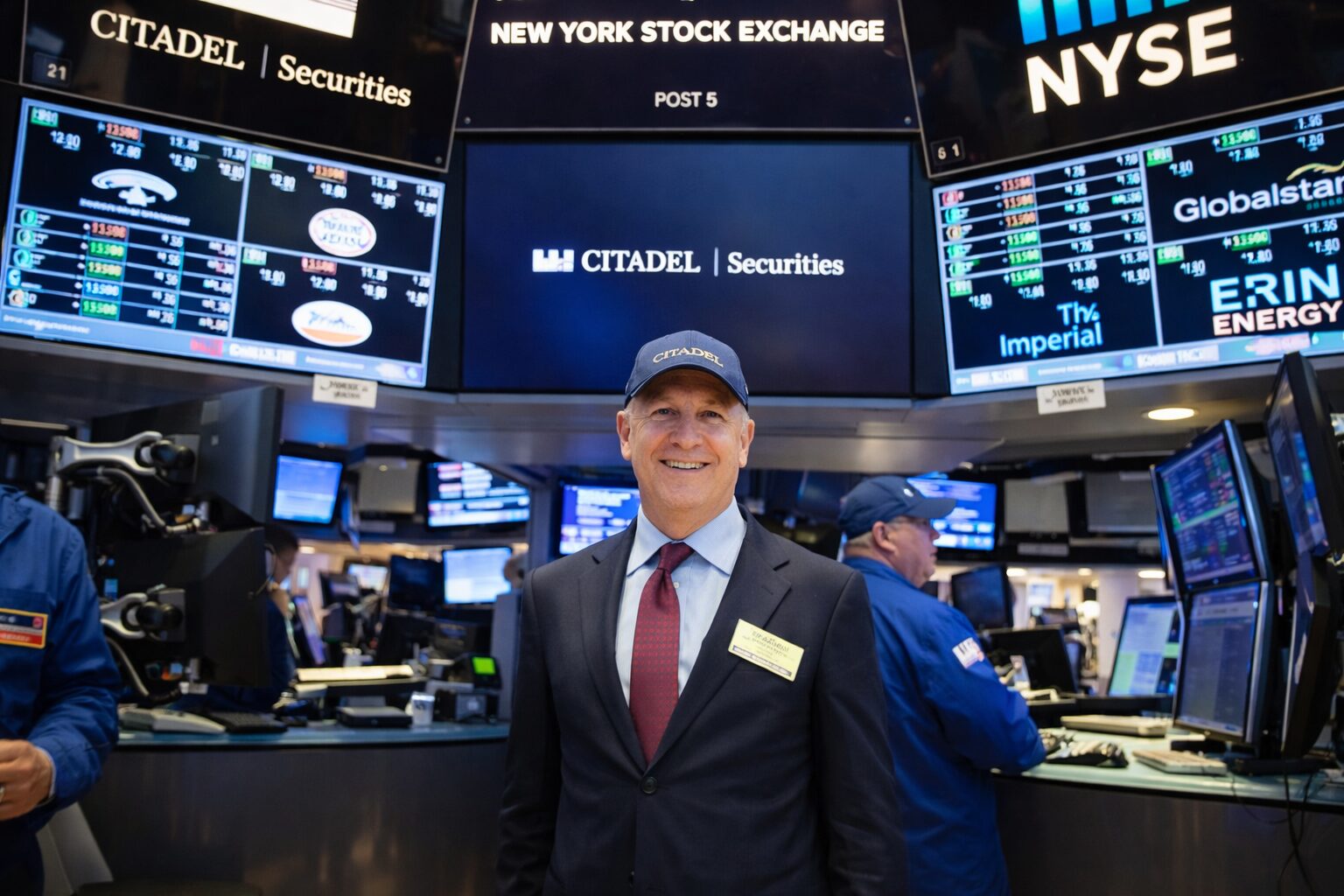
    Citadel Securities is considering entering the rapidly expanding prediction markets sector, according to its president Jim Esposito. Speaking at the Semafor World Economy Summit, Esposito said it is “certainly possible” the firm could provide liquidity to event-based markets as institutional demand grows.

    Esposito emphasized that the firm is not targeting sports contracts, which currently dominate the sector, but instead sees stronger long-term value in prediction markets tied to geopolitical and macroeconomic risks. He noted that institutional investors could use such contracts to hedge exposure to major events, including elections and global political developments.

    Prediction Market Growth Attracts Institutional Interest

    Prediction markets generated about $51 billion in trading volume during 2025, according to analysts at Bernstein, representing a tripling in activity year over year. Platforms such as Kalshi and Polymarket have already recorded a combined $60 billion in volume so far in 2026.

    Analysts project the sector could reach $240 billion in annual volume in 2026, with an estimated 80% compound annual growth rate over the next five years. Longer-term forecasts suggest prediction markets could approach $1 trillion in yearly trading volume by 2030, supported by regulatory clarity and broader distribution partnerships.

    Regulatory Debate Continues as Market Expands

    Oversight of prediction markets remains a key issue. The Commodity Futures Trading Commission has asserted exclusive jurisdiction over the sector and is working to establish formal rules as adoption increases.

    At a recent congressional hearing, Michael Selig faced questions from lawmakers regarding the agency’s capacity to supervise the growing industry. Meanwhile, sports-related contracts still account for approximately 62% of total prediction market activity, driven by fragmented sports betting regulations across U.S. states.

    Citadel Securities already processes retail trades through brokerages such as Charles Schwab and Robinhood, the latter of which integrates prediction markets through Kalshi. Esposito added that the firm continues to monitor developments closely, while CEO Peng Zhao previously participated in a $185 million funding round supporting Kalshi’s expansion.

    Disclaimer

    This content is for informational purposes only and does not constitute financial, investment, or legal advice. Cryptocurrency trading involves risk and may result in financial loss.

  • Crypto Market Enters Sustained Winter as Exchange Volumes Drop 39% in Q1

    Crypto Market Enters Sustained Winter as Exchange Volumes Drop 39% in Q1

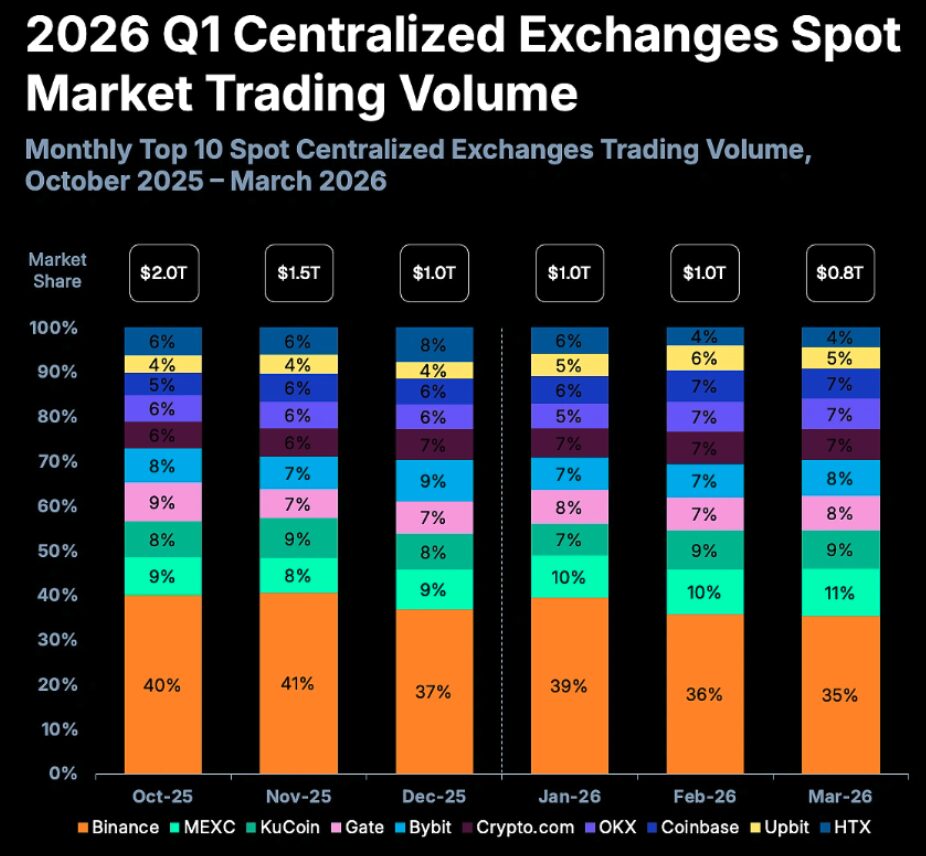
    The cryptocurrency market has entered what analysts describe as a sustained crypto winter, according to a new report from CoinGecko, as spot trading volumes across centralized exchanges declined sharply in the first quarter of 2026.

    Total crypto market capitalization dropped by more than 20% during the quarter, as bearish momentum from late 2025 combined with ongoing geopolitical instability. The top 10 centralized exchanges recorded a 39% decline in trading volume, falling to $2.7 trillion in Q1 from $4.5 trillion in the fourth quarter of 2025.

    Monthly trading volumes remained relatively steady at around $1 trillion in both January and February before falling sharply in March. The month recorded approximately $800 billion in total volume, making it the weakest month since November 2023.

    Trading volumes among the top 10 exchanges remained steady at $1 trillion a month in Jan and Feb before falling in March

    Bitcoin Weakness and Policy Uncertainty Add Pressure

    The downturn follows a period of market cooling after Bitcoin reached an all-time high above $126,000 about six months earlier. Since then, the market has faced pressure from fears of a global economic slowdown and uncertainty following U.S.–Israeli strikes on Iran in February.

    Average daily trading volume across the crypto market fell to $117.8 billion, representing a 27% decline compared to the previous quarter.

    Exchange and Asset Performance Show Broad Declines

    All of the top 10 centralized exchanges recorded falling volumes, with HTX experiencing the largest decline. The exchange saw trading activity fall 55% quarter-on-quarter to approximately $133.6 billion.

    During the same period, bitcoin prices declined by 22%, underperforming traditional markets such as the NASDAQ Composite and the S&P 500, which fell 7.1% and 4.8% respectively, marking their weakest quarterly performances since 2022.

    Disclaimer

    This content is for informational purposes only and does not constitute financial, investment, or legal advice. Cryptocurrency trading involves risk and may result in financial loss.

  • At Least 12 Crypto Entities Hit in Wave of Attacks After Drift Protocol Exploit

    At Least 12 Crypto Entities Hit in Wave of Attacks After Drift Protocol Exploit

    At least 12 DeFi protocols and crypto businesses have been attacked in just over two weeks following the Drift Protocol exploit on April 1, which saw losses of about $280 million in a long-running social engineering attack suspected to involve North Korean affiliated actors.

    The affected platforms include CoW Swap, Hyperbridge, Bybit, Dango, Silo Finance, BSC TMM, Aethir, MONA, Zerion, Rhea Finance, and Grinex exchange, showing a broad impact across both DeFi protocols and centralized services.

    Major Losses: Rhea Finance and Grinex Exchange

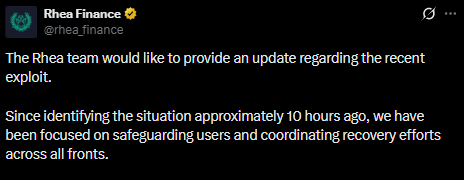
    DeFi protocol Rhea Finance lost around $7.6 million after an attacker exploited its Margin Trading feature, launching a coordinated pool manipulation attack that targeted the Rhea Lend smart contract. Blockchain security firm CertiK reported that the attacker created fake token contracts and added liquidity into new pools, likely tricking oracle and validation systems.

    Meanwhile, the Russia-linked Grinex exchange suspended operations after a $13.7 million hack, blaming “unfriendly states” for the breach. The exchange has been previously linked to Russia’s crypto ecosystem and sanctions-evasion concerns.

    Other April Attacks Across DeFi Ecosystem

    Additional incidents include a $1.67 million reserve manipulation attack on the Binance Smart Chain TMM/USDT liquidity pool, a $410,000 exploit at bridge aggregator Dango, a $392,000 oracle misconfiguration exploit at Silo Finance, and a $423,000 access control attack affecting Aethir.

    Expanding Threats and AI-Driven Social Engineering

    Analysts warn that attackers are increasingly using advanced AI tools for social engineering and credential theft, improving their ability to impersonate developers and infiltrate projects.

    Overall, malicious actors stole over $168.6 million from 34 DeFi protocols in Q1 2026, highlighting escalating coordinated threats across the crypto sector.

    Disclaimer

    This content is for informational purposes only and does not constitute financial, investment, or legal advice. Cryptocurrency trading involves risk and may result in financial loss.