Category: News

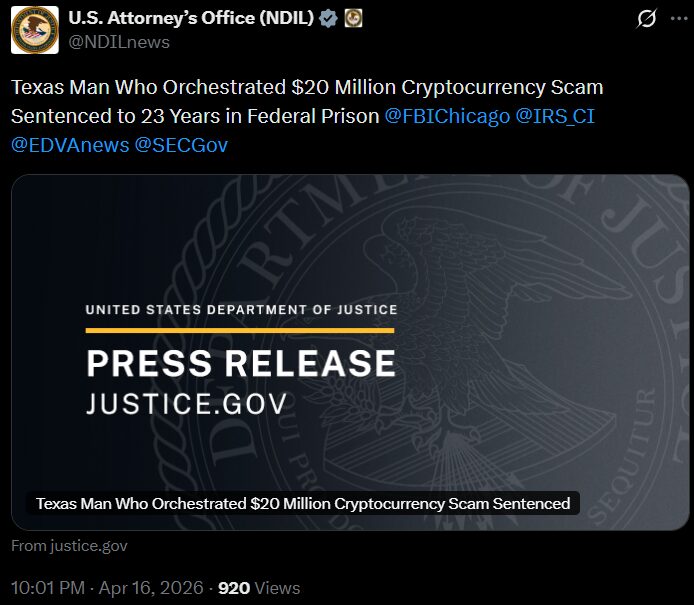
  • Texas Man Sentenced to 23 Years for $20 Million Meta-1 Coin Cryptocurrency Fraud

    Texas Man Sentenced to 23 Years for $20 Million Meta-1 Coin Cryptocurrency Fraud

    A Texas resident, Robert Dunlap, has been sentenced to 23 years in federal prison for his role in a cryptocurrency fraud scheme that defrauded nearly 1,000 investors of approximately $20 million. The sentencing was handed down by U.S. District Judge LaShonda Hunt on Tuesday, with Dunlap also ordered to pay restitution to victims.

    Federal prosecutors, including Assistant U.S. Attorneys Jared Hasten and Paige Nutini, described Dunlap as unrepentant in their sentencing memorandum, stating that his misrepresentations continued over several years.
    False Claims of Gold and Artwork Backing Misled Investors

    A federal jury in the Northern District of Illinois convicted Dunlap in November on two counts of mail fraud, each carrying a potential sentence of up to 20 years. Authorities said he conspired to market and sell the Meta-1 Coin through a trust structure between 2018 and 2023, making false claims that the token was backed by $44 billion in gold and a $1 billion art collection featuring works attributed to artists such as Pablo Picasso and Vincent van Gogh.

    Investigators found these claims to be fictional, with no legitimate assets supporting the token. Dunlap and associates also allegedly used automated trading bots to artificially inflate trading volume and prices on a platform called the Meta Exchange, which Dunlap created.

    SEC Intervention and Misuse of Investor Funds

    In March 2020, the U.S. Securities and Exchange Commission obtained emergency relief orders and an asset freeze against Dunlap and alleged accomplices Nicole Bowdler and former Washington state Senator David Schmidt.
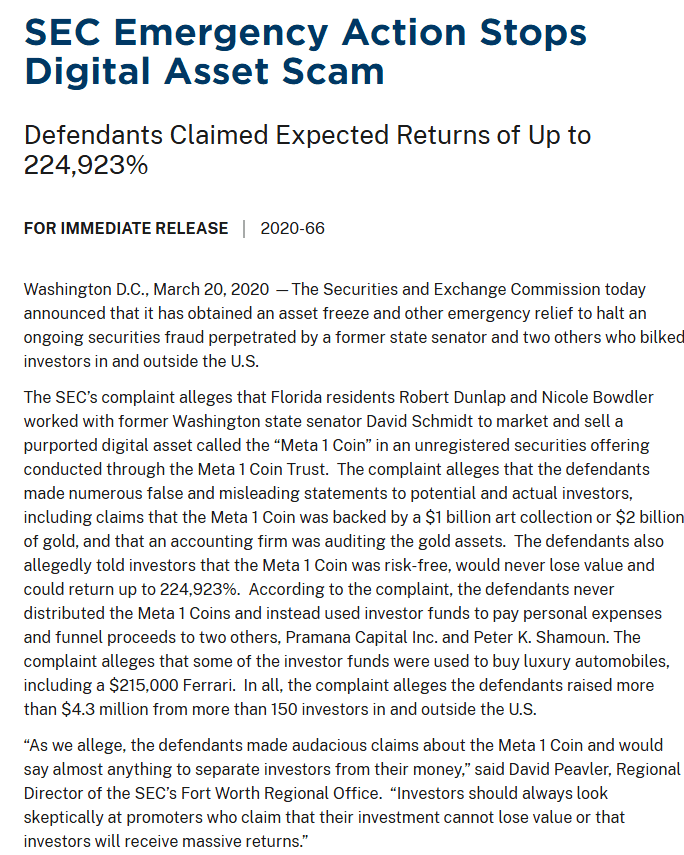
    Regulators said investors were promised risk-free returns of up to 224,923%, but tokens were never delivered. Instead, funds were diverted for personal expenses and luxury purchases, including high-end vehicles such as a Ferrari, highlighting ongoing enforcement efforts against large-scale crypto fraud schemes.

    Disclaimer

    This content is for informational purposes only and does not constitute financial, investment, or legal advice. Cryptocurrency trading involves risk and may result in financial loss.
  • U.S. Government Moves $606,000 in Bitcoin Linked to 2016 Bitfinex Hack

    U.S. Government Moves $606,000 in Bitcoin Linked to 2016 Bitfinex Hack

    Coinbase Transfer Sparks Attention but Not Immediate Selling Signal

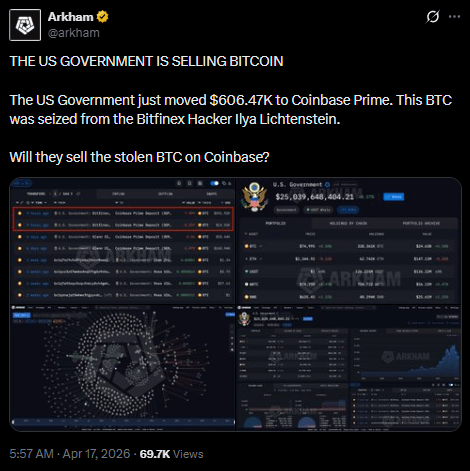
    The U.S. government has moved approximately $606,000 worth of bitcoin to Coinbase Prime, involving around 8 BTC tied to the 2016 Bitfinex hack. On-chain data from Arkham Intelligence links the transfer to wallets associated with hacker Ilya Lichtenstein, who orchestrated the original breach.

    While transfers to exchanges are often interpreted as potential selling pressure, analysts note this movement does not necessarily indicate liquidation. It may also reflect custody restructuring or administrative handling of seized assets.

    Court Rules Bitcoin Must Be Returned to Bitfinex

    Federal proceedings have established that the seized bitcoin must be returned in kind to Bitfinex, rather than being sold and sent to the U.S. Treasury. This means the government is required to transfer the actual bitcoin back to the exchange instead of converting it into fiat currency.

    Bitfinex plans to use the returned assets to fully redeem outstanding Recovery Right Tokens, which were issued to users affected by the 2016 hack. After redemptions, at least 80% of remaining net proceeds will be used to buy back and burn the exchange’s native token, UNUS SED LEO.

    Inside the 2016 Bitfinex Hack and Long Legal Aftermath

    The original exploit occurred in August 2016, when Lichtenstein executed more than 2,000 unauthorized transactions, draining 119,756 BTC, worth about $72 million at the time and roughly $8.9 billion today.

    Authorities later tracked complex laundering activity involving mixers, darknet services, and cross-chain transfers, along with gold purchases. In 2022, U.S. investigators seized a portion of the stolen bitcoin valued at $3.6 billion, marking one of the largest crypto seizures in history.

    Lichtenstein was sentenced to 60 months in federal prison in 2024 and released in January 2026 under the First Step Act. He later publicly thanked President Donald Trump on social media following his release.

    Government Holdings and Strategic Reserve Plans

    The seized bitcoin remains under U.S. custody and is part of broader government-held crypto assets. The U.S. has previously indicated that confiscated bitcoin may contribute to a national strategic bitcoin reserve, highlighting its evolving stance on digital asset holdings.

    Current estimates place U.S. government crypto holdings at approximately $24.54 billion in bitcoin, along with smaller positions in ether and other digital assets.

    Disclaimer

    This content is for informational purposes only and does not constitute financial, investment, or legal advice. Cryptocurrency trading involves risk and may result in financial loss.
  • Clarity Act Stablecoin Yield Proposal Delayed as Ban on Idle Rewards Remains

    Clarity Act Stablecoin Yield Proposal Delayed as Ban on Idle Rewards Remains

    Lawmakers Postpone Release of Updated Stablecoin Yield Language

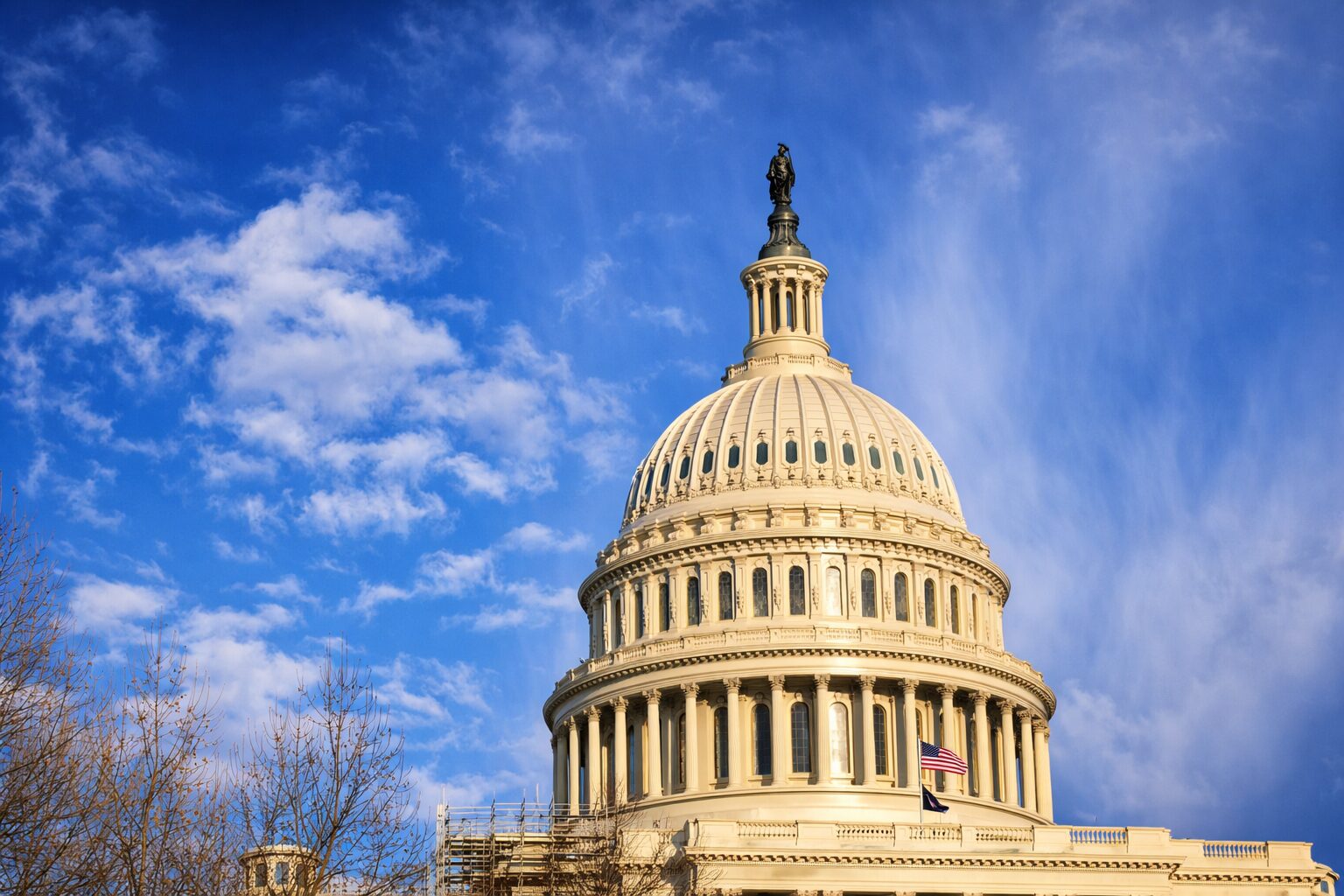
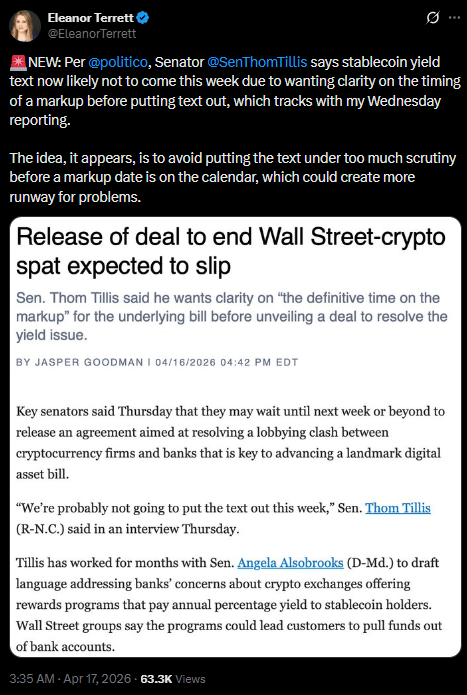
    The anticipated release of updated stablecoin yield provisions in the Clarity Act has been delayed until at least next week, according to lawmakers involved in the drafting process. U.S. Senator Thom Tillis said the updated language would not be published this week as he seeks clarity on the timing of the upcoming Banking Committee markup before making the draft public.

    Sources familiar with the discussions indicated that legislative teams continue to meet with bank trade associations and cryptocurrency companies to refine the text. The current draft reportedly maintains earlier language that bans rewards on idle stablecoin balances while allowing yield tied to transactional activity. According to insiders, making major changes to the draft at this stage could be difficult.

    Senator Tillis has been working alongside Angela Alsobrooks to address long-standing regulatory uncertainty over whether crypto companies should be permitted to pay interest on inactive stablecoin holdings.

    Dispute Over Stablecoin Rewards Remains Key Legislative Challenge

    The debate over stablecoin rewards has become the most contentious issue within the Clarity Act, a major legislative effort aimed at establishing comprehensive regulations for digital assets in the United States. The previously enacted GENIUS Act prohibits stablecoin issuers from paying interest directly to holders but does not restrict third-party platforms, including exchanges, from offering yield services.

    Traditional U.S. banks have warned that allowing interest on stablecoin balances could divert large volumes of deposits away from the banking system, potentially disrupting financial stability. Meanwhile, crypto firms such as Coinbase argue that banning such rewards could slow innovation and reduce competitive opportunities, noting that banks themselves could benefit from participating in the evolving digital asset ecosystem.

    Since early this year, the White House has hosted several closed-door meetings aimed at resolving the dispute, though no final agreement has yet been reached between the competing industry groups.

    Disclaimer

    This content is for informational purposes only and does not constitute financial, investment, or legal advice. Cryptocurrency trading involves risk and may result in financial loss.
  • Israel–Lebanon Ceasefire Takes Effect as Trump Calls for Peace and Signals Iran Deal Progress

    Israel–Lebanon Ceasefire Takes Effect as Trump Calls for Peace and Signals Iran Deal Progress

    Ceasefire Begins After Hours of Cross-Border Strikes

    A ceasefire between Israel and the Iran backed group Hezbollah came into effect at 22:00 BST on Thursday, following hours of continued cross-border strikes before the truce officially began.

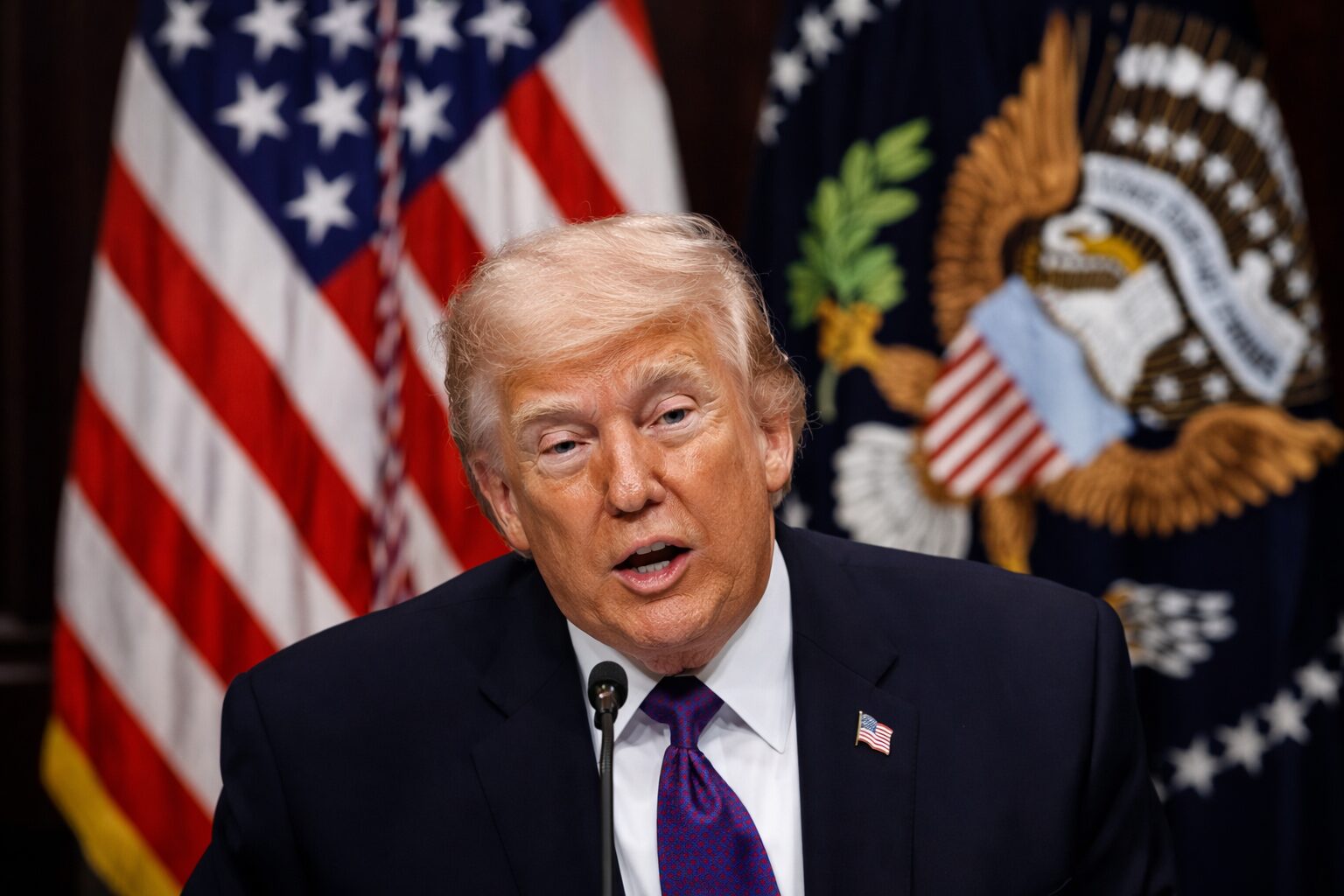
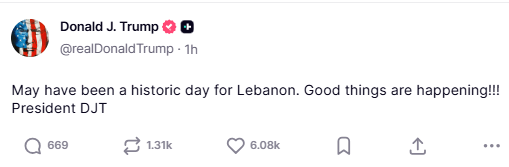
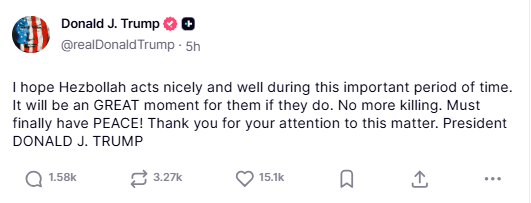
    President Donald Trump described the moment as a “historic day” for Lebanon and urged Hezbollah to act “nicely” during the ceasefire period. He also called for an end to hostilities, stating that it was time for “no more killing” and emphasizing the importance of maintaining peace during the fragile truce.

    Security analysts have warned that the ceasefire remains delicate, offering only temporary relief rather than a guaranteed long-term resolution. However, leaders in both Israel and Lebanon welcomed the agreement as an opportunity to reduce immediate tensions.

    Israeli Security Zone and Civilian Restrictions Remain in Place

    Despite the ceasefire taking effect, Israeli authorities confirmed that troops will remain deployed inside a 10-kilometer-deep security zone in southern Lebanon. Officials also warned Lebanese residents not to return to certain areas within the zone, citing ongoing security risks.

    This continued military presence highlights the fragile nature of the truce and underscores ongoing concerns about renewed violence if conditions are violated.

    Trump Signals Progress Toward Possible Iran Agreement

    Alongside the ceasefire announcement, President Trump stated that negotiations between the United States and Iran are “very close” to reaching a broader agreement. He added that diplomatic talks could resume as early as the upcoming weekend.

    If confirmed, progress in U.S.–Iran negotiations could play a major role in stabilizing regional tensions, particularly given Iran’s support for Hezbollah. Analysts note that the success or failure of these talks will likely influence the long-term stability of the Israel–Lebanon ceasefire.

    Disclaimer

    This content is for informational purposes only and does not constitute financial, investment, or legal advice. Cryptocurrency trading involves risk and may result in financial loss.
  • Ex-Treasury chief warns of US bond crash and calls for contingency planning

    Ex-Treasury chief warns of US bond crash and calls for contingency planning

    Henry Paulson urges emergency readiness as debt risks grow

    Former U.S. Treasury Secretary Henry Paulson warned that U.S. authorities should prepare a contingency plan for a possible collapse in demand for U.S. Treasurys, saying the impact would be severe. He stressed the need for a short-term “break-the-glass” emergency plan ready to deploy when market stress intensifies.

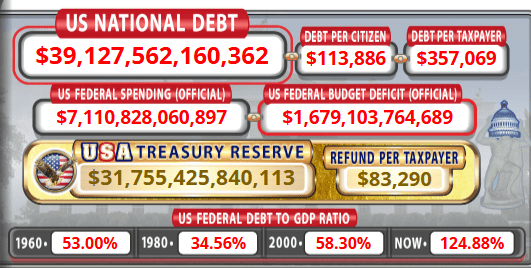
    The U.S. Treasury market underpins the global financial system and serves as the benchmark for pricing corporate bonds, mortgages and equities. Economists have warned of a potential “doom loop” as national debt surpasses $39 trillion, pushing investors to demand higher yields. Interest payments on 10-year notes currently stand near 4.3%, increasing fiscal pressure. If borrowing costs rise further, the Federal Reserve could become the principal buyer of government debt.

    Treasury stress could create mixed outlook for crypto markets

    A crisis in the $31 trillion Treasury market could drive investors toward alternatives like Bitcoin, especially if inflation fears weaken confidence in the dollar. However, risks remain because Tether holds about 63% of reserves in Treasury bills and 10% in reverse repurchase agreements.

    Research lead Andri Fauzan Adziima from Bitrue said such an event could trigger short term liquidity stress. Meanwhile, the U.S. Department of the Treasury conducted its largest buyback, accepting $15 billion in securities maturing between 2026 and 2028 to improve liquidity.

    Disclaimer

    This content is for informational purposes only and does not constitute financial, investment, or legal advice. Cryptocurrency trading involves risk and may result in financial loss.
  • Grinex Exchange Suspends Trading After $14 Million Hack Linked to Sanctions Concerns

    Grinex Exchange Suspends Trading After $14 Million Hack Linked to Sanctions Concerns

    Grinex Halts Operations Following Major Security Breach

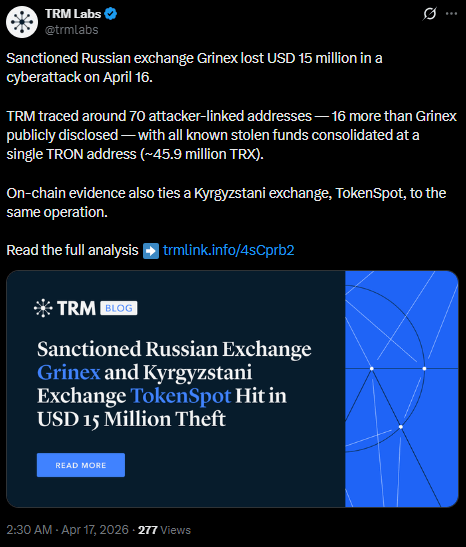
    Sanctioned cryptocurrency exchange Grinex suspended trading operations after losing more than 1 billion Russian rubles (about $13.7 million) in a cyberattack that targeted 54 digital wallet addresses. The platform, registered in Kyrgyzstan but widely linked to Russia’s crypto ecosystem, said the nature of the breach suggested the involvement of highly sophisticated actors.

    In an official statement, the exchange described the attack as showing an “unprecedented level of resources and technology” typically associated with hostile state-backed entities. Grinex confirmed that all available data has been transferred to law enforcement authorities and that a criminal complaint has been filed at the infrastructure location.

    Grinex has been widely viewed as the successor to the previously sanctioned Garantex exchange. Both platforms have been accused by U.S. authorities of assisting Russian entities in evading sanctions and facilitating money laundering activities tied to Russia-linked hackers.

    Investigators Link Additional Wallets and Exchanges to Attack

    Blockchain intelligence firm TRM Labs reported that the attack may have extended beyond Grinex. Investigators identified 16 additional wallet addresses connected to the incident beyond those publicly disclosed. The consolidation wallet used by the attacker reportedly holds about 45.9 million TRON (TRX), valued at nearly $15 million.

    TRM Labs also noted that TokenSpot, another Kyrgyzstan-based exchange with on-chain links to Grinex, may have been indirectly affected. Two wallets associated with TokenSpot transferred roughly $5,000 to the same consolidation address used in the Grinex breach. TokenSpot later reported technical maintenance on April 15, followed by the restoration of full operations the next day.

    Stolen USDT Converted to Avoid Asset Freezing

    Blockchain analytics company Elliptic tracked approximately $15 million in USDT leaving Grinex-linked accounts during the attack. According to investigators, the stolen funds were transferred across the Tron and Ethereum blockchains and converted into other assets such as TRX or ETH.

    This incident follows similar high-profile breaches, including a June 2025 attack on Iran-based exchange Nobitex, where roughly $81 million was stolen by a group claiming pro-Israel affiliations, highlighting ongoing security and geopolitical risks in the crypto sector.

    Disclaimer

    This content is for informational purposes only and does not constitute financial, investment, or legal advice. Cryptocurrency trading involves risk and may result in financial loss.
  • Circle Faces Lawsuit After $280 Million Drift Protocol Hack Over Unfrozen USDC Funds

    Circle Faces Lawsuit After $280 Million Drift Protocol Hack Over Unfrozen USDC Funds

    Investor Joshua McCollum Files Class Action Alleging Negligence by Circle

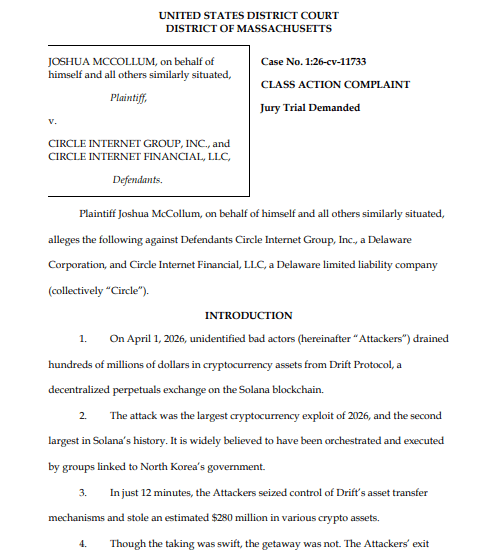
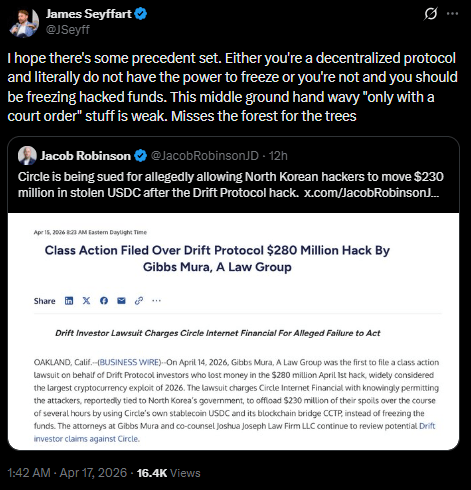
    Stablecoin issuer Circle Internet Group is facing a class action lawsuit after the $280 million exploit of Drift Protocol on April 1, with investors alleging the company failed to act quickly to stop stolen funds from being moved. The lawsuit was filed in a U.S. district court in Massachusetts by Drift investor Joshua McCollum on behalf of more than 100 affected investors.

    The complaint claims Circle allowed attackers to transfer approximately $230 million in USDC from the Solana blockchain to Ethereum using Circle’s Cross-Chain Transfer Protocol (CCTP) over several hours without intervention. Attorneys representing McCollum argued that Circle permitted the criminal use of its services and that the losses could have been prevented or reduced if timely action had been taken. The lawsuit accuses Circle of aiding and abetting conversion and negligence, with damages to be determined during trial proceedings.

    Legal Debate Grows Over Crypto Firms’ Responsibility During Hacks

    The case highlights a growing legal grey area regarding whether crypto companies should intervene when exploits occur. Lawyers representing the investors noted that Circle froze 16 USDC wallets in connection with a sealed civil case roughly a week before the Drift incident, suggesting the company had the technical capability to act.

    Blockchain analytics firm Elliptic linked the exploit to suspected North Korean state-backed hackers, who reportedly executed more than 100 transactions during U.S. working hours. The stolen funds were later converted into Ether and routed through the Tornado Cash privacy protocol to obscure their origin.

    Lorenzo Valente, director of research for digital assets at ARK Invest, argued that freezing funds without a legal order could create risks of arbitrary decision-making, underscoring the broader debate between regulatory compliance and rapid intervention during cyberattacks.

    Disclaimer

    This content is for informational purposes only and does not constitute financial, investment, or legal advice. Cryptocurrency trading involves risk and may result in financial loss.
  • CFTC Relies on AI as Staffing Cuts Challenge Oversight of Crypto and Prediction Markets

    CFTC Relies on AI as Staffing Cuts Challenge Oversight of Crypto and Prediction Markets

    Mike Selig Highlights AI Role as Workforce Shrinks and Duties Expand

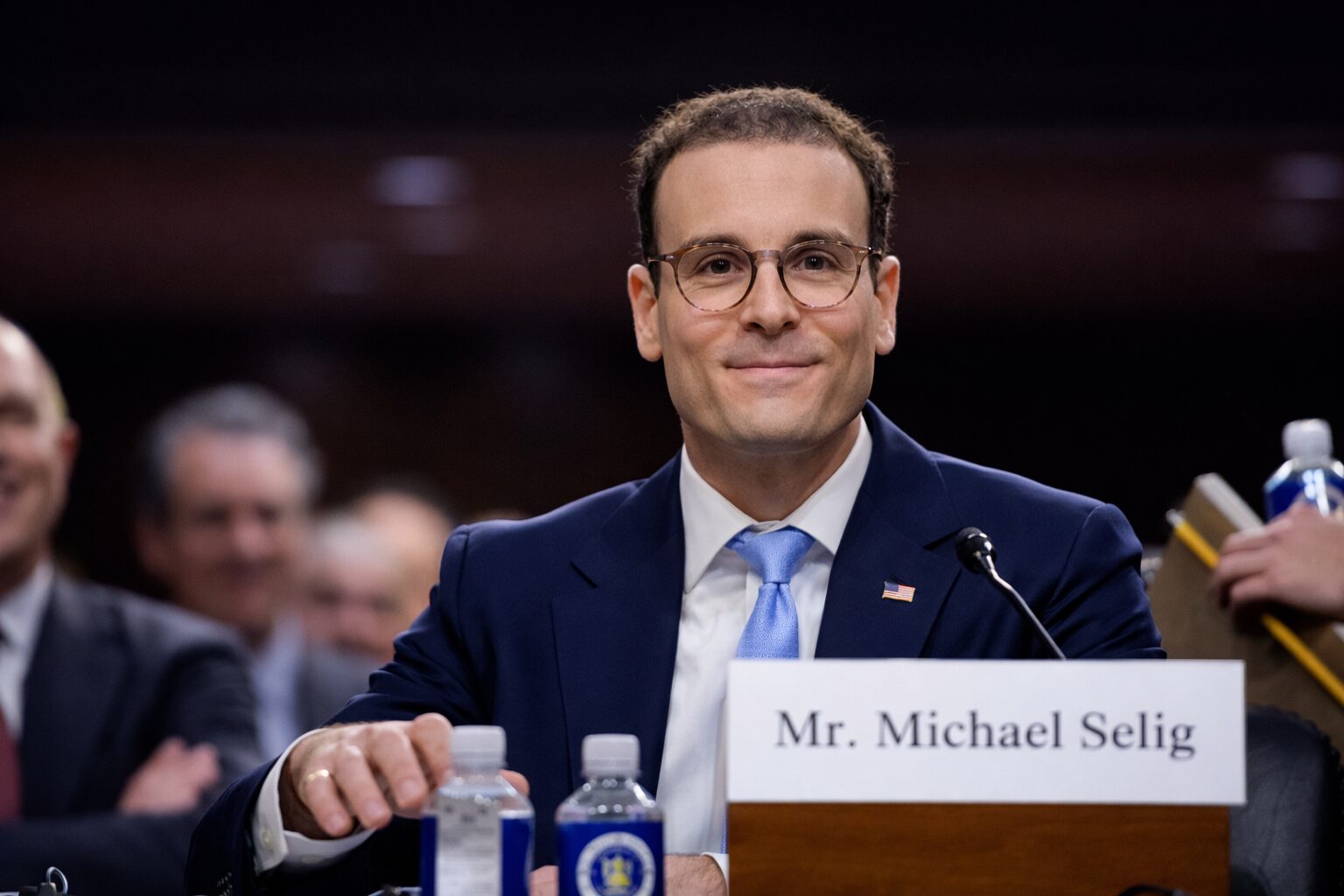
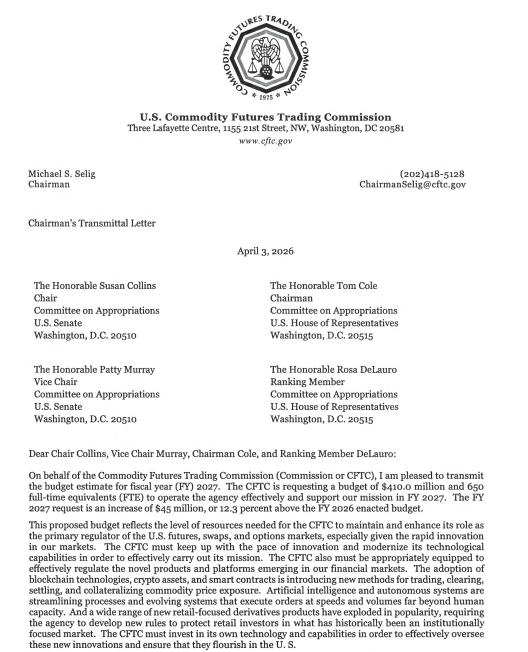
    U.S. Commodity Futures Trading Commission Chairman Mike Selig told lawmakers that artificial intelligence is helping the agency manage growing oversight responsibilities despite major staffing reductions. Speaking before the House Agriculture Committee chaired by Glenn “GT” Thompson, Selig said AI tools are now integrated into surveillance systems and investigative workflows to improve efficiency as demands increase.

    Agency records show roughly a quarter of the CFTC workforce has departed since 2025 under federal workforce cuts introduced during President Donald Trump’s administration. Even with fewer personnel, the regulator is taking on broader duties tied to cryptocurrency oversight and the fast-growing prediction markets sector. The agency’s upcoming budget request seeks funding for only three additional enforcement staff, bringing the total to 108 employees, still about 23% below the 140 staff members recorded in 2025.

    CFTC

    Numerous Prediction Market Investigations Underway as Regulatory Pressure Grows

    Selig confirmed that “numerous investigations” are currently underway involving prediction markets but declined to specify the number or focus. The CFTC is asserting jurisdiction over platforms such as Polymarket and Kalshi, which have grown from millions to billions in trading volume within a year.

    Representative Angie Craig warned that the agency’s workforce is stretched too thin, while former Chairman Rostin Behnam had previously argued that additional staff would be necessary to effectively oversee expanding crypto and prediction market activity.

    Disclaimer

    This content is for informational purposes only and does not constitute financial, investment, or legal advice. Cryptocurrency trading involves risk and may result in financial loss.

  • Crypto Investor Risks Rise as Most Protocols Fail to Reveal Liquidity Agreements

    Crypto Investor Risks Rise as Most Protocols Fail to Reveal Liquidity Agreements

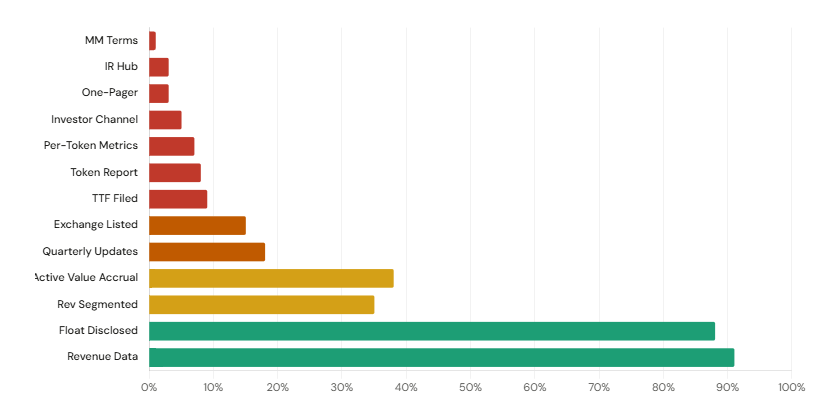
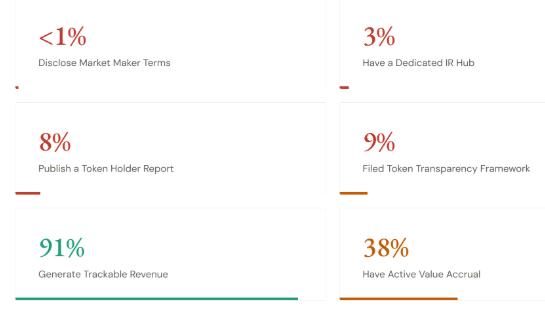
    A new study by Novora has revealed a major transparency gap across the digital asset sector, with fewer than 1% of crypto protocols publicly disclosing their market-making arrangements. The research reviewed more than 150 major protocols across sectors such as decentralized exchanges, lending platforms, perpetual futures, layer-1 and layer-2 networks, and cross-chain bridges.

    Among all projects analyzed, only the decentralized liquidity platform Meteora was found to have shared public details about its market-making terms, referencing information from its 2025 token holder report. The reviewed protocols ranged widely in size, with fully diluted valuations between approximately $40 million and $45 billion.

    Disclosure metrics assessed across 150+ protocols

    Investor Reporting Practices Remain Limited Across Sector

    The findings highlight broader investor communication weaknesses across crypto markets. While 91% of protocols were shown to generate measurable revenue, only 18% issued quarterly updates, and just 8% released formal reports for token holders.

    Data validation for the study relied on widely used analytics platforms such as Artemis, Token Terminal, Dune Analytics, DefiLlama, and Blockworks Research, indicating that relevant operational data exists but is rarely formalized into accessible disclosures.

    The state of crypto IR

    Market-maker agreements have faced growing scrutiny due to concerns that certain structures may incentivize aggressive token selling. Regulators, including the U.S. Securities and Exchange Commission, have previously pursued enforcement actions against firms accused of manipulating token prices.

    Analysts warn that improving disclosure standards could strengthen investor confidence and reduce risks tied to poorly structured liquidity arrangements, particularly as crypto markets continue to mature and attract institutional participation.

    Disclaimer

    This content is for informational purposes only and does not constitute financial, investment, or legal advice. Cryptocurrency trading involves risk and may result in financial loss.
  • Trump Announces 10-Day Israel–Lebanon Ceasefire Following Escalating Regional Conflict

    Trump Announces 10-Day Israel–Lebanon Ceasefire Following Escalating Regional Conflict

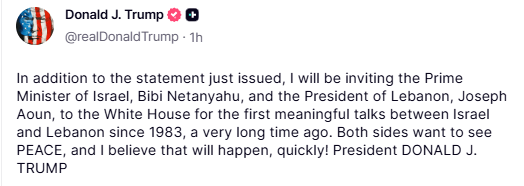
    U.S. President Donald Trump announced that Israel and Lebanon have agreed to a temporary 10-day ceasefire aimed at reducing tensions after weeks of intense cross border conflict. The truce is scheduled to take effect at 5 p.m. EST (21:00 GMT) on Thursday, following discussions with Israeli Prime Minister Benjamin Netanyahu and Lebanese President Joseph Aoun.

    Trump said both leaders formally agreed to begin the ceasefire in an effort to move toward peace between the two countries. Lebanese Prime Minister Nawaf Salam welcomed the announcement, describing the truce as a central Lebanese demand that had been pursued since the early days of the conflict. He said the ceasefire was also the main objective of recent talks between Lebanese and Israeli officials held in the United States.

    Conflict Escalation Led to Heavy Casualties and Mass Displacement

    Lebanon became directly involved in the conflict on March 2, when Hezbollah launched rockets into Israel following the killing of Iranian Supreme Leader Ali Khamenei on February 28 during an Israeli strike at the start of a broader U.S.-Israel war involving Iran.

    Israeli military operations in response have caused significant damage across Lebanon, with more than 2,100 people reported killed and thousands injured. Authorities also issued evacuation orders affecting roughly 15% of Lebanese territory, forcing more than one million residents to leave their homes.

    Recent strikes in southern Lebanon’s Tyre district reportedly killed nine people over two days, including a paramedic. Salam expressed condolences for victims and voiced hope that displaced civilians would be able to return home quickly if the ceasefire holds.

    Trump also stated that he plans to invite Netanyahu and President Aoun to direct negotiations, adding that both sides appear willing to pursue longer-term solutions to resolve their differences.

    Disclaimer

    This content is for informational purposes only and does not constitute financial, investment, or legal advice. Cryptocurrency trading involves risk and may result in financial loss.