Category: News

  • Cato Institute Urges U.S. to Remove Crypto Capital Gains Tax to Boost Currency Competition

    Cato Institute Urges U.S. to Remove Crypto Capital Gains Tax to Boost Currency Competition

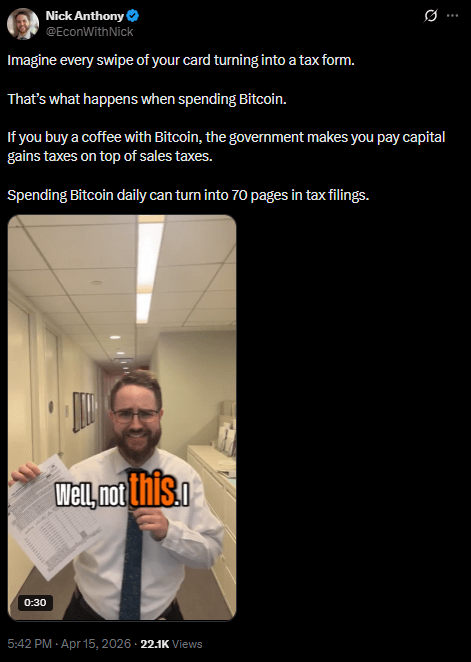
    The Cato Institute, a Washington, D.C.–based public policy think tank, has called on the United States government to eliminate capital gains taxes on cryptocurrencies such as Bitcoin to encourage broader currency competition. Policy scholar Nicholas Anthony argued that current tax rules discourage the everyday use of digital assets as payment methods.

    Under existing U.S. law, using crypto to purchase goods or services can trigger a taxable event, similar to selling stocks or real estate. Anthony noted that frequent small transactions such as daily purchases can result in complex reporting requirements, making crypto less practical as a currency.
    Alternative Tax Models Under Consideration

    Anthony suggested that fully removing capital gains taxes would be the simplest approach. However, he also outlined other possible solutions, including eliminating taxes only on cryptocurrency and foreign currency transactions to encourage monetary competition.

    Another option discussed was introducing a de minimis tax rule, which would exempt small transactions from capital gains reporting. While partial exemptions could reduce the burden, Anthony warned they might still create compliance challenges if users must verify transaction details.

    Growing Crypto Adoption Strengthens Policy Debate

    Data cited in the report shows that crypto usage for payments continues to expand. A 2025 survey by the National Crypto Association found that 39% of U.S. crypto holders reported using digital assets to purchase goods and services.

    Additionally, research from Springer Nature identified approximately 11,000 merchants worldwide accepting Bitcoin payments, highlighting the growing relevance of digital currencies in global commerce.

    Disclaimer

    This content is for informational purposes only and does not constitute financial, investment, or legal advice. Cryptocurrency trading involves risk and may result in financial loss.


  • BitMEX Proposes Canary Fund Model as Alternative to Bitcoin Quantum Coin Freeze

    BitMEX Proposes Canary Fund Model as Alternative to Bitcoin Quantum Coin Freeze

    BitMEX Research has introduced a proposed alternative to freezing dormant Bitcoin that may be vulnerable to future quantum computing attacks. Instead of immediately restricting access to older coins, the proposal recommends a soft fork that would only activate a full freeze if a quantum computer capable of stealing Bitcoin is proven to exist.

    The concept relies on a “canary approach,” which creates a special Bitcoin address generated using a Nothing-Up-My-Sleeve Number (NUMS). This cryptographic method ensures the private key is unknown, meaning the address cannot be spent under normal circumstances but could be accessed if powerful quantum technology becomes available.

    How the Canary Watch System Would Work

    Under the model, users could voluntarily donate Bitcoin to the canary address as a bounty. If a quantum-capable actor successfully spends funds from the address, it would act as proof of a real threat and automatically trigger protective measures. Until then, older coins would remain spendable under a “canary watch state,” reducing disruption to the network.

    The proposal also allows participants to secure funds using multisignature wallets and withdraw contributions at any time.

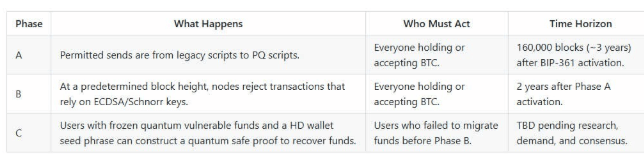
    Proposed 3 phase solution in BIP-361.: GitHub

    Debate Around BIP-361 and Quantum Security Plans

    This proposal comes after the introduction of BIP-361, a plan that suggested freezing dormant Bitcoin considered vulnerable to quantum attacks. The idea drew criticism from parts of the community, with some describing it as overly restrictive. BIP-361 co-author Jameson Lopp later clarified that the proposal was intended as a preliminary contingency concept rather than a finalized upgrade plan, highlighting concerns about potential supply shocks if quantum computing capabilities advance rapidly.

    Disclaimer

    This content is for informational purposes only and does not constitute financial, investment, or legal advice. Cryptocurrency trading involves risk and may result in financial loss.
  • CFTC Probes Oil Futures Trades Linked to Trump Iran Decisions

    CFTC Probes Oil Futures Trades Linked to Trump Iran Decisions

    The US Commodity Futures Trading Commission (CFTC) has opened an investigation into unusual oil futures trades placed shortly before key announcements by President Donald Trump concerning the Iran conflict. The probe focuses on trading activity on CME Group’s NYMEX and the Intercontinental Exchange platforms, where regulators observed sudden surges in trading volumes.

    According to reports, the CFTC is requesting “Tag 50” identity data from exchanges. This information is commonly used for regulatory audits and helps authorities identify individual traders involved in specific transactions.

    Key Trading Spikes Before Iran Announcements

    Investigators are examining at least two instances over a two week period. The first occurred on March 23, when billions of dollars in oil futures were traded roughly 15 minutes before Trump postponed planned strikes on Iranian energy infrastructure. The second spike took place on April 7, shortly before the administration announced a two-week ceasefire with Iran. These trades coincided with falling oil prices and gains in equity markets.

    Officials Warn of Insider Trading Risks in Prediction Markets

    Brian Young, a partner at Jones Day and former director of the CFTC enforcement division, noted that cases involving oil futures are a high priority because fuel prices closely track futures markets. Meanwhile, current enforcement director David Miller stated on March 31 that insider trading laws also apply to prediction markets. Growing scrutiny from lawmakers has pushed platforms such as Kalshi and Polymarket to introduce stricter rules, while the proposed Public Integrity in Financial Prediction Markets Act of 2026 aims to limit insider advantages among government officials.

    Disclaimer

    This content is for informational purposes only and does not constitute financial, investment, or legal advice. Cryptocurrency trading involves risk and may result in financial loss.

  • World Liberty Financial Proposal Sparks Governance Backlash as Justin Sun Calls It ‘Absurd Scam’

    World Liberty Financial Proposal Sparks Governance Backlash as Justin Sun Calls It ‘Absurd Scam’

    World Liberty Financial is facing strong criticism after introducing a governance proposal that would extend lock-up and vesting periods for early supporters of WLFI tokens by up to four years. The proposal aims to restructure token distribution across founders, advisors, partners, and early investors.

    Under the plan, more than 62 billion WLFI tokens currently under indefinite lockups would be shifted to fixed schedules. Founders and team members would face a two-year lock-up followed by a three-year linear vesting period, along with a requirement to burn 4.5 billion tokens. Early supporters holding over 17 billion tokens would be subject to a two-year cliff and an additional two-year vesting period, fully unlocking after four years.

    Justin Sun and Investors Criticize Governance Model

    Tron founder Justin Sun, the project’s largest individual investor, strongly opposed the proposal, calling it one of the “most absurd governance scams” he has encountered. He argued the system effectively punishes dissent, stating that holders who do not approve the new schedule would remain locked indefinitely under current terms.

    Sun also alleged that voting rights are undermined by centralized control mechanisms, including an anonymous multisignature wallet and an externally controlled account capable of blacklisting addresses. He claimed this structure makes governance votes ineffective and symbolic.

    Broader Investor Concerns and Market Fallout

    Other WLFI holders have also raised concerns, with some warning of potential legal action and questioning the fairness of the proposed changes. Critics argue the structure could trap investors while allowing early insiders to maintain control over token liquidity and financial benefits.

    X user Isonips wrote;

    Additional controversy stems from reports that WLFI tokens were used as collateral on lending platforms to borrow stablecoins, further intensifying scrutiny over the project’s transparency and governance practices.

    Disclaimer

    This content is for informational purposes only and does not constitute financial, investment, or legal advice. Cryptocurrency trading involves risk and may result in financial loss.

  • Iran Threatens Red Sea Shipping While Trump Signals Efforts to Ease Israel–Lebanon Conflict

    Iran Threatens Red Sea Shipping While Trump Signals Efforts to Ease Israel–Lebanon Conflict

    Iran has warned it could escalate maritime disruptions if the U.S. continues its blockade of the Strait of Hormuz. Iranian armed forces said they may target shipping routes across the Persian Gulf, Sea of Oman, and Red Sea if Iranian commercial vessels and oil tankers face continued restrictions or insecurity.

    The threat raises concerns over global energy supply chains, as the Strait of Hormuz remains one of the world’s most critical oil transit corridors.

    U.S. Signals on De-escalation and Diplomatic Talks

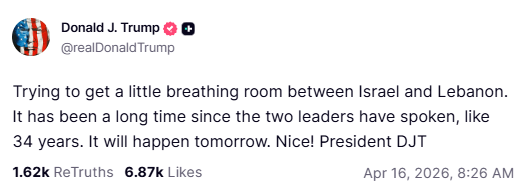
    U.S. President Donald Trump said efforts are underway to create “breathing room” between Israel and Lebanon as regional tensions persist. He also suggested the conflict is “very close to over,” while diplomatic communication with Tehran reportedly continues through intermediaries, including Pakistan.

    According to reports, in-person U.S.–Iran talks could resume as early as this week, with both sides still exchanging messages amid ongoing negotiations.

    China Response and Regional Diplomatic Shifts

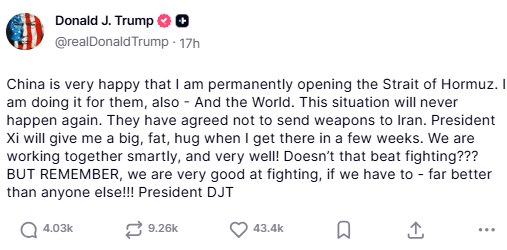
    Trump also claimed that China is “very happy” about efforts to stabilize maritime routes, after Beijing criticized the U.S. blockade as “dangerous.” He further stated that Chinese President Xi Jinping agreed not to supply weapons to Iran, though no independent confirmation has been provided.

    Separately, Israel and Lebanon have continued rare direct discussions in Washington while conflict with Hezbollah escalates, displacing over one million people in Lebanon.

    According to Iranian forensic officials, more than 3,300 people have been killed in Iran since late February. Additional reported casualties include over 2,100 in Lebanon, 32 in Gulf states, 23 in Israel, and 13 U.S. service members, alongside two non-combat deaths.

    Disclaimer

    This content is for informational purposes only and does not constitute financial, investment, or legal advice. Cryptocurrency trading involves risk and may result in financial loss.

  • Kalshi Plans Parent Verification Portal to Prevent Minors From Accessing Prediction Markets

    Kalshi Plans Parent Verification Portal to Prevent Minors From Accessing Prediction Markets

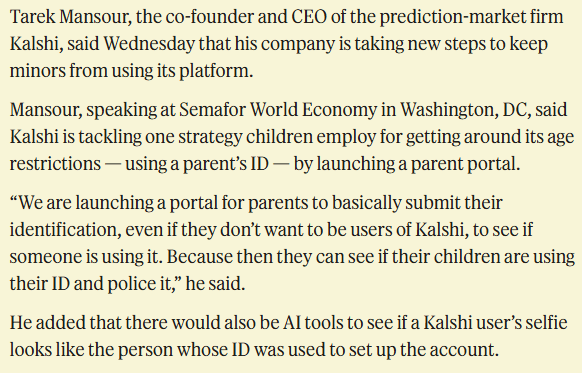
    Prediction markets platform Kalshi is preparing to launch a new parent verification portal aimed at preventing minors from bypassing age restrictions. The initiative was outlined by CEO Tarek Mansour, who said the system will allow parents to submit identification details to confirm whether their children are using accounts registered under parental credentials.

    The move follows reports of minors gaining access to the platform by using a parent’s identification to bypass the minimum age requirement of 18 years for US-based users. Alongside the portal, Kalshi plans to integrate selfie-based identity checks powered by artificial intelligence, enabling the system to compare facial data and detect mismatches between account holders and verified users.

    Increased Competition and Regulatory Scrutiny Surround Prediction Markets

    The planned safeguards come as prediction market platforms face rising scrutiny across the United States. Crypto firms have also moved to challenge Kalshi’s market presence, including recent developments from Binance, which integrated prediction market features into its wallet application, and Crypto.com, which partnered with High Roller Technologies to expand similar offerings.

    Kalshi maintains that its operations fall under the exclusive jurisdiction of the Commodity Futures Trading Commission. This stance has been supported in legal filings by Michael Selig, reinforcing the company’s regulatory position amid ongoing disputes.

    Court Decisions Shape Future of Event-Based Contracts

    Legal battles surrounding prediction markets remain active at both state and federal levels. Recently, a federal judge in Arizona blocked state authorities from applying local gambling laws to Kalshi’s event contracts. A similar ruling in New Jersey supported the argument that federal oversight under the Commodity Exchange Act takes precedence over state gambling regulations.

    Disclaimer

    This content is for informational purposes only and does not constitute financial, investment, or legal advice. Cryptocurrency trading involves risk and may result in financial loss.
  • Bitnomial Launches Injective Futures in US, Boosting ETF Prospects for INJ

    Bitnomial Launches Injective Futures in US, Boosting ETF Prospects for INJ

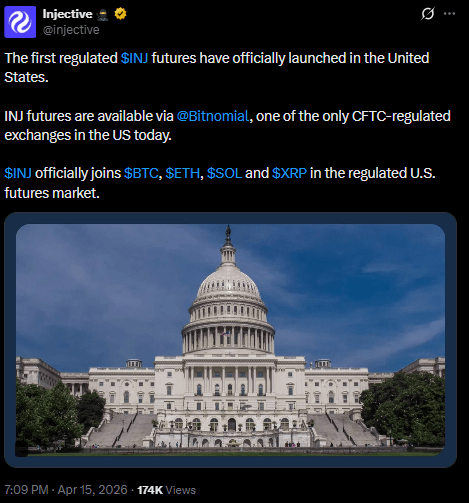
    Chicago based crypto derivatives exchange Bitnomial has launched monthly futures contracts tied to Injective (INJ), marking the first US-regulated derivatives product linked to the token. The contracts settle directly in INJ and feature monthly expiries, enabling traders to gain price exposure without holding the underlying asset.

    The futures can be margined in both cryptocurrency and US dollars through Bitnomial’s clearinghouse. Institutional clients have already been granted access, while retail participation is expected to roll out soon through the Botanical trading platform. The exchange also confirmed plans to introduce perpetual futures and options contracts tied to INJ in the future.

    Bitnomial operates a fully integrated trading venue, brokerage and clearinghouse regulated by the Commodity Futures Trading Commission, reinforcing compliance within the evolving US crypto market.

    ETF Eligibility and Injective Ecosystem Growth

    The launch begins a six-month performance track record, a key requirement that could support a potential spot ETF tied to Injective. Earlier, Canary Capital filed for a staked INJ ETF, with Cboe BZX Exchange submitting a related rule change to the US Securities and Exchange Commission.

    Injective (INJ) runs on a Layer 1 blockchain designed for financial applications, featuring an on-chain order book and cross-chain compatibility with networks such as Ethereum (ETH) and Solana (SOL).

    Expanding Altcoin Futures Competition in the United States

    Previous regulatory tensions also shaped the market. In August 2024, Bitnomial attempted to list XRP (XRP) futures through self-certification, but faced challenges from the US Securities and Exchange Commission. After filing a lawsuit in October 2025, the company later dropped the case in March and proceeded to launch regulated XRP futures as regulatory guidance evolved.

    Disclaimer

    This content is for informational purposes only and does not constitute financial, investment, or legal advice. Cryptocurrency trading involves risk and may result in financial loss.
  • Crypto-Backed PAC Spends $8 Million to Challenge Sherrod Brown in Ohio Senate Race

    Crypto-Backed PAC Spends $8 Million to Challenge Sherrod Brown in Ohio Senate Race

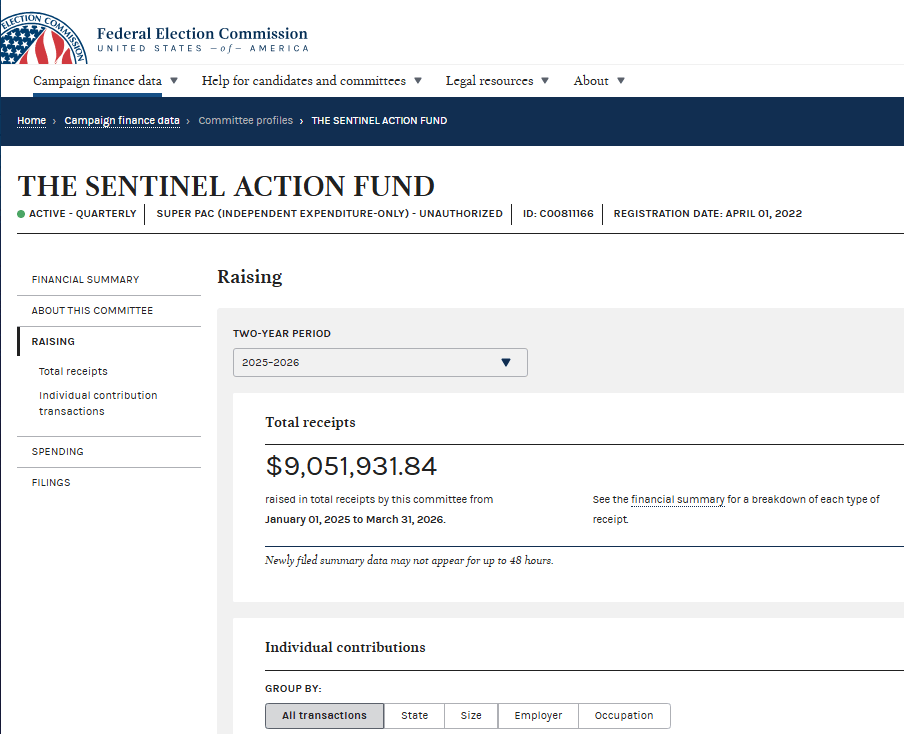
    A political action committee supported by crypto industry interests is investing millions into the Ohio Senate race, aiming to block the return of former Senator Sherrod Brown. The group, Sentinel Action Fund, announced plans to spend $8 million supporting Republican candidate Jon Husted in the closely contested election.

    Funding for the PAC includes backing from the Solana Policy Institute and venture firm Multicoin Capital. The committee criticized Brown, previously chairman of the Senate Banking Committee, for policies it claims slowed innovation in digital assets during his tenure.

     FEC

    Major Donors and Industry Support Highlight Growing Political Influence

    Several high-profile financial figures are also connected to the PAC’s funding network, including Stephen Schwarzman, Ken Fisher, Cliff Asness and Paul Singer. The largest single contribution reportedly came from Townsend Six Corp., which provided $8 million from an unidentified donor source.

    The Solana Policy Institute itself contributed $750,000 to the Sentinel Action Fund and has supported both Republican and Democratic PACs, allocating $2 million to Republican committees and $1.5 million to Democratic groups, according to federal records.

    Election Outcome Could Shape Future Crypto Regulation

    The Ohio Senate race is expected to play a significant role in determining control of Congress, particularly as Democrats seek to regain a majority amid shifting political dynamics during the administration of Donald Trump. Recent polling suggests a tightening race between Brown and Husted after earlier surveys showed a stronger lead for the Republican candidate.

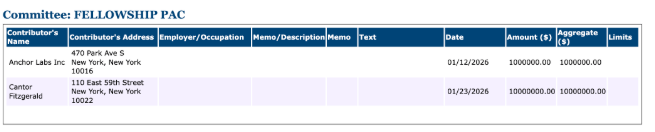
    Other crypto-aligned groups, including Fairshake and Fellowship PAC, have also emerged to support candidates seen as favorable to digital asset innovation. Analysts note that future control of Congress could significantly influence cryptocurrency legislation, though bipartisan support for the sector has steadily grown in recent years.

    Disclaimer

    This content is for informational purposes only and does not constitute financial, investment, or legal advice. Cryptocurrency trading involves risk and may result in financial loss.
  • Tether Adds 951 BTC to Reserves, Expands Holdings to 97,141 BTC Worth $7.2 Billion

    Tether Adds 951 BTC to Reserves, Expands Holdings to 97,141 BTC Worth $7.2 Billion

    Tether has expanded its Bitcoin reserves after withdrawing 951 BTC valued at approximately $70.47 million from Bitfinex, according to recent on-chain data. The transfer is believed to include Bitcoin acquired during the first quarter of 2026, continuing the firm’s long-standing strategy of allocating 15% of quarterly profits toward Bitcoin purchases.

    Following the latest withdrawal, Tether’s primary reserve wallet now holds 97,141 BTC, worth roughly $7.2 billion, making it the fifth largest Bitcoin holder on-chain. The steady accumulation highlights the company’s consistent approach of withdrawing purchased Bitcoin shortly after each quarter closes.

    Average Purchase Price and Unrealized Gains Highlight Strong Position

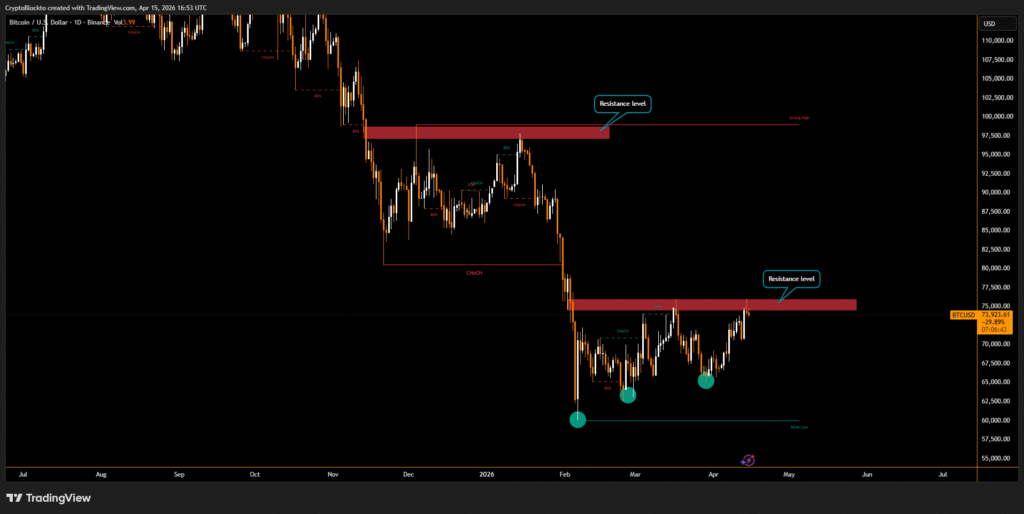
    Data from on-chain analysts indicates that Bitcoin accumulated by Tether since 2023 carries an average purchase price of about $51,312 per BTC. With Bitcoin currently trading near $74,000, the company is estimated to hold around $2.175 billion in unrealized profits from its long-term treasury strategy.

    $BTC daily price chart

    Despite the significant movement of funds, Bitcoin prices remained relatively stable, suggesting that large institutional transfers continue to be absorbed by market liquidity without triggering sharp volatility.

    Growing Institutional Holdings Reinforce Bitcoin Market Confidence

    Tether’s continued reserve expansion signals sustained confidence among major crypto firms in Bitcoin’s long-term value. The company has repeatedly emphasized using operating profits rather than debt to fund purchases, reinforcing a gradual accumulation model rather than speculative trading.

    Disclaimer

    This content is for informational purposes only and does not constitute financial, investment, or legal advice. Cryptocurrency trading involves risk and may result in financial loss.

  • Elizabeth Warren Presses Elon Musk for Details on X Money Stablecoin Plans

    Elizabeth Warren Presses Elon Musk for Details on X Money Stablecoin Plans

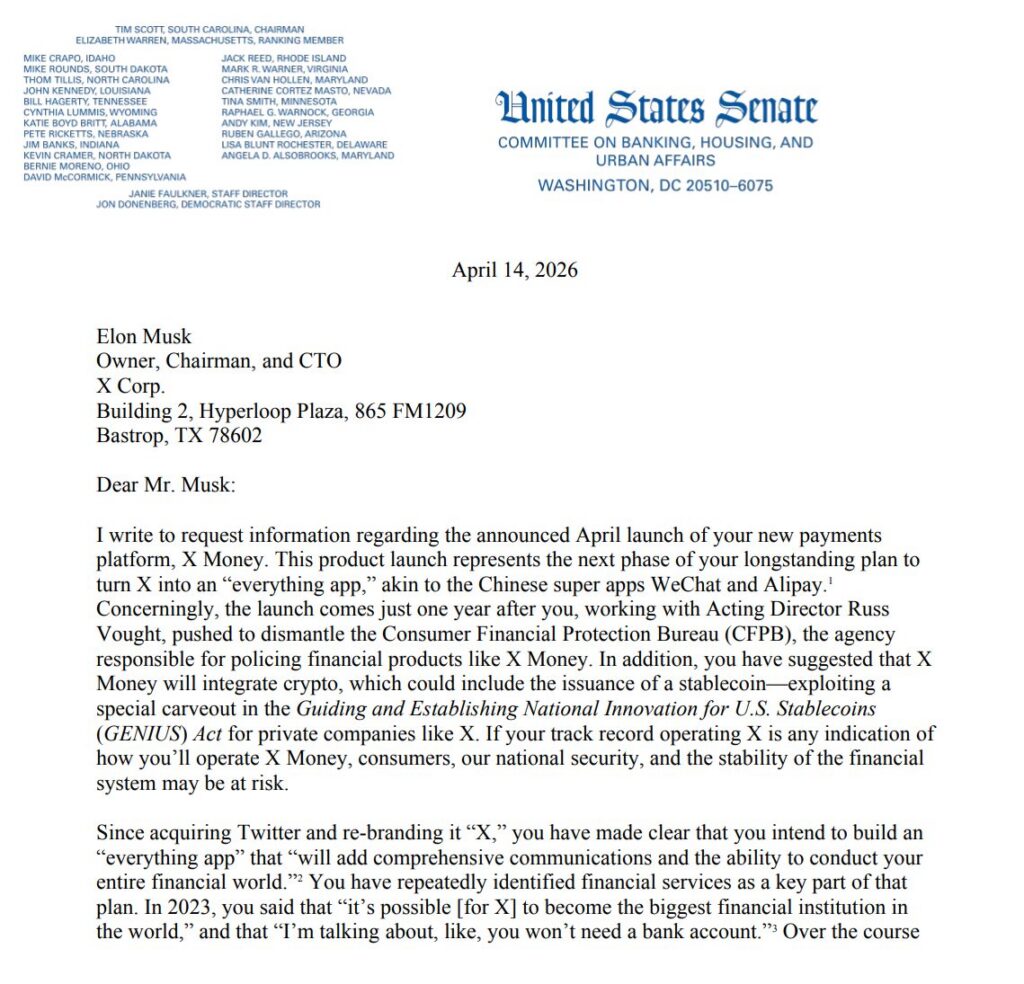
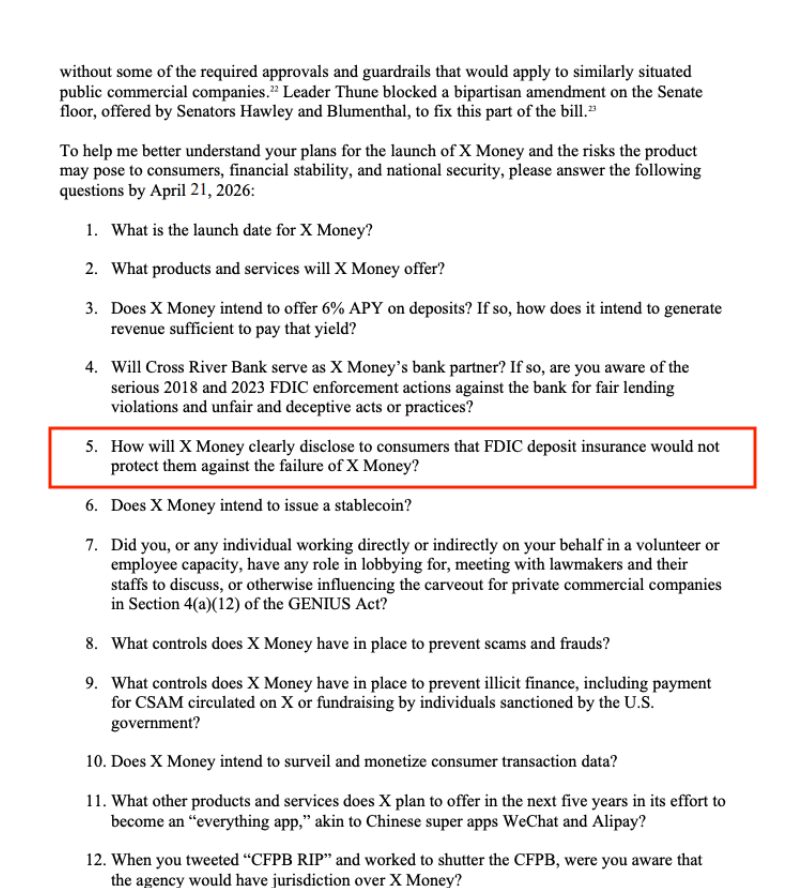
    US Senator Elizabeth Warren has formally questioned Elon Musk regarding the upcoming X Money payments feature expected to be integrated into the X platform. The inquiry centers on whether the service plans to issue its own dollar pegged stablecoin and how it intends to manage financial and security risks.

    In a letter sent Tuesday, Warren raised concerns that crypto and stablecoin integrations within X Money could pose risks to the US financial system and national security. She specifically asked whether the platform plans to use provisions under the Guiding and Establishing National Innovation for US Stablecoins (GENIUS) Act, which allows private companies to issue stablecoins under defined regulatory conditions.

    Elizabeth Warren’s letter seeking information about the upcoming X Money launch

    Questions Raised Over Interest Rates and Banking Partnerships

    Warren also highlighted reports that an early beta preview of X Money suggests the platform may offer up to 6% interest on deposits, significantly higher than the current federal funds rate range of 3.5% to 3.75%. She questioned how such yields could be supported without relying on high-risk investments or aggressive data monetization strategies.

    The senator pointed to X Money’s reported partnership with Cross River Bank, which previously faced enforcement action from the Federal Deposit Insurance Corporation. She asked whether users would be clearly informed that funds held in stablecoin-based services may not be protected under traditional federal deposit insurance.

    A list of questions from the letter sent to Elon Musk by Elizabeth Warren

    Regulatory Debate Intensifies Around Stablecoin Protections

    The concerns reflect broader debate over consumer safeguards tied to stablecoins issued by private technology firms. Statements from Travis Hill have clarified that stablecoin deposits are not automatically covered by FDIC insurance under the GENIUS Act framework.

    While the law does not explicitly ban pass-through insurance coverage, regulators have suggested such arrangements could conflict with the intent of the legislation. Warren’s inquiry signals potential regulatory resistance as technology companies expand into financial services through stablecoin-powered payment platforms.

    Disclaimer

    This content is for informational purposes only and does not constitute financial, investment, or legal advice. Cryptocurrency trading involves risk and may result in financial loss.