Category: News

  • North Korean Hackers Used AI-Driven Social Engineering in Zerion Crypto Attack

    North Korean Hackers Used AI-Driven Social Engineering in Zerion Crypto Attack

    Crypto wallet platform Zerion has confirmed that North Korean linked hackers used AI-assisted social engineering techniques to steal around $100,000 from its corporate hot wallets. The company released a post-mortem report stating that no user funds, apps, or core infrastructure were impacted, although the web application was temporarily disabled as a precaution during the investigation.

    The attack highlights how threat actors are increasingly targeting human systems rather than exploiting smart contract vulnerabilities. According to Zerion, the hackers gained access to logged-in team sessions, credentials, and private keys associated with company wallets.

    AI-Enabled Social Engineering Becoming a Key Cybersecurity Threat

    This incident marks the second major social-engineering-based crypto attack this month, following a $280 million exploit of Drift Protocol, which was also linked to North Korean actors. Security researchers note that these operations rely heavily on long-term deception strategies rather than technical exploits.

    Groups such as UNC1069 have been observed running multi-week campaigns across platforms like Telegram, LinkedIn, and Slack, often impersonating trusted contacts or compromised accounts to build credibility before executing attacks.

    Growing Use of AI Expands Cyberattack Capabilities

    Security experts warn that AI tools are now being used to enhance phishing, image manipulation, and impersonation tactics, making attacks more convincing and harder to detect. Reports from cybersecurity firms indicate that North Korean groups have been refining these methods for years, targeting developers, DeFi contributors, and crypto infrastructure workers as primary entry points into the ecosystem.
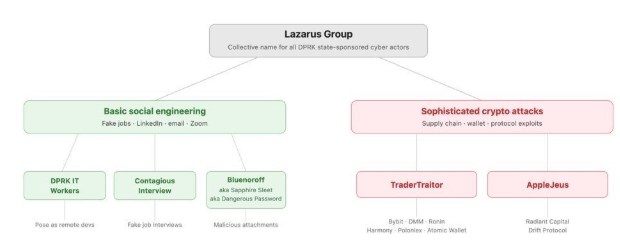
    There are 2 types of DPRK attack vectors, one more sophisticated than the other: ZachXBT
    Disclaimer

    This content is for informational purposes only and does not constitute financial, investment, or legal advice. Cryptocurrency trading involves risk and may result in financial loss.
  • IMF Warns Global Debt Could Hit 100% of GDP by 2029, Boosting Bitcoin Hedge Narrative

    IMF Warns Global Debt Could Hit 100% of GDP by 2029, Boosting Bitcoin Hedge Narrative

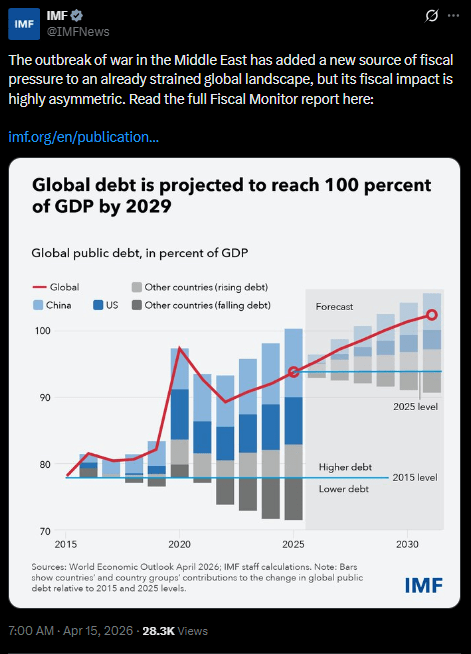
    The International Monetary Fund has warned that global public debt could approach 100% of world gross domestic product (GDP) by 2029, raising concerns about fiscal solvency and long-term bond market stability. Under current projections, major economies including the United States and China are expected to remain key contributors to rising debt levels, alongside increased global defense spending.

    If debt issuance continues to outpace economic growth, investors may begin demanding higher bond yields, reflecting concerns about governments’ ability to repay obligations.

    Bitcoin Seen as Potential Hedge Against Debt and Financial Stress

    In a scenario where bond yields rise due to solvency fears rather than monetary tightening, investors could shift funds into alternative assets such as Bitcoin. Its fixed supply cap of 21 million coins, independence from sovereign balance sheets, and decentralized structure support its role as a potential hedge against inflation and financial repression.

    Historical events reinforce this view. Bitcoin gained momentum following the 2013 Cyprus banking crisis and again during the 2023 U.S. regional banking turmoil, when stress across lenders coincided with a broader crypto market recovery.

    Rising Yields Remain a Risk Factor for Crypto Markets

    However, rising yields can also create pressure on risk assets. During 2021–2022, aggressive rate hikes by the Federal Reserve lifted Treasury yields and contributed to Bitcoin’s fall from nearly $70,000 to around $16,000.

    Unlike previous cycles driven by central bank tightening, a debt-driven yield surge could lead investors to question government solvency, potentially increasing interest in decentralized assets over the long term.

    Disclaimer

    This content is for informational purposes only and does not constitute financial, investment, or legal advice. Cryptocurrency trading involves risk and may result in financial loss.

  • Bitwise Launches Spot Avalanche ETF BAVA on NYSE With 5.4% Staking Yield

    Bitwise Launches Spot Avalanche ETF BAVA on NYSE With 5.4% Staking Yield

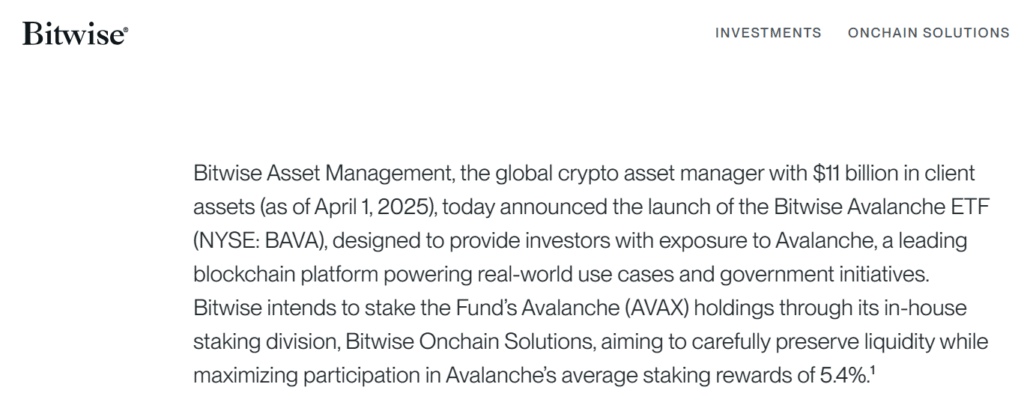
    Bitwise Asset Management has launched a spot Avalanche exchange-traded fund (ETF) under the ticker BAVA, scheduled to begin trading on the New York Stock Exchange on April 15. The fund is designed to provide investors with direct exposure to Avalanche (AVAX), a blockchain platform widely used for enterprise and government-focused applications.

    The ETF will stake its AVAX holdings through Bitwise’s internal division, Bitwise Onchain Solutions, allowing the fund to generate approximately 5.4% annual staking rewards while maintaining sufficient liquidity for investor access.

    Fee Structure and Incentives for Early Investors

    The Bitwise Avalanche ETF (BAVA) carries a 0.34% annual management fee, with a promotional incentive offering 0% fees on the first $500 million in assets during the fund’s initial month. This pricing strategy aims to attract early institutional and retail inflows as demand for regulated crypto investment vehicles continues to grow.

    As of April 1, 2025, Bitwise reported that they are managing $11 billion in client assets, positioning the firm among the largest dedicated crypto asset managers globally.

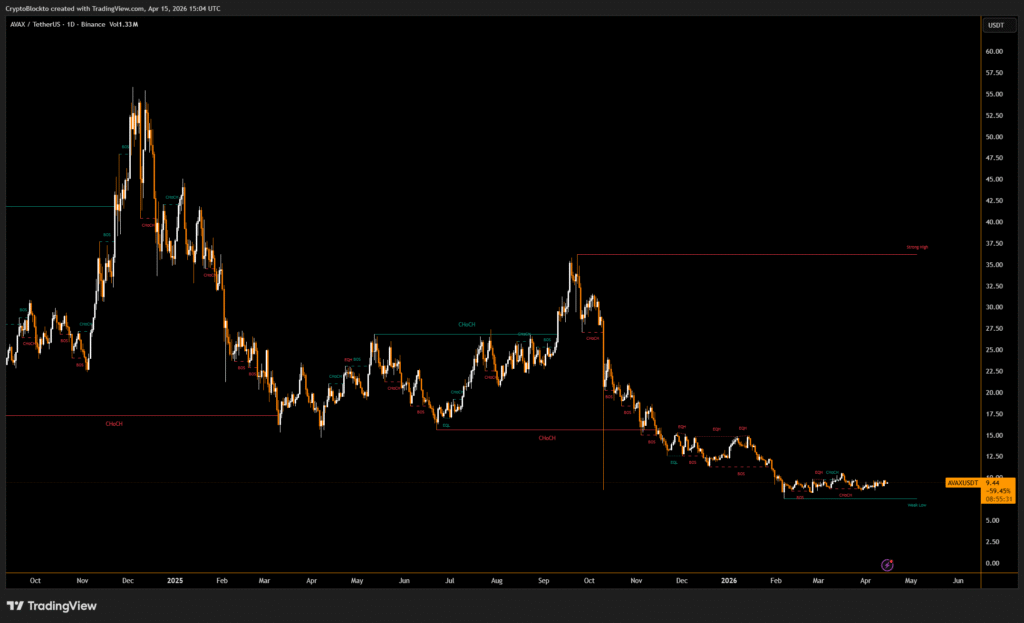
    AVAX daily price chart

    With a market capitalization near $4.1 billion, Avalanche supports a growing ecosystem of enterprise-grade applications, reinforcing its role in expanding blockchain adoption across financial services and public-sector initiatives.

    Disclaimer

    This content is for informational purposes only and does not constitute financial, investment, or legal advice. Cryptocurrency trading involves risk and may result in financial loss.
  • Trump Backed World Liberty Financial Proposes 62.3 Billion WLFI Token Unlock With Partial Burn

    Trump Backed World Liberty Financial Proposes 62.3 Billion WLFI Token Unlock With Partial Burn

    World Liberty Financial has proposed unlocking 62.3 billion WLFI governance tokens that were previously fully locked without any vesting schedule. The move introduces a structured distribution model aimed at gradually releasing supply over time.

    Token Burn and Vesting Schedule Details

    Under the proposal, early supporters holding 17 billion WLFI tokens will retain their full allocation but will face a two-year cliff followed by a two-year linear vesting schedule. Meanwhile, founders, advisors, and team members holding 45.2 billion tokens will see 10% of their allocation around 4.5 billion tokens permanently burned, reducing total supply.

    The remaining 40.7 billion tokens assigned to insiders will begin unlocking after a two-year cliff, followed by a three-year vesting period. These tokens were previously locked indefinitely with no clear liquidity pathway.

    Governance and Market Impact Considerations

    The restructuring shifts WLFI from a static supply model to a phased emission system, balancing token burn pressure with long-term unlocking. The proposal highlights a major governance adjustment as the project redefines insider incentives while maintaining controlled token circulation across its ecosystem.

    Disclaimer

    This content is for informational purposes only and does not constitute financial, investment, or legal advice. Cryptocurrency trading involves risk and may result in financial loss.
  • Switzerland’s Crypto Valley Captures 47% of Europe Blockchain Funding in 2025

    Switzerland’s Crypto Valley Captures 47% of Europe Blockchain Funding in 2025

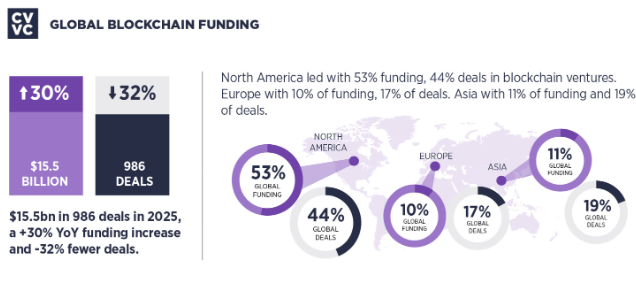
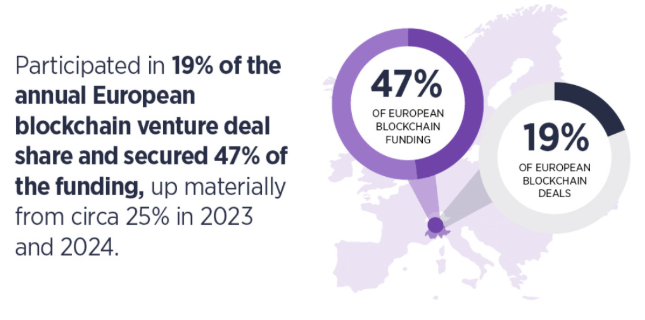
    Switzerland’s Crypto Valley raised $728 million across 31 deals in 2025, up 37% from $531 million in 2024, according to CV VC’s annual report. The region accounted for 47% of all European blockchain venture funding and about 5% of global blockchain investment, reinforcing its position as Europe’s dominant crypto hub.

    Globally, blockchain venture funding increased 30% to $15.5 billion across 986 deals, while deal count fell 32%, showing a clear shift toward fewer but significantly larger funding rounds. The trend reflects capital concentration into stronger infrastructure and protocol-level projects rather than early-stage experimentation.

    Global blockchain funding growth compared to Crypto Valley growth

    TON Accounts for $400 Million as Capital Concentrates in Large Rounds

    A single transaction heavily shaped Crypto Valley’s totals: The Open Network (TON) raised around $400 million, making it the largest deal in the ecosystem for 2025. Other notable financings included Sygnum Bank ($58 million), M0 stablecoin platform ($40 million), Impossible Cloud Network ($34 million), and CratD2C ($30 million).

    Sector allocation shows blockchain networks dominated with 62% of total funding, followed by infrastructure at 14%, while both centralized finance and decentralized finance applications each captured 10%. This highlights continued investor preference for foundational blockchain systems over consumer-facing products.

    Crypto Valley accounted fro 47% of total European blockchain investments

    Crypto Valley now hosts 1,766 active blockchain companies, a 134% increase since 2020. Zug accounted for 20 of 31 deals and 88% of disclosed capital, while Zurich followed with five deals.

    Despite rising funding, the number of unicorns dropped from 17 to 10, as weaker market conditions pushed six token projects below the $1 billion valuation threshold. Even so, the ecosystem’s growth shows sustained institutional interest in Switzerland as a global blockchain investment center.

    Disclaimer

    This content is for informational purposes only and does not constitute financial, investment, or legal advice. Cryptocurrency trading involves risk and may result in financial loss.

  • US–Iran Tensions Rise as Ceasefire Extension Uncertain Amid Strait of Hormuz Crisis

    US–Iran Tensions Rise as Ceasefire Extension Uncertain Amid Strait of Hormuz Crisis

    The United States and Iran have reportedly agreed “in principle” to extend a truce, according to sources, even as military tensions intensify across the region. Despite discussions on renewing the ceasefire, former US President Donald Trump signaled he does not plan to extend the agreement, adding uncertainty to already fragile diplomacy.

    Military Escalation and Naval Blockade

    The Pentagon has reportedly deployed an additional 10,000 troops as US Central Command (CENTCOM) claims a full naval blockade has been implemented, preventing trade to and from Iran through sea routes. CENTCOM stated that Iranian ports are now “fully blocked,” aiming to restrict maritime movement in the Persian Gulf and surrounding waters.

    Iranian officials, however, strongly rejected the blockade. Major General Ali Abdollahi warned that Iran could retaliate by expanding maritime restrictions across the Red Sea, Persian Gulf, and Sea of Oman, stating that no exports or imports would be allowed if pressure continues.

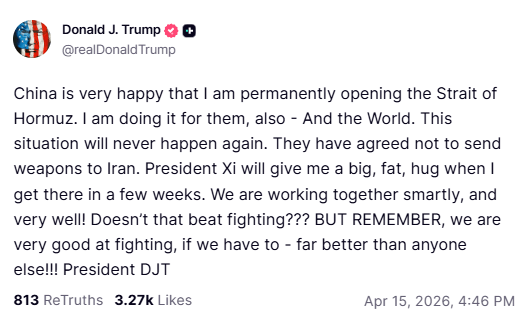
    Amid the escalating rhetoric, US President Donald Trump issued a statement on truth social emphasizing his role in keeping the Strait of Hormuz open. He said:

    “China is very happy that I am permanently opening the Strait of Hormuz. I am doing it for them, also – And the World. This situation will never happen again. They have agreed not to send weapons to Iran…” .

    The remarks come as regional powers and global markets closely monitor the evolving crisis, with shipping security and energy prices remaining highly sensitive to any further escalation.

    Disclaimer

    This content is for informational purposes only and does not constitute financial, investment, or legal advice. Cryptocurrency trading involves risk and may result in financial loss.
  • TeraWulf Shares Drop After $900 Million Equity Raise to Fund AI Data Center Expansion

    TeraWulf Shares Drop After $900 Million Equity Raise to Fund AI Data Center Expansion

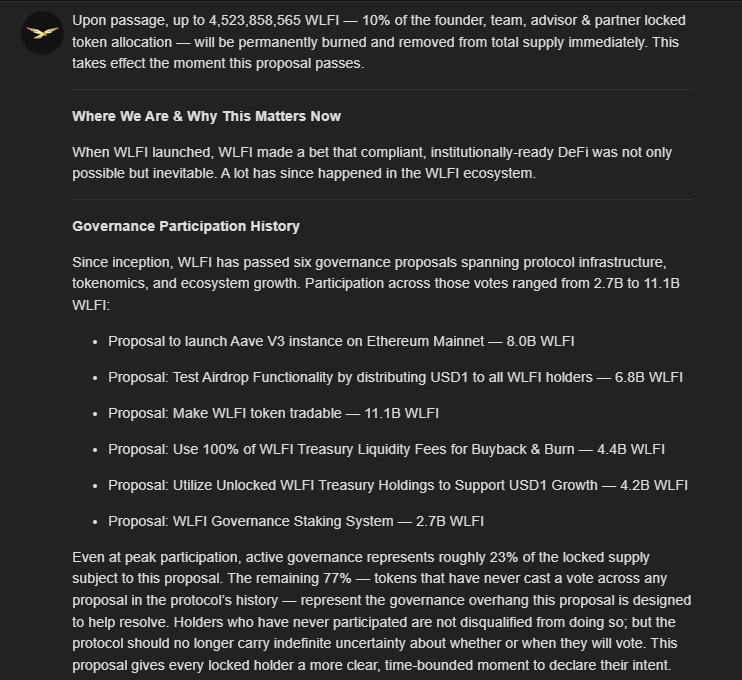
    Shares of TeraWulf Inc. declined after the company priced an upsized $900 million equity offering, increasing the raise from an initial $800 million target.

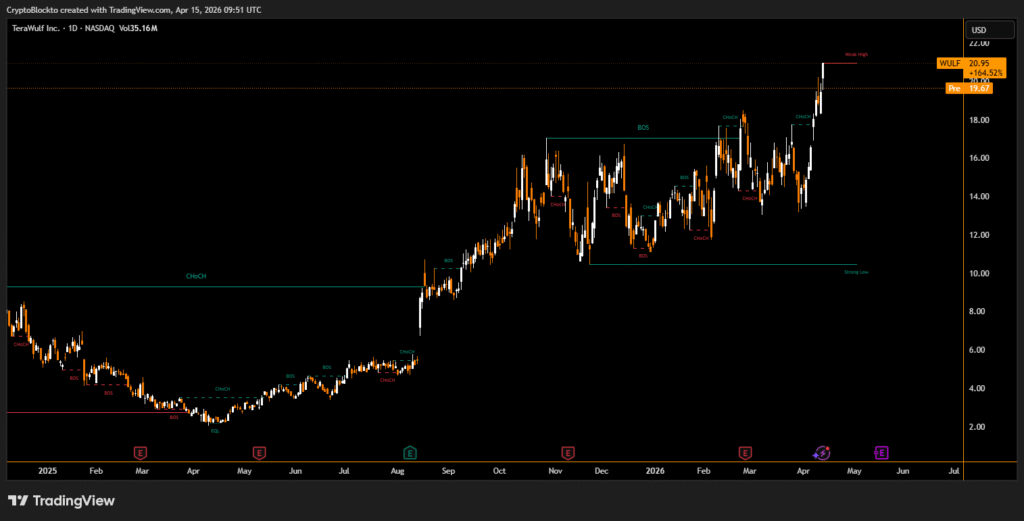
    The firm priced 47.4 million shares at $19 each on April 14, triggering a 6% decline in pre-market trading to about $19.70, after closing the previous session 7.7% higher at $20.95. Despite the drop, the stock remains up roughly 18% over the past six months.

    TeraWulf Inc. stock price chart

    Underwriters were also granted a 30-day option to purchase an additional 7.11 million shares at the same offering price. Morgan Stanley served as lead bookrunning manager, while Cantor Fitzgerald acted as equity capital markets advisor.

    Funds Target AI Data Center Construction in Kentucky

    TeraWulf said the proceeds from the offering will primarily fund construction of its planned data center campus in Hawesville, Kentucky, supporting expansion into high-performance computing (HPC) and AI infrastructure.

    The company also plans to use funds to fully repay outstanding balances under its bridge credit facility. The share offering is expected to close on April 16.

    Preliminary Q1 Results Show Near-Breakeven EBITDA

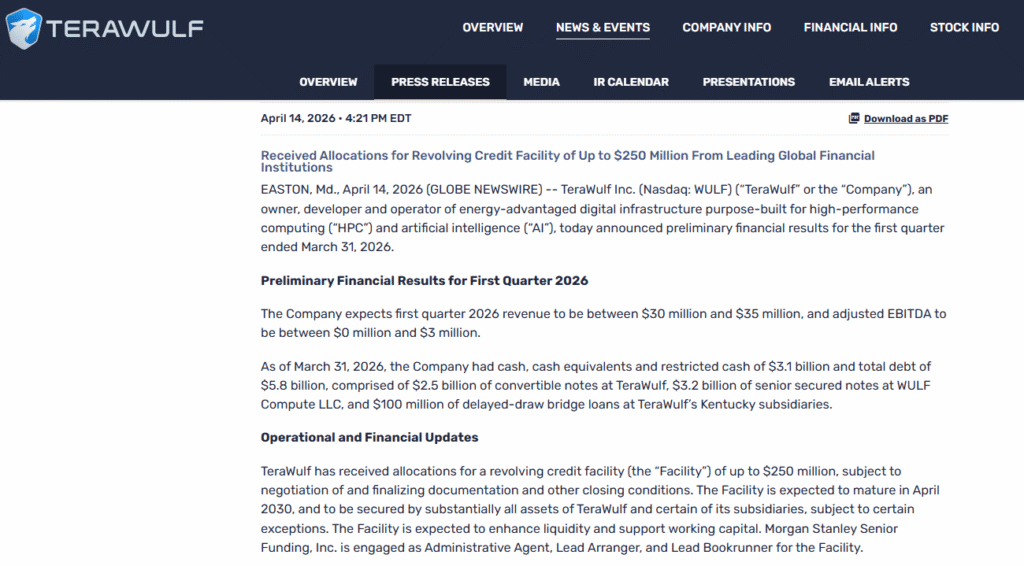
    Alongside the capital raise announcement, TeraWulf released preliminary first-quarter results for the period ending March 31. The company expects revenue between $30 million and $35 million, with adjusted EBITDA reaching up to $3 million, reflecting near-breakeven performance.

    As of March 31, TeraWulf reported $3.1 billion in cash and equivalents against $5.8 billion in total debt, including $2.5 billion in convertible notes, $3.2 billion in senior secured notes, and $100 million in delayed draw bridge loans.

    More than 50% of first-quarter revenue came from HPC hosting, highlighting the company’s strategic shift toward long-term, credit-backed revenue streams and expanded computing capacity through the remainder of the year.

    Disclaimer

    This content is for informational purposes only and does not constitute financial, investment, or legal advice. Cryptocurrency trading involves risk and may result in financial loss.

  • Pakistan Allows Banks to Serve Licensed Crypto Firms After Years-Long Ban

    Pakistan Allows Banks to Serve Licensed Crypto Firms After Years-Long Ban

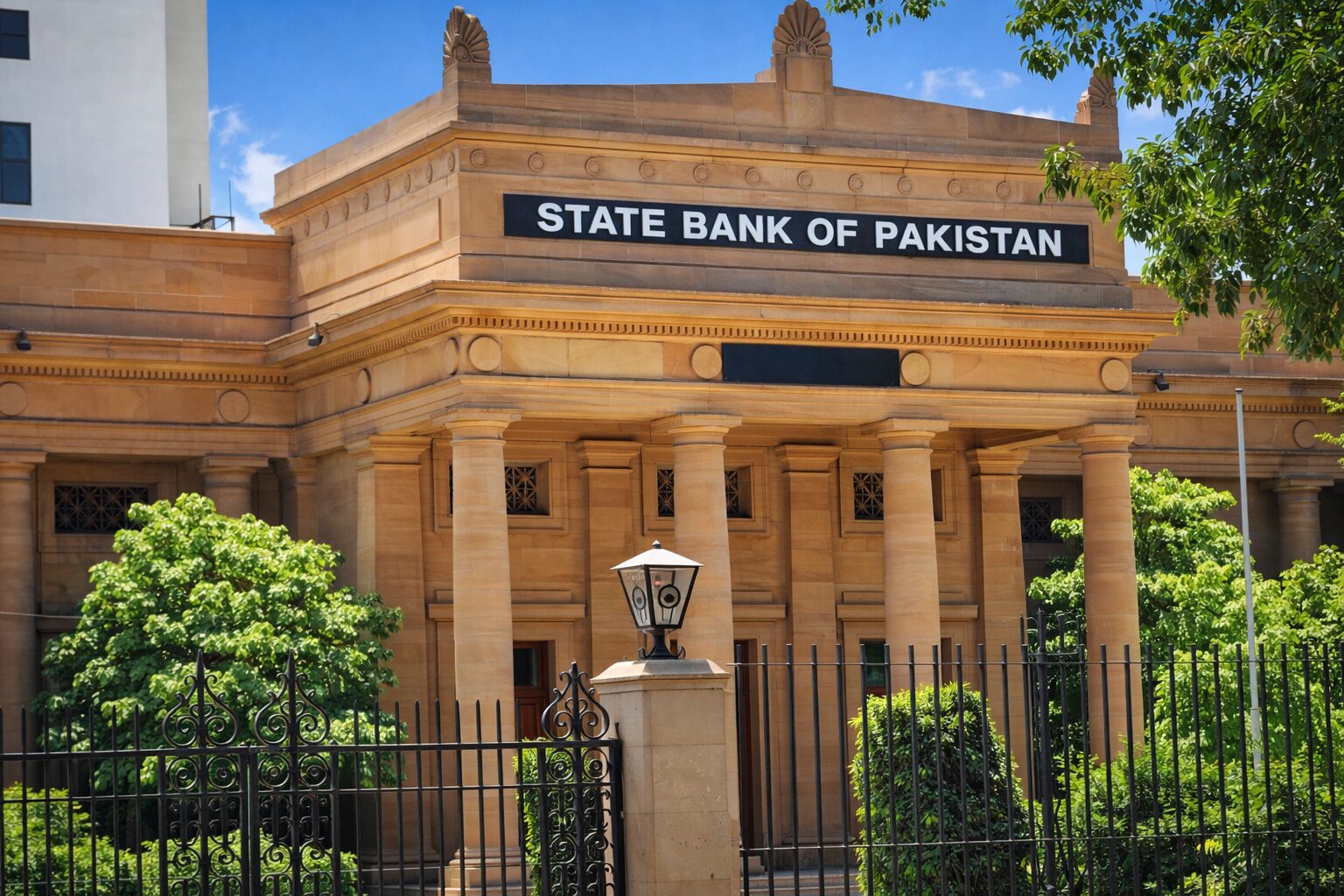
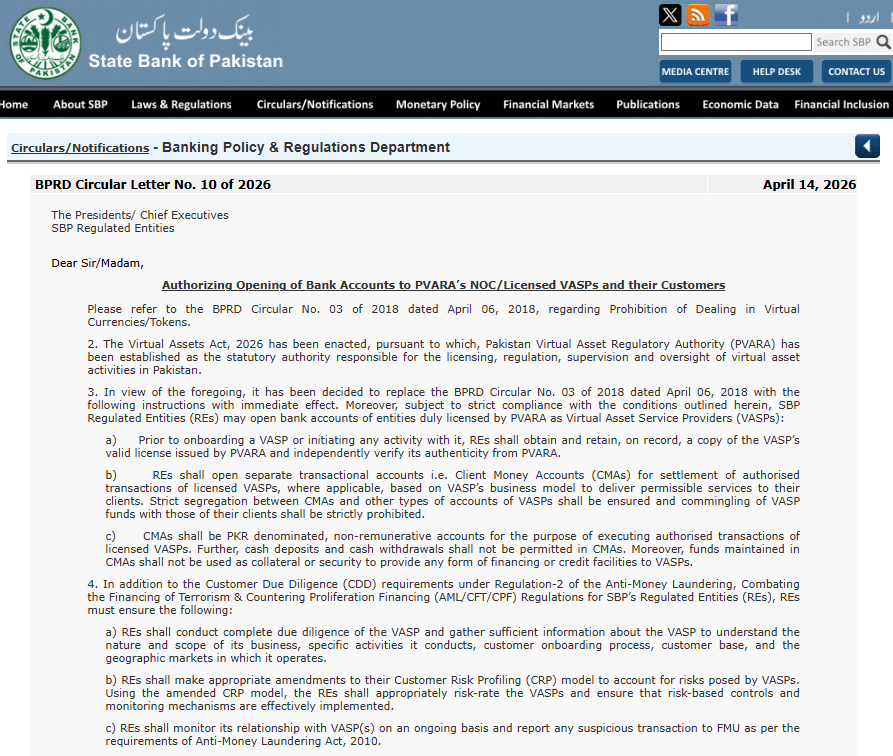
    The State Bank of Pakistan has allowed banks to open accounts for licensed virtual asset service providers (VASPs), ending an eight-year prohibition on dealing with virtual currencies.

    According to a circular issued on April 14, regulated banks can now provide banking services to firms licensed by the Pakistan Virtual Assets Regulatory Authority. The move follows the approval of the Virtual Assets Act 2026 in March, marking a major step toward a formal regulatory framework for digital assets after restrictions first imposed in 2018.

    Banking Access Granted Under Strict Compliance Requirements

    Under the new framework, banks are not permitted to trade, invest, or hold crypto assets using their own funds or customer deposits. Their role is limited strictly to providing banking services for licensed crypto entities.

    BPRD circular letter

    Banks must open separate transactional accounts in Pakistani rupees, known as Client Money Accounts (CMAs), ensuring strict segregation between customer funds and operational accounts. Financial institutions are also required to comply fully with foreign exchange regulations, anti-money laundering (AML), and counter-terrorism financing (CFT) rules.

    Ongoing monitoring of crypto-related transactions is mandatory, and suspicious activities must be reported to Pakistan’s Financial Monitoring Unit.

    Policy Shift Reflects Broader Effort to Build Regulated Crypto Ecosystem

    The policy change follows increased engagement between Pakistani authorities and major global exchanges, including Binance and HTX, during discussions held in late 2025.

    Pakistan has also explored blockchain-based financial systems through talks with affiliates of World Liberty Financial, including potential use of stablecoins for cross-border payments.

    The decision signals a shift from restrictive policies toward regulated adoption, potentially opening the door for licensed crypto platforms to operate more effectively within Pakistan’s financial system.

    Disclaimer

    This content is for informational purposes only and does not constitute financial, investment, or legal advice. Cryptocurrency trading involves risk and may result in financial loss.
  • eToro to Acquire Zengo in Self-Custody Expansion as CEO Reiterates $250K Bitcoin Target

    eToro to Acquire Zengo in Self-Custody Expansion as CEO Reiterates $250K Bitcoin Target

    Trading platform eToro has agreed to acquire self custodial crypto wallet provider Zengo as part of its push into onchain services.

    The deal will allow eToro to integrate Zengo’s wallet technology and expand offerings across tokenized assets, prediction markets, perpetual trading, and yield products. Financial terms were not officially disclosed, though reports suggest the transaction is valued at around $70 million, primarily in cash.

    The acquisition reflects eToro’s broader strategy to attract crypto-native users and expand beyond traditional brokerage services into self-custody infrastructure.

    Crypto Revenue Dominates eToro Financial Performance

    According to company figures, digital assets remain central to eToro’s business model. The platform reported $13.8 billion in total revenue and income in 2025, with approximately $12.98 billion generated from crypto-related activities.

    Chief Executive Officer Yoni Assia stated that the Zengo acquisition aligns with the firm’s long-term goal of strengthening its position in the digital asset ecosystem.

    CEO Predicts Bitcoin Could Exceed $250,000 in Future Cycle

    Speaking at the Paris Blockchain Week, Assia predicted that the current crypto market slowdown may last another quarter before Bitcoin enters a new accumulation phase. He reiterated expectations that Bitcoin could eventually rise above $250,000, potentially reaching $500,000 or higher over time.

    Other industry figures, including Arthur Hayes and Robert Kiyosaki, have also projected similar long-term targets, though firms such as Galaxy Digital have urged caution due to macroeconomic uncertainties.

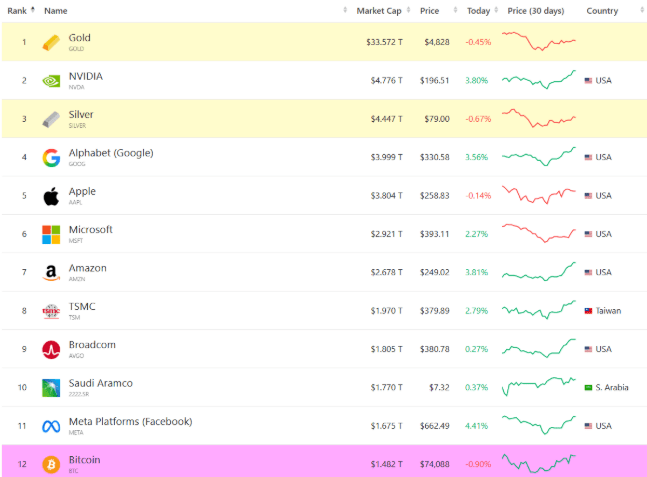
    Top assets by market capitalization.

    A move to $250,000 would require Bitcoin to increase more than threefold, implying a market capitalization of roughly $5 trillion, potentially making it the second-largest asset globally after gold.

    Disclaimer

    This content is for informational purposes only and does not constitute financial, investment, or legal advice. Cryptocurrency trading involves risk and may result in financial loss.
  • Virginia Approves New Law to Hold Dormant Crypto Assets In-Kind Starting July 2026

    Virginia Approves New Law to Hold Dormant Crypto Assets In-Kind Starting July 2026

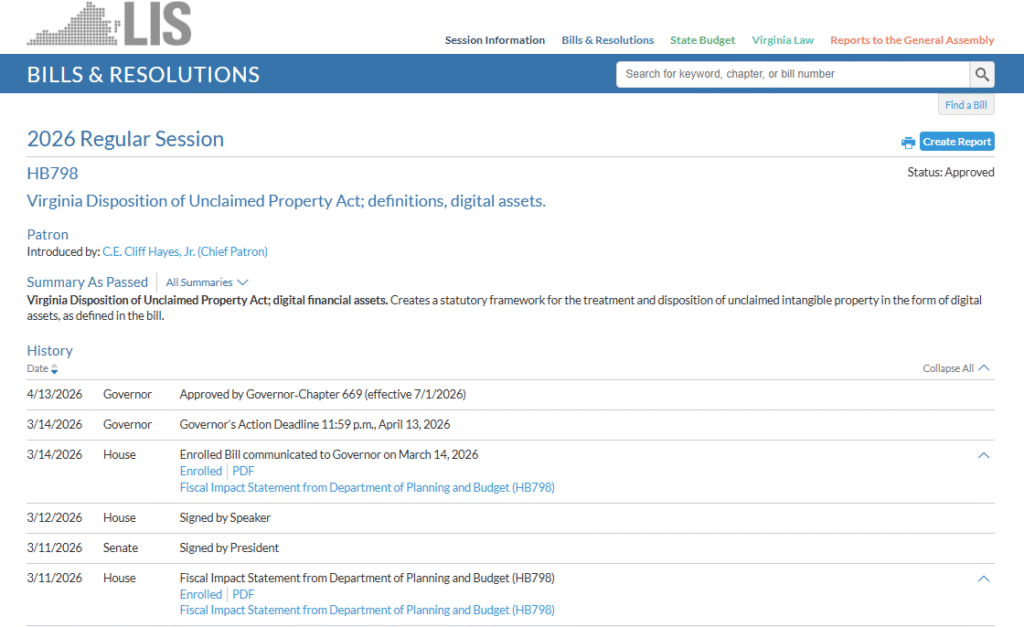
    The state of Virginia has enacted new legislation governing how dormant crypto accounts will be handled. Governor Abigail Spanberger signed House Bill 798 into law, with the measure scheduled to take effect on July 1, 2026.

    Under the new framework, crypto assets left inactive in customer accounts for five years will be transferred to state custody in-kind, meaning the digital tokens will be preserved in their original form rather than immediately converted into cash. This approach aims to protect asset value and reflect the unique nature of digital currencies.

    One-Year Holding Rule Protects Owners From Forced Liquidation

    Historically, many state authorities liquidated unclaimed crypto soon after receiving custody, which often resulted in owners reclaiming funds at earlier, potentially lower market values. The updated law now requires that digital assets be held for at least one year before any liquidation occurs.

    Industry figures, including Paul Grewal of Coinbase, welcomed the change, noting that preserving crypto assets in-kind aligns better with how digital assets function as long-term stores of value.

    Digital Asset Definition Expanded Under Updated Property Rules

    The legislation introduces a broad definition of digital assets, covering representations of value used as a medium of exchange, unit of account, or store of value. However, certain categories are excluded, including non-cashable merchant rewards, in-game items limited to specific platforms, and some regulated securities.

    Virginia’s move follows similar regulatory updates in California, reflecting a growing trend among US states to modernize unclaimed property laws to accommodate cryptocurrencies and other digital financial assets.

    Disclaimer

    This content is for informational purposes only and does not constitute financial, investment, or legal advice. Cryptocurrency trading involves risk and may result in financial loss.