Category: News

  • Stablecoin Payment Volume Could Reach $1.5 Quadrillion by 2035, Report Projects

    Stablecoin Payment Volume Could Reach $1.5 Quadrillion by 2035, Report Projects

    Stablecoin transaction volumes could surge to as much as $1.5 quadrillion by 2035, signaling a major shift in how global payments are processed. A new industry report estimates that even under baseline growth, stablecoin activity could reach $719 trillion, highlighting rapid adoption across financial systems.

    Stablecoins Move Toward Mainstream Payment Infrastructure

    Stablecoins processed roughly $28 trillion in real economic activity in 2025, focusing on payments, remittances, and settlements rather than trading activity. Analysts expect continued growth as stablecoins become embedded in merchant payment systems, making digital asset transactions feel similar to traditional card payments.
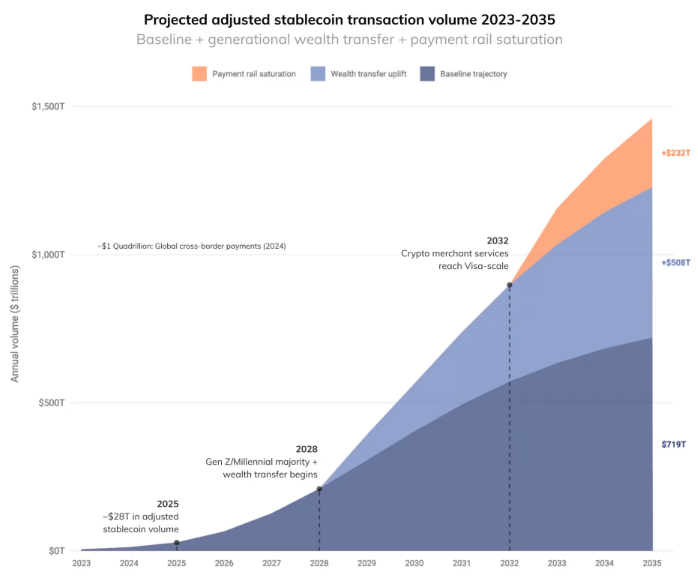
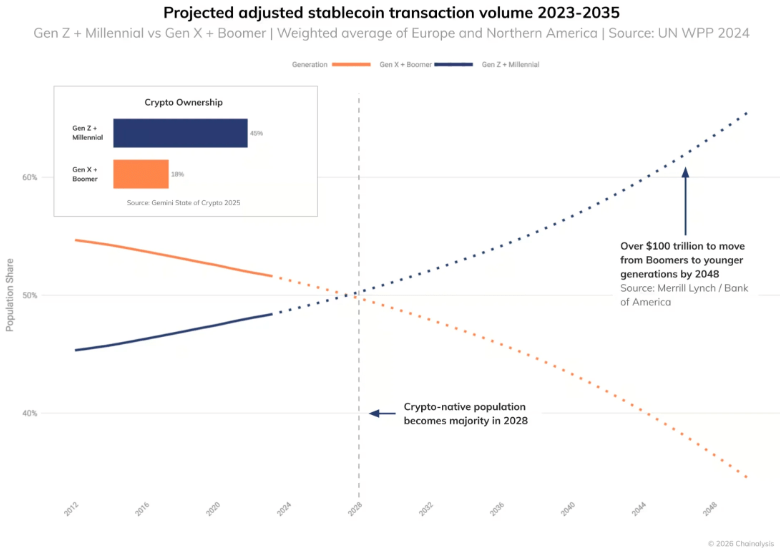
    Projected stablecoin volume 2023-2035

    Two major drivers are expected to fuel this expansion. First, a $100 trillion generational wealth transfer between 2028 and 2048 will shift financial control toward younger users who are more comfortable using digital assets. Second, wider merchant adoption and backend payment integration will make stablecoin usage nearly invisible to consumers.

    Competition With Visa and Mastercard Expected

    Payment volumes using stablecoins could reach parity with major card networks such as Visa and Mastercard between 2031 and 2039, depending on adoption speed. Financial institutions are already positioning themselves for this shift, with payment firms acquiring crypto-focused infrastructure providers.
    Financial institutions also expect stablecoin expansion to influence capital markets. Some projections suggest rising adoption could generate up to $1 trillion in demand for U.S. Treasuries, linking digital payments to global liquidity flows. Meanwhile, policymakers continue to debate regulatory frameworks as stablecoins transition from niche tools to core components of the global payments ecosystem.

    Disclaimer

    This content is for informational purposes only and does not constitute financial, investment, or legal advice. Cryptocurrency trading involves risk and may result in financial loss.


  • Quantum Computing Threat to Bitcoin Seen as Real but Manageable, Says Bernstein

    Quantum Computing Threat to Bitcoin Seen as Real but Manageable, Says Bernstein

    Growing advances in quantum computing are raising concerns about Bitcoin’s long term cryptographic security, but analysts say the threat remains manageable rather than immediate. A recent report from Bernstein, led by analyst Gautam Chhugani, noted that while timelines are shortening, Bitcoin still has time to adapt through technical upgrades.

    Quantum Computing Advances Accelerate Crypto Risk Timeline

    Quantum computing operates using qubits, which can exist in multiple states simultaneously through superposition and entanglement, allowing complex calculations to be processed faster than classical computers.

    Recent breakthroughs, including reduced qubit requirements reported by Google Quantum AI, suggest encryption vulnerabilities may emerge sooner than previously expected. Systems such as elliptic curve encryption, widely used in crypto wallets, could eventually be weakened by sufficiently powerful quantum machines.

    Legacy Wallets Face Higher Exposure

    The report highlighted that risk is concentrated in roughly 1.7 million BTC stored in older legacy wallets, while newer wallet practices reduce vulnerability. Importantly, Bitcoin mining operations, which rely on SHA-based hashing, are considered largely secure even under advanced quantum scenarios.

    Bernstein estimates the crypto industry has three to five years to transition toward post quantum cryptography, including updated wallet standards, reduced address reuse, and regular key rotation. Researchers also noted that quantum-based mining attacks would require energy output comparable to a star, reinforcing the view that the threat is significant but not existential.

    Disclaimer

    This content is for informational purposes only and does not constitute financial, investment, or legal advice. Cryptocurrency trading involves risk and may result in financial loss.
  • Iran Weighs Bitcoin Tolls for Ships Passing Through Strait of Hormuz

    Iran Weighs Bitcoin Tolls for Ships Passing Through Strait of Hormuz

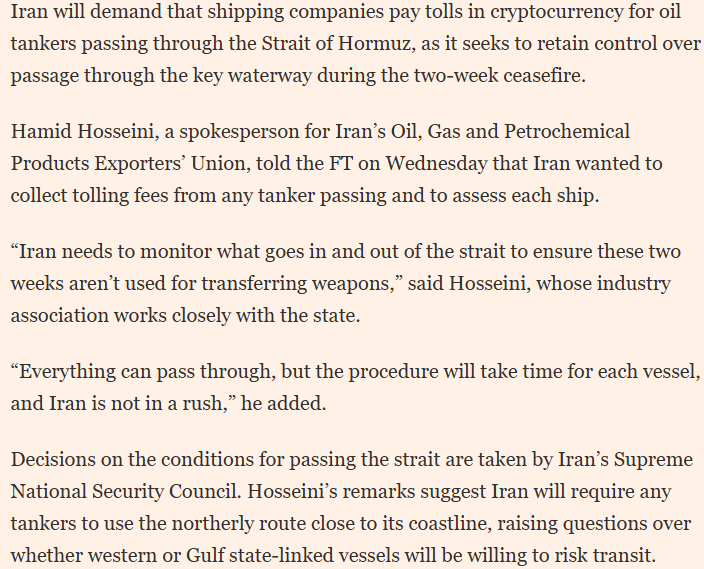
    Iran is reportedly considering a Bitcoin based toll system for vessels traveling through the Strait of Hormuz, following a temporary ceasefire agreement with the United States. The proposal could require certain ships to pay $1 per barrel of oil in Bitcoin to access the key global shipping route.

    Proposed Bitcoin Tariff for Oil Tankers

    According to reports, empty oil tankers would be allowed to pass through the Strait of Hormuz without charges. However, other vessels carrying oil may be required to pay the proposed Bitcoin tariff.

    A spokesperson for Iran’s Oil, Gas and Petrochemical Products Exporters’ Union, Hamid Hosseini, said authorities would evaluate each vessel during the two-week ceasefire period to confirm it is not transporting weapons. Once approved, ships would reportedly receive instructions and have only seconds to complete the Bitcoin payment, limiting traceability and reducing the risk of sanctions-related asset seizures.

    Ceasefire Conditions and Regional Impact

    The proposed toll system follows statements from U.S. President Donald Trump, who said the ceasefire includes the complete and safe reopening of the Strait of Hormuz. Iran reportedly submitted a 10-point plan that includes maintaining control over the waterway and seeking sanctions relief.

    Before the recent conflict, Iran had already used digital assets to manage sanctions pressure. Reports indicated the country acquired approximately $500 million worth of USDT, while blockchain monitoring recorded about $3.7 billion in crypto flows between January and July 2025.

    Disclaimer

    This content is for informational purposes only and does not constitute financial, investment, or legal advice. Cryptocurrency trading involves risk and may result in financial loss.
  • White House Report Finds Stablecoin Yields Pose Limited Risk to Bank Lending

    White House Report Finds Stablecoin Yields Pose Limited Risk to Bank Lending

    A recent White House study concluded that stablecoin rewards are unlikely to significantly affect bank lending or broader credit conditions, offering a counterpoint to concerns from banks and trade groups.

    Findings from the Council of Economic Advisers

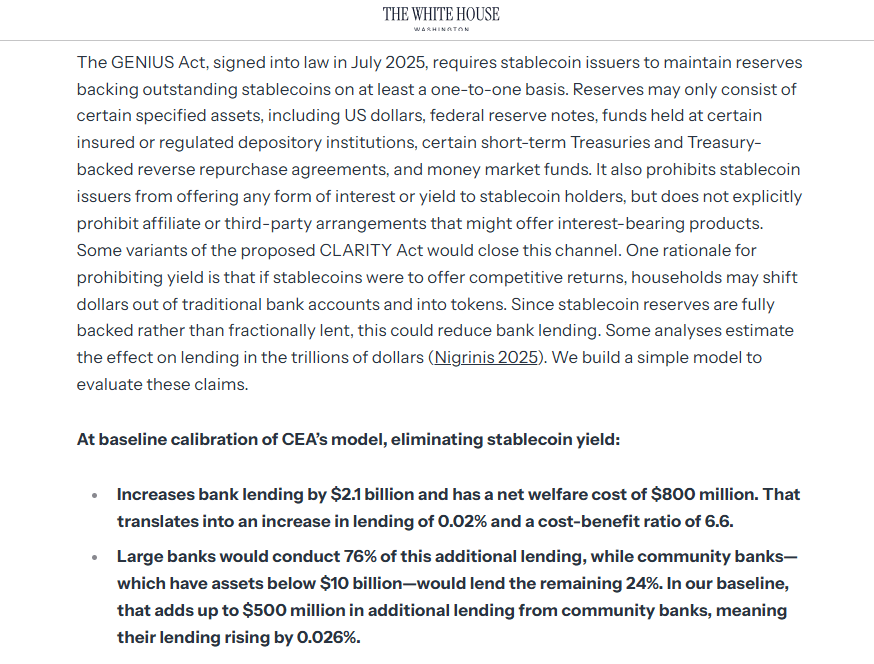
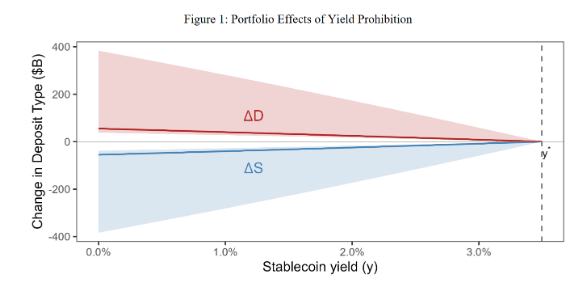
    The report from the Council of Economic Advisers (CEA) found that prohibiting stablecoin yields would produce minimal benefits for banks. In the study’s base scenario, removing yield-bearing features increases lending by only $2.1 billion, roughly 0.02% of total U.S. loans, while imposing a net welfare cost on consumers.

    White House economists noted that most stablecoin reserves remain within the banking system, often invested in Treasurys or deposited elsewhere, limiting any material “flight” from traditional balance sheets. Only an estimated 12% of reserves is effectively excluded from lending, dampening the impact on credit creation.

    Banking Sector Concerns

    Banks and trade groups have warned that interest-bearing stablecoins could siphon trillions from deposits. The Independent Community Bankers of America projected potential losses of $1.3 trillion in deposits and $850 billion in reduced lending. Major banks, including Bank of America and JPMorgan, have urged regulators to apply bank-style rules to stablecoin yields to prevent a parallel deposit system.

    Portfolio effects of the yield ban

    Debates continue under the proposed Clarity Act, which seeks to restrict indirect yield mechanisms. Regulators are also implementing provisions under the GENIUS Act, ensuring one-to-one reserve backing and limiting direct yield payments.

    Disclaimer

    This content is for informational purposes only and does not constitute financial, investment, or legal advice. Cryptocurrency trading involves risk and may result in financial loss.
  • Thailand SEC Proposes Stricter Rules on Crypto Funders

    Thailand SEC Proposes Stricter Rules on Crypto Funders

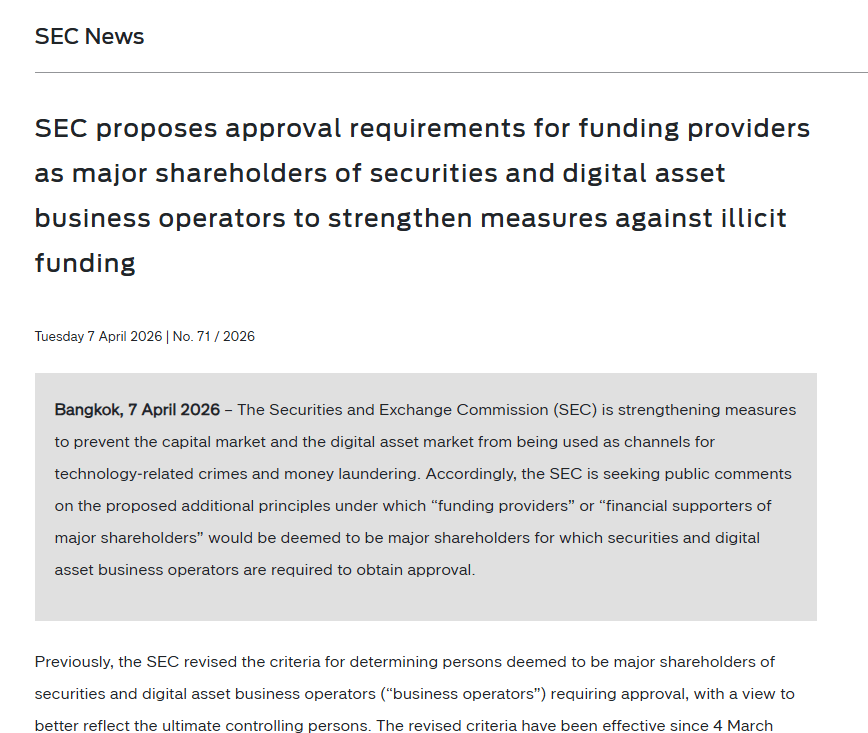
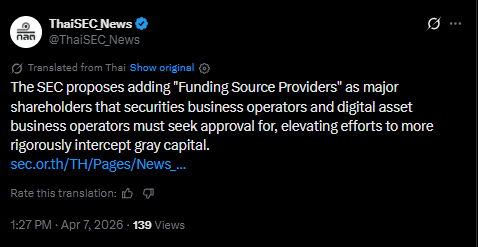
    Thailand’s Securities and Exchange Commission (SEC) has proposed tighter funding rules for cryptocurrency companies, aiming to prevent money laundering and technology-related financial crimes. The new rules expand oversight to include financiers behind major shareholders, whether direct or indirect, requiring them to obtain regulatory approval.

    Broader Definition of Funding

    The SEC clarified that “significant funding” includes guarantors, contractual arrangements, or investments in instruments that give a supporter the status or role of a funder to major shareholders. This applies not only to direct contributions but also to indirect backing via share acquisitions, including entities that hold shares in crypto firms.

    Government Entities and Public Consultation

    Government-related shareholders such as ministries, departments, public organizations, or other agencies will be reviewed only at the entity level since they are already under official oversight. The proposed measures are open for public consultation until April 22, 2026, allowing stakeholders to provide feedback before implementation.

    Context and Enforcement

    The proposal follows Thailand’s intensified efforts against financial crimes. In January 2026, authorities launched a “gray money” campaign targeting both physical and digital markets. As part of anti-money laundering measures, local crypto platforms froze 10,000 accounts, demonstrating stronger enforcement and regulatory oversight in the country’s digital asset sector.

    Disclaimer

    This content is for informational purposes only and does not constitute financial, investment, or legal advice. Cryptocurrency trading involves risk and may result in financial loss.
  • South Korea Plans to Regulate Stablecoins and Tokenized RWAs Under Existing Laws

    South Korea Plans to Regulate Stablecoins and Tokenized RWAs Under Existing Laws

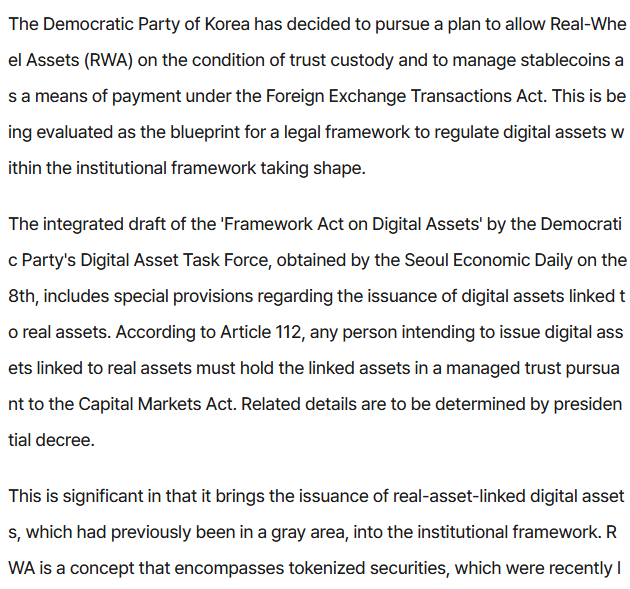
    South Korea’s ruling Democratic Party of Korea is moving forward with plans to bring tokenized real-world assets (RWAs) and stablecoins under existing financial regulations as part of the proposed Digital Asset Basic Act. The move signals the country’s intent to formalize oversight of digital assets while encouraging responsible innovation.

    Digital Asset Basic Act to Integrate RWAs Into Financial Rules

    According to policy details, issuers of tokenized RWAs will be required to deposit linked assets into a managed trust, in line with requirements under the Capital Markets Act. Additional operational details are expected to be outlined through a presidential decree.

    The proposal also classifies stablecoins as a means of payment under the Foreign Exchange Transactions Act, placing oversight responsibility on foreign exchange authorities. Small-scale stablecoin payments for goods and services will be exempt from foreign exchange reporting rules, a step viewed as supporting everyday stablecoin use while maintaining supervision of larger transactions.

    Stablecoin Yield Ban and Technical Standards Proposed

    The legislation includes provisions to ban yield on idle stablecoin balances, reflecting similar policy debates underway in other major markets. The Financial Services Commission, South Korea’s financial watchdog, will also be tasked with creating technical interoperability standards and establishing a unified digital asset disclosure system.

    The Digital Asset Basic Act, considered South Korea’s second major regulatory framework for digital assets, has experienced legislative delays that pushed its original 2025 deadline, but authorities continue working toward implementation.

    Disclaimer

    This content is for informational purposes only and does not constitute financial, investment, or legal advice. Cryptocurrency trading involves risk and may result in financial loss.

  • Saudi Arabia’s East-West Oil Pipeline Targeted in Attack

    Saudi Arabia’s East-West Oil Pipeline Targeted in Attack

    Saudi Arabia’s vital East-West oil pipeline, which transports crude from the Gulf to the Red Sea for export, has reportedly been attacked, raising concerns over regional energy security. The pipeline is a major route for crude exports, connecting inland oil fields to the Red Sea terminals.

    Strategic Importance of the East-West Pipeline

    The East West pipeline is critical for Saudi Arabia’s oil supply chain, enabling the kingdom to move large volumes of crude efficiently from the interior to export ports. Disruptions to this infrastructure can impact global oil markets and push crude prices higher due to supply constraints.

    https://cms.blockto.io/saudi-east-west-pipeline-reaches-full-capacity-amid-hormuz-disruptions/

    Potential Implications and Market Reactions

    While details of the attack remain limited, analysts warn that any prolonged disruption could affect oil exports, regional trade, and energy security. The incident may trigger heightened geopolitical tensions and influence global oil prices, as markets react to risks along this key route.

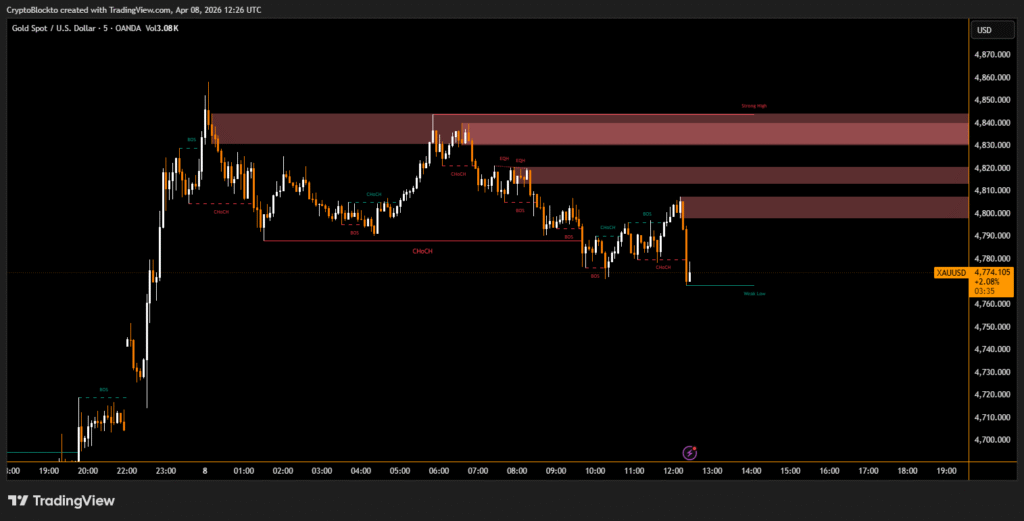
    Gold drops almost more than 200 pips in lower timeframe;

    Gold 5 minutes price chart

    Saudi authorities are expected to investigate the incident and secure the pipeline. The kingdom has previously emphasized strong security measures for its energy infrastructure, highlighting the importance of safeguarding oil supply lines against sabotage and attacks.

    Disclaimer

    This content is for informational purposes only and does not constitute financial, investment, or legal advice. Cryptocurrency trading involves risk and may result in financial loss.
  • Crypto Whale Earns $2 Million Profit From Oil Short Position

    Crypto Whale Earns $2 Million Profit From Oil Short Position

    A crypto trader known as Loracle secured a $2 million profit after closing a major short position in crude oil futures early Wednesday, following a sharp drop in oil prices linked to geopolitical developments.

    Oil Prices Fall Over 15% After Ceasefire News

    Oil markets saw a steep decline after news of a U.S.–Iran ceasefire, which pushed crude prices down by more than 15%, falling below $100 per barrel. Loracle had opened a $5 million short position in crude oil perpetual futures on the decentralized trading platform Hyperliquid last week.

    As prices dropped, the trader closed the bearish position, locking in profits, according to blockchain analytics data from Arkham Intelligence. Current holdings tied to the trader reportedly include USDT, USDC, ETH, and other digital assets totaling more than $8 million.

    Hyperliquid Gains Momentum in Traditional Asset Trading

    The trade highlights the growing role of decentralized platforms like Hyperliquid, which allow cryptocurrency traders to speculate on traditional assets such as oil. Increased market volatility tied to geopolitical tensions has driven activity on these platforms.

    Recent data shows WTI crude oil perpetual futures generated $2.45 billion in trading volume over the past 24 hours, surpassing ether-linked contracts. Bitcoin remains the most traded contract, while Brent oil futures ranked fourth with approximately $1.3 billion in volume, signaling strong demand for crypto-based commodity trading.

    Disclaimer

    This content is for informational purposes only and does not constitute financial, investment, or legal advice. Cryptocurrency trading involves risk and may result in financial loss.
  • Trump Signals Tariff and Sanctions Relief Talks With Iran After Nuclear Agreement Progress

    Trump Signals Tariff and Sanctions Relief Talks With Iran After Nuclear Agreement Progress

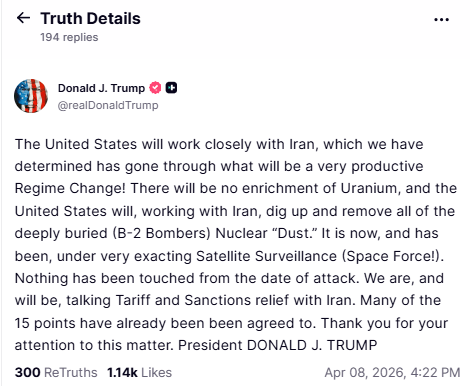
    The United States has announced plans to work closely with Iran on nuclear cleanup and diplomatic measures following recent conflict developments. President Donald J. Trump stated that Iran has undergone what he described as a “very productive Regime Change,” emphasizing that uranium enrichment will cease.

    Nuclear Sites Under Surveillance

    Trump noted that all nuclear materials, including deeply buried sites previously targeted, have remained untouched since the initial attack. These locations have been monitored under stringent satellite surveillance by the US Space Force, ensuring that no unauthorized activity has occurred.

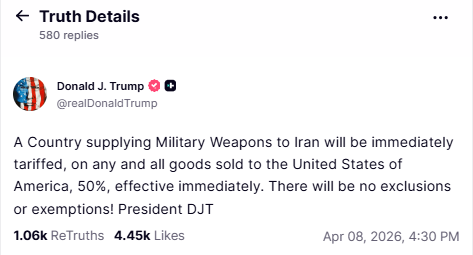
    Trump also warned that if any country supplying military weapons to Iran will be immediately tariffed, on any and all goods sold to the United States of America, 50%, effective immediately.

    Sanctions and Tariff Discussions

    The President confirmed ongoing discussions with Iran regarding tariff and sanctions relief, highlighting that many of the 15 proposed agreement points have already been agreed upon. The administration aims to enforce nuclear compliance while promoting diplomatic and economic cooperation, signaling tentative progress toward stability and long-term regional engagement.

    Disclaimer

    This content is for informational purposes only and does not constitute financial, investment, or legal advice. Cryptocurrency trading involves risk and may result in financial loss.

  • Three Polymarket Traders Profit $484,575 on US-Iran Ceasefire Bets

    Three Polymarket Traders Profit $484,575 on US-Iran Ceasefire Bets

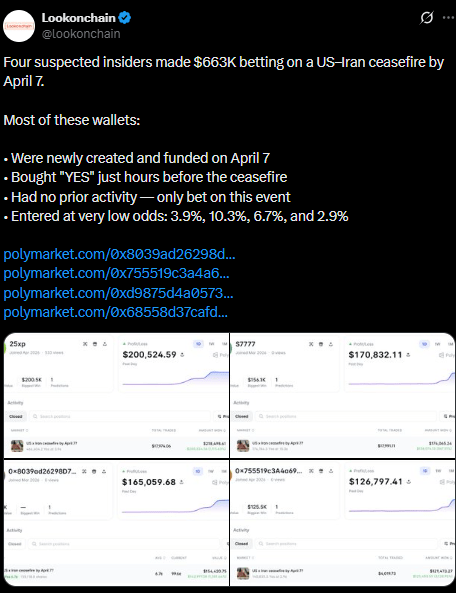
    Three newly created wallets on the prediction market Polymarket profited a combined $484,575 by betting that the United States and Iran would agree to a ceasefire by April 7. According to blockchain analytics firm Lookonchain, the wallets had no prior on-chain activity before placing “yes” bets on the market.

    The “yes” bets were placed at probabilities between 2.9% and 10.3%, and the three wallets made their first trades within 26 hours of the announcement. One trader placed their initial bet at 1:59 pm UTC on Tuesday, roughly eight and a half hours before US President Donald Trump confirmed the ceasefire on Truth Social. The other two wallets placed bets at 10:01 am UTC on Tuesday and 8:50 pm UTC on Monday. Individual profits were $200,525, $158,600, and $125,450.

    The ceasefire, agreed to on Tuesday, lasts two weeks, though neither side has ruled out future military action. Prediction markets like Polymarket have surpassed $10 billion in monthly trading volume, attracting scrutiny over insider trading. Past incidents include a US Polymarket user profiting $400,000 on a Venezuelan-related market, and arrests in Israel for alleged insider trading related to strikes on Iran.

    Polymarket and Kalshi have implemented measures to detect market abuse, but concerns remain about regulatory oversight and ethical trading in prediction markets.

    Disclaimer

    This content is for informational purposes only and does not constitute financial, investment, or legal advice. Cryptocurrency trading involves risk and may result in financial loss.