Category: News

  • Gold Investors Return to Bitcoin as Fund Flows Reverse: Fidelity Analysis

    Gold Investors Return to Bitcoin as Fund Flows Reverse: Fidelity Analysis

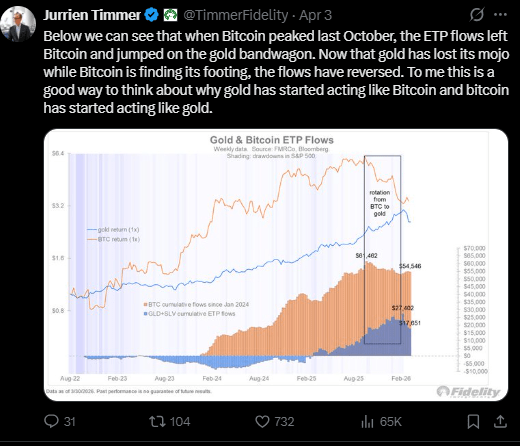
    Jurrien Timmer, director of global macro at Fidelity Investments, highlighted a significant shift in investor behavior, noting that gold investors are moving back into Bitcoin (BTC). In a post on X, Timmer stated that “investors who abandoned Bitcoin late last year are returning to crypto assets,” signaling renewed confidence in digital currencies.
    Reversal of 2025 Fund Flows

    Timmer explained, “Last year, investors pulled money out of crypto assets and moved into gold, but that flow is now reversing.” He emphasized that “as gold’s appeal fades and Bitcoin becomes more established, the direction of fund flows is changing.” This suggests a broader shift in investor priorities from traditional safe-haven assets toward cryptocurrencies.
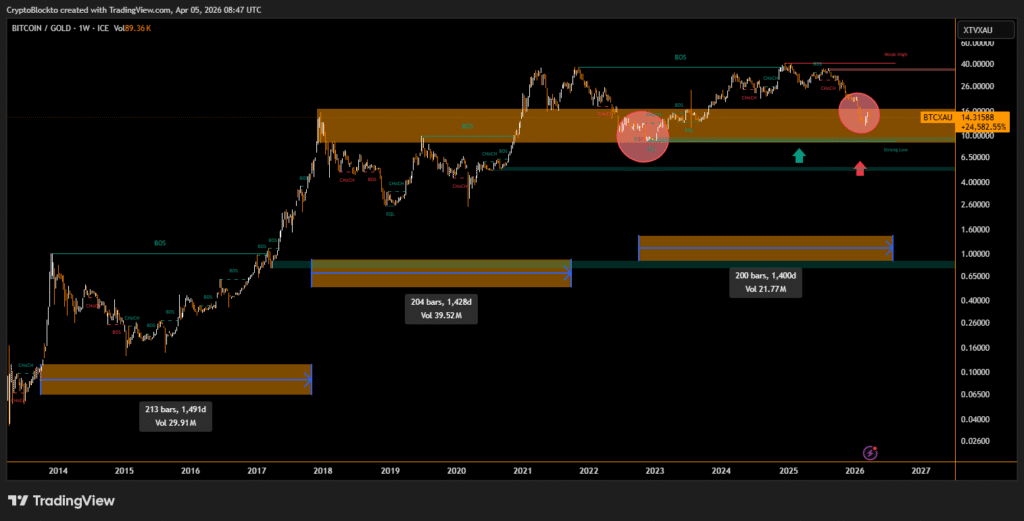
    Bitcoin vs Gold price Chart

    Bitcoin Support and Market Outlook

    The Fidelity executive noted that Bitcoin is currently forming support while trading sideways, appearing poised for the next leg higher. In comparison, gold has recently been relatively sluggish, reinforcing the reversal in capital allocation.

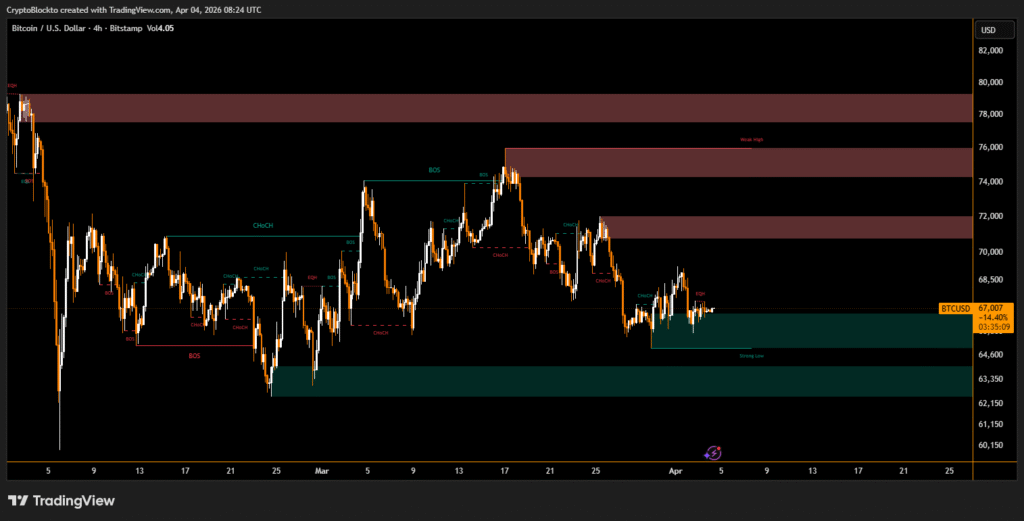
    Bitcoin was trading at $66,800 at the time of reporting, showing a decline of 5.63% over the past 30 days.
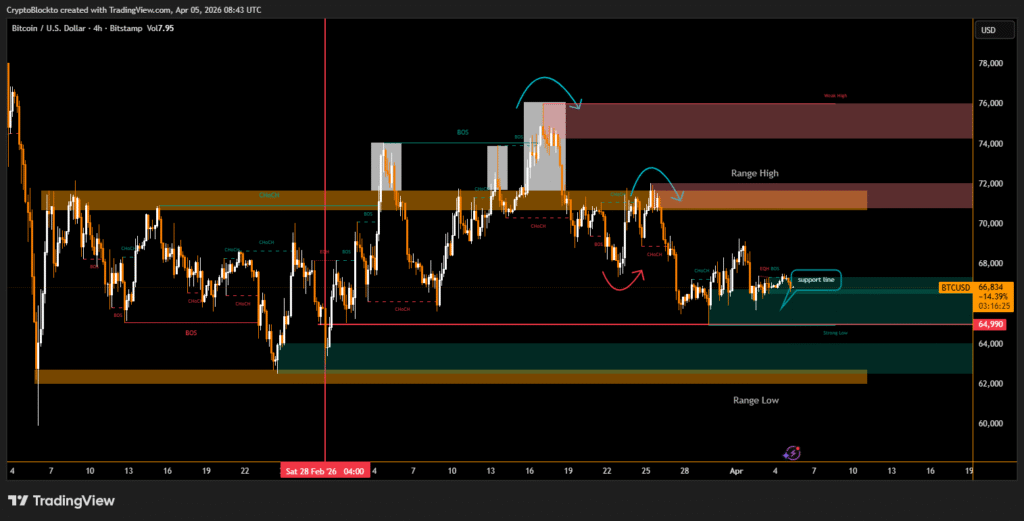
    $BTC 4h price chart

    Timmer added that these inter asset fund flows could affect price volatility in the near term, highlighting the importance of tracking short-term investment trends for both crypto and precious metals markets.

    Disclaimer

    This content is for informational purposes only and does not constitute financial, investment, or legal advice. Cryptocurrency trading involves risk and may result in financial loss.

  • Anthropic Launches PAC Amid Tensions With Trump Administration Over AI Policy

    Anthropic Launches PAC Amid Tensions With Trump Administration Over AI Policy

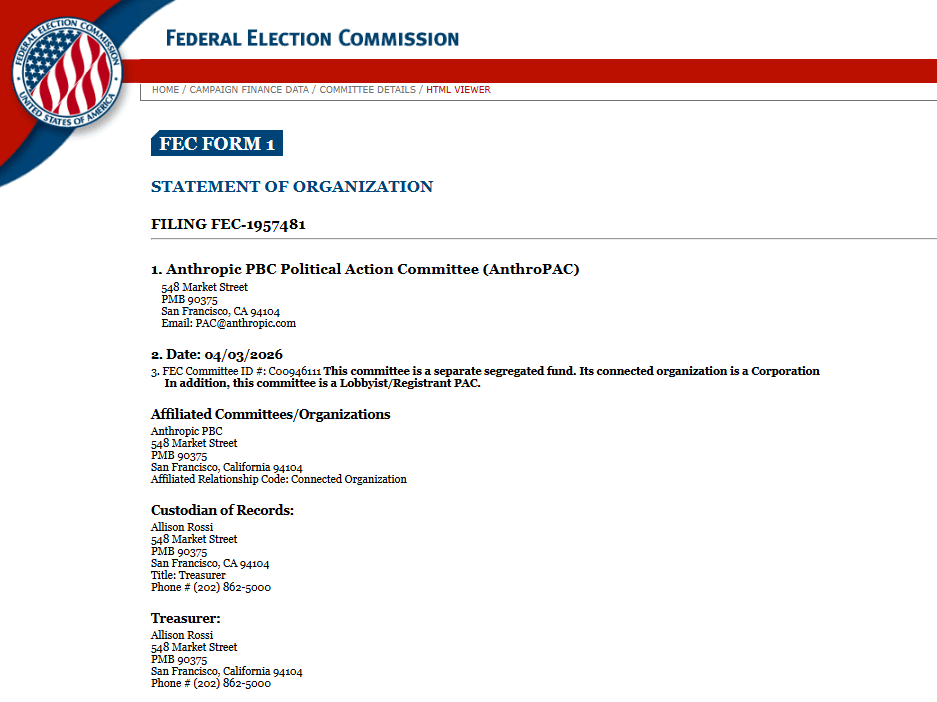
    Artificial intelligence firm Anthropic has launched an employee-funded political action committee (PAC) named AnthroPAC, entering election financing amid growing debates over AI policy in Washington. The company filed a statement of organization with the Federal Election Commission on Friday, listing Anthropic as the connected organization. Contributions are capped at $5,000 per candidate per election cycle and must be disclosed through public filings.

    Anthropic launches PAC

    Bipartisan Support and Funding Activity

    Anthropic said the PAC is expected to support candidates from both major parties, though some observers have questioned whether it will remain politically balanced. The company has already contributed $20 million to Public First Action, an organization focused on advancing AI safety initiatives.

    Clash With Pentagon Over AI Technology

    The move comes amid friction with the Pentagon, which designated Anthropic a supply chain risk in February after the company opposed the use of its AI in fully autonomous weapons and mass surveillance. Anthropic has challenged the designation in court, and a federal judge in California temporarily blocked the measure.

    Google Backing Texas Data Center

    In a related development, Google plans to support a multibillion-dollar Texas data center for Anthropic through Nexus Data Centers, with initial costs potentially exceeding $5 billion, reflecting increasing demand for AI infrastructure.

    Disclaimer

    This content is for informational purposes only and does not constitute financial, investment, or legal advice. Cryptocurrency trading involves risk and may result in financial loss.

  • Drift Protocol Reveals Investigation Into $285 Million Theft, Links Attack to DPRK-Linked Group

    Drift Protocol Reveals Investigation Into $285 Million Theft, Links Attack to DPRK-Linked Group

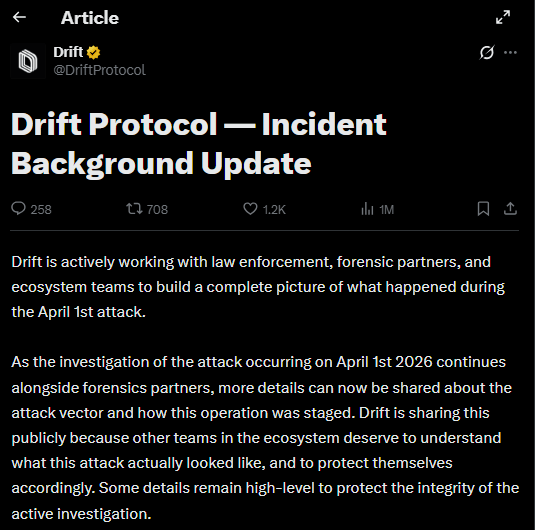
    Drift Protocol has released preliminary findings of its investigation into the $285 million theft that occurred on April 1, 2026. The investigation indicates that the attack was a long term, organized infiltration operation lasting approximately six months.

    Since fall 2025, attackers posed as a quantitative trading firm, engaging Drift team members at multiple international crypto conferences. Over this period, they compromised devices through code repository links and a TestFlight application, establishing trust with contributors by investing over $1 million of their own capital and conducting detailed discussions on trading strategies and vault integrations.

    Attack Vectors and Methodology

    Drift’s forensic analysis identifies three potential attack vectors:

    1. Code repository compromise – exploiting known VSCode and Cursor vulnerabilities from December 2025 to February 2026, allowing silent execution of malicious code.
    2. TestFlight application – downloaded under the guise of a wallet product.
    3. Other targeted interactions – meticulously staged over months, including in-person meetings at conferences.

    All remaining protocol functions have been frozen, compromised wallets removed from the multisig, and attacker wallets flagged across exchanges and bridges.

    Possible DPRK-Linked Attribution

    Preliminary evidence, supported by the SEALS 911 team, links the operation to the same actors behind the October 2024 Radiant Capital hack, associated with UNC4736, a North Korean state-affiliated group also tracked as AppleJeus or Citrine Sleet. Operational overlaps and on-chain fund flows suggest medium-high confidence, although Mandiant has not formally attributed the exploit, pending full device forensics.

    Community Guidance and Ongoing Investigation

    Drift emphasized that the in-person attackers were not North Korean nationals but third-party intermediaries used for relationship building and infiltration. The investigation highlights the sophisticated, professional identities built by the attackers, including employment histories and public credentials.

    Drift urges ecosystem teams to audit access, secure devices, and monitor for similar threats. For assistance, the team recommends reaching out to @SEAL911. Drift also thanked experts @tayvano_, @tanuki42_, @pcaversaccio, and @bax1337 for their contributions to the investigation.

    Disclaimer

    This content is for informational purposes only and does not constitute financial, investment, or legal advice. Cryptocurrency trading involves risk and may result in financial loss.
  • IMF Warns Tokenized Finance Could Amplify Financial Crises

    IMF Warns Tokenized Finance Could Amplify Financial Crises

    Tokenized finance could make market crises unfold faster than regulators can respond, according to a report released by the International Monetary Fund (IMF). IMF Financial Counselor Tobias Adrian described tokenization as a structural shift in financial architecture rather than a marginal efficiency gain, warning that the removal of traditional settlement delays could increase systemic risk.

    IMF

    Traditional two-day settlement cycles currently provide time for central banks to mobilize liquidity, net exposures, and intervene before trades are finalized. Adrian argued that tokenized systems remove these buffers by enabling instant settlement. Automated margin calls and algorithmic feedback loops in 24/7 markets could compress response time, while existing central bank emergency lending tools were designed for business-day cycles, not continuous operations.

    Stablecoin Risks and Legal Uncertainty in Tokenized Systems

    Adrian compared stablecoins to money market funds, noting that while they function well in stable conditions, they can become vulnerable to runs when confidence declines. He stated that stablecoins without access to central bank reserves require higher liquidity buffers and conservative margining to offset settlement asset risk. Even fully backed stablecoins depend on issuers’ operational capacity and the liquidity of underlying government securities markets.

    The report also noted that tokenized lending has not grown meaningfully due to blockchain pseudonymity, which limits credit assessment and forces lenders to rely on overcollateralization. Adrian challenged the “code is law” principle, arguing that legal mandates for stability must override automated execution. He recommended predefined override mechanisms in critical smart contracts.

    Three Future Scenarios and Policy Recommendations

    The IMF outlined three scenarios for tokenized finance: a coordinated system anchored by wholesale central bank digital currencies, a fragmented network of incompatible national platforms, or a system dominated by private stablecoins that weakens public backstops.

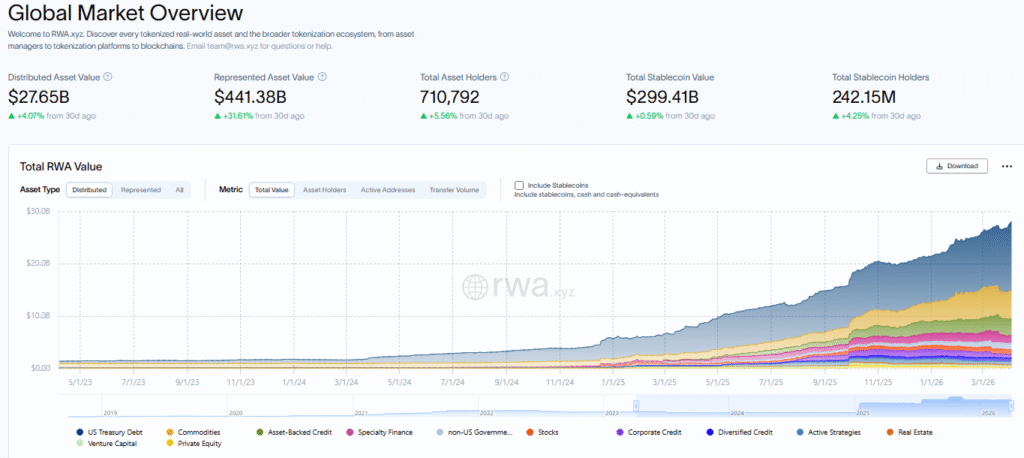
    Tokenized real-world assets have reached roughly $27.7 billion in distributed onchain value:RWA.xyz data

    A five-pillar roadmap recommended settlement anchored in safe money, consistent regulation across equivalent activities, legal certainty for tokenized assets, interoperability standards, and adapting central bank tools for continuous-operation financial environments.

    Disclaimer

    This content is for informational purposes only and does not constitute financial, investment, or legal advice. Cryptocurrency trading involves risk and may result in financial loss.
  • Trump Confirms Rescue of US Officer as Tehran Rejects Ultimatum Amid Ongoing Strikes

    Trump Confirms Rescue of US Officer as Tehran Rejects Ultimatum Amid Ongoing Strikes

    US President Donald Trump confirmed that an American officer, missing after his F-15E fighter jet was downed over Iran, has been rescued and is “safe and sound.” Speaking on Truth Social, Trump described the operation as “one of the most daring Search and Rescue Operations in U.S. History” and identified the rescued officer as a “highly respected Colonel.”

    Tehran Rejects 48-Hour Ultimatum

    Trump warned that attacks on Iran would intensify unless Tehran agreed to a peace deal within 48 hours. Iran, however, rejected the “helpless and nervous” ultimatum, signaling continued tension in the region.

    US and Israeli forces carried out strikes on Iranian hospitals, universities, and petrochemical facilities, killing at least five people and wounding around 170. Since the start of the conflict, over 30 universities in Iran have been targeted.

    Regional Escalation and Protests

    The Yemeni Houthi group claimed a joint long-range attack on Israel alongside Iranian and Hezbollah forces. Meanwhile, Israel’s ground invasion of southern Lebanon expanded to the city of Tyre, killing at least six people and displacing thousands.

    Protests erupted across Tel Aviv, Jerusalem, and Haifa, with hundreds demanding an end to the war in Iran.

    The US announced the arrest and revocation of permanent residency of the niece of late Iranian Major General Qassem Soleimani and her daughter. Soleimani’s daughters stated the women arrested were not related to them.

    Disclaimer

    This content is for informational purposes only and does not constitute financial, investment, or legal advice. Cryptocurrency trading involves risk and may result in financial loss.
  • Telegram Ban in Iran Backfires as VPN Usage Surges, Pavel Durov Says

    Telegram Ban in Iran Backfires as VPN Usage Surges, Pavel Durov Says

    Telegram co founder Pavel Durov said the Iranian government’s attempt to block the messaging platform has produced the opposite effect, leading to massive growth in virtual private network (VPN) usage. According to Durov, Iran banned Telegram several years ago, but tens of millions of users have continued accessing the platform through VPN services and similar tools.

    VPN technology allows users to route internet traffic through servers located in different regions, masking their Internet Protocol addresses and bypassing national internet restrictions. Durov stated that instead of pushing citizens toward state-controlled messaging applications, the ban resulted in large-scale adoption of privacy tools.

    He noted that roughly 50 million users in Iran are now part of what he described as a “digital resistance,” joined by another 50 million users in Russia who also rely on similar methods to bypass restrictions.

    Decentralized Tools Expand During Internet Restrictions

    The continued use of Telegram comes amid broader internet restrictions in Iran, including a nationwide blackout imposed in January 2026 during ongoing protests and conflict involving Israel, the United States and Iran.

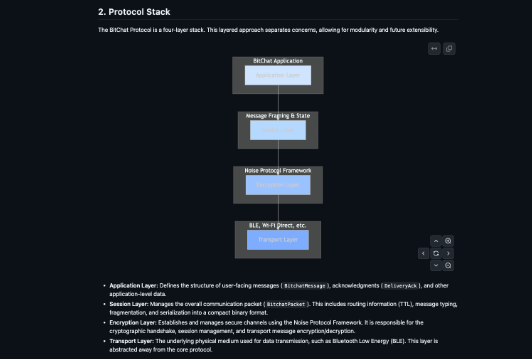
    The components of the BitChat messaging application tech stack: GitHub

    Despite the blackout, users have turned to alternative technologies such as satellite-based internet services and decentralized messaging applications. One example is BitChat, which uses Bluetooth mesh networking to allow devices to communicate directly without relying on traditional internet infrastructure.

    Similar patterns have been observed in other regions. During protests in Nepal in September 2025, downloads of BitChat surged to more than 48,000 in one week, reflecting how users increasingly adopt decentralized communication tools during periods of government-imposed digital restrictions.

    Disclaimer

    This content is for informational purposes only and does not constitute financial, investment, or legal advice. Cryptocurrency trading involves risk and may result in financial loss.
  • Digital Asset Treasuries Shift From Passive Holding to Yield Generation

    Digital Asset Treasuries Shift From Passive Holding to Yield Generation

    The role of digital asset treasuries is rapidly changing as simple accumulation strategies lose favor among investors. By early 2026, more than 200 publicly listed companies collectively held over $115 billion in digital assets, yet many are trading at discounts to their holdings. This gap reflects growing investor demand for capital efficiency and measurable returns rather than passive exposure.

    Companies are increasingly adopting transparency metrics such as “BTC per share” and implementing share buybacks to demonstrate value. The sector is transitioning from passive holding, often described as “DAT 1.0,” to active yield-focused strategies known as “DAT 2.0.”

    Staking, Trading and Credit Models Drive Treasury Returns

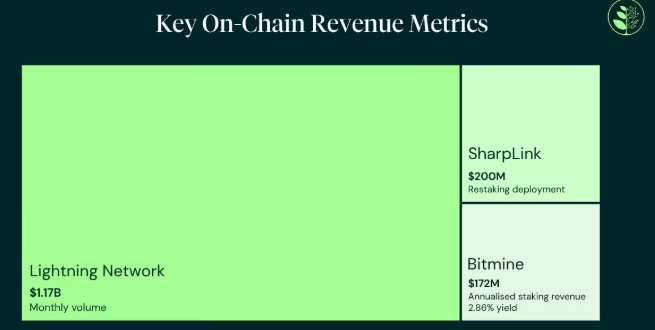
    Three primary models are emerging. The first focuses on infrastructure participation, including staking and network validation. Firms like Bitmine Immersion Technologies reported over 3 million staked ETH, generating approximately $172 million in annualized revenue, highlighting the potential of protocol-level income.

    The second model involves active trading strategies such as funding-rate arbitrage and options premiums. While these can generate strong returns, they require advanced risk management and continuous oversight. Some firms have achieved significant revenue growth through such strategies, though accounting complexities can obscure profitability.

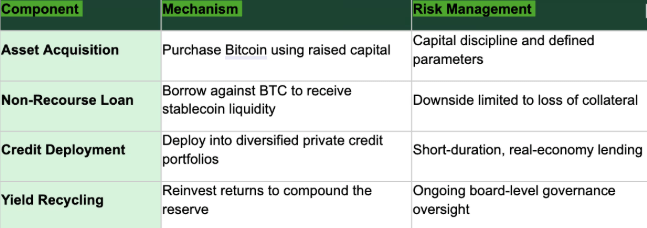
    A third approach uses digital assets as collateral to access liquidity, which is then deployed into private credit markets. This model mirrors traditional finance by combining borrowing, lending and yield generation, supported by the growing role of stablecoins in global payments and settlement systems.

    Yield Becomes Core Measure of Treasury Performance

    As the sector matures, yield generation is becoming the key benchmark for success. Companies are increasingly blending multiple strategies based on risk tolerance and operational capabilities. The shift signals a broader industry evolution where disciplined capital deployment, rather than asset size alone, determines long-term value.

    Disclaimer

    This content is for informational purposes only and does not constitute financial, investment, or legal advice. Cryptocurrency trading involves risk and may result in financial loss.

  • Former UK Chancellor Kwasi Kwarteng Supports Bitcoin as Alternative to Strained Financial Systems

    Former UK Chancellor Kwasi Kwarteng Supports Bitcoin as Alternative to Strained Financial Systems

    Former UK Chancellor Kwasi Kwarteng has voiced support for Bitcoin as part of a broader shift toward alternative financial systems, reflecting on the economic turmoil that followed his short tenure in September 2022. Kwarteng, who served as chancellor for only a few weeks, described the controversial mini budget as “very, very rushed,” noting it was introduced just two weeks after taking office on September 6 and shortly before the death of Queen Elizabeth II.

    The rapid rollout of the policy triggered sharp increases in UK government bond yields and exposed vulnerabilities in Liability Driven Investment (LDI) pension strategies. Despite criticism, Kwarteng defended the original policy goals and warned that the United Kingdom remains trapped in a fiscal “doom loop,” where government spending continues to exceed tax revenue, while rising taxes reduce economic incentives.

    He also criticized what he described as short-term decision-making in politics and financial markets, arguing that long-term planning is essential for sustainable economic growth.

    Bitcoin Treasury Strategy and Stack BTC Involvement

    Kwarteng has since moved into the digital asset sector and now serves as executive chairman of Stack BTC, a UK based bitcoin treasury firm. The company currently holds 31 BTC on its balance sheet, reflecting its strategy of integrating Bitcoin into corporate treasury management.

    The venture has drawn political interest, with Reform UK leader Nigel Farage acquiring a 6% stake in the company. Kwarteng also highlighted what he sees as the UK’s slow adoption of digital asset innovation compared to European cities such as Paris, which he described as increasingly supportive of digital finance developments.

    He pushed back against earlier criticism from former Prime Minister Boris Johnson, who had described Bitcoin as a “Ponzi,” instead advocating for a more open-minded approach toward emerging monetary technologies and alternative financial systems.

    Disclaimer

    This content is for informational purposes only and does not constitute financial, investment, or legal advice. Cryptocurrency trading involves risk and may result in financial loss.

  • Bitcoin ETFs Expected to Surpass Gold ETFs in Assets, Analyst Says

    Bitcoin ETFs Expected to Surpass Gold ETFs in Assets, Analyst Says

    Spot BTC ETFs could eventually surpass gold ETFs in total assets under management (AUM) as investor interest grows beyond the “digital gold” narrative, according to ETF analyst James Seyffart. Speaking on the podcast, Seyffart highlighted Bitcoin’s multiple roles, including as digital gold, a store of value, a portfolio diversifier, and a form of digital capital and property. He added that the market also views Bitcoin as a “growth risk asset.”

    Bloomberg ETF analyst James Seyffart spoke to Natalie Brunell on podcast.

    Seyffart noted, “There are just more use cases of why somebody would put a Bitcoin ETF in a portfolio,” contrasting this with gold, which primarily serves one purpose.

    ETF Flows Reflect Shifting Investor Preferences

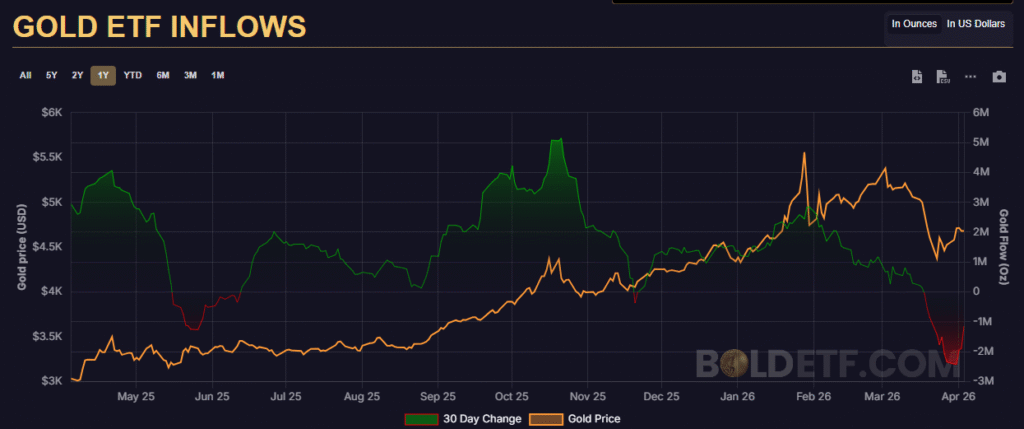
    US based gold ETFs recorded net outflows of $2.92 billion in March, while US spot Bitcoin ETFs saw $1.32 billion in net inflows over the same period. The largest US gold backed ETF, GLD, experienced a $3 billion outflow on March 4, the largest daily withdrawal in over two years.

    Gold ETF Inflows

    Despite recent divergences, both Bitcoin and gold have broadly moved in tandem over the past 30 days. Bitcoin is trading around $66,818, down 8%.

    $BTC 4h price chart

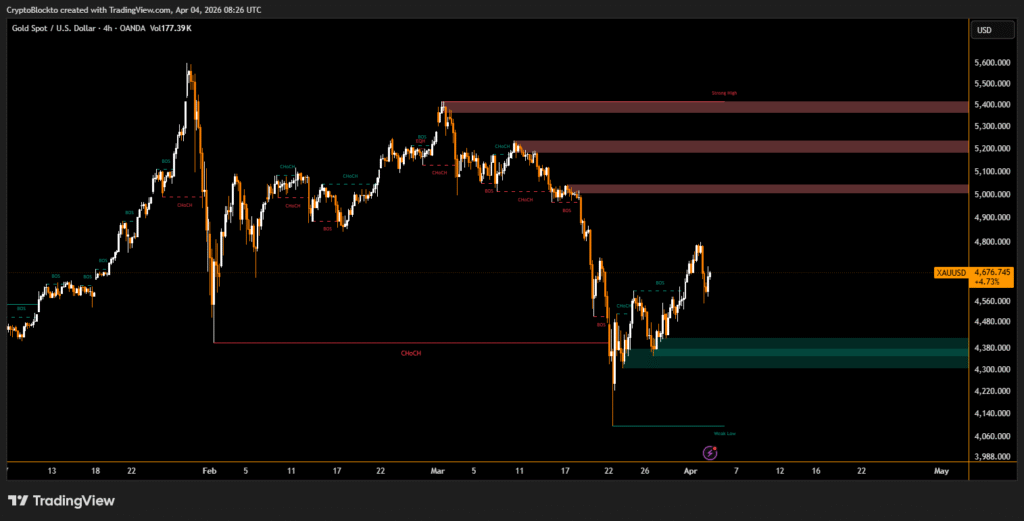
    While gold trades near $4,676, down 8%.

    Gold 4h price chart
    Disclaimer

    This content is for informational purposes only and does not constitute financial, investment, or legal advice. Cryptocurrency trading involves risk and may result in financial loss.

  • Cosmos Ecosystem’s Leap Wallet to Shut Down by May 28

    Cosmos Ecosystem’s Leap Wallet to Shut Down by May 28

    Leap Wallet, a noncustodial crypto wallet originally designed for the Terra Luna ecosystem, is shutting down its software suite by May 28, the team announced on Friday. The closure affects the browser extension, iOS and Android mobile apps, the Leap WebApp, Swapfast exchange platform, and the Leap Cosmos Hub validator.

    The Leap team urged users with ATOM delegated to their Cosmos Hub validator to redelegate to another validator promptly to continue earning staking rewards, accounting for network unbonding periods. Despite the shutdown, users can still access their assets through a recovery phrase or private key using another wallet, without needing to move funds to a new address.

    Leap Wallet’s Origins and Evolution

    Leap was launched in late 2021 with a $50,000 grant from Terraform Labs, the R&D firm behind TerraUSD, and later raised a $3.2 million seed round co-led by CoinFund and Pantera Capital in early 2022. Initially positioned as a go-to wallet for Terra similar to MetaMask for Ethereum or Phantom for Solana Leap offered staking, trading via Terraswap, and integration with Terraform Labs’ Anchor and Mirror decentralized applications.

    After Terra’s collapse in 2022, Leap pivoted to support the broader Cosmos ecosystem, leveraging Cosmos’ SDK to expand across multiple chains. The team emphasized their commitment to users and the interchain ecosystem, calling the decision to shut down a difficult but necessary step.

    Disclaimer

    This content is for informational purposes only and does not constitute financial, investment, or legal advice. Cryptocurrency trading involves risk and may result in financial loss.